From furniture to football art:What really happens to retired aircraft?

4 min read
What happens to an aircraft when it reaches the end of its flying career? Some are dismantled for valuable parts while others are recycled. But increasingly, pieces of retired airlines are turning up in far more unexpected places – from art galleries to football stadiums.
Emirates recently provided an eye-catching example earlier this month when it unveiled a giant Arsenal crest built from retired Airbus A380 and Boeing 777 components.
The project is part of a growing trend that is giving aircraft parts a second life after retirement. From aircraft windows being transformed into furniture through to landing gear becoming works of art, we take a look at the ways aviation materials can take on a striking second life.
How Emirates’ turned A380 and Boeing 777 parts into an Arsenal crest
The trend was demonstrated this month when Emirates unveiled an Arsenal crest made from components recovered from its Airbus A380 and Boeing 777 fleets.
Built by Emirates Engineering, the 2.4m-high illuminated sculpture incorporates A380 landing-gear hardware, a titanium bleed-air duct, composite floor panels and Boeing 777 fuselage skin.
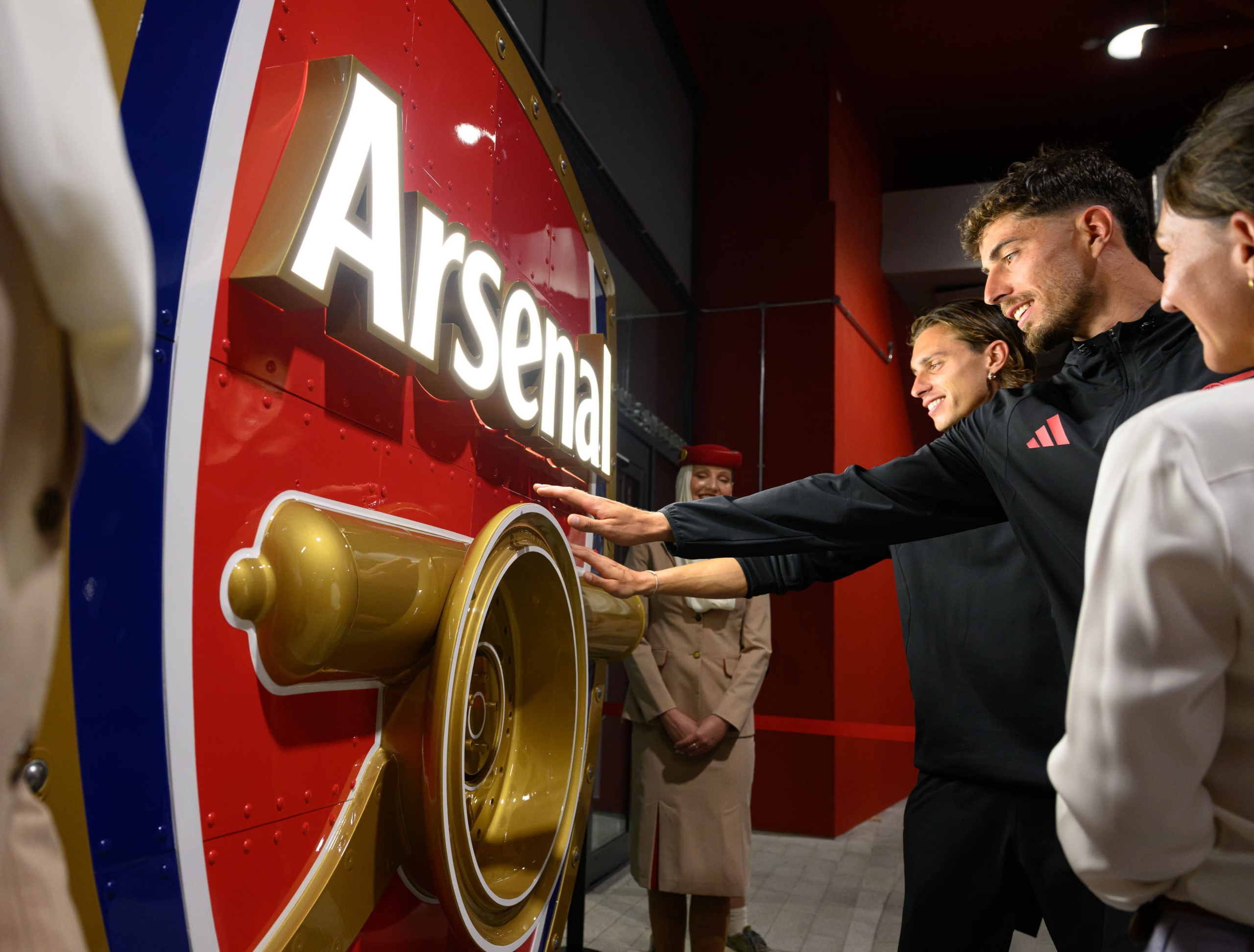
It was created to mark 20 years of the airline’s partnership with Arsenal and will remain on display at Emirates Stadium.
While the Arsenal crest made headlines, it’s part of a wider movement across the aviation industry. Airlines are increasingly finding ways to transform retired aircraft and materials.
Inside SWISS’ retired A321 makeover
SWISS, for example, has created an entire collection from a retired Airbus A321.
After 27 years of service, one of the carrier’s Airbus A321s – HB-IOC – took on a new role as the first in the airline’s SWISS Recraft Collection, an initiative designed to give components from retired aircraft a second life.
The aircraft, which had been the oldest A321 in the SWISS fleet, accumulated more than 73,000 flight hours and carried over seven million passengers during its career with Swissair and SWISS.
Following retirement, HB-IOC underwent the conventional part-out process, with components removed for use as spare parts or in training.
Rather than being discarded, selected aircraft parts which were left were repurposed into new products.
They have been turned into baggage tags and key fobs, wall hooks, coat racks, bowls, mirrors and side tables.
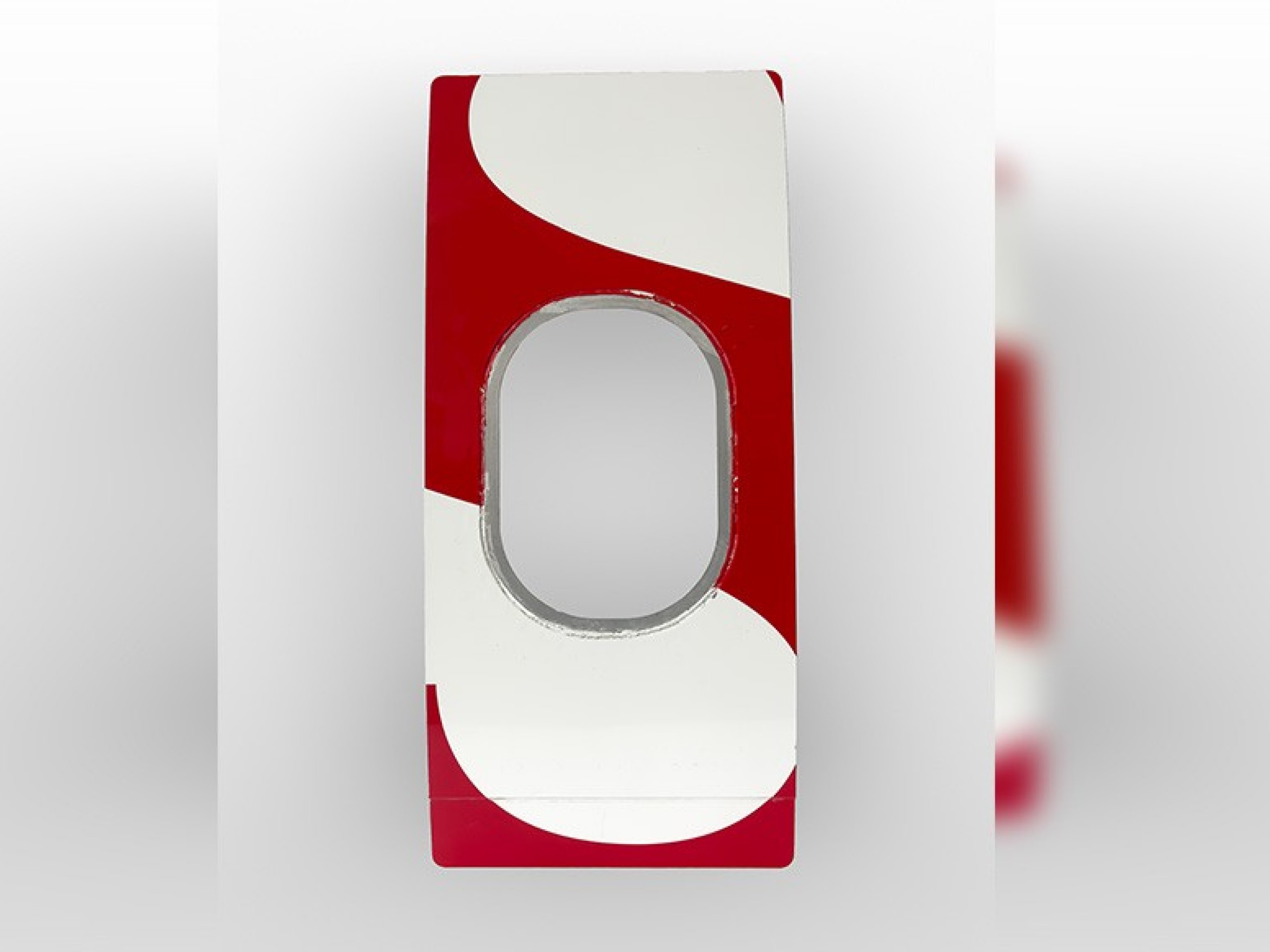
A specially-designed aircraft window can be mounted on a wall to serve as a bar or a display case.
Parts of the fuselage skin and substructure and the inner and outer aircraft windows have all been reworked and reinterpreted by designers to create these recrafted items.
How Singapore airlines turns old aircraft into bags and artwork
Singapore Airlines has also sought to extend the useful life of retired aircraft components through its Upcycling Project, supplying parts and materials to designers, artists, educational institutions and retail brands.
The initiative has seen aircraft materials repurposed into products including bags, furniture, clothing, accessories and service ware, while artists and sculptors have used them to create new artworks.
SIA has also partnered with Singapore-based educational organisations to use aircraft components as teaching materials for design and art courses.
An additional element of the project involves SG Enable, an agency dedicated to supporting persons with disabilities. Products created from the components can then be sold, with proceeds returning to the participating makers.
Korean Air gives retired uniforms a second life
Korean Air has repurposed its retired mechanic uniforms into 2,000 tool pouches for its maintenance teams, embracing sustainability in aviation operations.
With the introduction of eco-friendly uniforms earlier this year, the airline partnered with upcycling specialist Nukak to transform 700 decommissioned winter jackets into durable pouches.

The initiative builds on Korean Air’s broader upcycling efforts, which include crafting travel accessories and operational items from retired materials.
Delta and Air France show just how far upcycling can go
Delta Air Lines has taken a similar approach in the US, providing retired aircraft parts and materials to six artists, who incorporated the aviation components into original works of art showcased in Miami.
Delta commissioned pieces from these six up-and-coming artists to elevate their work to new audiences and showcase their talents during one of the art world’s biggest weekends. The immersive galleries – both in the air and on the ground – featured commissioned pieces as well as past work from the artists.

Air France has also embraced the trend through its Air Art collection, offering aircraft components and materials repurposed into decorative objects and collectibles for sale.
These include coin purses made from headrests, wallets made from lifejackets and engine fan blades, which are all currently on sale through the airline’s online shop.
These projects represent only a small part of what happens when an aircraft is retired.
While many components are recovered as spares and raw materials are recycled, a growing number of airlines are proving that an aircraft’s story doesn’t have to end with its final flight.
What normally happens to retired aircraft?
Retirement doesn’t usually mean it’s the end of the road for an aircraft. Many are flown to specialist storage facilities know as “boneyards” where valuable components are removed for reuse and recyclable materials are recovered. Engines, landing gear and electronic systems can be overhauled, while the remaining airframe can then be dismantled and metals can be recycled.