Airline etiquette: Rawdogging, barebeating and other annoying air travel habits to stop immediately

10 min read
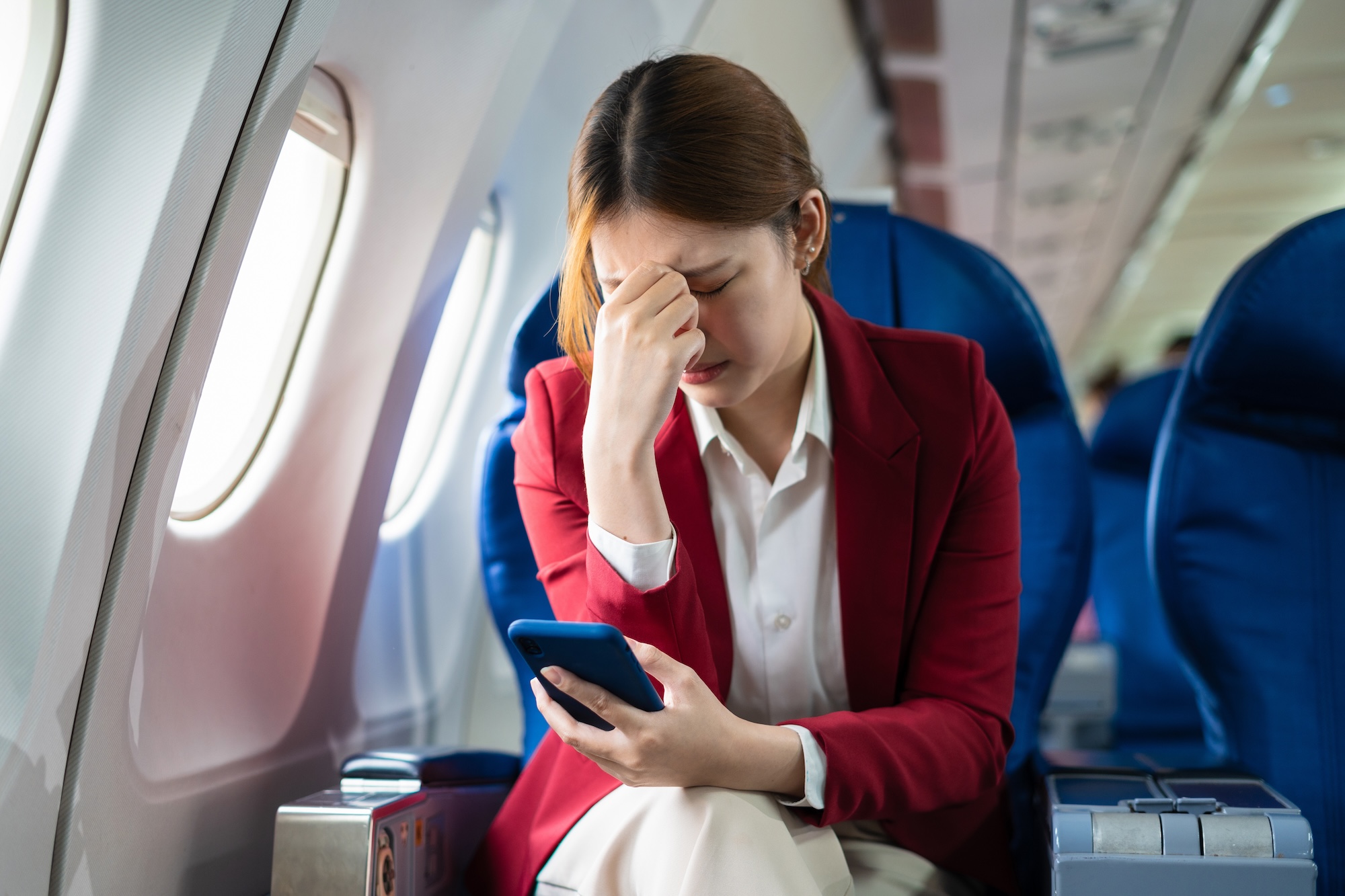
Air travel has always been a pressurised group experience, which sometimes brings out the worst in humanity. In the age of TikTok, Reddit and Twitter, some behaviours have caught on and spread, and our collective irritations with them have acquired punchy new nicknames.
Some are funny. Some are painfully accurate. And all of them capture the slightly unhinged theatre that unfolds at 35,000ft.
Here’s a look at the airborne behaviours that drive fellow passengers quietly mad and should probably stop at once.
Rawdogging
The term sounds extreme because, frankly, the behaviour is. “Rawdogging” a flight means flying with no book, no headphones, no downloaded Netflix series, no phone scrolling, sometimes not even consuming a beverage — just sitting there. Staring ahead. For hours.
It’s become a social media badge of honour among a certain subset of travellers who frame it as a form of mindfulness or mental toughness. Others see it as deeply unsettling.
Finished raw-dogging my flight to Baltimore
— ElCalvisimo (@ElCalvisimo) September 13, 2024
No sleep, no tv, no phone tapping, no reading, no talking, no pvpoke, no WiFi’s
Just the back of 19A. pic.twitter.com/wg5TBA42mD
Is Rawdogging wrong? Not really. Everyone has the right to decide what they do on board a flight, so long as they follow regulations intended for passenger safety and well-being. There are no rules that prohibit passengers from doing nothing.
It might be mildly alarming to others to sit next to someone who doesn’t budge from their seat for three hours, and possibly longer.
In a world where airlines have invested billions in catering, seatback in-flight entertainment (IFE), and WiFi, rawdogging feels like rebellion against the modern passenger experience. Each to his own, but really—why?
Barebeating
If rawdogging is silent stoicism, “barebeating” is its chaotic evil twin. This term describes the passenger who plays music, TikToks, or FaceTime calls OUT LOUD without using headphones. That creates unnecessary noise pollution for fellow passengers who may be just trying to sleep, or perhaps “rawdogging” their flight. Airlines globally already require passengers to use headphones, but enforcement often depends on crew intervention.
Barebeating tests social boundaries, sometimes with serious repercussions. A recent brawl on a Jet2 aircraft, which led to a diversion and two passengers being banned for life, was reportedly sparked by one passenger’s barebeating music that others found offensive.
Regulators have begun to notice an increase in this problematic behaviour. India’s aviation regulator, the Directorate General of Civil Aviation (DGCA), has recently reiterated expectations regarding passenger conduct, including the use of personal audio devices on flights.
Gate lice
“Gate lice” describes the cluster of passengers who swarm the boarding area long before their group is called. They hover. They inch forward. They block signage.
The pejorative term is believed to have been coined on FlyerTalk around 2005 by frequent flyers frustrated with crowding at the boarding gate.
Well it's that time of year again – amateur travel season with gate lice and passengers that rush to exit the plane! 😬😡 pic.twitter.com/ckYXcuceEk
— Will Townsend (@WillTownTech) May 15, 2025
The phenomenon became such an operational headache that American Airlines tested technology to enforce clearer boarding-group rules with an audible “beep” whenever someone tried to jump the queue.
Psychologists might call the condition queue anxiety. Others have argued that ignoring the boarding group is a smart (if unethical) travel hack. But many would say it is as unnecessary as it is annoying. If you’re in Group 4, the gate and aircraft will still be there when Group 4 is called.
And, honestly, why would anyone want to sit on the aircraft longer than they need to?
Premature risers (a.k.a. aisle standers)
We’ve all encountered these individuals. The seatbelt sign dings off, and half the cabin springs upright like a synchronised aquatic team. The “premature riser” stands up instantly, even bending sideways under the overhead bin.
It’s a related behaviour to gate lice, also demonstrating a psychological need to be first, and probably motivated by anxiety. However, it is far more likely to delay everyone’s ability to exit the aeroplane.
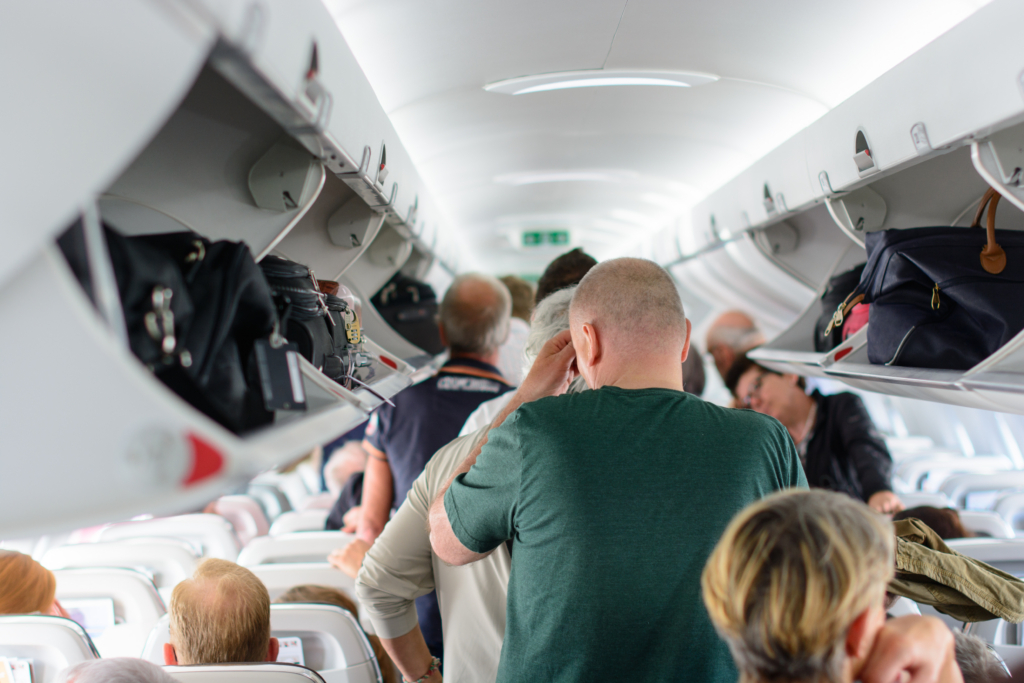
From an operational perspective, it’s not strictly illegal so long as the aircraft has stopped. Airlines require passengers to remain seated until the aircraft has come to a full stop at the gate for safety reasons. Regulators want airlines to enforce this rule.
The Turkish Directorate General of Civil Aviation announced last year that it would issue fines to passengers who stand before the aircraft has come to a complete stop, or who unfasten their seatbelts or open the overhead bins prematurely.
It’s safe to rise after the aircraft has stopped, but passengers should disembark in an orderly manner. From an etiquette perspective, passengers who stand up prematurely make others in the seats next to them uncomfortable. Air travellers should rather sit and wait for the rows in front of them to clear out.
Barefoot flyers
These passengers breach etiquette and basic hygiene. Taking your shoes off during the flight for comfort? Fair enough (if you’re wearing socks or slippers).
But flying with shoes off and bare feet on the bulkhead? Heck no. The “barefoot flyer” has become a recurring social media villain. While aircraft floors are cleaned, they remain high-traffic public spaces. Even fast-food restaurants enforce no-shoes-no-service policies. Bare feet belong at home (or on the beach during the holiday you’re flying to).
There is also a sub-category of these ankle-down nudists, “seat-back stretchers,” passengers who extend their bare feet between seat gaps and even further. No one wants a stranger’s toes peeping through their armrest.
No aviation regulation applies, but it’s a breach of civilised public behaviour that needs to stop.
Landing ovations
Call them the clappers or the cheer squad, some passengers spontaneously break into a round of applause when wheels touch down. In parts of Southern Europe and Latin America, applause upon landing remains common and is culturally ingrained. In other regions, it’s treated with ironic detachment, beffudlement and sometimes contempt.
@roemer_productions Which country surprised you the most? 😂 #plane #funny #game #friends #flight ♬ Funny video "Carmen Prelude" Arranging weakness(836530) – yo suzuki(akisai)
While it is an outdated habit, one can sympathise with the feelings behind it. The landing ovation survives because flying still feels faintly miraculous. While a safe landing is expected, everyone has a right to be grateful for the crew’s ability to pull it off. Besides, it may be truly heartfelt, especially if the flight experienced severe turbulence.
There may be no need to stop this behaviour at all, as it does no real harm. Those who find it odd need not clap.
Belt blockers and carousel crowders
This is another anxiety-related passenger behaviour. Belt blockers and carousel crowders stand pressed against the baggage belt, forming a defensive wall, as if their very lives depended on getting their bags out first. Of course, they ignore the many others whose bags may go through the conveyor first. No one behind these individuals can see their suitcase approaching or step forward to retrieve their bag without bumping shoulders.
Stepping back two feet from the belt makes the system faster for everyone. But there’s little reasoning with these eager individuals. This gentleman is next-level, though:
@ahmadmunir488 Welcome to Pakistan 😅
♬ original sound – Ahmad Munir
The proper flying etiquette is to be patient at baggage reclaim and to step back, leaving room for others to find their bags, too. And whatever else you do, don’t get on the carousel. It’s not a fun ride.
Other annoying airborne bugbears without official names
The internet has identified plenty more annoying passenger behaviours. While some don’t have official nicknames, we’ve allocated suitable monickers for these irritating behaviours.
- The seat-recline warrior deploys full recline at 30,000ft during a 90-minute hop. Woe betide the passenger seated behind them trying to use a laptop. This behaviour is the reason some airlines have installed pre-reclined (no recline) seats.
- The armrest conqueror claims both armrests in a narrowbody middle seat battle. Industry designers have sought clever ways to address this over the years, though the problem persists. Etiquette demands that each passenger use only one armrest at a time.
- The overhead bin hoarder boards early, stores their backpack, roller case, shopping bag or winter coat overhead, leaving little room for anyone else’s things. Some bin hoarders get craftier and use bins over seats that are at the front of the aeroplane when they are seated at the back. Not only is this behaviour inconsiderate, but it can also delay departure as cabin crew try to sort out whose items belong where.
- The aisle yoga practitioner performs full stretching routines mid-flight. Honestly, you can asana anywhere else.
Bugbears aren’t dangerous travel habits (mostly), but these are
None of the bugbears on our list is quite as hazardous to flight as two of the most persistent behaviours that repeatedly endanger passengers and crew:
- Bag-for-lifers: Individuals who would trade their bags for their lives and the lives of others. These travellers insist on getting their luggage off the plane during an evacuation, even when their aircraft may actually be on fire. The FAA recently asked airlines to emphasise to passengers just how dangerous this undesirable behaviour might be. Not only does luggage retrieval block the aisles when every second counts, but luggage may also damage the escape slides passengers will need to use to get off the plane quickly.
Honestly… I despair. Nothing is so important that you have to risk your, and others lives for. LEAVE your baggage and get off.
— Scott Bateman MBE (@scottiebateman) March 3, 2026
If it’s that important buy a small body bag for keys, passport, medication and money. Have it on you. Otherwise just GET OUT! pic.twitter.com/qafvo3Y4li
- Pub tourists: People who treat air travel as an extended pub tour, imbibing as much alcohol as they can in the lounge and bar at the airport and on the aircraft. These individuals are most likely to act out and become unruly in-flight, threatening crew and passengers. This often leads to unnecessary and expensive flight diversions, which wreck the travel plans of everyone else on the aeroplane. Airlines are penalising these passengers, including by pressing criminal charges, pursuing civil suits to recover the costs of their diversions, and banning flyers for life.
While we’ve given these two our own catchy labels, there’s really nothing amusing about them.
Flying etiquette is mostly common sense & safety requires cooperation
Aviation has always had etiquette friction. What’s changed is the speed at which behaviours become memes thanks to social media. Air travel today can be a paradox. While aircraft are quieter, passengers get louder. Many aeroplanes are now connected, but some passengers want to switch it all off.
Aircraft cabins are still confined public zones, and a narrowbody flying today at a 95% load factor is less forgiving of personal quirks than a Boeing 747 flying half-empty in the 1990s. As a result, minor irritations feel amplified.
But flyers need to remember that the basic rules of public behaviour also apply in the air. Aircraft are not your home away from home, even if airlines try to make passengers cosy.
Keep your headphones and shoes (or at least socks) on, and stand back at the gate and at the carousel. And if you must rawdog your next flight to prove your mettle, at least drink water occasionally for your own health and well-being.
More dangerous travel behaviours should be stemmed completely. Air travellers should keep in mind that flying is not a suitable environment for loss of control and drunken outbursts. While air travel is very safe, the few instances of aircraft accidents over the years have taught the industry a lot about how best to survive. Always follow crew instructions and leave your bags behind.
Featured Image: NINENII | stock.adobe.com
Sign up for our newsletter and get our latest content in your inbox.


More from


October 17, 20264 min read