


Drones and counter-UAS systems take centre stage at Poland’s MSPO 2026

4 min read

Poland’s MSPO defence exhibition has opened in Kielce with a strong focus on unmanned aircraft, counter-drone technology and new ways of pairing autonomous platforms with conventional combat aircraft.
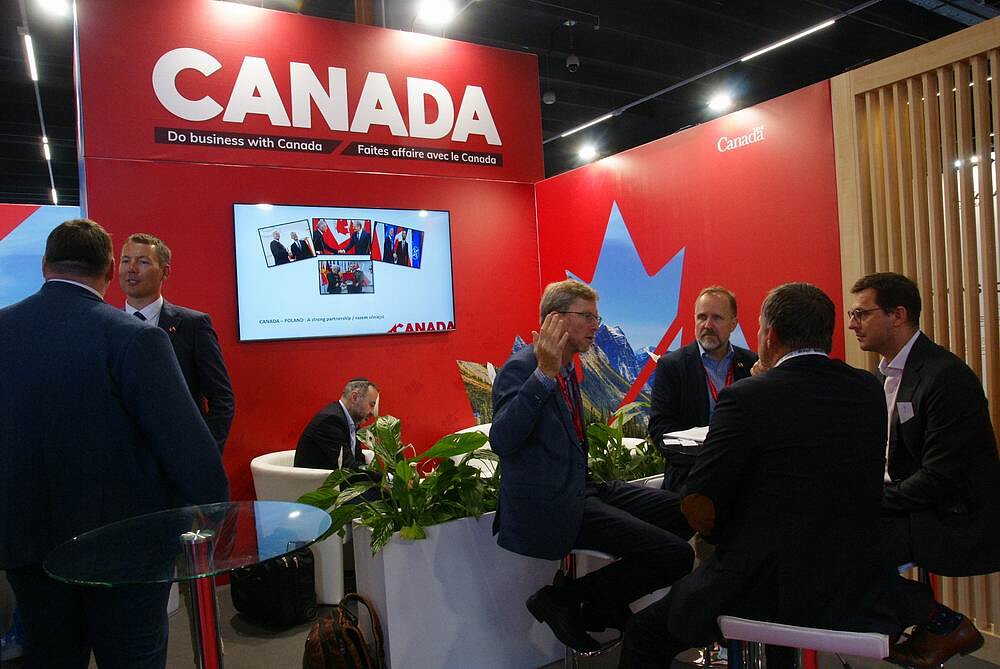
The 34th International Defence Industry Exhibition runs from September 8 to 11 at Targi Kielce. Organisers say exhibitors from 43 countries are taking part, with the available exhibition space fully booked. Canada is this year’s Lead Nation Partner, while Poland’s state-owned PGZ is the strategic industrial partner.
For the aerospace sector, the early days of the show have been dominated by drones and the systems designed to defeat them. New Polish unmanned aircraft have been unveiled alongside South Korean counter-UAS technology, while Anduril is using the show to pitch autonomous aircraft that could operate alongside Poland’s incoming F-35 fighters and AH-64E Apache helicopters.
Poland unveils new unmanned aircraft
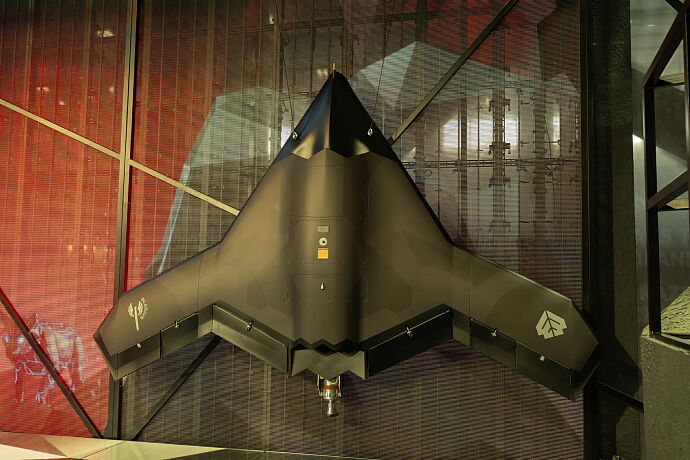
Poland’s WB Group is showing GLADIUS 2, a new jet-powered unmanned strike aircraft intended to extend the company’s existing GLADIUS family into longer-range missions. The programme is already linked to Polish military procurement and forms part of a wider WB architecture covering reconnaissance, communications, targeting and strike.
Another Polish company, FlyFocus, used MSPO to unveil TASACK, a 15 kg electrically powered loitering munition designed to reduce the amount of flying required from its operator.
Instead of manually steering the aircraft onto a target, the operator selects the target on a screen and TASACK handles the final approach. The company quotes a range of up to 110 km, a maximum speed of 300 km/h and endurance of up to 90 minutes. It can carry a 5 kg modular payload and is expected to be ready for production in the first quarter of 2027.
A different approach to the drone threat comes from Polish company Ala.com, which presented the Husaria A3. Rather than acting as the interceptor itself, the reusable unmanned aircraft carries smaller FPV interceptors closer to the area where hostile drones are expected.
The company says the A3 can remain airborne for more than 10 hours and carry four to six Pika A1 interceptor drones. It normally patrols at around 4,000 metres and can operate at altitudes up to 5,000 metres. The Pika A1 can reach 350 km/h but has an endurance of only eight minutes, so carrying it aboard the A3 avoids using much of its battery simply to climb and reach the target area.
One operator can control a six-aircraft group, with artificial intelligence allocating targets while the human operator retains authority to approve an engagement.
Anduril targets Poland’s F-35 and Apache fleets
US defence technology company Anduril is meanwhile offering Poland two larger autonomous aircraft designed to work with crewed combat platforms.
Brian Moran, Anduril’s vice-president for Europe, told Defense News at MSPO that the company is pitching its Fury collaborative combat aircraft to operate alongside Poland’s F-35s. Warsaw has ordered 32 F-35As.
“With Poland getting its F-35s, Fury is tailor-made to partner with an F-35 as a loyal wingman and as a force multiplier to keep men and women in uniform out of harm’s way,” Moran said.
Anduril is also discussing its Thunder autonomous rotorcraft with Polish officials. Thunder, unveiled at the Farnborough International Airshow in July, is being proposed as an unmanned partner for the AH-64E Apache.
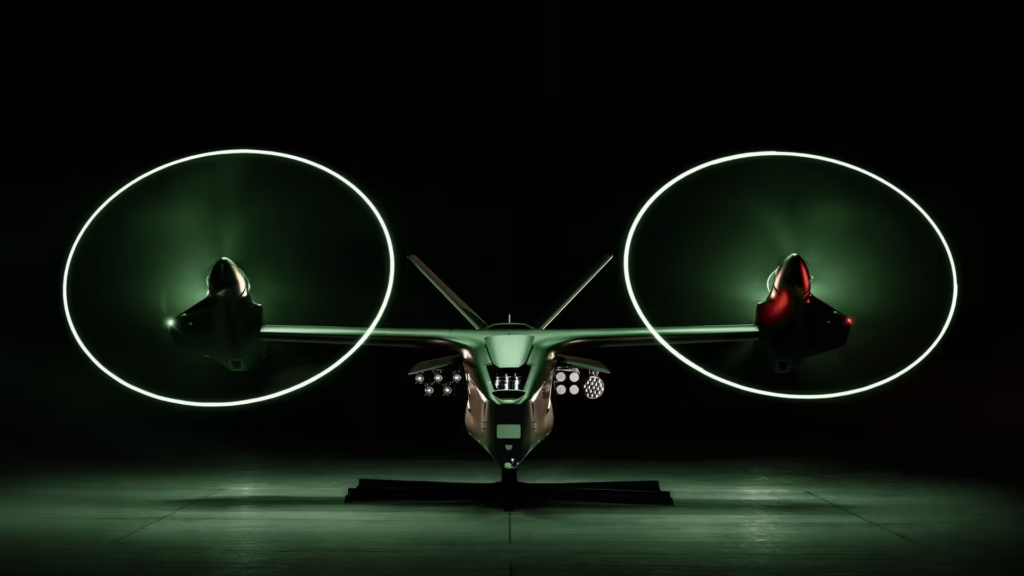
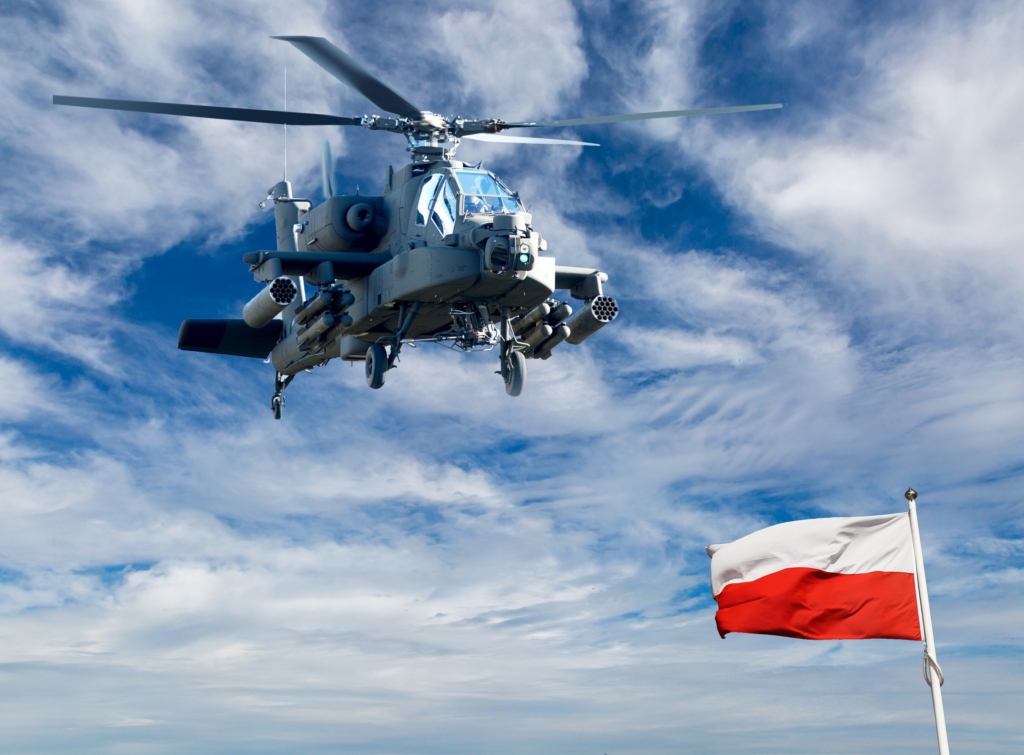
Poland has ordered 96 Apaches, with deliveries due to begin in 2028. Moran said Thunder could act as a “force multiplier” alongside the helicopters, particularly as Poland builds up the pilot cadre needed for such a large Apache fleet.
Anduril and PGZ are separately working on local assembly and production of the surface-launched Barracuda-500M cruise missile.
Counter-drone systems proliferate
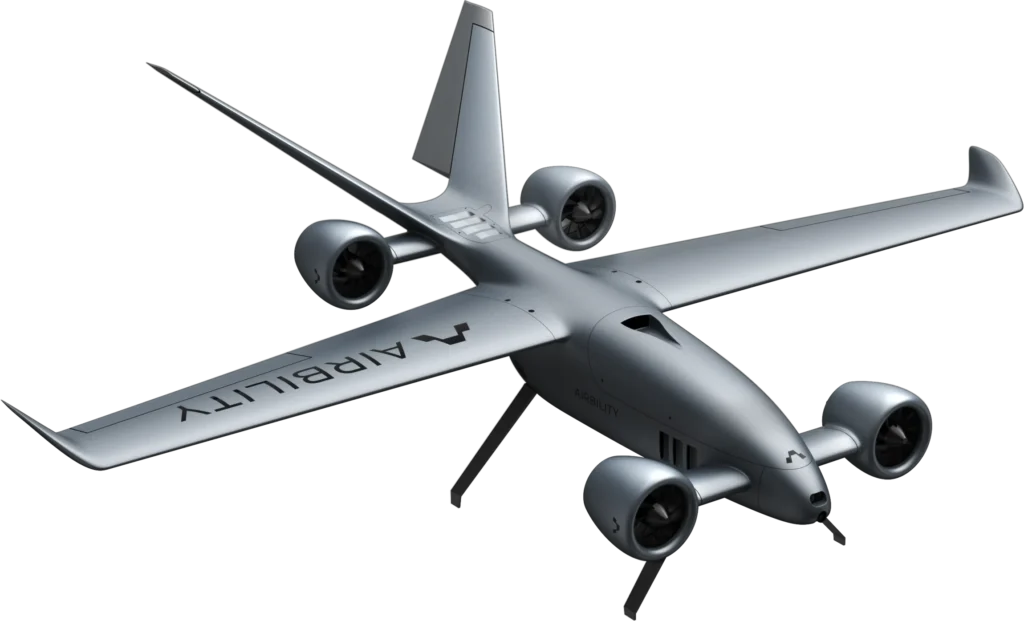
South Korea’s Airbility has brought another MSPO premiere with KAMD, a counter-UAS system designed to continue operating when satellite navigation is jammed or unavailable.
The system uses navigation technology based on simultaneous localisation and mapping together with inertial sensors.
Airbility is also displaying the ABAU10 interceptor, which captures drones with a net, and the larger ABA U60 for kinetic interceptions. Its AIRLOCK command-and-control system connects sensors and interceptors.
Hanwha Aerospace and Hanwha Systems are taking a broader layered approach. Their display includes the L-SAM long-range surface-to-air missile, H-SHORAD short-range system, H-Shield counter-drone system and interceptor drones. Hanwha is also showing laser weapons intended to destroy small UAVs.
Also, at the show, MBDA and Polish research institute WITU have announced that they are cooperating on COUNTER MASS INTERCEPTOR (CMI), a low-cost high volume solution to mass attacks of threats from one-way and ISR drones, helicopters and cruise missiles.
The CMI project reflects a wider movement in engineering towards developing affordable missiles that can be mass produced, narrowing the cost gap between drones and cruise-missile interceptors.
Initially unveiled at the Farnborough International Airshow in July 2026, CMI is a supersonic missile capable of engaging threats at ranges and altitudes of over 6km, employing field proven technologies from both MBDA and WITU. The two organisations are already working to rapidly innovate and trial CMI towards launching an initial firing campaign in 2027.
MBDA is also highlighting its CAMM family at Kielce. The company says the missile family is designed to counter complex airborne threats on land and at sea.


