ISRO’s “Naughty Boy” rocket launches India’s first geosynchronous imaging satellite

5 min read
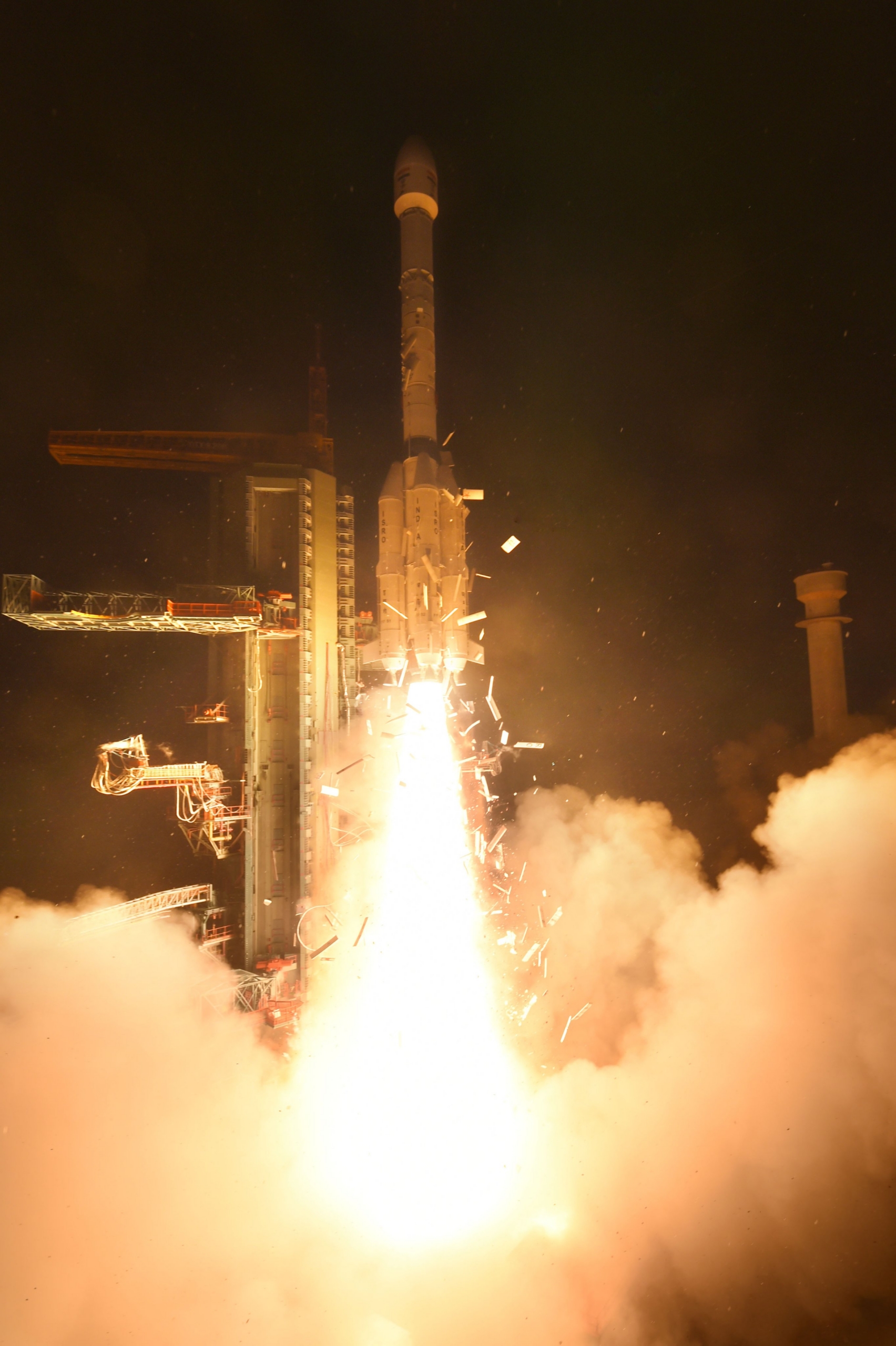
Once dubbed ISRO’s “Naughty Boy” after a series of early setbacks, India’s Geosynchronous Satellite Launch Vehicle (GSLV) has delivered one of its most significant missions yet.
On 4 September, the rocket successfully launched EOS-05, India’s first imaging satellite designed to operate from geosynchronous orbit, aboard the GSLV-F17. The mission gave the Indian Space Research Organisation (ISRO) its first successful launch of 2026 after two recent mission setbacks.
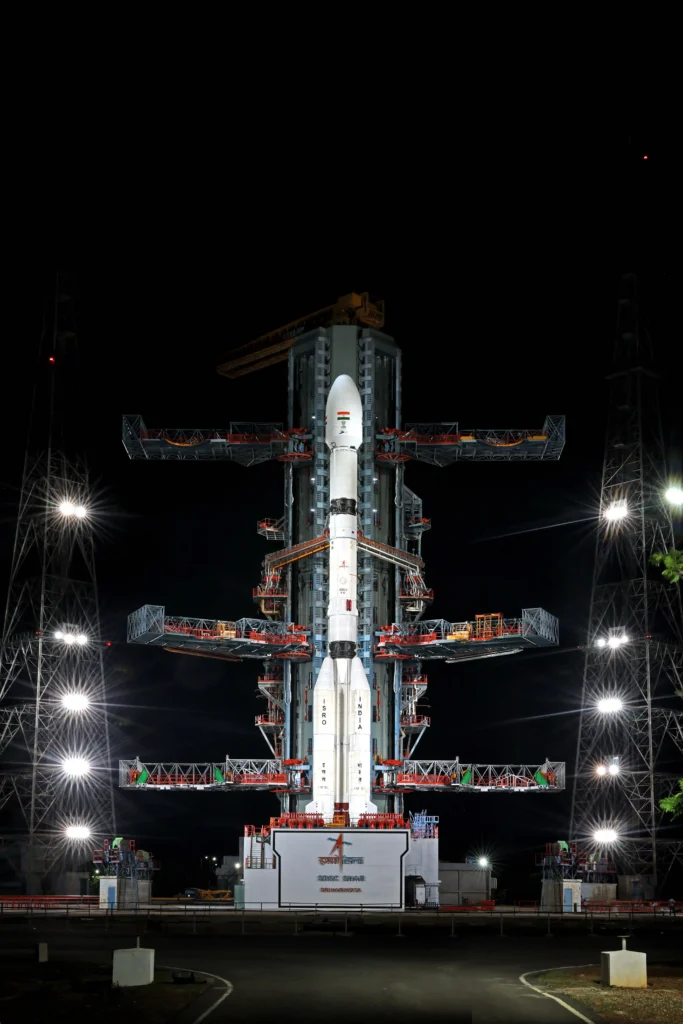
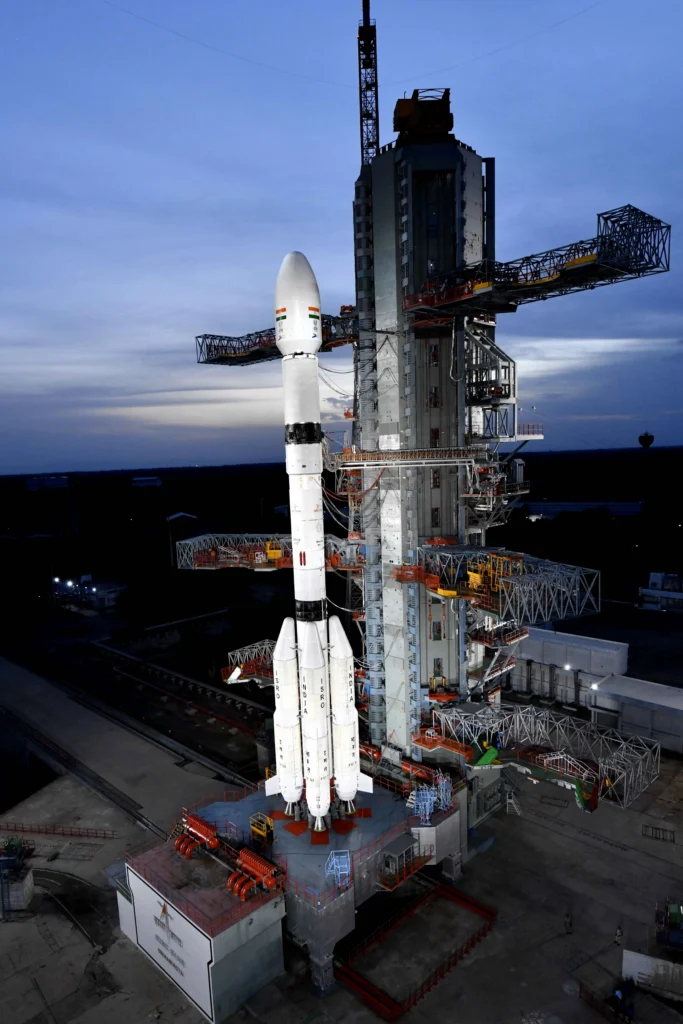
The three-stage GSLV lifted off from the Second Launch Pad at the Satish Dhawan Space Centre in Sriharikota at 2:55am local time.
Around 18 minutes later, the 2,367kg EOS-05 separated into its intended sub-geosynchronous transfer orbit. It was the 19th flight of the GSLV and the heaviest satellite yet carried by the launcher.
Why was ISRO’s GSLV nicknamed “Naughty Boy”?
For a rocket that acquired the unflattering nickname “Naughty Boy” during its difficult early years, the flight carried some extra significance. GSLV has suffered failures during its development, including the loss of the EOS-03 mission in 2021, but Friday’s flight put its indigenous cryogenic upper stage through another successful mission.
“I am very happy to announce that the GSLV-F17 vehicle has successfully and precisely injected the advanced EOS-05 geo-imaging satellite in the intended and required orbit,” ISRO chairman V Narayanan said after the launch.
EOS-05 will give India a different view of Earth
EOS-05 is not intended to remain in the orbit where GSLV-F17 left it. Over the coming days, the satellite will use its own propulsion system to raise its orbit until it reaches its operational position in geosynchronous orbit, roughly 36,000km above Earth.
That altitude is central to what the mission is designed to do.
Most Earth observation satellites operate in low Earth orbit, passing over different parts of the planet as they circle it. A spacecraft in geosynchronous orbit has an orbital period matching the Earth’s rotation, allowing it to maintain a continuous view of the same broad geographical region.
For EOS-05, that means being able to image large areas at frequent intervals instead of waiting for successive satellite passes. The spacecraft is intended to provide real-time or near-real-time imagery for applications including agriculture and disaster management, as well as monitoring cyclones, cloudbursts and thunderstorms.
Mission Director Thomas Kurien said EOS-05 had been configured for near-real-time imaging, while Project Director Imteyaz Ahamad said the spacecraft has multi-band capabilities.“It is a complex satellite in terms of configuration, content and capability,” Ahamad said.
Initial telemetry showed the satellite was healthy following separation and its solar array had deployed successfully.
Narayanan said EOS-05 has an assured lifetime of seven years, although he expects it to remain operational beyond that.
“We will take it to the required orbit using the propulsion system of the satellite, and the assured lifetime of the satellite is seven years. I am confident it will work for more than nine years,” he said.
GSLV launches its heaviest satellite yet
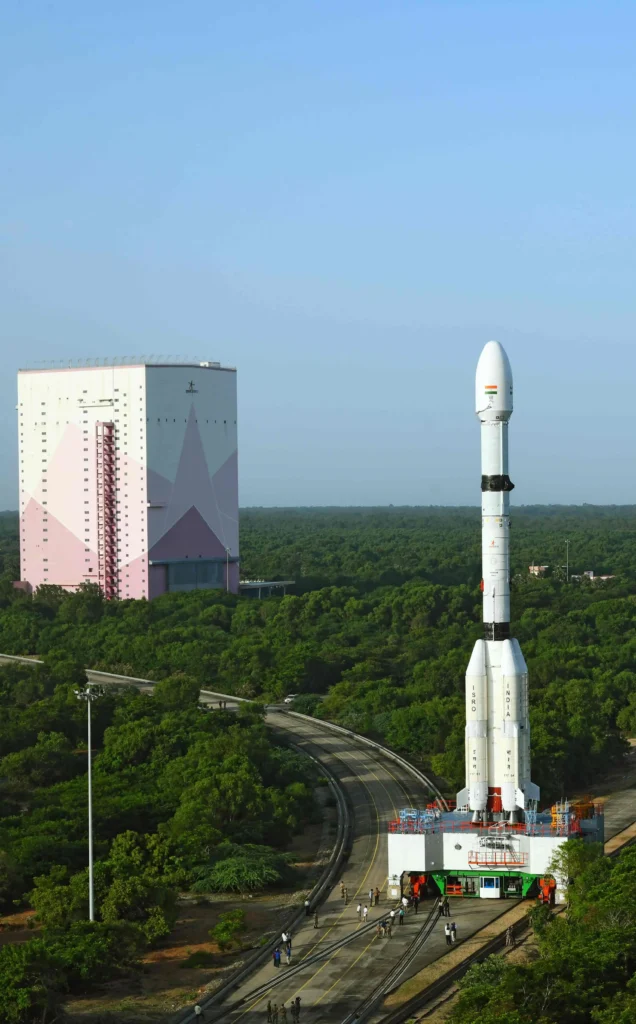
GSLV-F17 stands 51.7 metres tall and had a lift-off mass of 420.5 tonnes. Its first stage consists of a solid core with four liquid strap-on motors, followed by a liquid second stage. The third stage is the CUS15 cryogenic upper stage, fuelled by liquid hydrogen and liquid oxygen. The rocket carried a four-metre composite payload fairing.
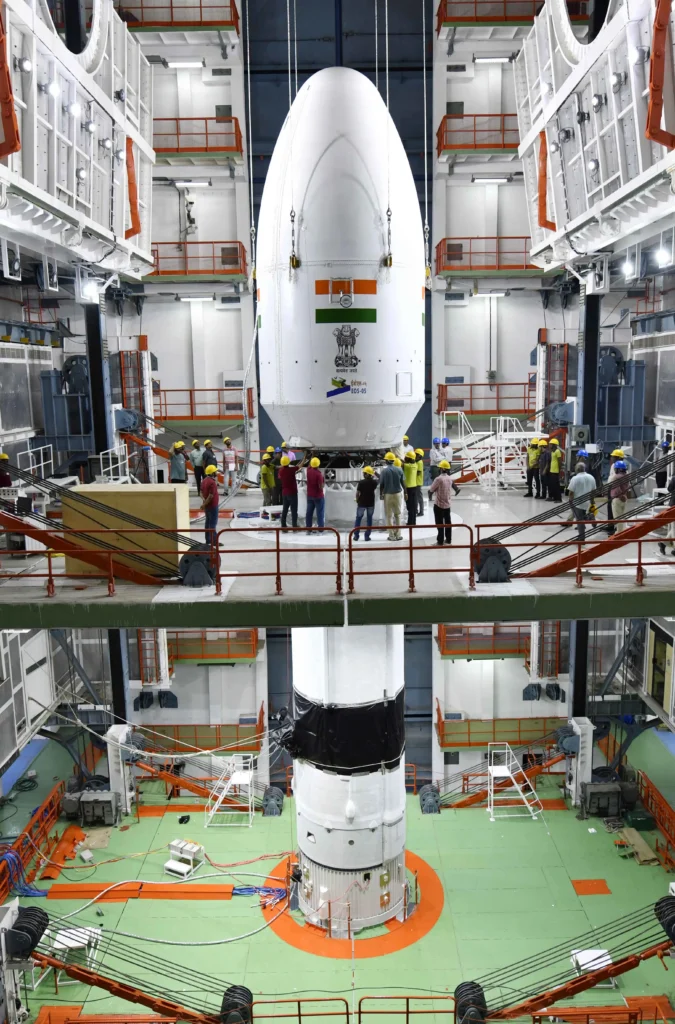
Friday’s mission also showed how much additional performance ISRO has extracted from the GSLV since its first flight.
Narayanan recalled that the first GSLV carried a 1,536kg payload. ISRO subsequently reduced structural mass and improved the propulsion system as the launcher evolved.
“Today, we have injected the heaviest satellite, a 2,367-kg satellite, using this launch vehicle,” he said.
The rocket also performed better than predicted on the EOS-05 mission. Narayanan said the planned injection apogee was just under 30,000km, while the vehicle achieved approximately 31,000km. The satellite will complete the climb to its operational orbit using its onboard propulsion.
GSLV returns to a mission lost five years ago
There is a direct link between Friday’s success and one of GSLV’s more recent failures.
In August 2021, GSLV-F10 launched EOS-03, another Earth observation satellite intended for operation from geostationary orbit. The mission failed after an anomaly prevented the cryogenic upper stage from functioning as planned. ISRO’s analysis of the flight subsequently traced the failure to the cryogenic stage.
EOS-05 effectively returns ISRO to the type of Earth observation mission it was unable to complete with EOS-03.
The GSLV’s problems go back further. Failures during its early development, particularly as India worked to master cryogenic propulsion, helped earn the launcher its “Naughty Boy” nickname. The programme has since matured, with Friday’s mission adding another successful flight for the indigenous cryogenic upper stage.
ISRO was also looking to recover from a setback much closer to home.
On January 12, its PSLV-C62 mission carrying 16 satellites failed to place them into their intended orbits after encountering an anomaly in the launcher’s third stage.
The EOS-05 mission therefore ends a gap of nearly eight months since ISRO’s previous launch and gives the agency its first successful mission of the year.
ISRO targets first uncrewed Gaganyaan mission in 2026
The launch also came with a fresh indication of the timetable for Gaganyaan, India’s human spaceflight programme.
Speaking after the EOS-05 mission, Narayanan said ISRO is working towards launching the first uncrewed Gaganyaan flight before the end of 2026. Preparations were progressing “vigorously and systematically”, he said.
ISRO plans to conduct three uncrewed missions before moving to crewed flights. Narayanan said around 8,000 tests had already been completed for Gaganyaan, where the qualification of the human-rated launch vehicle, spacecraft and associated systems is being driven by the requirement to protect the crew.
The first uncrewed flight will allow ISRO to test the spacecraft and human-rated systems without astronauts aboard before progressing towards an Indian crewed orbital mission.
Gaganyaan is only part of the immediate launch schedule. Narayanan said ISRO is targeting six more launches during the current financial year, including the NVS-03 navigation satellite.
For an agency coming off two failed missions, the work begins again almost immediately.
“Reward for hard work is more work,” Narayanan said after EOS-05 reached orbit.
Sign up for our newsletter and get our latest content in your inbox.


More from


October 17, 20264 min read