“Good thing I saw Air Crash Investigation”: Passenger tells how he grabbed controls during flydubai dive

8 min read
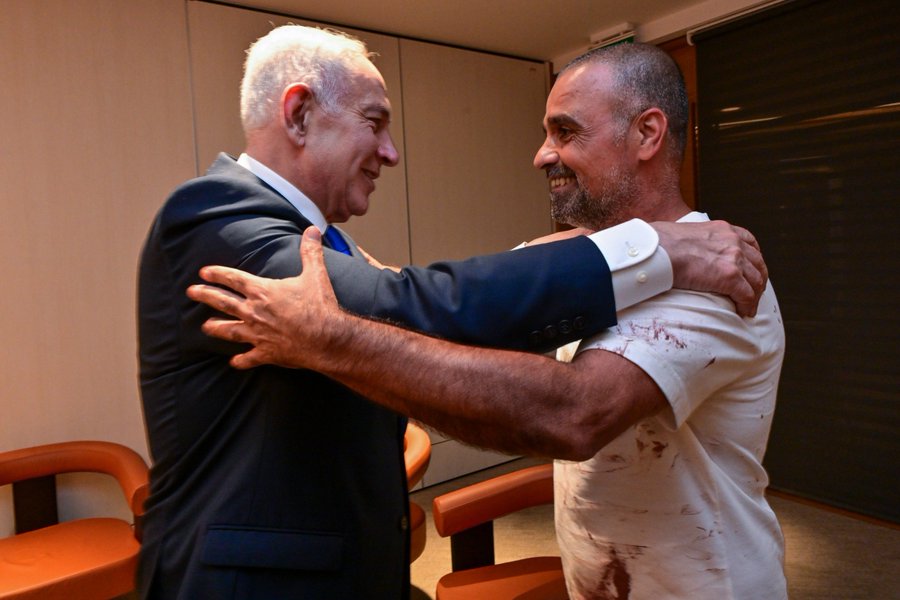
For years, Yaniv Hayoun had watched Mayday, the television series known in many countries as Air Crash Investigation, reconstruct what happens when an aircraft is in trouble. He could hardly have imagined that one day some of what he had seen on television would come back to him inside the cockpit of a plunging Boeing 737 MAX 8.
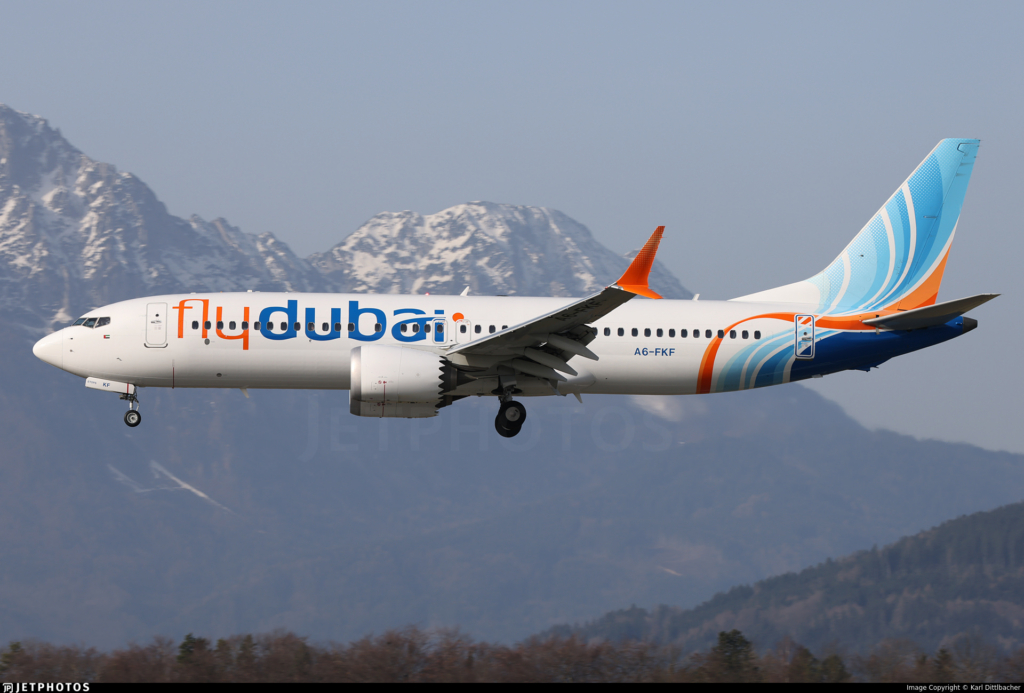
With no flying licence and no hidden aviation career, Hayoun was among the passengers who rushed forward as flydubai Flight FZ1073 descended violently during a cockpit attack on September 30. After helping pull the alleged attacker away from the controls, he found the aircraft still pointing downwards and grabbed the controls himself.
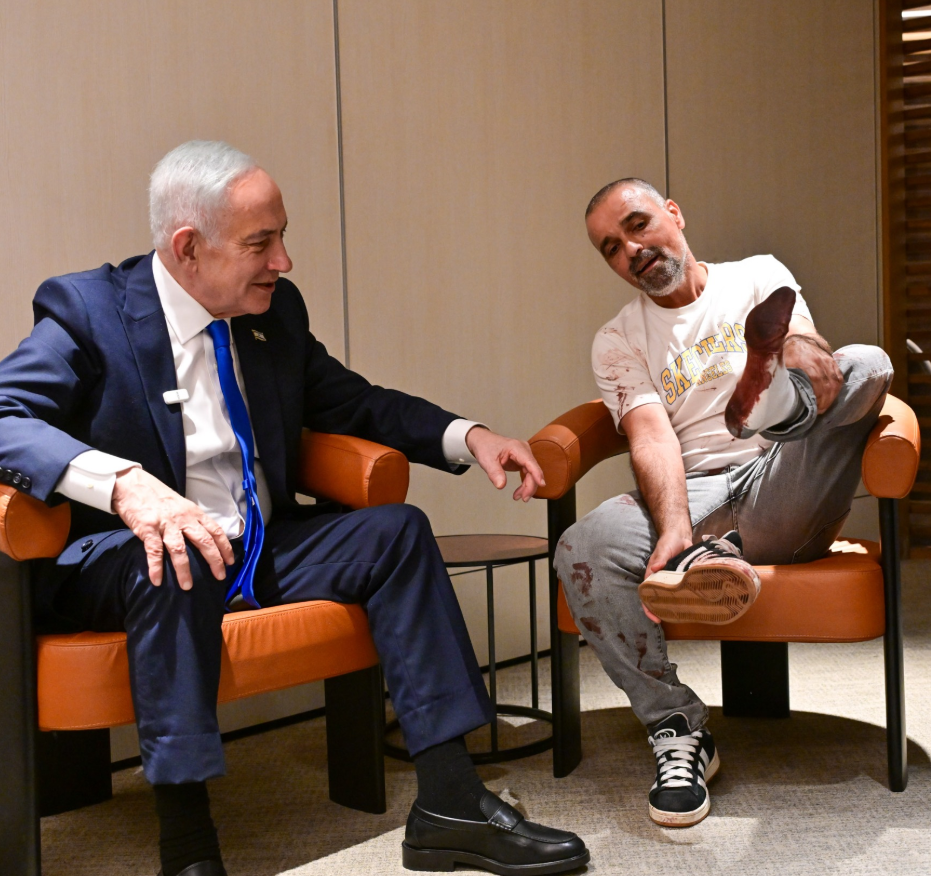
“I jumped back in there…started pulling the controls,” Hayoun later told Israeli Prime Minister Benjamin Netanyahu, who met the passengers at the at Ben Gurion International Airport in Tel Aviv.
And Amit Segal, a chief political analyst for Israel’s N12 News network, wrote on his X account: “The hero of the FlyDubai attack Yaniv said, I pulled back on the controls and stopped the plane’s dive. Good thing I watched ‘Air Crash Investigation.'”
Sitting right behind business class, Hayoun’s intervention lasted only until trained crew could take over. Two off-duty flydubai pilots travelling aboard the aircraft subsequently assumed control and landed at Tabuk in Saudi Arabia. But the few minutes in between have produced an extraordinary story not only of the people aboard FZ1073, but of the aircraft itself.
The 737 MAX 8 had lost nearly 14,000ft in less than 30 seconds during the crisis, according to Flightradar24, and images after landing showed that much of its rudder had been torn away. Yet the aircraft remained controllable and made it safely onto the ground.
“Suddenly the aircraft started to fall down, like, a massive turbulence, like a massive G force, for 20 or 30 seconds,” passenger Almog Italie was quoted by the Associated Press.
Injured captain opens the cockpit door
At the centre of the story is Captain Smit Machchhar, the Indian pilot who was seriously injured in the cockpit.
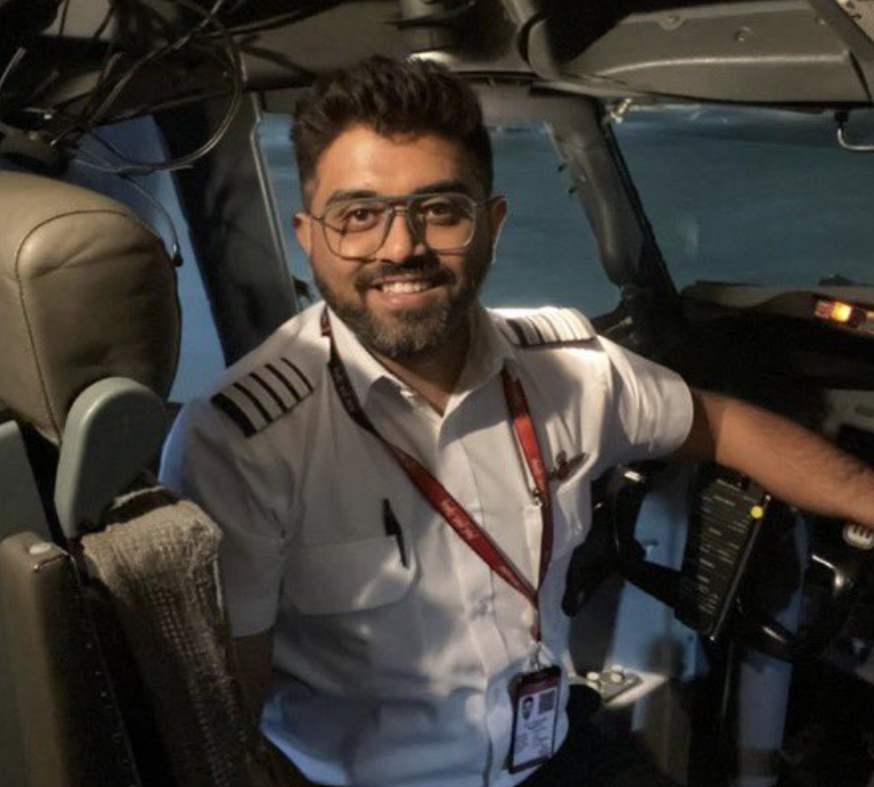
According to Israeli officials, Machchhar was stabbed by his co-pilot, who then apparently attempted to crash the aircraft. Despite his injuries, Machchhar fought back and managed to release the cockpit door, giving passengers and other crew access to the flight deck. Saudi authorities subsequently detained the other pilot. The motive remains under investigation.
Flydubai has confirmed an altercation on the flight deck, but has not endorsed all the accounts that have subsequently emerged about motive. The airline has urged against speculation while authorities investigate what happened.
What happened after the cockpit door opened is better documented
Hayoun and other passengers rushed in. He said he pulled the alleged attacker away from the controls and others helped restrain him. With the aircraft still descending, Hayoun says he returned to the controls and pulled back. He said the aircraft began levelling before qualified crew took over.
What the flight data shows
Away from the extraordinary accounts from inside the cabin, the tracking data provides a stark picture of what the aircraft went through.
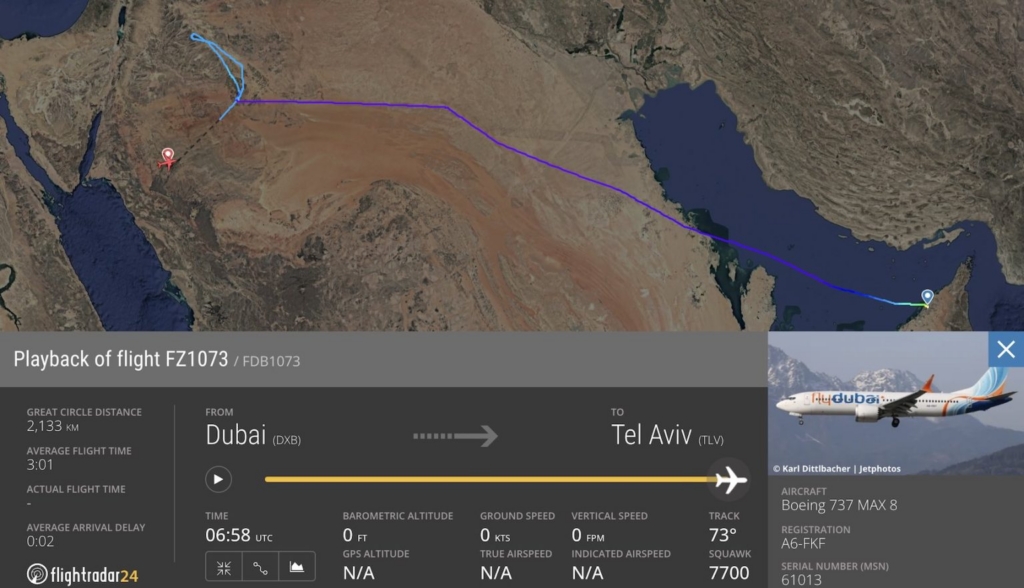
FZ1073 left Dubai at 03:05 UTC and climbed to 34,000ft, according to Flightradar24. At 05:21 UTC, it began a steep descent, followed by a sharp climb and another descent. By 05:33, it had settled at around 15,000ft.
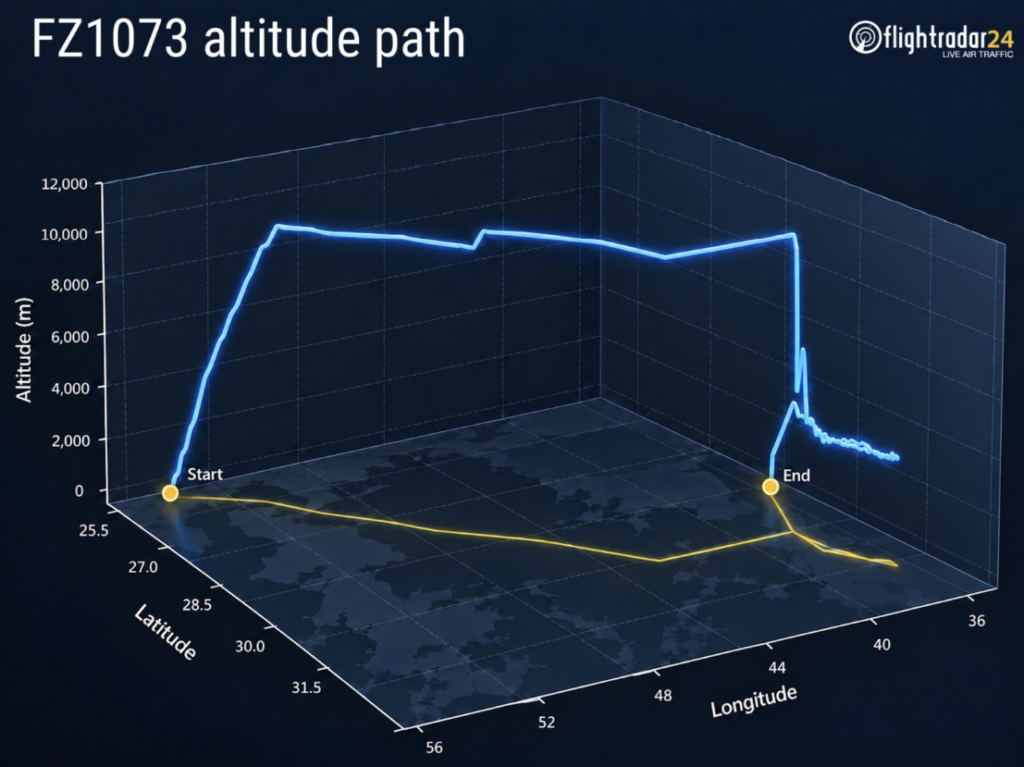
The flight data showed the aircraft lost nearly 14,000ft in less than 30 seconds. The aircraft subsequently transmitted the emergency code 7700 and then 7500, the internationally recognised transponder code for unlawful interference. It later returned to 7700 before landing at Tabuk.
The tracking data alone cannot establish what control inputs were being made in the cockpit or precisely what aerodynamic loads the aircraft experienced. But the damage visible after landing shows how serious the event became.
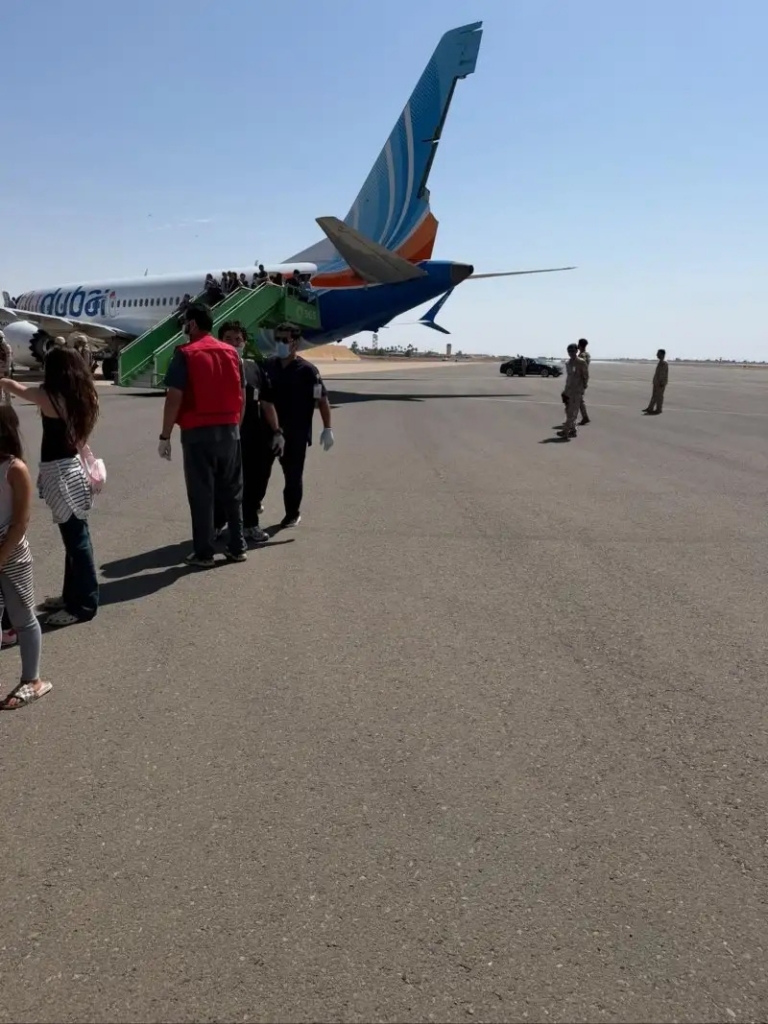
Photographs showed a large section of the rudder missing.
What does a rudder actually do?
The rudder is the movable vertical control surface at the back of an aircraft’s tail. Move it one way and the aircraft’s nose yaws, or turns, to one side; move it the other way and the nose yaws in the opposite direction.
Pilots use it alongside the aircraft’s other flight controls to keep the aircraft coordinated and stable, particularly when dealing with crosswinds, an engine failure or other situations that create an imbalance around the vertical axis. It is not, however, the control that normally makes an aircraft climb or descend. That job primarily belongs to the elevators on the horizontal tail.
That distinction helps explain how a 737 can remain flyable despite losing part of its rudder. The loss does not mean the aircraft suddenly has no pitch or roll control. But it reduces yaw authority and can make maintaining directional control considerably more demanding, particularly during an approach and landing.
Exactly why FZ1073’s rudder was damaged has not yet been established by an aviation authority. Images show the damage, but investigators have yet to determine its cause.
Former United Airlines pilot and aviation safety expert Steve Arroyo told the Associated Press that the forces involved appeared severe.
“That was a serious descent and strong aerodynamic forces on that rudder for that to happen,” he said, adding that he was amazed the aircraft had remained intact.
Former NTSB and FAA accident investigator Jeff Guzzetti pointed to another crucial factor: altitude. He said the aircraft might not have been able to recover had the descent continued below 10,000ft. “It is remarkable they were able to pull out of that dive. What saved them is there was enough altitude left for them to recover,” Guzzetti said.
How fast was the 737 going?
Retired US Navy F/A-18 pilot Matthew “Whiz” Buckley has added another dimension to the discussion.
Speaking to Fox News, Buckley estimated that the aircraft exceeded its maximum operating speed by “at least 100 knots” during the plunge. One hundred knots is about 115mph, or 185km/h.
That is Buckley’s assessment rather than a finding from the investigation, and it should be treated as such. Flightradar24 has released granular ADS-B data covering altitude, ground speed and reported vertical rate, but an aircraft’s ground speed is not the same measurement as the indicated airspeed used for its operating speed limits.
It is therefore too early to state as fact that FZ1073 exceeded the 737 MAX’s certified operating limit by exactly 100 knots, or that overspeed caused the rudder damage.
What can be said is that the descent was exceptionally rapid and that the aircraft emerged from it with significant tail damage. That makes the condition of the aircraft after landing an important part of the investigation.
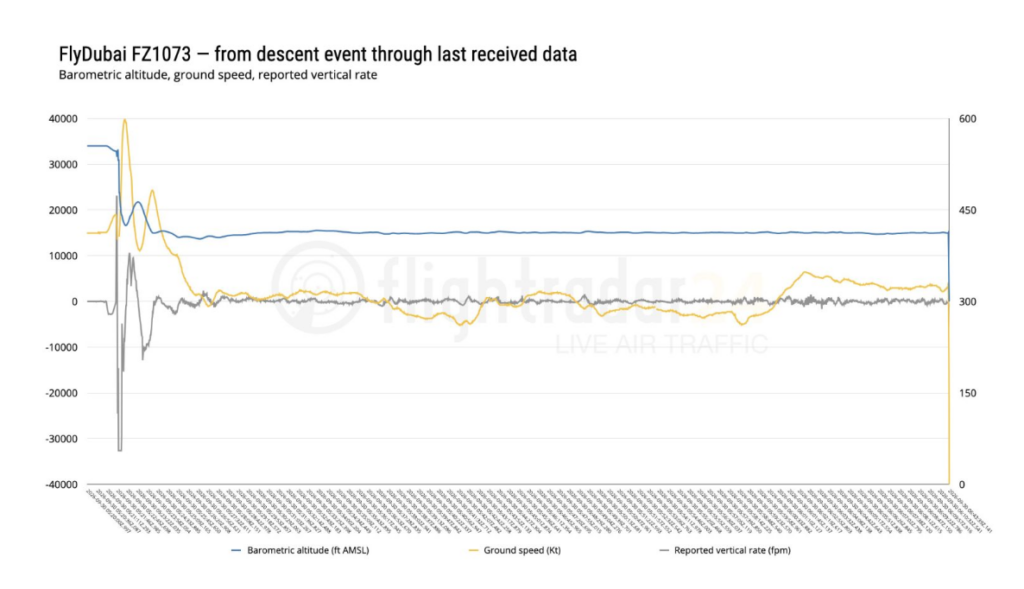
A Boeing put through an extraordinary event
The aircraft involved was a Boeing 737 MAX 8, the most widely operated member of the current 737 MAX family.
Commercial airliners are designed with structural margins and must meet certification requirements covering manoeuvres, gusts and other loads that can occur in service. But those requirements should not be confused with an aircraft being designed to tolerate any possible speed, load or control input.
FZ1073 appears to have been subjected to circumstances far outside an ordinary airline flight. The fact that it remained controllable after the descent and with substantial rudder damage will inevitably attract attention to the resilience of the airframe. But until investigators establish the actual speeds, aerodynamic loads, control inputs and mechanism behind the rudder damage, it would be premature to turn the incident into a definitive claim about the MAX’s structural strength.
AGN could find no public statement from Boeing specifically addressing the condition of the FZ1073 airframe or the rudder damage at the time of publication.
The aircraft’s survival has also drawn praise from US President Donald Trump, who subsequently highlighted the 737 MAX’s ability to withstand forces and strain beyond what it had been designed to encounter, while praising Boeing and chief executive Kelly Ortberg. Trump had earlier described the violent descent to reporters in the Oval Office, saying the aircraft was travelling at a speed it was never designed to reach.
“Congratulations to the GREAT Boeing Company for producing a plane, the 737 Max, that was able to withstand G Forces and Strain far beyond what it was designed and expected to do. It was an amazing show of precise and powerful structural planning and design. It is about time that The Boeing Company, which builds, by far, the finest commercial airliners in the sky, was given credit for this airplane’s incredible “genius!” To Kelly Ortberg, and all of his officers and associates at Boeing, congratulations on a job well done!!!”
‘We’re going to die’
For the people aboard, none of those engineering questions existed in the moment.
Associated Press reported how passenger Naama Bershadski recalled closing her eyes and thinking, “We’re going to die.” Another passenger described roughly 20 to 30 seconds of violent motion and heavy forces as the aircraft fell.
At the front of the aircraft, the response came from an unlikely collection of people.
There was Machchhar, badly injured but still able to help open the way into the cockpit. There was Hayoun, who helped overpower the alleged attacker and then briefly did something no airline passenger expects ever to do: pull on the controls of an airliner in flight. A dentist aboard, Dr Shota Musaev, helped treat the wounded captain. And there were the off-duty flydubai pilots who ultimately took control of the damaged jet and brought it safely into Tabuk.
Flydubai’s own statement gives those pilots an important piece of the credit. The airline said the aircraft was “successfully secured by on-duty flydubai crew travelling on the flight,” who diverted it and landed safely at Tabuk. All passengers and crew were accounted for.