Inside the F-104 ‘wind tunnel in the sky’ accelerating hypersonic testing

4 min read
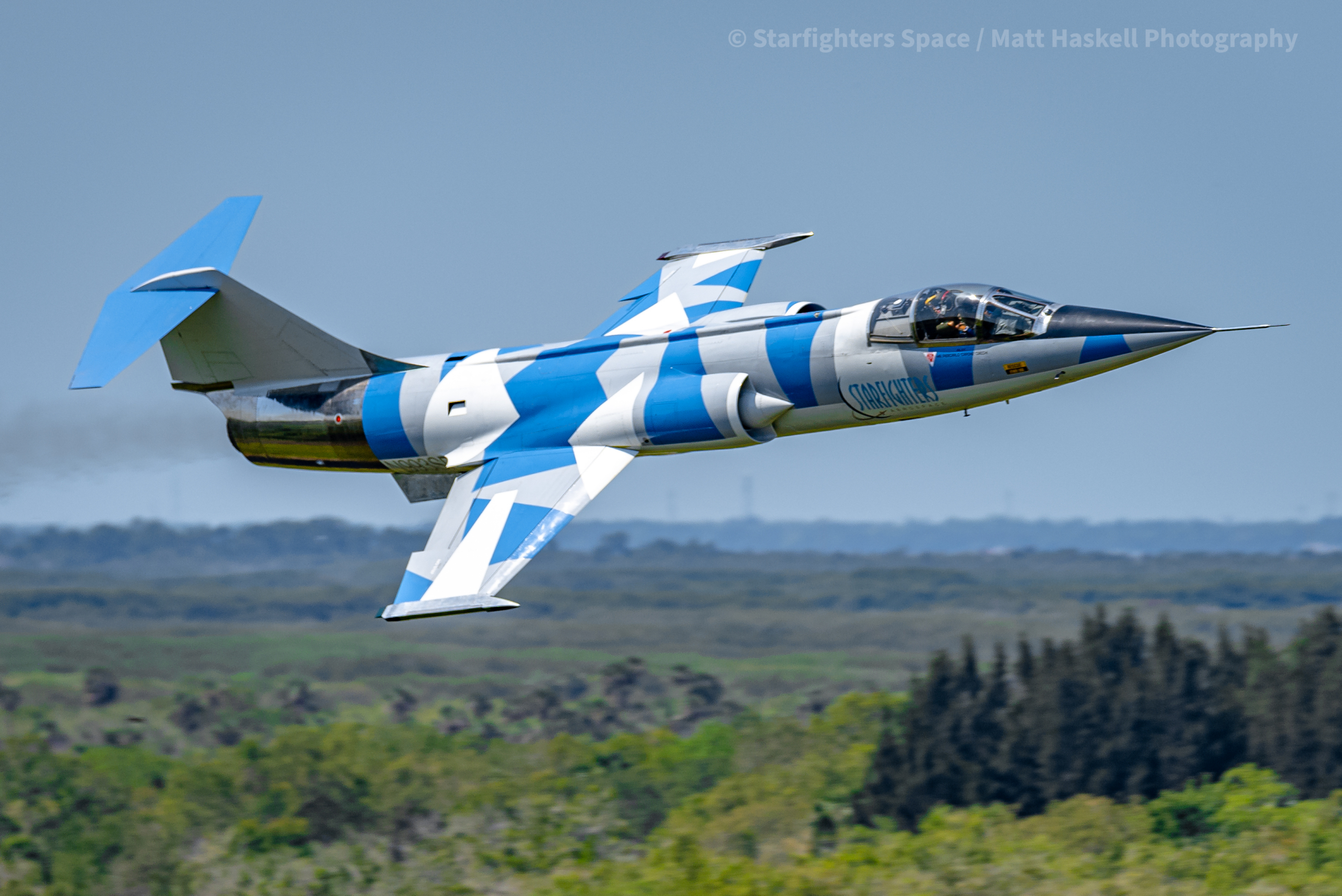
Starfighters Space is turning its fleet of Cold War-era F-104s into flying laboratories capable of giving hypersonic hardware minutes rather than seconds in a real-world supersonic airflow.
The company has developed a modular underwing test platform that can carry full-size components at speeds of up to Mach 2.2, offering aerospace and defence developers an alternative to heavily booked ground facilities.
It has already attracted potential work from Florida-based propulsion specialist Vaya Defense & Space. Under an agreement announced on September 9, the companies will evaluate flying Vaya hypersonic test articles and other payloads aboard the “Wind Tunnel in the Sky”.
Speaking exclusively to Aerospace Global News, Starfighters Space CEO Tim Franta explained exactly what an aerial wind tunnel is, and why the industry so badly needs it.
Supersonic wind tunnel waits reach 18 months
Although Starfighters has long carried research equipment aboard its aircraft, Franta said Wind Tunnel in the Sky was created in response to a growing shortage of supersonic test capacity.
“I was just inundated, whether it was at the National Space Symposium or with customers, with the national shortage of time in supersonic wind tunnels,” he explained.
“Right now, if you need a supersonic wind tunnel, you probably have a year-to-18-month wait. They’re extremely expensive, and you pretty much need to use them for the whole week and use their whole menu of services.”
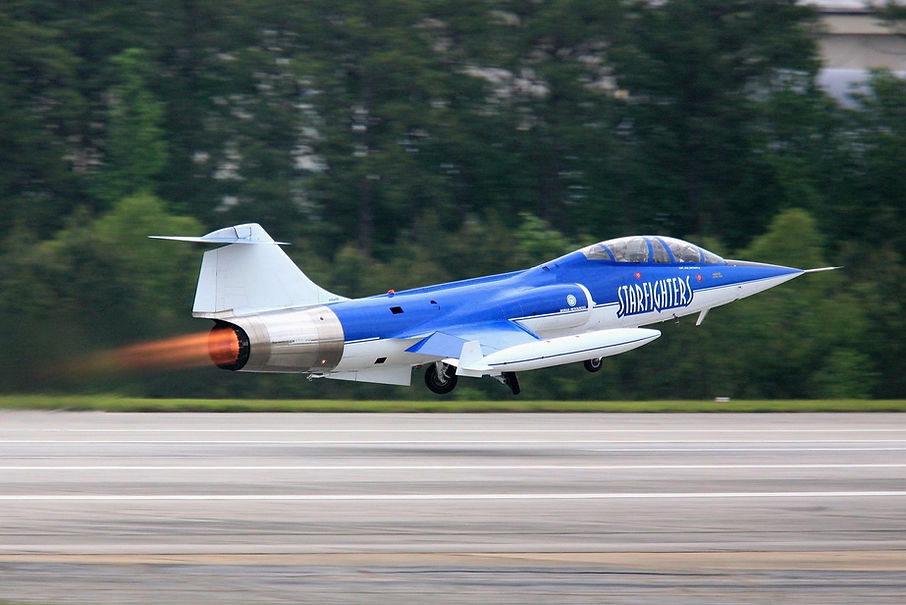
The alternative developed by Starfighters resembles a missile carried beneath an F-104’s wing. Its four modular sections allow customers to install different types of experimental hardware without modifying the aircraft itself.
A radio-transparent nose can house avionics, telemetry, communications equipment and cameras. Further sections can accommodate air inlets, control surfaces, wings, flaps and advanced materials, while the rear can be used to evaluate tail fins or ignition systems.
The platform is flown from an existing F-104 pylon already approved for supersonic operation.
Five minutes of testing in ‘real air’
Franta said a conventional supersonic wind-tunnel run might expose an article to the required conditions for between 30 seconds and one minute. An F-104 flight can provide more than five minutes, while Starfighters says some missions could offer a Mach 2 test window of up to 10 minutes.
“You get 10 to 20 times more time in one flight than you can on your first wind-tunnel test,” Franta said.
“You’re actually in the real airflow. It has real humidity, real bugs, different temperatures and pressures. You get real-world data as opposed to the extremely sterile world of wind tunnels.”
The system currently carries five standard sensors, including instruments measuring temperature, pressure and position, but customers can add their own equipment and receive data in real time.
Starfighters could also operate as many as three sorties in one day, allowing engineers to adjust hardware or software between flights.
“They can actually do tweaks between flights,” Franta explained. “That’s very expensive to do at a wind tunnel. With us, we just go flying. The air is always there, and we have the speed.”
F-104 can carry full-size test hardware
The aircraft can carry approximately 1,100 lb of equipment exposed to the airflow. Unlike a conventional wind tunnel, which may require a scale model, Starfighters can potentially fly a complete production-size component.
“If it’s small enough, you can go one-to-one,” Franta said. “Even if you fly it at half-size, that’s one-to-two, which gives you much more data.”
Safety restrictions mean the platform cannot carry explosives or radioactive material. Fuel cannot be ignited beneath the aircraft, although ignition systems can be activated.

That capability was demonstrated during three supersonic captive-carry flights conducted for GE Aerospace in August 2025. The F-104 carried the company’s ATLAS solid-fuel ramjet test vehicle, with its igniters activated during flight.
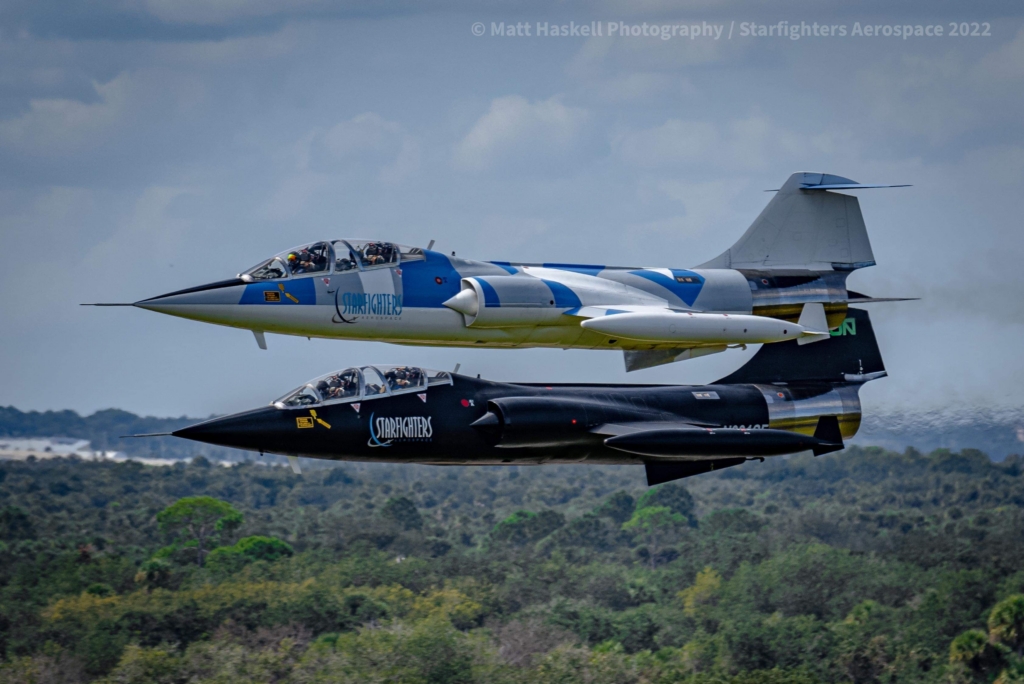
Starfighters has identified two aircraft for the new service: a single-seat F-104S offering the highest performance and a two-seat model able to carry a flight-test engineer.
Operating from NASA’s Kennedy Space Center places the aircraft inside the Eastern Range from takeoff, allowing defence customers to connect experimental systems directly to range telemetry.
“We’re right at the area where it gets very interesting,” Franta said. “Mach 2 is where you really start to see the problems and advantages of going really fast.”
Sign up for our newsletter and get our latest content in your inbox.


More from


October 17, 20264 min read