China launches four rockets in 45 hours as mega constellation race accelerates

6 min read
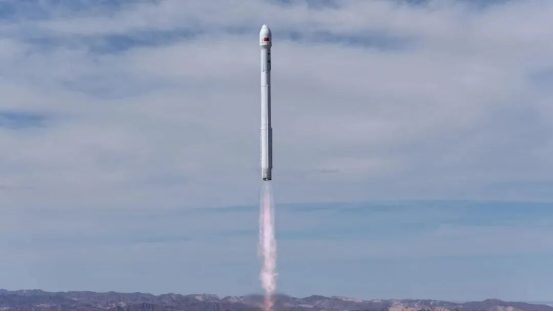
China launched four different orbital rockets in less than 45 hours, using a mix of state-owned and commercial launch vehicles as the country steps up deployment of its huge low Earth orbit broadband constellations.
The launches between 15-17 September involved LandSpace’s Zhuque-2E, Orienspace’s Gravity-1, a Long March 12 and a Kuaizhou-11. They flew from three locations, including a sea-based launch platform off China’s east coast.
Two of the missions carried satellites for Qianfan and SatNet, the two large broadband networks under construction in China. Together, the constellations are planned to eventually comprise about 28,000 satellites.
The four missions also offered a glimpse of the launch capacity China is assembling to put those spacecraft into orbit. Commercial launch companies operated alongside the country’s established state space groups, while rockets flew from inland bases, the southern island of Hainan and an offshore platform.
LandSpace begins the launch run with 10 Qianfan satellites
The sequence began at 14:26 Beijing time on 15 September, when LandSpace launched a Zhuque-2E Y7 from the Dongfeng commercial space innovation pilot zone in northwest China.
The methane-fuelled rocket carried 10 satellites belonging to Qianfan’s 19th polar-orbit group. China’s National Space Administration said the spacecraft successfully entered their planned orbits.
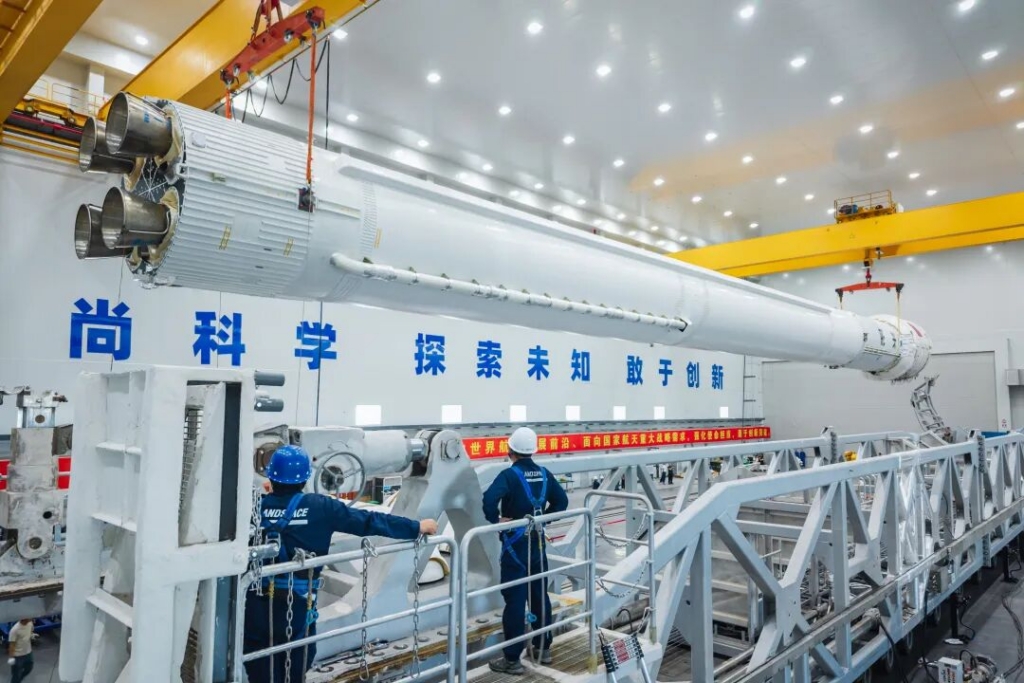
LandSpace said it was the ninth flight of the Zhuque-2 family and the first time the rocket had been used for a large-scale satellite internet constellation deployment.
The Zhuque-2E burns liquid methane and liquid oxygen. LandSpace is moving the vehicle towards routine commercial operations while developing its larger Zhuque-3 reusable rocket.
The Qianfan mission was significant for another reason. China has traditionally relied heavily on the state-owned Long March family for major satellite launches. The September flight showed a privately developed rocket taking on a batch deployment for one of the country’s biggest planned satellite networks.
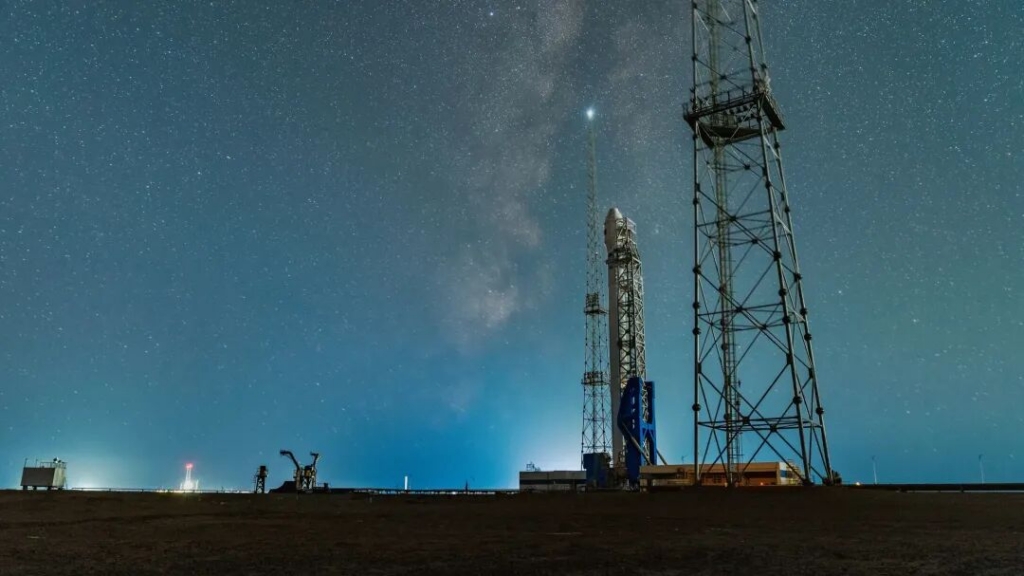
Qianfan, also known as Thousand Sails or Spacesail, is planned to eventually comprise about 15,000 satellites. The network is intended to provide broadband connectivity from low Earth orbit.
The scale of that plan puts pressure not only on satellite manufacturing but also on launch availability. Thousands of spacecraft will have to be placed into orbit, often in batches, if the constellation is to approach its planned size.
Gravity-1 follows from a sea platform
Less than 16 hours after the Zhuque-2E mission, another Chinese commercial launcher was in flight.
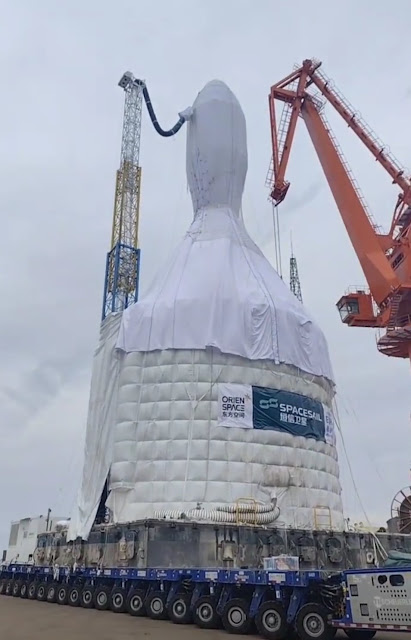
Orienspace launched its Gravity-1 Y3 at 06:00 Beijing time on September 16 from a mobile sea platform off the coast of Shanghai.
The solid-fuel rocket carried nine spacecraft: eight Qianfan satellites and an Enhanced Ultra High Throughput, or EUHT, technology test satellite. All nine reached their planned orbits, according to Chinese state media.
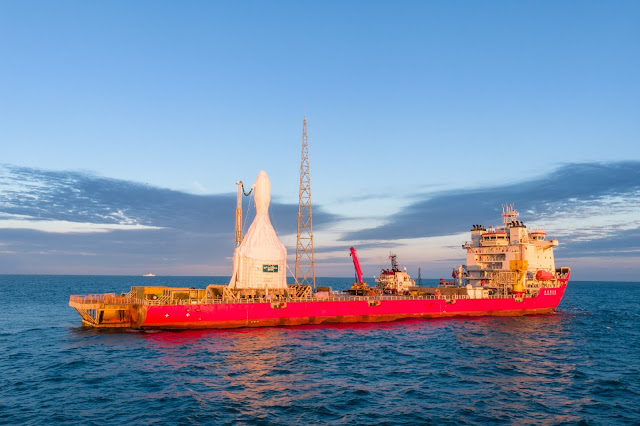
The mission carried more than three tonnes of payload to an orbit about 800 km above Earth, according to a Beijing government account, which said the flight set Chinese records for payload mass and orbital altitude for a single sea launch.
Gravity-1 gives China another route for launching large batches of satellites without relying solely on established land-based spaceports.
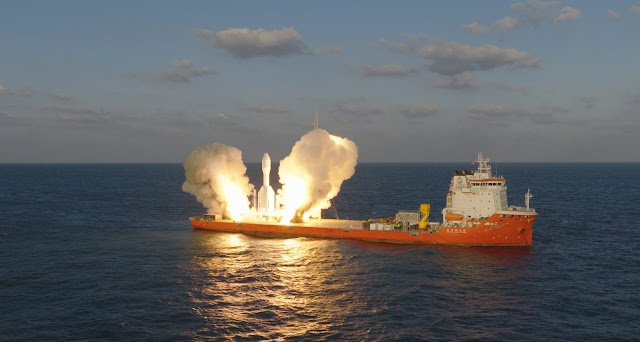
The vehicle is also markedly different from the Zhuque-2E. Gravity-1 uses solid propulsion and operates from an offshore platform, while Zhuque-2E is a liquid methane and oxygen rocket launched from land.
Orienspace is working towards a regular launch service as demand grows from constellation operators.
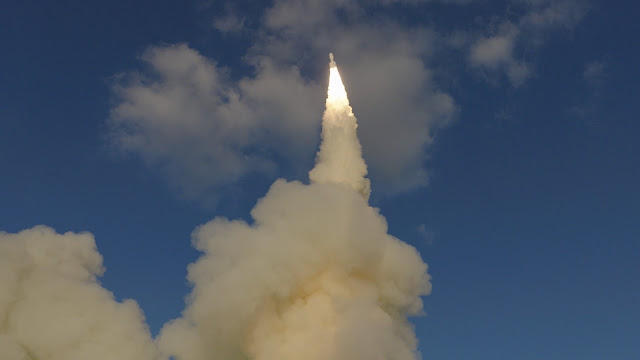
The two commercial missions within hours of each other demonstrated how China’s private launch industry is beginning to move beyond test flights and smaller payloads towards the large-scale deployment work needed for satellite constellations.
Long March 12 adds satellites to SatNet
China’s state-owned launch industry joined the sequence early on 17 September.
A Long March 12 lifted off from the Hainan commercial spacecraft launch site at 08:32 Beijing time, carrying nine spacecraft for another Chinese low Earth orbit satellite internet network.
China Aerospace Science and Technology Corporation, or CASC, said the satellites successfully entered their designated orbit. The flight was the 667th launch involving a Long March rocket.
The satellites were part of China’s SatNet programme, a state-backed broadband network planned on a scale of about 13,000 spacecraft.
Long March 12 is one of the newer additions to China’s launcher fleet. The approximately 62-metre rocket is China’s first four-metre-diameter, single-core launch vehicle and is designed to carry at least six tonnes into a 700 km sun-synchronous orbit.
Its design also allows different payload fairings to be used for single or multiple satellite missions, making the rocket suited to the growing demand for constellation deployments.
The launch showed the other side of China’s broadband build-up. While commercial companies are becoming increasingly prominent, the country’s established state space industry remains central to putting large numbers of spacecraft into orbit.
Qianfan and SatNet are being developed separately, but their planned scale illustrates the size of China’s ambitions in low Earth orbit. Current plans envisage roughly 15,000 spacecraft for Qianfan and about 13,000 for SatNet.
Fourth launch closes a 45-hour run
China launched again just over two hours after the Long March 12 mission.
A Kuaizhou-11 Y3 lifted off from the Jiuquan Satellite Launch Center at 10:40 Beijing time on September 17 carrying the Tianyi-51 and Tianyi-52 satellites.
The two spacecraft entered their planned orbits successfully, according to Xinhua.
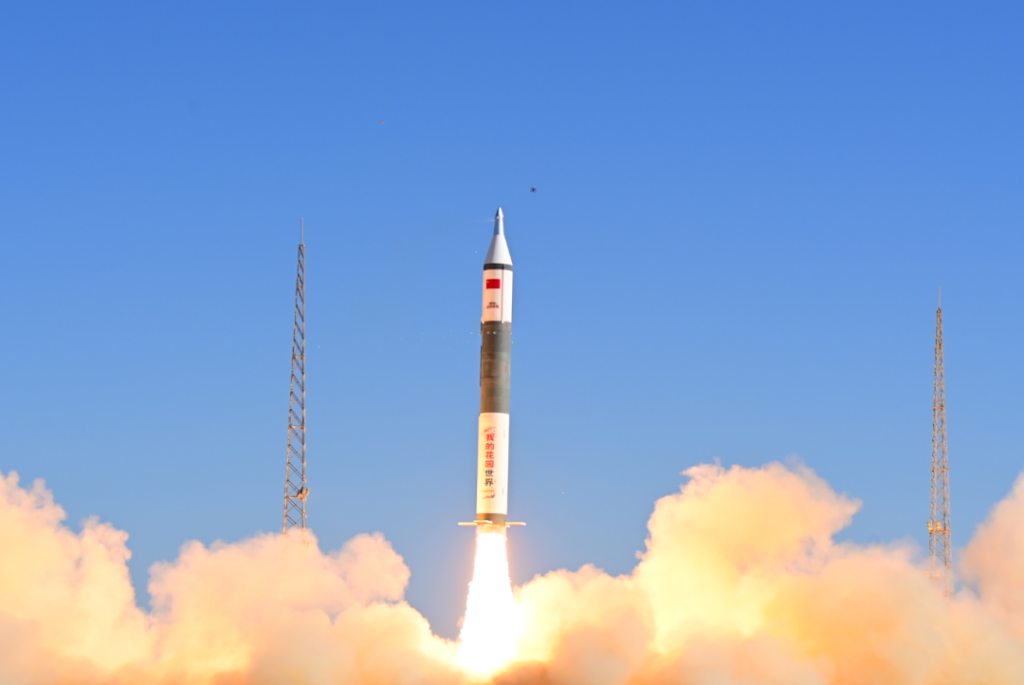
Unlike the preceding missions, the Kuaizhou-11 flight was not deploying spacecraft for either Qianfan or SatNet. Tianyi-51 and Tianyi-52 are commercial synthetic aperture radar satellites intended to conduct interferometric SAR observations.
Kuaizhou-11 is operated by Expace, which is linked to the state-owned China Aerospace Science and Industry Corporation, or CASIC.
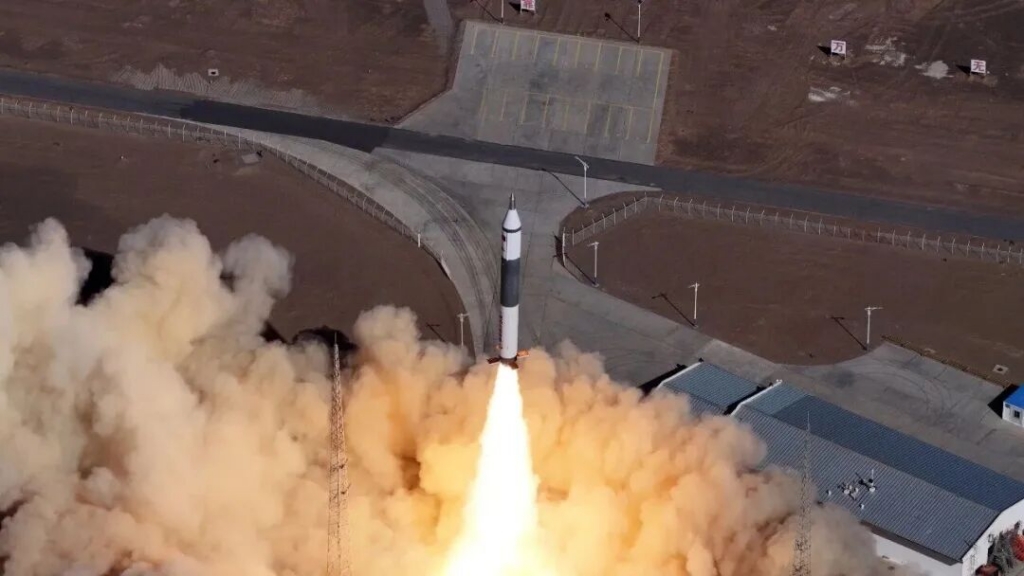
The flight was the seventh launch of a Kuaizhou-11 and the 40th mission involving China’s wider Kuaizhou rocket family.
From the Zhuque-2E liftoff on the afternoon of September 15 to the Kuaizhou-11 mission on the morning of September 17, China carried out four successful orbital launches in about 44 hours.
Launch capacity becomes critical as constellation deployments grow
None of the four rockets attempted to recover their first stage, but China is pursuing reusable launch systems alongside the expansion of its expendable fleet.
LandSpace is developing Zhuque-3 around first-stage recovery and reuse, while CASC and several other Chinese launch developers are pursuing reusable vehicles.
The technology could become increasingly important as Qianfan and SatNet move deeper into deployment.
China faces the same basic challenge confronting any operator planning a megaconstellation: producing satellites in large numbers is only one part of the equation. Enough rockets must also be available to carry them into orbit at the required pace.
The September launch run showed how China is broadening that capacity rather than relying on a single rocket family or launch site.
Sign up for our newsletter and get our latest content in your inbox.


More from


October 13, 202612 min read