


Airlines could save $44bn a year by cutting just 11 minutes from aircraft turnarounds

4 min read
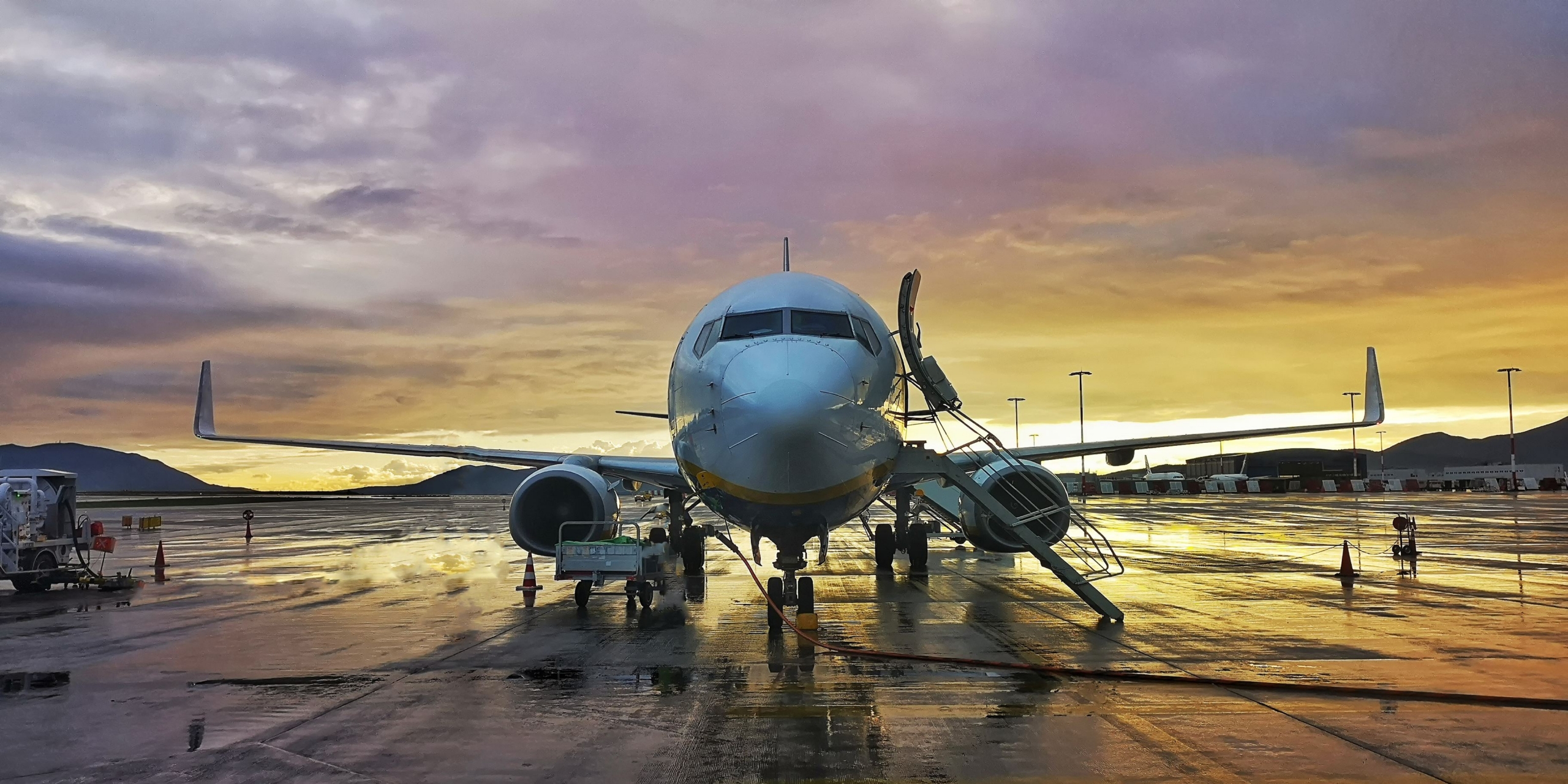
Airlines could cut costs and ease pressure on congested airports by improving aircraft turnaround performance, with the potential savings estimated at up to $44bn annually, according to a new industry report.
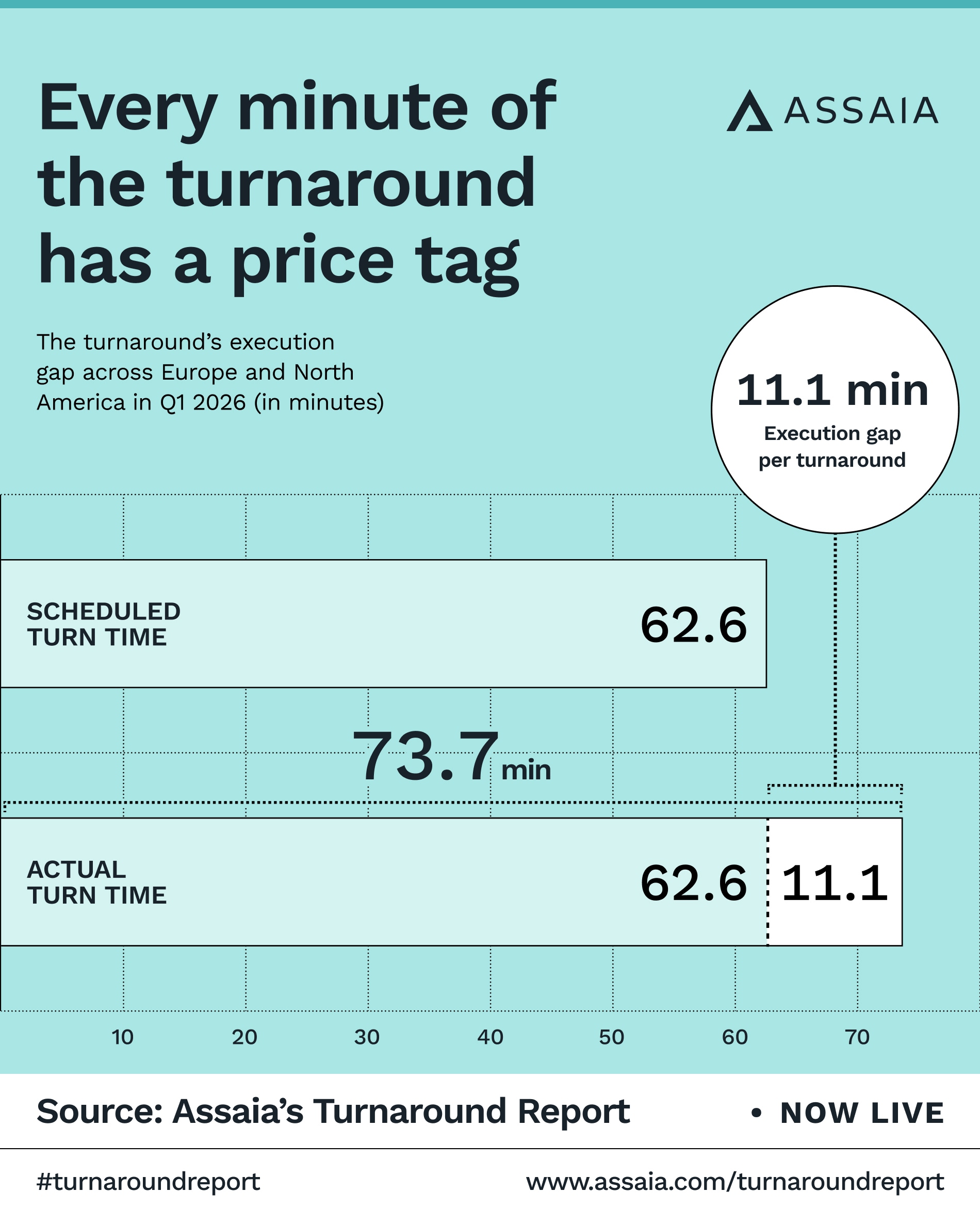
Analysis by aviation technology company Assaia found that aircraft in Europe and North America spent an average of 11.1 minutes longer on the ground than scheduled in the first quarter of 2026.
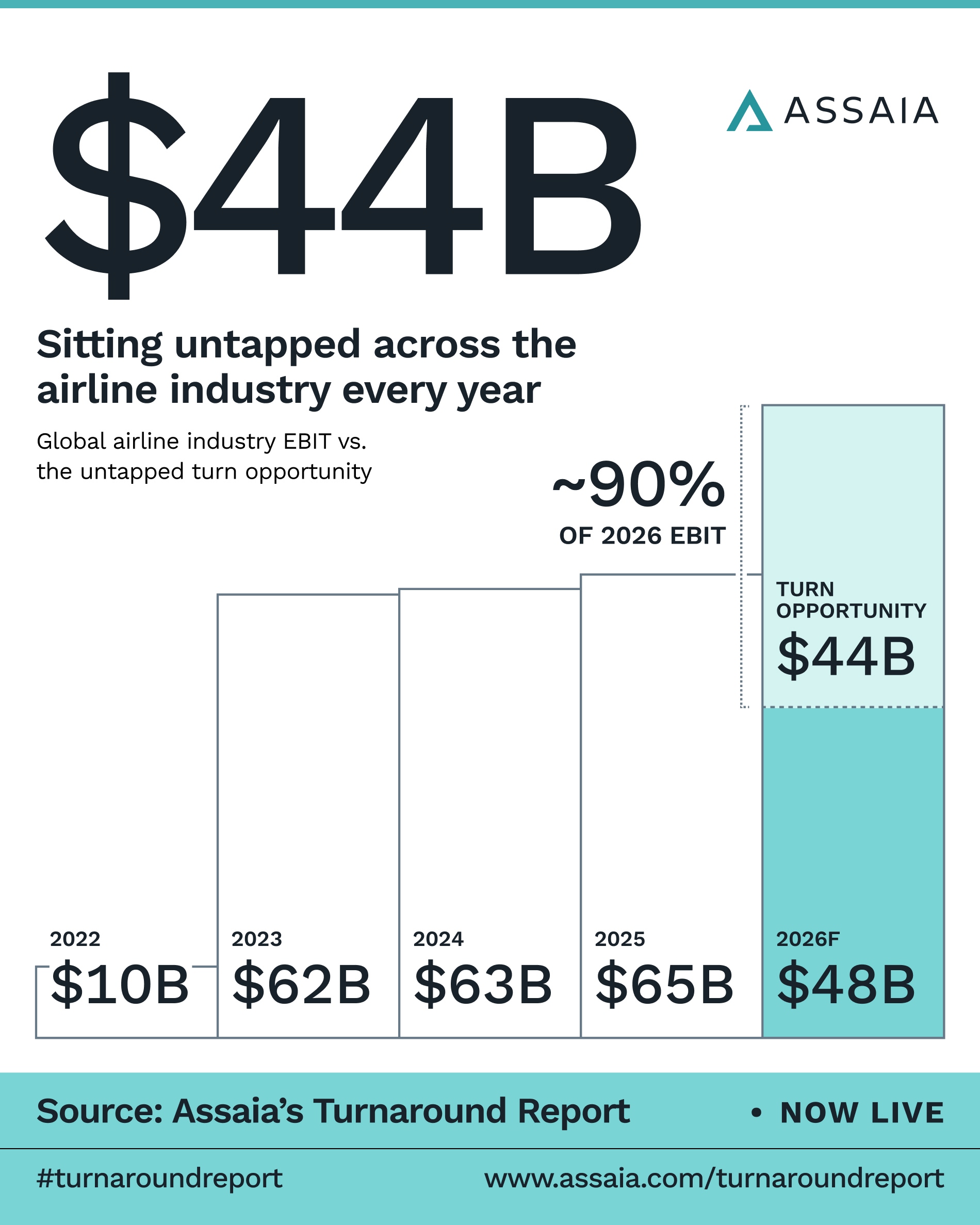
Assaia estimates that eliminating this delay across the approximately 40 million annual flights would offer the opportunity to save nearly 90% of the global airline industry’s forecast operating profit for 2026.
The calculation uses an estimated cost of $100 for each minute of delay, with an 11-minute overrun across those flights adding up to $44 billion.
Aircraft turnaround delays put pressure on airline costs
The report focuses on the period between an aircraft arriving at its stand and departing for its next flight, during which multiple ground operations must be completed. These include passenger disembarking the aircraft, cleaning of the cabin, re-fuelling, re-catering, processing of hold baggage and then re-boarding.
Assaia analysed more than 750,000 turnarounds across Europe and North America to investigate why some operations finish close to schedule while others overrun by more than 20 minutes.
The company’s findings show that small setbacks throughout the day can accumulate, eventually leading to a delayed departure.
The report found little difference between the best- and worst-performing turnarounds during their first 12 minutes.
Delays then build across individual ground-handling activities, with baggage loading taking substantially longer on poorly performing turns.
“During the servicing of the turnaround, no single task collapses,” the report says. “Catering gives up two and a half minutes, fueling two, unloading one and a half (small slips that stack into a late turn).”
How small delays turn into a big overrun
The final stages of the turnaround add to any delays that have already built up, Assaia said.
For the worst-performing turnarounds, closing the cargo door and retracting the passenger boarding bridge takes longer than in operations completed on time.
In slot-constrained airports, if the aircraft misses its off-blocks time, the resulting delay can be much bigger than the sum of the delayed parts of the turnaround.
Late departures go on to disrupt subsequent rotations, increase crew and passenger disruption costs, and reduce the time aircraft spend generating revenue, the report added.
Ground delays place extra demand on airport stand capacity
The report also identifies implications for airport infrastructure. Assaia estimates that turnaround overruns occupy around 6% of available stand capacity, equivalent to approximately 55 minutes of an average stand’s operating day.
At an airport with 100 gates, the company calculates that the capacity tied up by these time overruns is comparable to six additional gates, which it estimates would cost about $600m to construct.
The findings come as airports face growing pressure to accommodate additional traffic.
Eurocontrol forecasts that European flight demand could exceed available airport capacity by around 1.1 million flights annually by 2050.
AI monitoring associated with shorter turnarounds
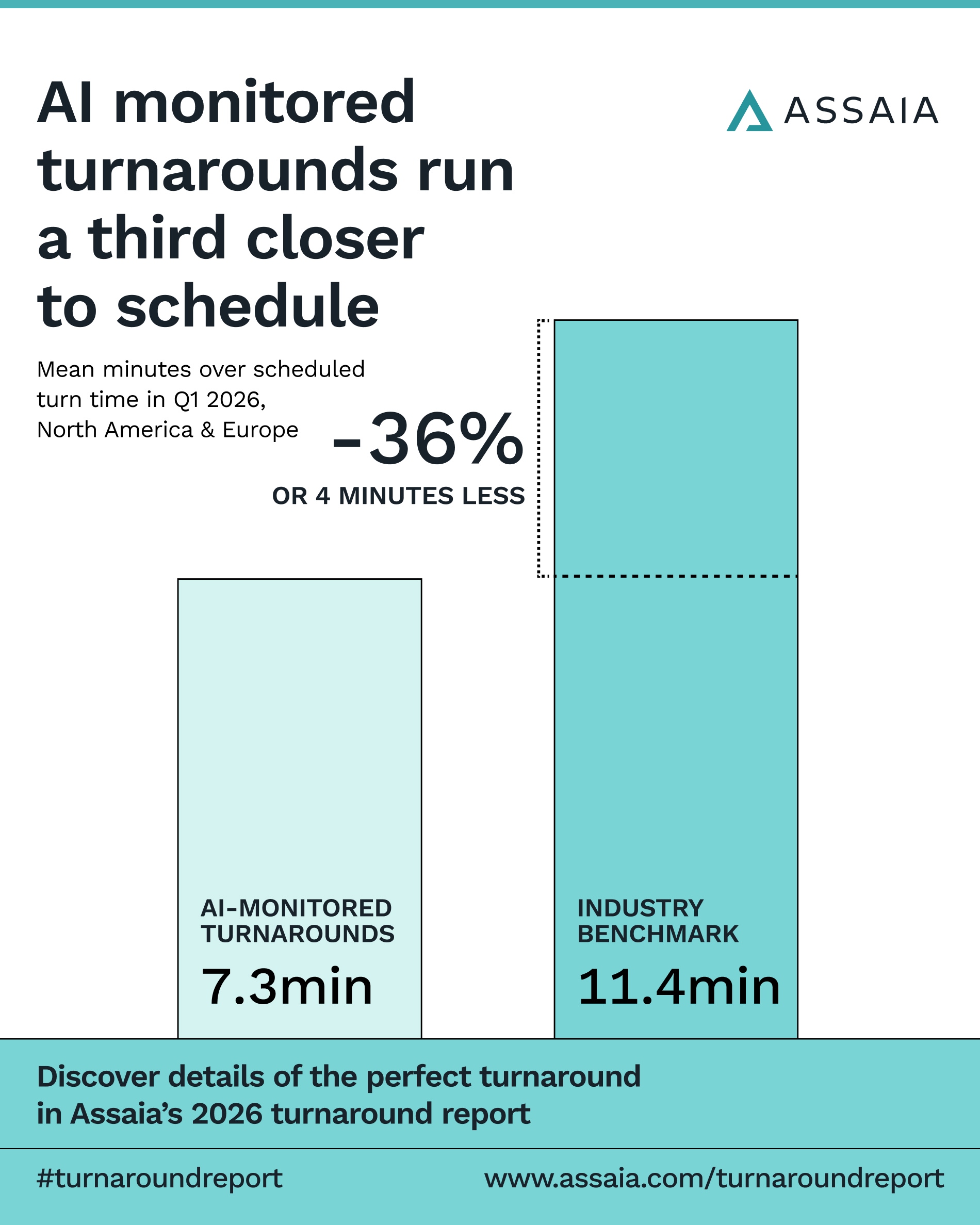
Assaia’s report compares approximately 125,000 turnarounds monitored by its artificial intelligence and computer-vision technology at eight major airports with 1.5 million turnarounds at 20 comparable airports.
During the first quarter of 2026, the monitored operations averaged 7.3 minutes over scheduled turnaround time, against 11.4 minutes across the industry benchmark. This represented a 36% smaller gap between planned and actual performance.
The technology tracks ground activities, which Assaia says enables airlines, airports and handling companies to flag problems in good time.
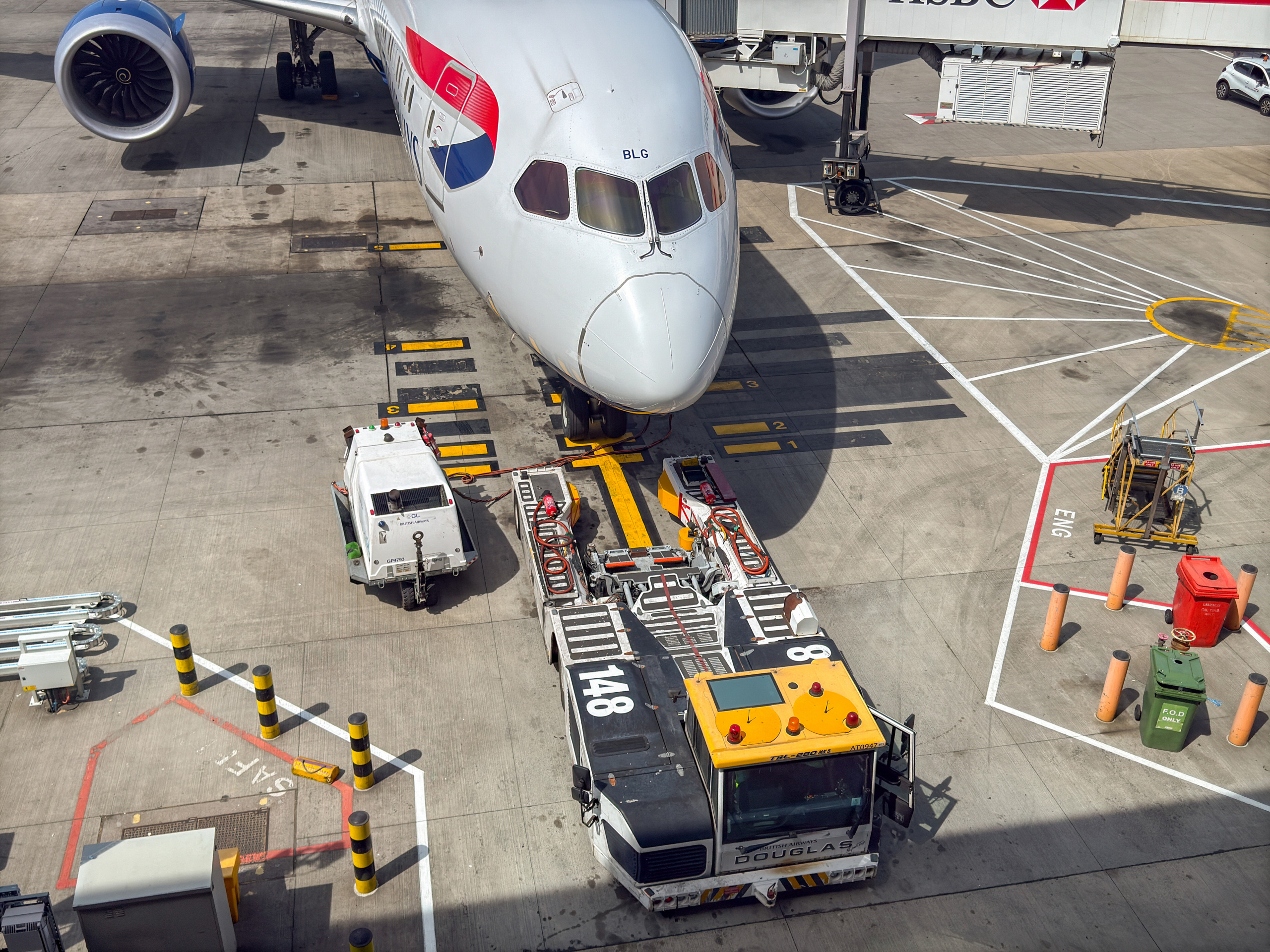
‘Opportunity for airlines and airports to make better use of the capacity they have’
Assaia chief executive Christiaan Hen said the findings highlighted the importance of identifying operational setbacks before they spread through an airline’s network.
“Eleven minutes might not sound significant, but across millions of flights, the impact is huge,” he said.
“The impact of these delays goes far beyond cost. One in five flights is arriving late, while turnaround overruns are using up around 6% of available airport stand capacity.
“With passenger demand continuing to grow and new airport infrastructure taking years to deliver, there is a real opportunity here for airlines and airports to make better use of the capacity they already have.”
He added: “AI gives teams real-time visibility of what is happening around an aircraft, helping them identify where time is being lost and act before a few minutes become a much bigger delay.”






