The BRRRRT Act could see A-10 Warthogs towed back from the boneyard for service

6 min read

The battle over the future of the A-10 Thunderbolt II is far from over, with bipartisan lawmakers introducing legislation that would keep the close air support aircraft in service until at least 2033 and could see stored aircraft returned to the flight line.
The proposed Bolstering Recognition, Resurgence, Retention, and Remembrance of the Thunderbolt (BRRRRT) Act seeks to prevent further reductions in the A-10 fleet until a certified replacement is available.
If passed, the legislation would not only extend the aircraft’s service life beyond current Air Force plans but could also see some retired aircraft restored from storage to maintain the required fleet size.
Introduced by Congressman Abe Hamadeh of Arizona and co-led by Congressman Don Davis of North Carolina, the bill has attracted support from lawmakers on both sides of the aisle as debate continues over the future of one of the US military’s most recognisable combat aircraft.

The legislation comes just months after the Department of the Air Force announced it would retain two A-10 squadrons until 2030 following a request from President Donald Trump and Defence Secretary Pete Hegseth. One squadron will remain on active duty at Moody Air Force Base in Georgia, while another Reserve unit at Whiteman Air Force Base in Missouri will also continue operating the aircraft.
The new bill goes further by requiring the Air Force to maintain the A-10 through fiscal year 2033 and preventing further retirements until an alternative has been certified to perform the same close air support mission.
Lawmakers argue no aircraft has yet replaced the A-10’s battlefield role
For years, the Air Force has argued that the ageing A-10 should be retired as it shifts resources towards fifth- and sixth-generation aircraft capable of operating in highly contested airspace.
The service has repeatedly maintained that platforms such as the F-35, together with precision-guided weapons and networked operations, will eventually assume many of the aircraft’s missions. Supporters of the A-10 disagree.
They argue that no aircraft currently in the US inventory combines the same level of survivability over the battlefield, long loiter time, precision firepower and ability to operate in direct support of ground forces.
Congressman Hamadeh said the aircraft had repeatedly demonstrated its value in combat.
“The A-10 has repeatedly proven itself on the battlefield, saving American lives and delivering unmatched close air support when our troops need it most.”
He added that the legislation was intended to ensure the aircraft would not be retired before a suitable replacement had entered service.
The bill’s title is a reference to the distinctive sound produced by the aircraft’s GAU-8/A Avenger 30 mm cannon, a weapon capable of firing nearly 4,000 rounds a minute and one that has become synonymous with the A-10’s reputation among soldiers on the ground.
The A-10 Warthog: An aircraft that continues to evolve
Although the A-10 first entered service in the 1970s, the aircraft has continued to receive upgrades intended to keep it relevant on today’s battlefield.
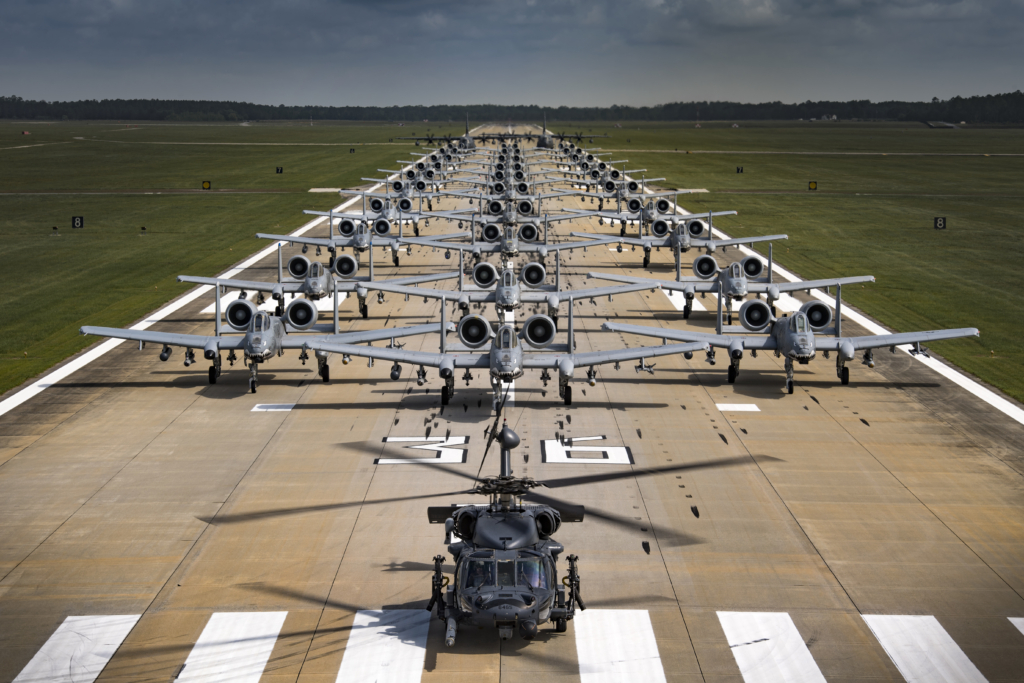
Recent improvements have included enhanced communications, updated avionics and new precision-guided weapons. The fleet has also begun receiving the Angry Kitten electronic warfare pod, designed to improve survivability by detecting and disrupting enemy radar and electronic threats.
The Air Force has also been expanding the aircraft’s operational flexibility through the integration of probe-and-drogue aerial refuelling, allowing the A-10 to refuel from aircraft operated by the US Navy, Marine Corps and allied air forces. The capability offers commanders greater flexibility during joint operations where Air Force boom-equipped tankers may not be available.
Another significant development has been the integration of the Advanced Precision Kill Weapon System (APKWS). Originally designed as a laser-guided rocket for engaging lightly armoured targets, the weapon has increasingly been used as a lower-cost option for countering drones and other emerging aerial threats.
These upgrades reflect the Air Force’s efforts to maintain the aircraft’s usefulness even as long-term plans continue to favour retirement.
USAF A-10s were recently used during Operation Epic Fury against Iranian naval targets.
Fresh imagery released from the US Central Command area showed deployed A-10C Thunderbolt IIs operating with two additions never previously seen together on operationally deployed aircraft: a new probe-and-drogue aerial refuelling system and the Angry Kitten electronic warfare pod.
The Air Force still wants to move on from the Warthog
The A-10 has survived repeated attempts at retirement over the past decade.
Successive Air Force leaders have argued that maintaining a dedicated close air support aircraft diverts funding and manpower from modernisation programmes considered essential for future conflicts, particularly against technologically advanced adversaries.
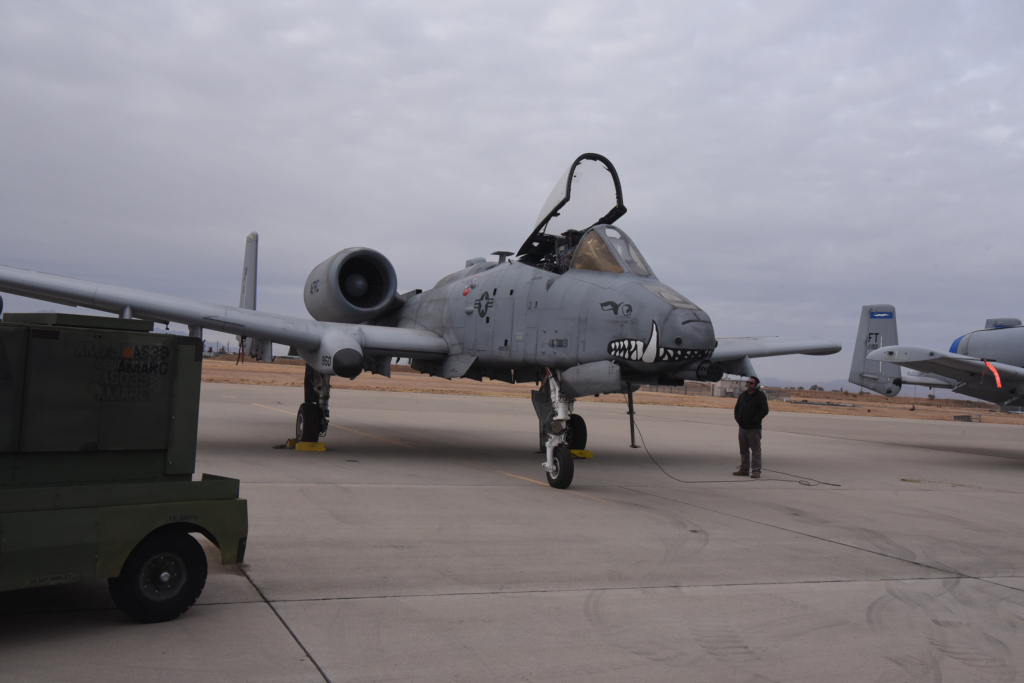
The service has also pointed to the aircraft’s limited ability to survive in heavily defended airspace protected by modern surface-to-air missile systems.
That position has frequently put the Air Force at odds with members of Congress, many of whom have questioned whether another aircraft can fully replicate the A-10’s unique role.
The latest legislation reflects those continuing concerns.
While the Air Force currently plans to retain part of the fleet until 2030, supporters of the BRRRRT Act argue that reducing training, maintenance and operational capacity before a replacement is available risks creating a capability gap in close air support.
More than four decades of combat service
The A-10 entered service in 1977 after being developed specifically to destroy Soviet armour and provide close air support for ground forces.
Its design reflected that mission. Straight wings allow the aircraft to fly slowly over the battlefield, while titanium armour protects the cockpit and critical systems. Redundant hydraulic and flight control systems improve survivability, enabling the aircraft to absorb significant battle damage and continue flying.

The aircraft proved its effectiveness during Operation Desert Storm, where it destroyed hundreds of Iraqi tanks and armoured vehicles. It has since supported US operations in the Balkans, Afghanistan, Iraq and Syria, becoming one of the most frequently requested aircraft by troops engaged in ground combat.
Its ability to remain over an area for extended periods, identify friendly and enemy forces and deliver accurate fire at close range has earned it enduring support from soldiers and military commanders alike.
The debate on A-10 is far from over
Whether the BRRRRT Act becomes law remains uncertain.
The legislation will have to pass through the normal congressional process before becoming binding on the Department of the Air Force. Even then, the debate over the A-10’s future is unlikely to end.
The Air Force continues to focus on developing a force built around the F-35, the B-21 Raider and the Next Generation Air Dominance programme, supported by autonomous Collaborative Combat Aircraft. Those platforms are intended to meet the demands of future conflicts against increasingly sophisticated adversaries.
Supporters of the A-10 counter that future wars may still require an aircraft dedicated to supporting troops in close contact with enemy forces. Until another platform has demonstrated it can perform that mission as effectively, they argue, retiring the Thunderbolt II would be premature.
If Congress agrees, some of the A-10s already parked in storage at Davis-Monthan Air Force Base could yet find themselves returning to the flight line, proving that one of military aviation’s most distinctive aircraft may still have another chapter to write.