Private jet moves: Bombardier delivers 1st Global 8000 as Gulfstream’s G300 takes flight

7 min read
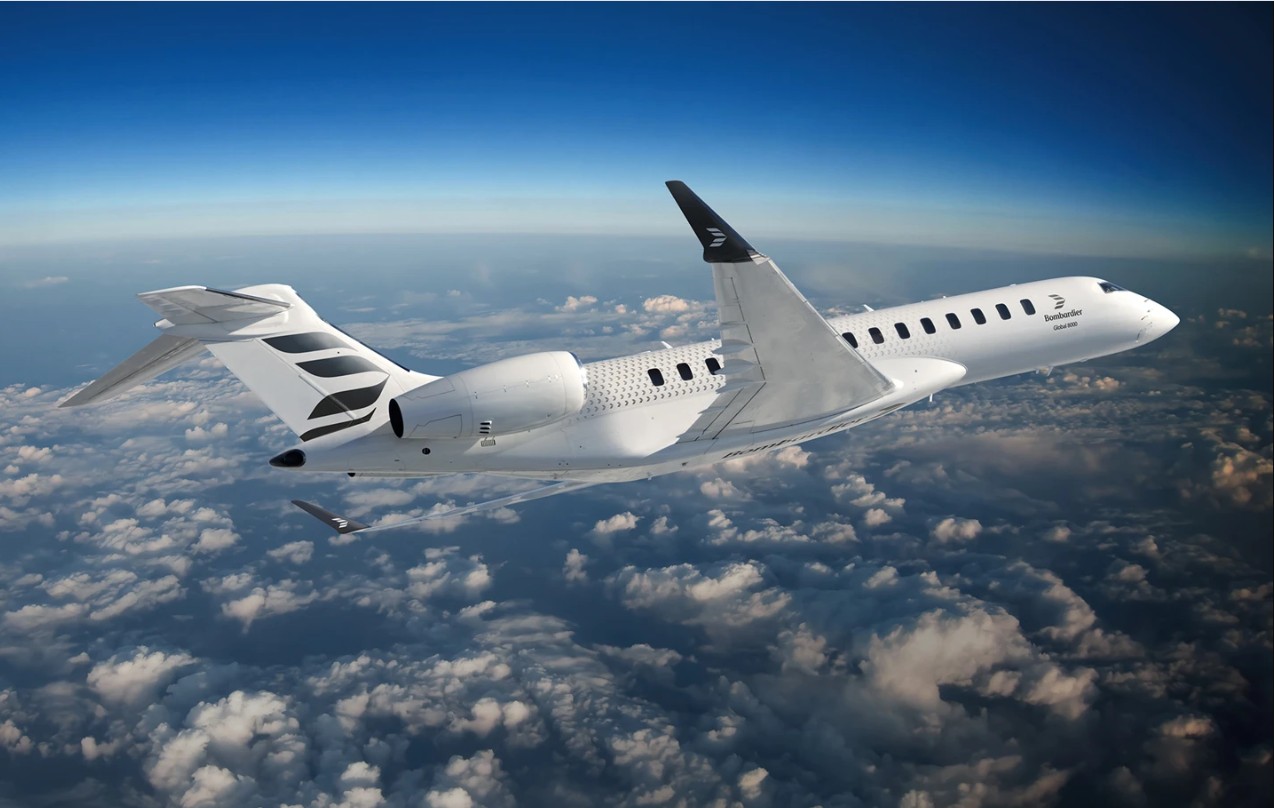
Bombardier and Gulfstream have reached new milestones this week.
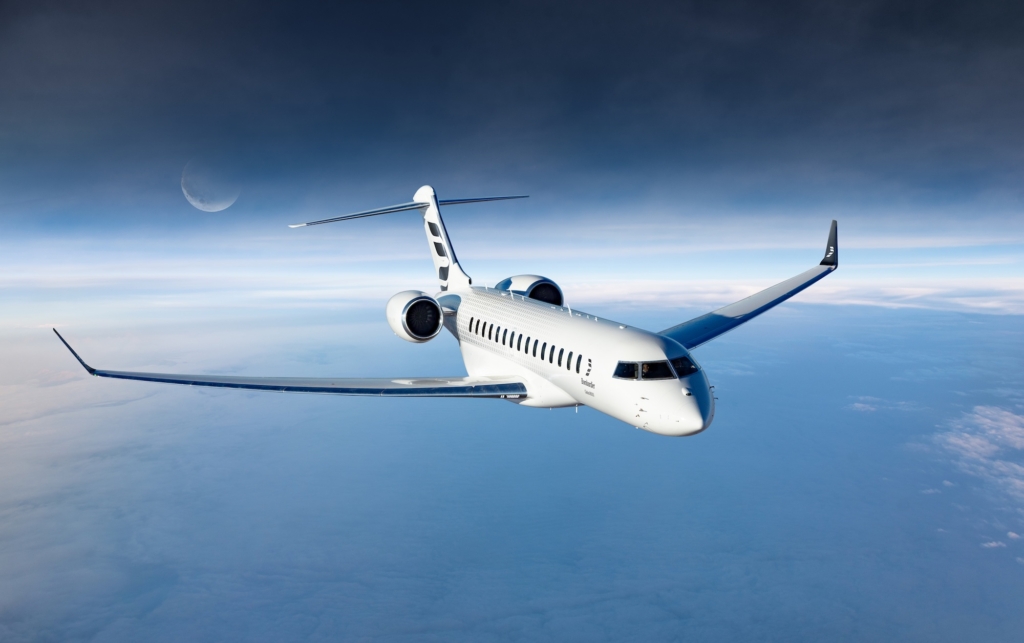
Bombardier has just delivered the first of its new Global 8000 long-range business jets to its first customer, while Gulfstream has just flown its G300 medium-sized jet for the first time.
Both of these models take the business jet market to new levels and are likely to set the standard for executive jets for years to come.
Bombardier delivers its first Global 8000
On 8 December, Bombardier celebrated the entry into service of its Global 8000 business aircraft during a special event held at its aircraft assembly centre in Mississauga, Ontario (Canada).
The aircraft was handed over to launch operator Chartwright, who also launched the Global 7500 previously.
“Managing this best-in-class aircraft on behalf of our client reflects the depth of our trusted operational expertise and the strength of our longstanding relationship with Bombardier,” said Chartright’s Chief Operating Officer, Ben Boehm. “As the first to introduce the Global 7500 in Canada, we are proud to carry that legacy forward with the Global 8000.”
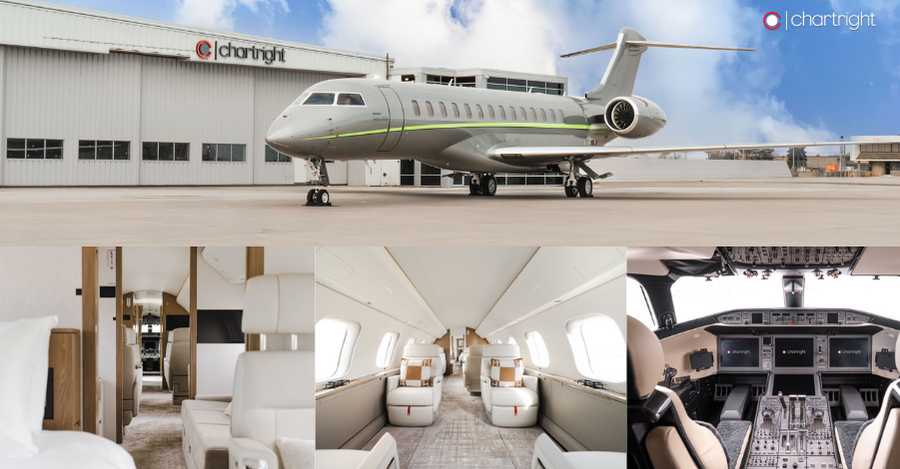
First announced in May 2022 at EBACE in Geneva, the first Global 8000 rolled off the final assembly line in April 2025. With its inaugural flight completed in May 2025, the type received Transport Canada Type Certification in November, paving the way for the first delivery to a customer on 8 December.
Features of the Global 8000
The Global 8000 is described by the company as “the world’s fastest civil aircraft since Concorde.” With a cruise speed of Mach 0.95, the aircraft can connect two cities faster than any other aircraft, says Bombardier.
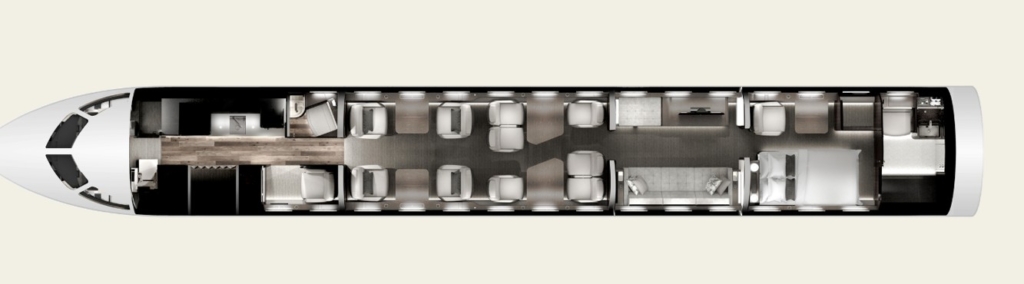
With its four-zone cabin (a first in its class), the aircraft features four internal living spaces as well as a separate crew rest area.
The Global 8000 offers a range of 8,000 nautical miles, while it retains the ability to operate from shorter runways with takeoff and landing performance comparable to that of a light jet.
Bombardier adds that with the company having redesigned the cabin environment on board the Global 8000, the cabin has an altitude of just 2,691ft at a cruise altitude of 41,000ft, eradicating the effects of jet lag and maximising cabin comfort.
Federal Aviation Administration (FAA) and the European Aviation Safety Agency (EASA) certifications remain pending, but both are expected shortly.
What Bombardier says about the Global 8000
“Pride and excitement only begin to describe what the entry-into-service of the Global 8000 means for all 18,000 of us at Bombardier,” said Éric Martel, President and CEO, Bombardier. “Every innovation and every detail of the Global 8000 reflects the hard work, creativity, and dedication of our teams.
“This revolutionary aircraft is redefining the business aviation landscape with its innovative design, signature smooth ride, unmatched performance and a promise fulfilled to our customers,” he added.
“Today’s celebration is a testament to the rigour and dedication of our talented employees and suppliers who have collectively enabled our Global 8000 to set the new standard for speed, range and cabin comfort in the industry,” said Stephen McCullough, Senior Vice President, Engineering and Product Development, Bombardier.
“This is truly a historic moment for Bombardier, our suppliers and the thousands of dedicated professionals who have brought a no-compromise attitude to this project every single day. Their commitment and dedication underscore everything we do at Bombardier – pushing the boundaries of what is possible.”
The Gulfstream G300 flies for the first time
On 5 December, Gulfstream Aerospace announced that the company’s new Gulfstream G300 had made its first flight.
The aircraft type was only announced in October, and has made rapid progress towards its maiden flight.

The first G300’s first flight lasted two hours and 25 minutes, flew at a speed of Mach 0.75 and reached an altitude of 30,000 feet (9,144 meters).
Prior to this, the G300 program had already completed more than 2,000 ground test hours. Going forward, the campaign will include two additional test aircraft that are already in production.
Specifications of the Gulfstream G300
The G300 features the largest interior in the super-midsize private jet segment with Gulfstream’s signature panoramic oval windows. The aircraft can accommodate up to ten passengers and includes two living areas, a full galley and space for baggage.
The aircraft achieves the lowest cabin altitude in its class at 4,800 ft (1,463 m) when flying at 41,000 ft (12,497 m). It also features 100% fresh air in the cabin through a plasma air ionisation system and “whisper-quiet sound levels.”

It can fly 3,600 nautical miles (6,667 km) at Mach 0.80 or 3,000 nm (5,556 km) at Mach 0.84. The aircraft is powered by a pair of Honeywell HTF7250G engines.
The G300 is to enter service by 2027
Gulfstream anticipates the G300 business jet will enter service in 2027, with first customer deliveries expected early that year, following the completion of its flight testing programme and certification.
While this timeline is considered to be ambitious but feasible by industry commentators, by leveraging the proven but smaller Gulfstream G280 platform, the company believes that this timeline is possible to achieve.

“With its combination of safety, technology, performance and cabin comfort, the G300 is a game changer for the super-midsize category,” said Mark Burns, president, Gulfstream.
“This latest investment, designed to exceed our customers’ expectations for large-cabin features in a mid-cabin aircraft, brings another new category leader to our next-generation fleet. With the addition of the G300, Gulfstream truly offers an aircraft for every mission. Achieving first flight at this stage in the program is a remarkable achievement.”
The rapid growth in business aviation
Business aviation has expanded sharply since the pandemic, when private flying became a practical alternative for travellers seeking continuity, privacy and control.
Rather than fading as commercial travel returned, demand has remained elevated and is now structurally embedded in the market. Forecasts reflect that momentum, with Fortune projecting annual growth of around 5% through 2032 and Honeywell forecasting 3% growth between 2025 and 2035.

Several factors underpin this sustained rise. The pandemic introduced private aviation to a much broader customer base, many of whom have not returned to premium airline travel because of the time savings, convenience and privacy offered by business jets.
At the same time, fractional ownership, membership programmes and more flexible charter models have made access to private aircraft far easier than a decade ago.
Demand is strongest in North America, the world’s largest business aviation market, while Asia-Pacific continues to accelerate as corporate and UHNW travel grows across the region.

Latin America is also expanding, though the preference there leans more heavily toward pre-owned aircraft. Across all markets, the strongest appetite is for larger jets, which offer the lowest cost per mile and the highest levels of comfort.
Record backlogs at major OEMs provide the clearest indicator of sustained demand. With new aircraft such as Bombardier’s Global 8000 and Gulfstream’s G300 entering the market, manufacturers continue to raise performance and comfort benchmarks, ensuring a steady pipeline of new customers and replacement demand for years ahead.
The impact of new aircraft on private jet travel
The arrival of next-generation aircraft such as the Bombardier Global 8000 and Gulfstream G300 illustrates how rapidly the top end of business aviation is evolving. Although the two jets sit in different size categories, both introduce step changes in speed, range, cabin comfort and health-focused design, raising expectations of what private travel should deliver.
For operators and owners, these improvements matter commercially. Newer aircraft typically offer lower operating costs per mile, better fuel efficiency and quieter performance, making them more attractive to both charter customers and fractional ownership schemes.
As fleets refresh, passengers are increasingly drawn to aircraft that provide higher cruise speeds, lower cabin altitudes and more flexible cabin layouts.
Environmental scrutiny remains a point of debate, yet OEMs argue that modern designs burn less fuel, produce fewer emissions and incorporate more sustainable materials than the aircraft they replace. For a growing number of users, the combination of efficiency, comfort and time savings continues to outweigh concerns about the sector’s environmental footprint.
With demand for private aviation still rising, the introduction of aircraft like the Global 8000 and G300 will only accelerate the trend toward newer, more capable jets.
As manufacturers continue to push technical and cabin innovations, customers in this segment are likely to prioritise the latest models, reinforcing a cycle of continuous upgrade across the business jet market.
Featured image: Bombardier