Bangladesh weighs J-10CE purchase amid Eurofighter uncertainty

4 min read

Bangladesh is reportedly close to ordering around 20-24 Chinese J-10CE fighter jets. It remains unclear whether Dhaka will also proceed with a Eurofighter purchase, as it seeks to balance its strategic relationship with China, manage its proximity to India, and diversify defence partnerships with Europe.
Bangladesh reportedly closing in on Chinese J-10CE purchase
According to a new report by Bangladesh’s The Daily Star news outlet, the country is moving closer to ordering Chinese J-10C fighter jets.
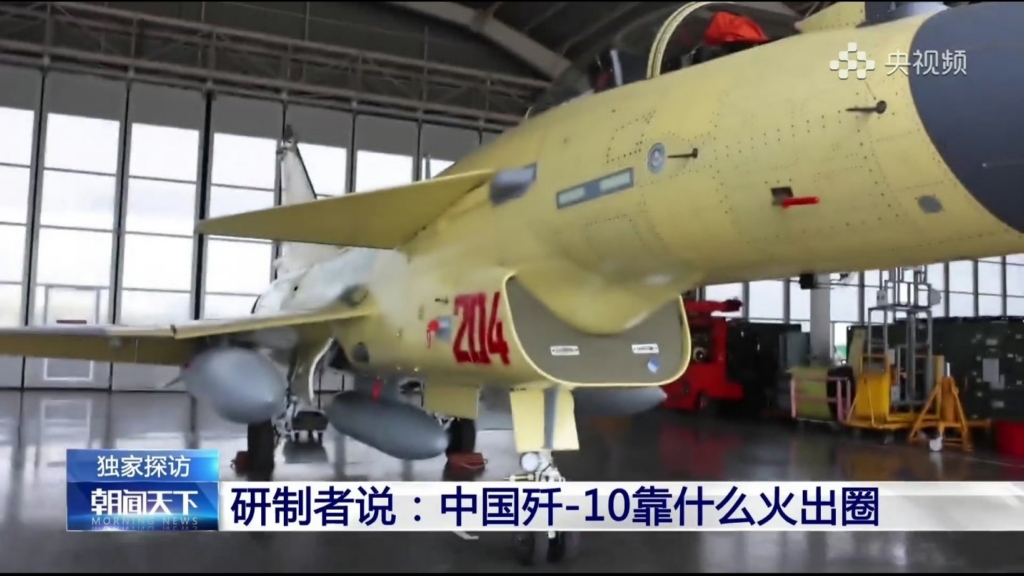
The publication wrote, “Bangladesh is moving ahead with plans to purchase Chinese J-10CE multirole fighter jets and attack helicopters as part of efforts to modernise the Bangladesh Air Force, Prime Minister’s Adviser Zahed Ur Rahman said today.”
Rahman was quoted as saying, “If budget support is available this fiscal year, the purchase will go ahead. Otherwise, it will be deferred to the next budget.”
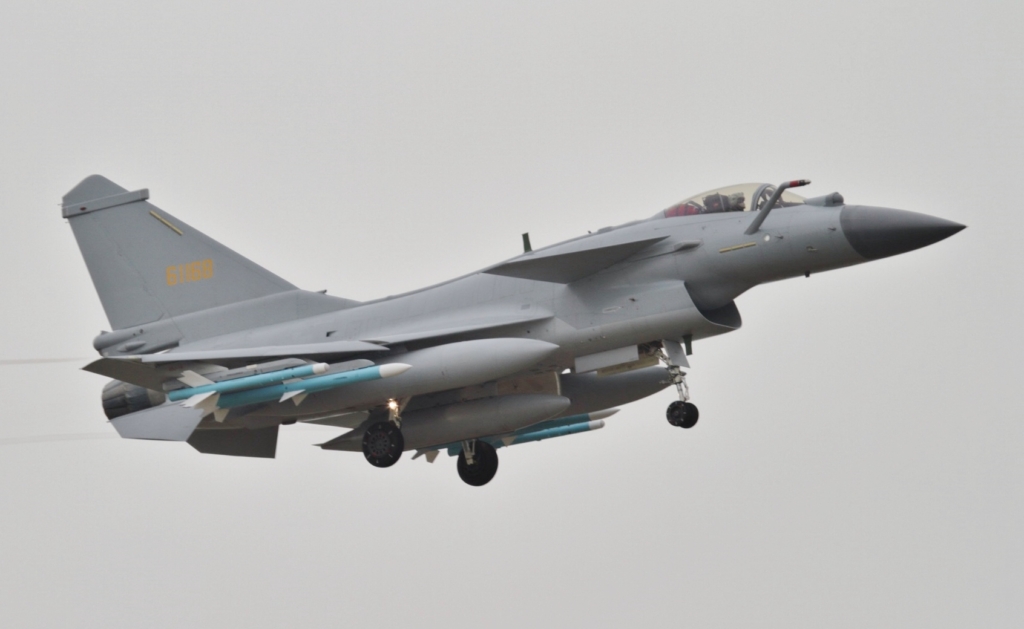
From a capability, cost, and logistics perspective, the J-10CE appears to be the strongest candidate, particularly given Bangladesh’s existing Chinese-made fighter fleet.
Russian fighter jets were effectively off the table due to the US’s CAATSA. AGN reported in 2025 that two Bangladeshi police Mil-8 helicopters were in limbo in Russia due to the fear of triggering sanctions should Bangladesh receive them.
Bangladesh’s geopolitical context
The decision of which fighter jets to purchase is inseparable from Bangladesh’s geopolitical context, which is dominated by India.
In 1971, India helped Bangladesh (then East Pakistan) to achieve independence, but then in 2024, Bangladesh had a revolution against its long-term leader, Sheikh Hasina. Sheikh Hasina was seen as India-friendly.
Some in Bangladesh consider this its second independence, while relations with Pakistan have since improved and even considered Sino-Pakistani JF-17s.
Bangladesh sees purchasing Chinese fighter jets as a way to counter India’s influence, while also charting a different course relative to India, which is purchasing Europe’s other leading fighter, the Rafale.
But this also risks antagonising India. The India-China rivalry is perhaps the world’s largest, mostly overlooked rivalry.
In recent years, India has fought skirmishes with China in the Himalayas while also fearing China is trying to strategically surround India via strategic agreements with Bangladesh, Pakistan, Sri Lanka, and the Maldives. India is designing its force posture to counter China in the region.
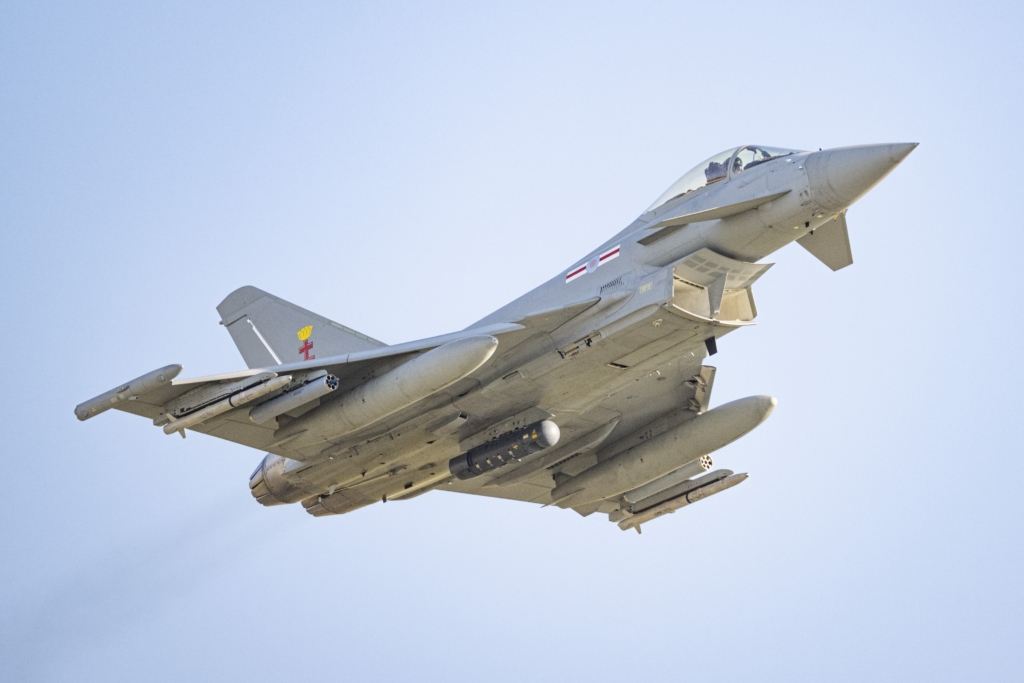
Another factor is that the single-engine J-10CEs are considered substantially cheaper (perhaps half the cost) than their more capable twin-engined Eurofighter counterparts.
The J-10CE is a medium-weight, single-engine fighter more comparable in size and role to the F-16 than to the larger, twin-engine Eurofighter Typhoon.
Separately, on paper, the F-16 Block 70/72 would be an excellent fit for Bangladesh. The fact that the F-16 is not being seriously considered suggests post-2024 Bangladesh is concerned about its supplier relationships, and not just the aircraft performance and cost in isolation.
The flyaway costs of the Eurofighter are sometimes reported to be around $110 million, rising to around $130 million with additions.
Bangladesh claims the J-10C’s flyaway cost is around $62.5 million, although Defence Post points out this rises to $115 million with extras and assistance. These numbers should be taken with caution.
A major issue for Bangladesh is financing, and Eurofighters would stretch its modest military budget.
The Chengdu J-10s are good enough for Bangladesh
From a military perspective, the J-10CE would build on existing Sino-Bangladeshi military cooperation. Bangladesh was the last country to receive China’s F-7GIs in 2013 (heavily derived from the Soviet MiG-21 Fishbed).

The potential transition from the F-7 to the J-10CE would therefore be relatively straightforward compared with introducing an entirely new Western fighter ecosystem. While the J-10 is generally considered inferior to the Eurofighter, it is likely good enough for Bangladesh’s requirements.
The overarching concern for Bangladesh’s air force is India, and a few dozen Eurofighters would not likely do much to alter the balance of power.
One of the big selling points for Bangladesh is Pakistan’s claim that its J-10Cs shot down Indian fighter jets in 2025, including a Rafale fighter jet. The details of the engagement are murky, and it is difficult to draw conclusions, but regardless, this is being cited within Bangladesh.
Importantly, the fighter jet purchase is the top line in a larger purchase of attack helicopters, VIP helicopters, and UAV systems to modernise the Bangladesh military. It is unclear which countries Bangladesh will purchase those systems from.
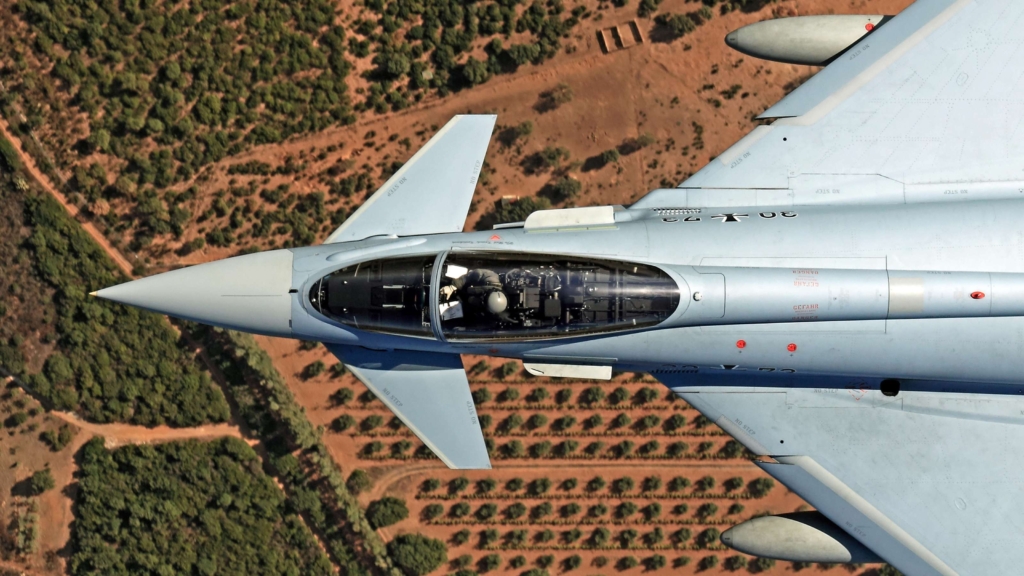
Even if Bangladesh does order the J-10CE, this doesn’t necessarily mean it’s over for the Eurofighter. Incentives to balance national and geopolitical concerns could see it purchase a mixed fleet, as Indonesia is doing, and Canada is mulling.