


Expedition searches remote Pacific Island for Amelia Earhart’s missing plane

5 min read
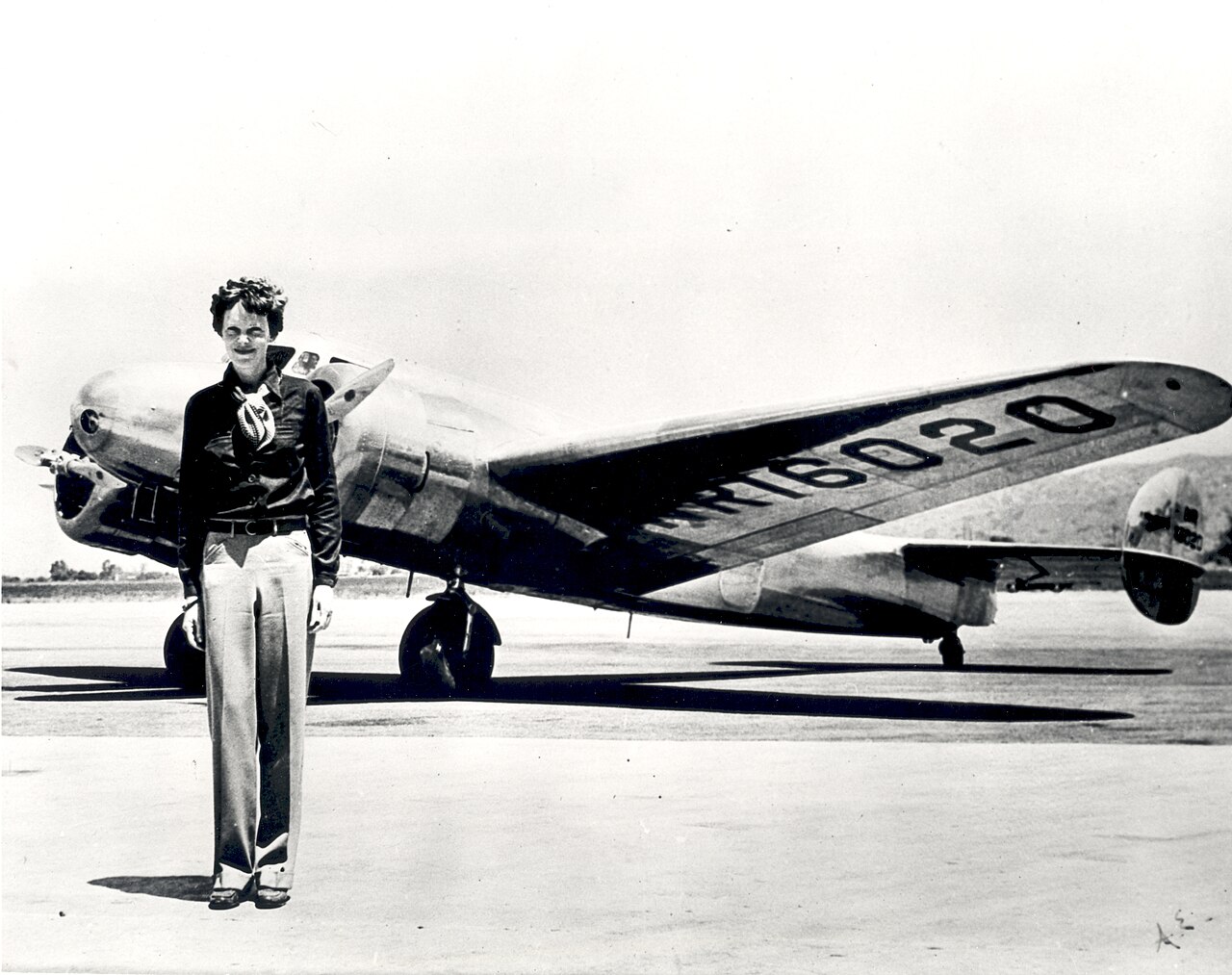
Nearly 90 years after pioneering aviator Amelia Earhart disappeared during an attempt to fly around the world, a new expedition is heading to a remote Pacific island in the hope of finding her missing aircraft.
Researchers believe an unusual object beneath a lagoon at Nikumaroro, in the island nation of Kiribati, could provide an important clue to one of aviation’s most enduring mysteries.
New expedition to search for wreckage of Amelia Earhart’s plane
As reported by the BBC, the latest expedition, supported by Purdue University and the Archaeological Legacy Institute, is investigating an underwater formation that appears to resemble part of an aeroplane. The team hopes to establish whether it could be the remains of Earhart’s Lockheed Electra, which vanished in July 1937 while she was flying with navigator Fred Noonan.
The search is focused on an area identified through satellite imagery and historical photographs. Although the object has attracted considerable interest, its identity remains unconfirmed, and researchers must establish whether it is aircraft wreckage or a natural feature.
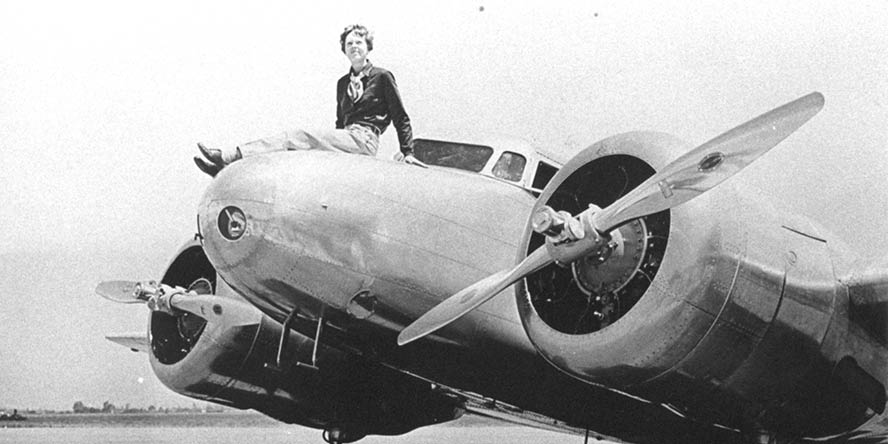
Earhart was already internationally famous when she set out to become the first woman to fly around the world along the equator. An accomplished pilot and advocate for women in aviation, she had made history in 1932 by becoming the first woman to fly solo across the Atlantic Ocean.
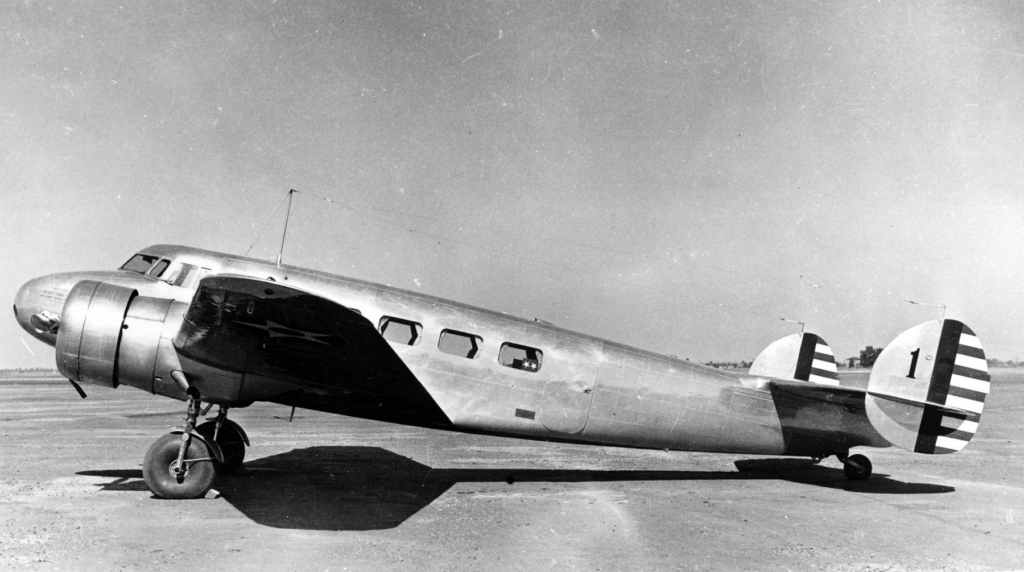
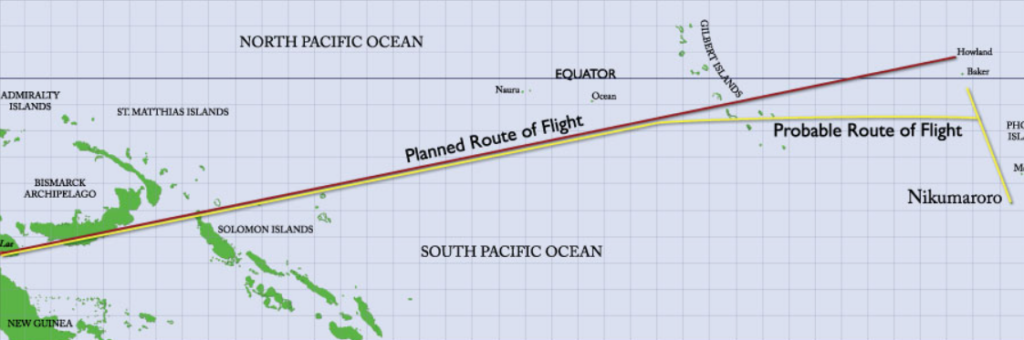
Her 1937 attempt involved a specially modified Lockheed Electra 10E, equipped for long-distance flying. After completing much of the journey, Earhart and Noonan departed Lae, in what is now Papua New Guinea, on 2 July, heading towards Howland Island, a tiny Pacific territory where they intended to refuel.
The aircraft never reached its intended destination
Radio communications indicated that the crew were struggling to locate Howland Island and were concerned about their remaining fuel. In one of her final known transmissions, Earhart reported that they were flying along a navigational line but could not see the island. Contact was subsequently lost.
The United States launched a major search involving naval vessels and aircraft, but neither the aviators nor their plane was ever found. Earhart was declared legally dead in 1939, although competing explanations for her disappearance have continued to circulate since.
Why researchers are searching Nikumaroro
The latest expedition is investigating the possibility that Earhart and Noonan reached Nikumaroro, a remote coral atoll in the Phoenix Islands group, south-east of Howland Island. The island was then known as Gardner Island.
According to this theory, the aircraft may have missed its intended destination and continued towards the south-east. Earhart and Noonan could have made an emergency landing on the island’s reef, surviving the initial disappearance before eventually dying as castaways.
The theory has been investigated for decades by the International Group for Historic Aircraft Recovery, known as TIGHAR. Researchers have examined archival documents, aerial photographs, artefacts and accounts from people connected with the island.
Among the evidence discussed by investigators are reports that human remains and objects associated with a castaway were discovered on Nikumaroro in 1940.
Items reported in historical records included footwear and a container associated with navigational equipment. However, the remains were sent away for examination and were subsequently lost, preventing modern DNA testing.
Other artefacts found during investigations have been suggested as possible evidence of an American castaway. None, however, has conclusively established that Earhart or Noonan reached the island.
The mysterious object beneath the lagoon
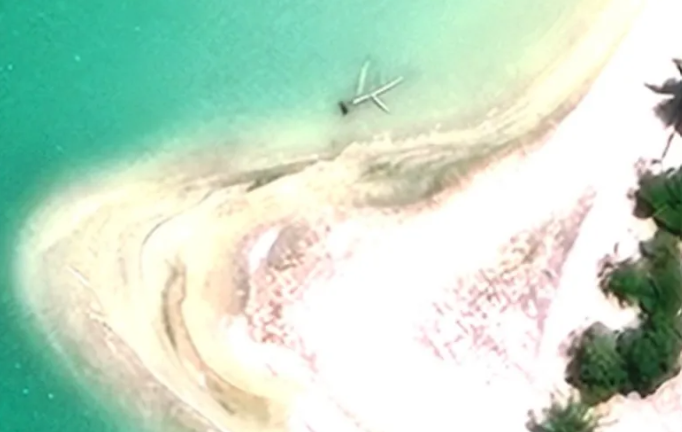
The new search centres on an underwater feature identified in satellite imagery captured in 2020. Known as the Taraia Object, it has attracted attention because its shape appears broadly consistent with an aircraft-like structure.
Researchers are examining whether the formation could be connected to Earhart’s Lockheed Electra. Historical imagery reportedly suggests that the object has remained in the same location since at least 1938, a detail that investigators consider relevant to understanding its origins.
The expedition aims to document the site using underwater observations, photography and remote-sensing techniques. These methods should help the team assess the object’s dimensions, shape and physical characteristics before drawing conclusions about what it might be.
The mission is expected to involve a 17-member team and cost approximately $900,000. Its work is planned over several days, although identifying a possible wreck would not necessarily mean that the aircraft could immediately be recovered. Any future recovery operation would require appropriate authorisation from Kiribati.
Researchers must also consider the difficulties of working around an isolated coral atoll, where underwater conditions, limited access and the surrounding reef can complicate archaeological investigations.
Scientific evidence, not speculation
The Nikumaroro theory is not universally accepted. One prominent alternative is that Earhart and Noonan ran out of fuel while searching for Howland Island and crashed into the Pacific, where the aircraft sank.
Other expeditions have explored the surrounding seabed using sonar, remotely operated vehicles and detailed mapping. A 2019 National Geographic and Ocean Exploration Trust expedition surveyed substantial areas around Nikumaroro but did not establish that Earhart’s plane was there.
Sceptics have also questioned whether the Taraia Object is artificial at all. Some researchers have suggested that its apparent aircraft-like shape could be explained by a natural formation or another object, rather than a wrecked aeroplane. Establishing its composition and structure will therefore be essential.
The distinction matters because a suggestive image is not proof. A convincing identification would require stronger physical evidence, such as aircraft components that could be linked to the Electra through their design, serial numbers or other distinctive characteristics.
Could the Earhart mystery finally be solved?
Earhart’s disappearance has become much more than an unsolved aviation accident. Her achievements helped challenge assumptions about women’s abilities, while her final flight captured public attention because of its ambition, technological challenges and tragic uncertainty.
For the researchers travelling to Nikumaroro, the immediate objective is to determine what lies beneath the lagoon, rather than to assume that the answer is already known.

If the object proves to be part of Earhart’s aircraft, it could offer the clearest physical lead in years and help reconstruct the final stage of her journey. If it is unrelated, the expedition could still improve understanding of the island and narrow the possibilities surrounding the disappearance.
For now, the fate of Earhart and Noonan remains unresolved. The expedition represents another attempt to replace decades of speculation with verifiable evidence, and to discover what happened to two aviators who disappeared while attempting one of the most ambitious flights of their era.
Sign up for our newsletter and get our latest content in your inbox.


More from

October 11, 20263 min read






