Alaska Airlines to retire Hawaiian’s iconic Boeing 717 fleet in favour of Boeing 737-800s

4 min read

The Boeing 717 has been synonymous with Hawaiian inter-island flying for more than two decades, but its days are now numbered. Alaska Air Group has announced it will replace Hawaiian Airlines‘ fleet of Boeing 717-200 aircraft with larger Boeing 737-800s, marking one of the biggest changes to Hawaii’s domestic air travel network in years.
The move, announced by Alaska Airlines, is intended to modernise Hawaiian’s neighbour island operations while increasing capacity and bringing the fleet closer into line with Alaska’s predominantly Boeing 737 operation.
The first Hawaiian-branded Boeing 737-800 is expected to enter service on inter-island routes from the first half of 2028, with deliveries continuing through 2029. The 717 fleet will then be progressively retired.
A larger aircraft for Hawaii’s shortest jet routes
The decision is unusual because Hawaiian’s inter-island network consists of some of the world’s shortest scheduled jet flights.
Typical sectors include Honolulu to Kahului, Maui (around 30 minutes), Honolulu to Lihue, Kauai (35 minutes), and Honolulu to Kona or Hilo on Hawaii Island, generally lasting less than 45 minutes.
For more than 20 years, these routes have been flown almost exclusively by Boeing 717s, whose combination of rapid acceleration, short-field performance and quick turnarounds made them ideally suited to frequent, high-cycle operations.

Replacing them with the larger Boeing 737-800 is a significant shift in operating strategy for the carrier.
Rather than focusing on the smallest aircraft capable of serving the routes efficiently, Alaska is betting that increased passenger demand, greater fleet commonality and improved onboard amenities will outweigh the operational advantages of the ageing 717.
“Neighbor Island service is part of the fabric of life in Hawai‘i, and we know how deeply our guests, employees and communities care about its future. This decision reflects our commitment to invest in Hawai‘i for the long term, to strengthen Hawaiian Airlines and to honour the local expertise, culture and care that have made Hawaiian the airline of Hawai‘i for nearly a century,” said Diana Birkett Rakow, CEO of Hawaiian Airlines, in the announcement.
More seats and a familiar cabin
The Boeing 737-800 will offer approximately 25% more capacity than the 128-seat Boeing 717 currently operating for Hawaiian.
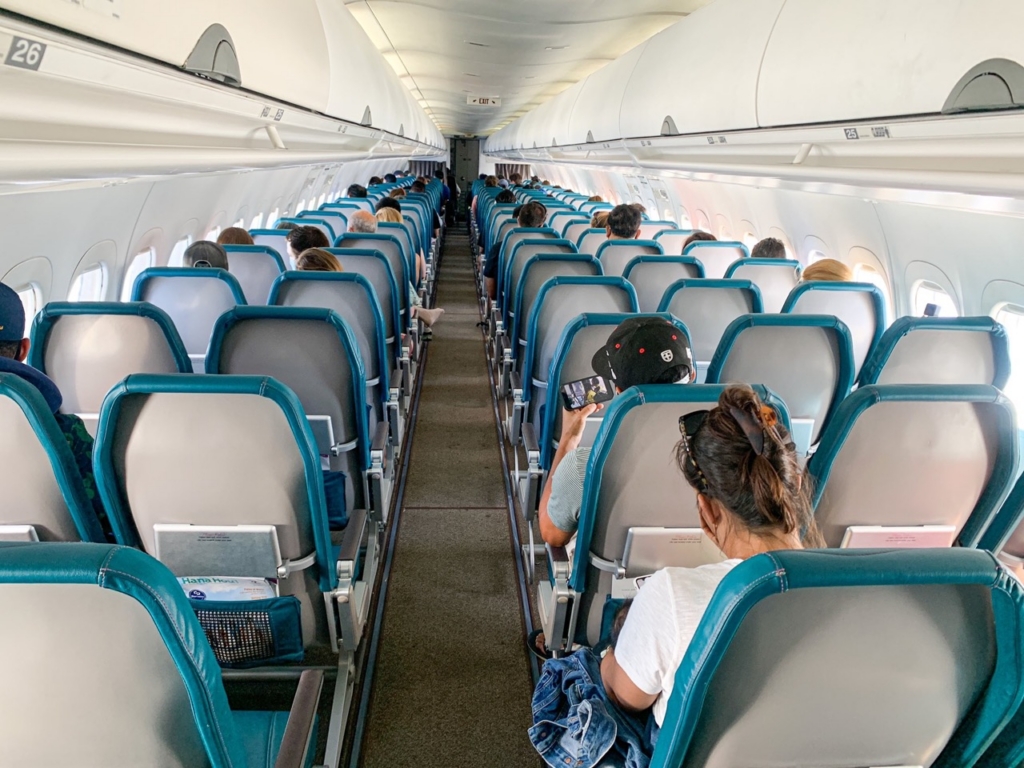
Passengers will also benefit from a cabin that is more closely aligned with the rest of the Alaska Air Group fleet, including:
- Twice as many first class seats
- 30 premium class seats
- Reclining Recaro seats in economy
- 110V power outlets, USB charging and seatback device holders at every seat
- Fast, free Starlink Wi-Fi
Alaska said the additional seats will help accommodate growing demand on popular neighbour island services, particularly during peak travel periods.
An ageing fleet reaches retirement
Hawaiian Airlines inherited the Boeing 717 fleet following its acquisition of Aloha Airlines’ market share after the carrier ceased operations in 2008. The airline currently has a fleet of 19 Boeing 717-200s with an average age of 24.5 years. It is among the oldest commercial jet fleets still operating in scheduled passenger service in the US.
Boeing ceased production in 2006 after building only 156 aircraft, leaving operators with a shrinking global fleet and limited long-term maintenance support.
As spare parts become harder to source and maintenance costs rise, most airlines have retired the type. Delta Air Lines and Hawaiian are the last two current operators.
Boeing 717 vs Boeing 737-800
| Feature | Boeing 717-200 | Boeing 737-800 |
| Typical Hawaiian seating | 128 | ~160 |
| Entry into Hawaiian service | 2001 | Planned 2028 |
| Production ended | 2006 | Still widely supported globally |
| Engines | Rolls-Royce BR715 | CFM56-7B |
| Best suited for | Very high-frequency short sectors | Higher-capacity, common fleet operations |
| Passenger amenities | Older cabin | Domestic first class, larger bins, Starlink Wi-Fi |
Why the 737 can work on inter-island flights
At first glance, deploying a Boeing 737 on flights lasting little more than half an hour appears inefficient.
The 737 burns more fuel during take-off and climb than the smaller 717, and those phases account for much of the fuel consumption on such short sectors.
However, passenger capacity shifts the economics.
The Boeing 737-800 carries around 160 passengers in Hawaiian’s planned configuration, spreading operating costs across roughly one-quarter more seats. The aircraft also benefits from newer CFM56-7B engines, improved aerodynamics and the economies of operating a common fleet across Alaska Air Group.
Because inter-island flights require relatively little fuel, the aircraft also departs well below its maximum take-off weight, allowing strong runway performance at Hawaii’s major airports.
The larger aircraft will, however, require careful management of ground operations to maintain the rapid turnarounds that have long been a hallmark of Hawaiian’s inter-island schedule.
Supporting Hawaiian’s next chapter
Alaska Air Group said the fleet replacement is part of its investment in Hawaiian Airlines following the airlines’ merger.
“Investment in a dedicated Hawaiian Airlines-branded 737-800 fleet is about more than aircraft. It is about protecting the connections that make life possible across the islands and ensuring Hawaiian remains strong for the future,” Rakow said.
Alongside the fleet renewal, Alaska announced plans to invest in airport facilities, lounges, digital technology and employee training as it continues integrating Hawaiian Airlines into the wider Alaska network.
The retirement of Hawaiian Airlines’ Boeing 717s will mark the end of one of commercial aviation’s most distinctive fleets. For many Hawaii residents, the aircraft has become as much a part of island life as the routes it serves—making its replacement the close of a memorable chapter in Hawaiian aviation history.
Sign up for our newsletter and get our latest content in your inbox.


More from


October 17, 20264 min read