


Airbus’ uncrewed Valkyrie completes first European flight as combat drone programme targets 2029

3 min read
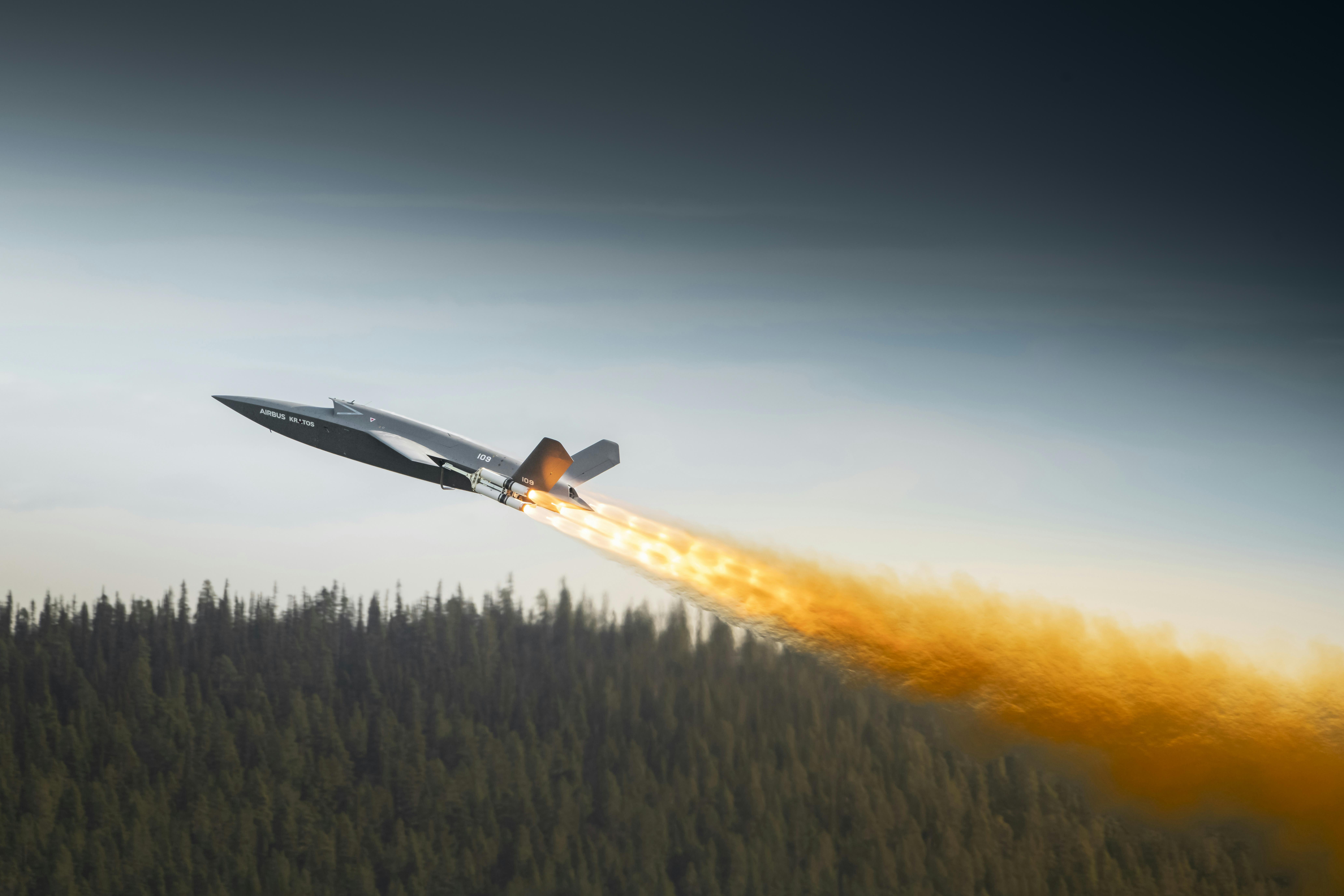
Airbus and US defence company Kratos Defence and Security Solutions have completed the first European flight of the U740 Valkyrie uncrewed combat aircraft.
According to Airbus, the milestone marks a significant step towards introducing collaborative combat aircraft (CCA) into European military service by 2029.
First European flight of the U740 Valkyrie
The flight took place at an undisclosed test facility in Northern Europe. According to an Airbus statement, the aircraft completed its planned objectives, including a rocket-assisted take-off without a conventional runway, manoeuvres at different altitudes and speeds of up to Mach 0.8, and adjustments to its mission while airborne.
The demonstration is intended to pave the way for more advanced flight testing, including the integration of Airbus’ European-developed MARS (Multiplatform Autonomous Reconfigurable and Secure) mission system.
MARS will provide the aircraft’s mission-management and autonomy capabilities, enabling it to conduct tasks autonomously and coordinate with other crewed and uncrewed platforms.
Airbus says the system is designed to preserve European control over mission software, applications, data and hardware. Human oversight will remain in place for critical decisions, in accordance with operational rules and applicable legal and ethical requirements.
Mike Schoellhorn, chief executive of Airbus Defence and Space, said the partnership combines Kratos’ established aircraft design with Airbus’ European mission technology to provide affordable combat capability by the end of the decade.
How will the Valkyrie be used?
The Valkyrie is intended to operate alongside crewed combat aircraft, including the Eurofighter Typhoon, extending their operational reach and increasing available firepower while reducing pilots’ exposure to high-risk missions.
Measuring 9.1 metres long (29.8 ft), with an 8.2 metre (26.9 ft)wingspan, the aircraft has an internal weapons bay and external payload stations beneath its wings. Airbus lists a maximum take-off weight of approximately three tonnes, a range exceeding 3,25 miles (5,000 km) and a service ceiling of 45,000 feet.
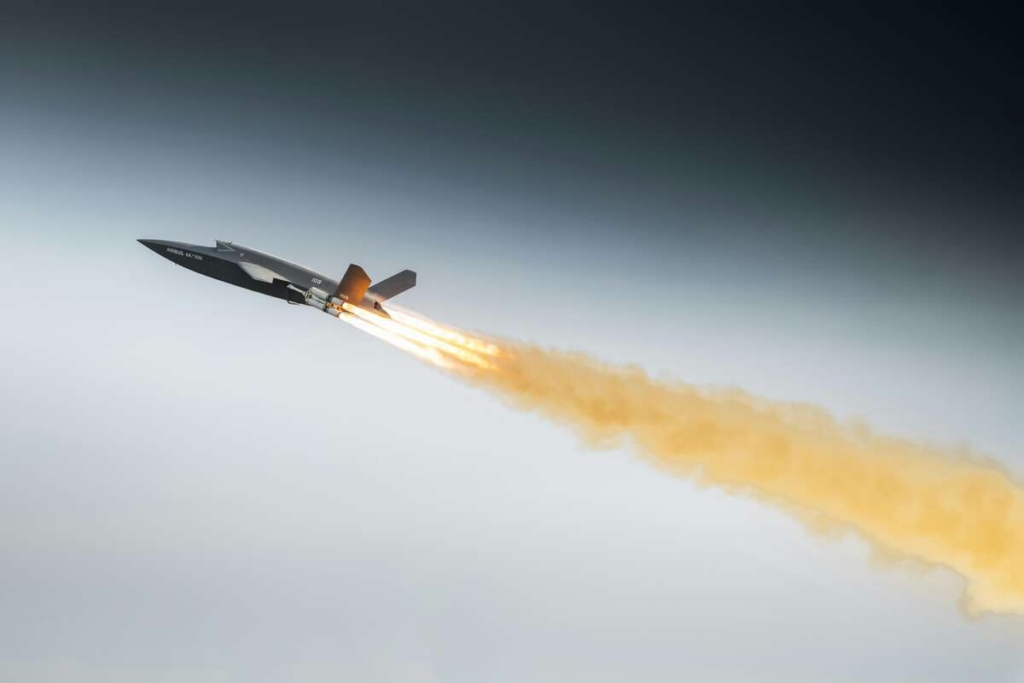
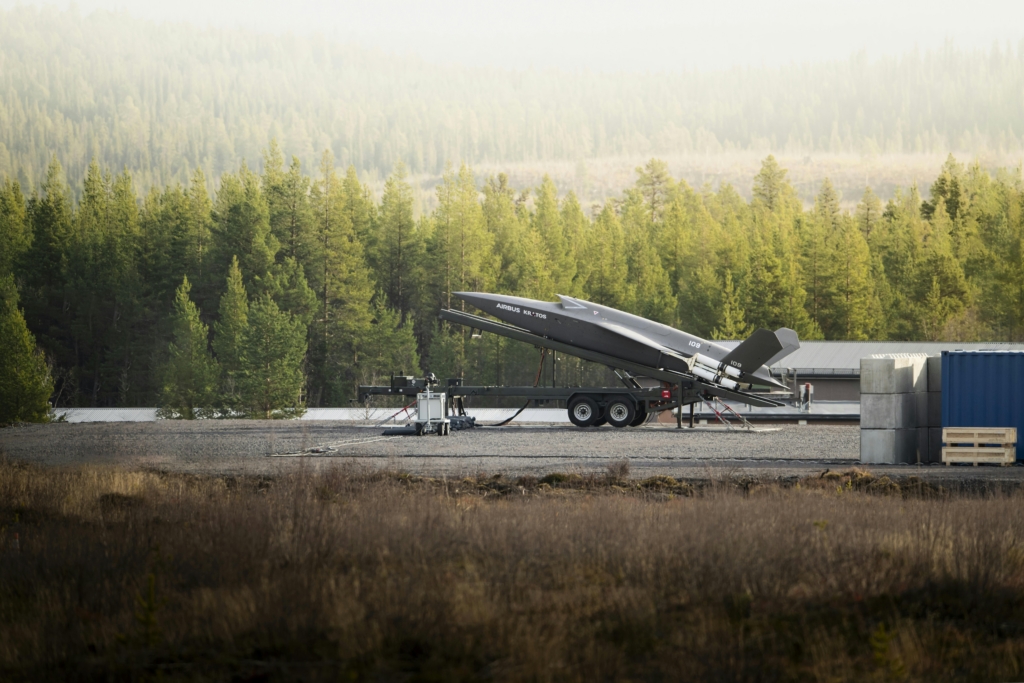
It can be launched using a rocket-assisted rail system, although conventional runway operations are also an option.
Eric DeMarco, president and chief executive of Kratos, described the flight as a successful milestone, highlighting the potential to combine the company’s aircraft and manufacturing experience with Airbus’ mission systems and aerospace expertise.
The companies are targeting an operational combat-ready system for the German Air Force by 2029, with potential applications elsewhere in Europe.
What is the background to the Valkyrie programme?
The Valkyrie programme builds on the US-developed XQ-58A Valkyrie, which first flew in 2019. Airbus and Kratos announced their partnership in July 2025, seeking to accelerate European access to uncrewed combat capability without having to develop an entirely new airframe from scratch.
The wider concept is known as crewed-uncrewed teaming, in which a piloted fighter directs one or more uncrewed aircraft to perform missions that might be too dangerous or demanding for crewed platforms.
Potential roles include reconnaissance, electronic warfare and air-to-ground attack. The precise operational configuration for Germany is still being defined.
The programme also forms part of Airbus’ broader uncrewed combat aircraft strategy. The company has unveiled the larger U760 Ravenstorm, a European-designed platform intended for the early 2030s. The Valkyrie is intended to provide an earlier route to operational capability while Airbus develops its longer-term portfolio.
A central question is how to reconcile the use of a US-developed aircraft with European defence autonomy. Airbus’ approach is to retain Kratos’ existing airframe while placing mission management and autonomy under its European MARS system.
The success of that integration, along with flight testing and operational certification, will be critical to meeting the 2029 target.






