


What to expect from Airbus in 2026

6 min read
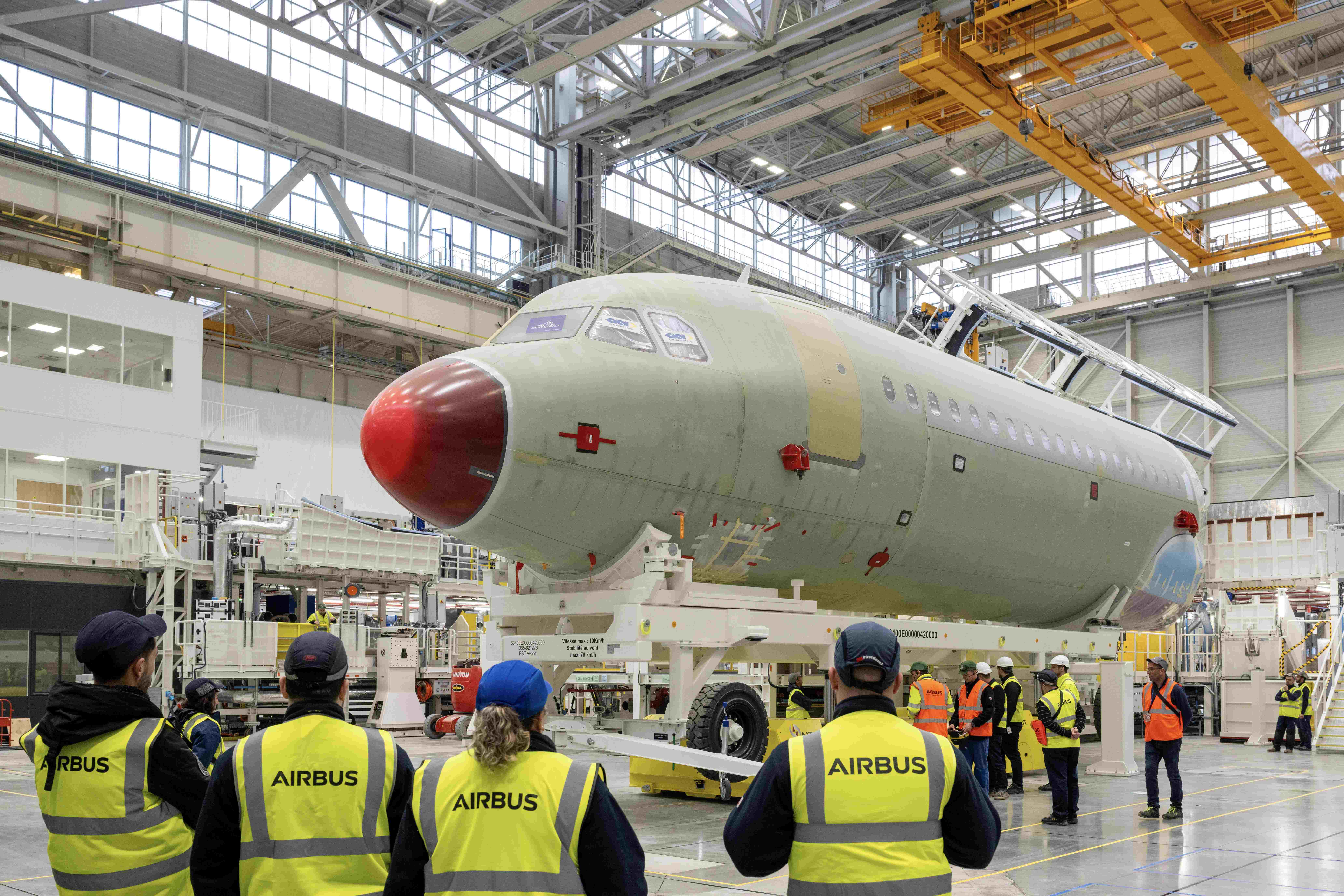
Airbus heads into 2026 with one overriding message from its investor presentations and earnings calls: the ramp-up isn’t over yet, but the real stress-test of its industrial system is about to begin.
Airbus aircraft delivery targets edge toward 900
Airbus delivered 766 jets in 2024 and initially guided to “around 820” commercial aircraft for 2025, a target it reaffirmed with its 9M 2025 results presentation.
A late-year fuselage panel quality issue forced a cut to “around 790” for 2025, with management stressing that the underlying ramp-up trajectory is unchanged.

On the Q3 2025 earnings call, analysts pressed Airbus on whether 2026 could deliver a “double-digit” increase in output compared with 2025. Investor commentary and follow-up reporting suggest the internal working assumption is around 900 deliveries in 2026, with some estimates as high as 1,000.
The lower end of the estimates would still:
- Cement its lead over Boeing in annual deliveries for another year, and
- Continue the march toward record narrowbody output later in the decade.
Single-aisle lead: Airbus A320neo family does the heavy lifting
The backbone of any 2026 scenario is the Airbus A320 family. In its results presentations and investor materials, Airbus has repeatedly reaffirmed its goal of taking A320-family production to 75 aircraft a month in 2027, from roughly 60 today.
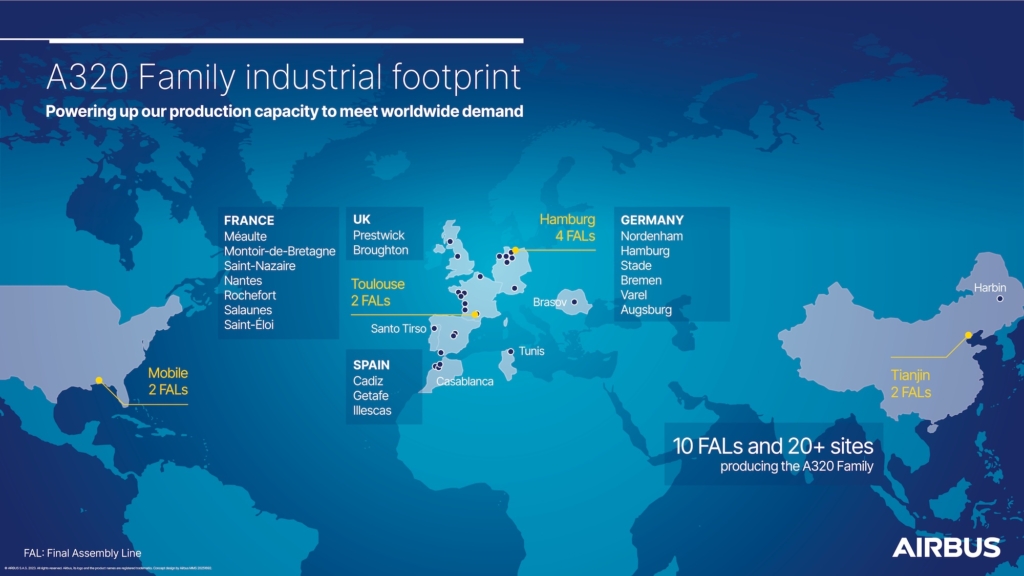
To support that, the group is adding capacity across its final-assembly network:
- A second A320 family line in Tianjin, inaugurated in October 2025, is expected to be fully operational by early 2026.
- A repurposed A380 line in Toulouse is due for completion as a second A321-capable line by mid-2026.
On recent calls, CEO Guillaume Faury has characterised 2026 as another year of progressive ramp-up rather than a step change, with continued constraints on engines, aerostructures, and cabin equipment. That matches the external signals: Airbus is talking about progressing “towards 75 in 2027”, not hitting that level in 2026.
For airlines, the 2026 story on single-aisles is less about a headline rate and more about slot relief. After years of sold-out order books, a steady rise in A320 output should begin to shorten lead times, even if only marginally.
A321XLR: first full year in service
By 2026, the A321XLR should be moving from “new toy” to workhorse. Airbus has already begun handing over production aircraft to its customers.
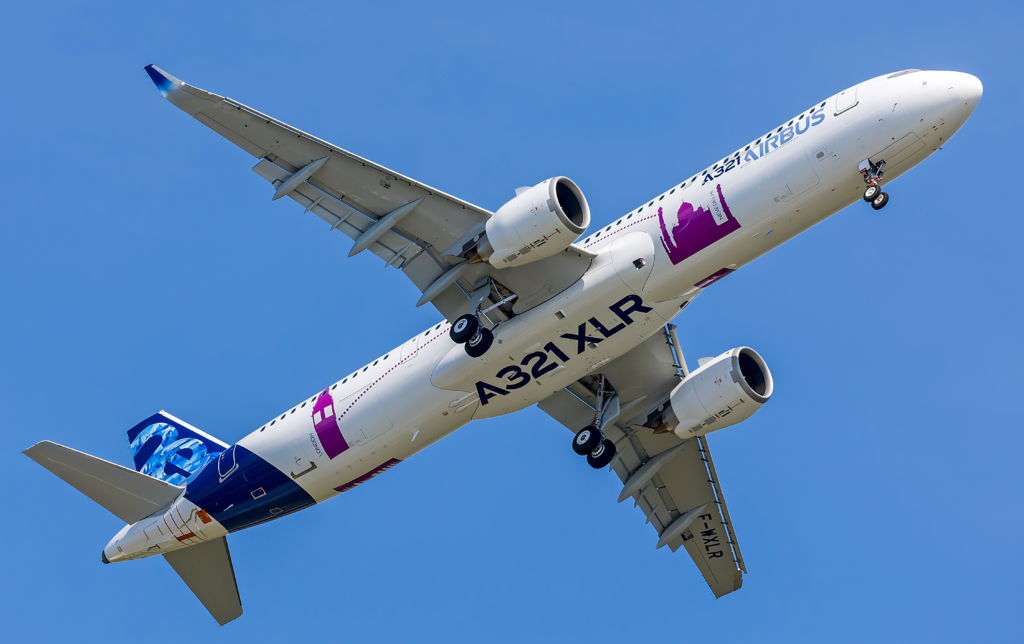
Key 2026 milestones for the A321XLR include:
- Network experiments: IndiGo, which is taking its first XLR at the end of 2025, plans six weekly non-stops from Delhi/Mumbai to Athens from January 2026 – a template for “long, thin” routes in high-growth markets.
- Domestic densification: Qantas expects to have several XLRs in service by the end of 2026, with higher seating and upgraded cabins compared with its 737-800s, enabling more capacity on constrained domestic trunk routes and short-haul international flights.
Airbus has framed the XLR as a margin and mix story: long-range A321s are heavily optioned, attract premium pricing and help defend Airbus’ dominance in the high-end single-aisle niche against any future Boeing move.
A220: slower ramp-up, but still growing into 2026
The A220 remains a strategic priority for Airbus but is also a pain point. Management has told investors that supply-chain and cost issues, including at engine and aerostructure suppliers, like Spirit AeroSystems, are forcing a more cautious ramp profile. Spirit has booked forward losses on both the A220 and A350, underlining the pressure in that part of the ecosystem.
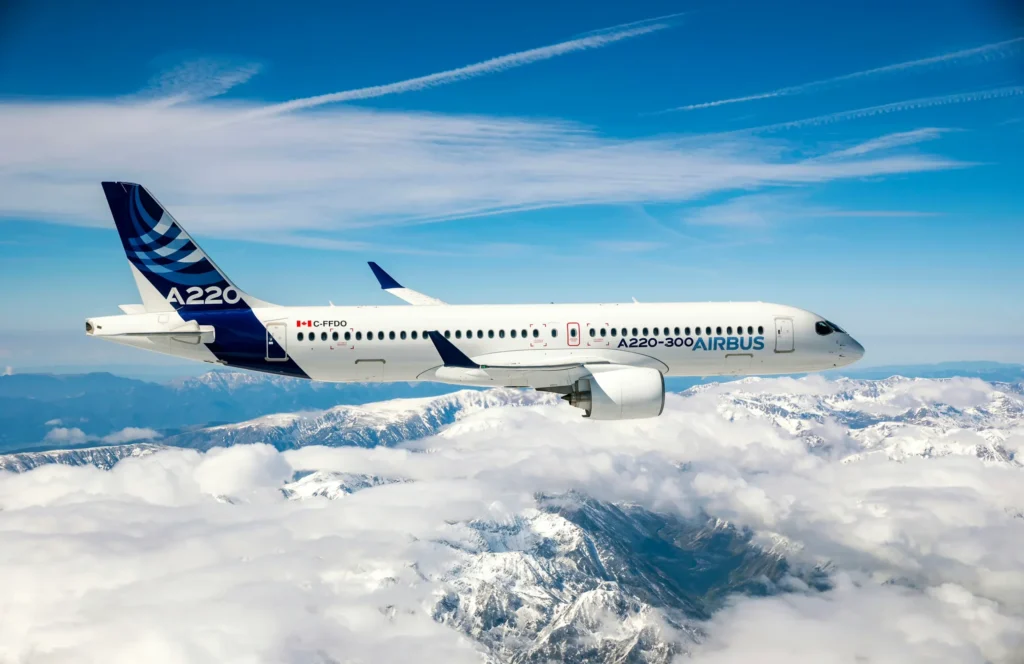
Airbus’ stated target has been to raise A220 production to around 14 aircraft per month by 2026, but the target may slip to the end of the year.
For 2026, that likely means:
- A220 output will grow compared to 2025, but at a slower rate.
- Continued discussion on programme economics – with investors still listening carefully for any hint of an A220-500 stretch or further industrial restructuring.
Widebodies: steady A350 ramp, A350F first flight
On widebodies, Airbus’ investor presentations lay out a longer-dated ramp:
- A350 production targeted at 12 per month by 2028.
- A330 stabilised at four per month, with a move to five per month pencilled in for 2029.
For 2026, that translates into:
- More A350s, but still a gradual climb from the 57 delivered in 2024, constrained by both supply chain and cabin-equipment bottlenecks.
- A330neo as a niche capacity tool, with little change in monthly rate but a clearer long-term signal that the line is safe into the 2030s.

The real widebody headline is the A350F:
- Airbus now targets Q3 2026 for the A350F’s first flight, with entry-into-service in the second half of 2027 after a one-year delay.
- Investor decks and the 2025 Global Market Forecast highlight a projected 45% growth in the dedicated freighter fleet by 2044, with demand for 935 new-build freighters. It’s a market Airbus wants to tap before Boeing’s 777-8F gains momentum.
Expect Airbus to focus on updates to the A350F test programme, structural and systems testing, and early customer visits. Investors will be looking forward to the first flight as a sign of progress.
Hydrogen and ZEROe postponed but not abandoned
Beyond conventional programmes, Airbus has faced a setback this year in meeting its long-term sustainability targets, acknowledging that technology has not yet caught up with its plans for the ZEROe hydrogen-powered aircraft and that the programme could be delayed by a decade.
Airbus successfully powered on its first megawatt-class hydrogen fuel-cell “iron pod” at 1.2 MW in late 2023, a key milestone towards a 2035 hydrogen-powered commercial aircraft.
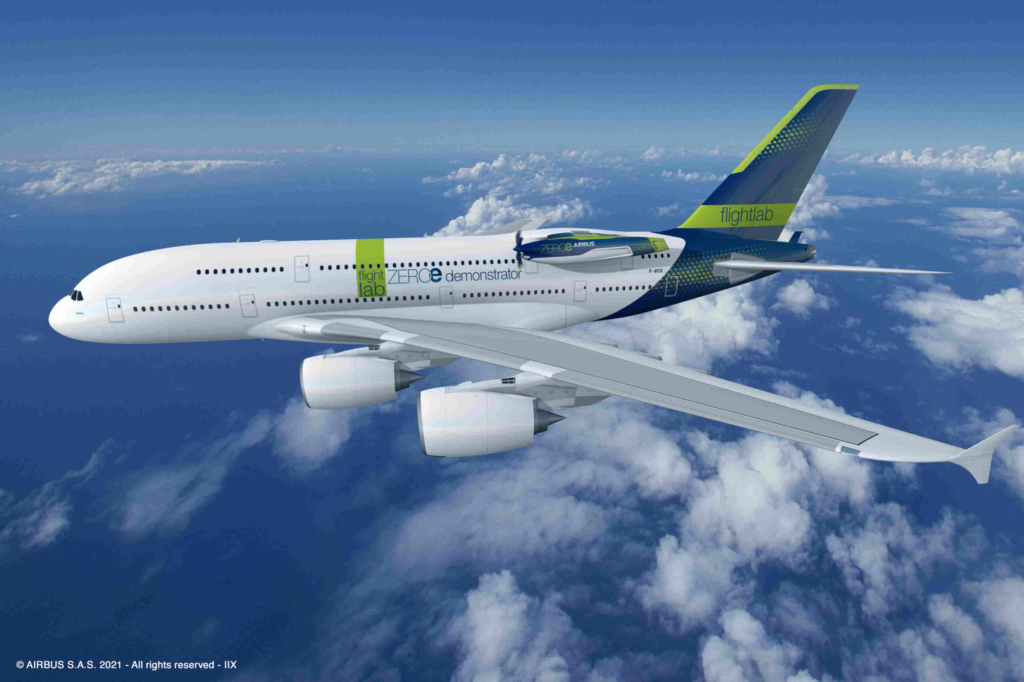
The company had previously stated plans to flight-test hydrogen propulsion on an A380 testbed from around 2026, using systems developed with CFM International.
Despite the delays, Airbus has reaffirmed its commitment to the ZEROe programme and has adjusted expectations. There may be more detailed disclosure to investors next year on technology choices and certification pathways to support Airbus’ narrative about defending its market share in a decarbonising world – and to justify sustained R&D spending through the late 2020s.
Industrial risks: panels, “gliders” and Spirit integration
If 2025 has proven anything, it’s that the ramp-up plans of both OEMs remain fragile. Panel quality issues and a major software recall have already cost Airbus its original 2025 delivery target.
For 2026, the main risk Airbus faces are:
- Engines and aerostructures: GTF and LEAP engine availability, along with cost and capacity constraints at key suppliers, remain the primary bottlenecks for single-aisle output.
- “Gliders”: partially completed A320-family airframes waiting on engines or components are still present in the system, although management insists the number is trending down into 2026.
- Spirit AeroSystems integration: Boeing’s purchase of Spirit and the parallel transfer of Spirit sites related to the A220, A320, and A350 to Airbus will keep industrial teams busy through 2026–27.
Airbus has told investors that the impact of integrating these Spirit work packages is in line with earlier estimates. Still, it is another moving part in an already complex ramp-up.
Demand is not the problem for Airbus in 2026
Finally, nothing in Airbus’ 2025 Global Market Forecast suggests demand is a constraint. The OEM projects:
- 3.6% annual passenger-traffic growth through 2044;
- A need for around 43,400 new passenger and freighter aircraft, of which about 34,250 are single-aisle aircraft.
Backlog figures from the 9M 2025 presentation show 8,665 commercial aircraft in the orderbook – roughly 12 years of current production at today’s rates.
In other words, for Airbus, 2026 is not about finding new aircraft buyers; it’s about proving the company can execute the ramp it has already sold. If Airbus can get close to the ~900-delivery level investors expect, keep A320 and A220 trajectories intact, and hit the A350F first-flight milestone, it will have cleared its biggest near-term hurdles and be well on the path to its late-decade production and decarbonisation ambitions.
Featured Image: Airbus


