


How Airbus is using 3D printing to overcome supply chain bottlenecks and accelerate production

5 min read

Since 2019 and the COVID-19 pandemic, the world’s major aircraft manufacturers have been hamstrung by supply chain bottlenecks, delaying the supply of vital components to production lines and slowing the manufacture of new aircraft.
However, addressing some of those issues with new innovative ways of producing crucial aircraft parts has gone some way to alleviating some of these delays.
Airbus, as one of the leading OEMs (original equipment manufacturers), has embraced the use of 3D printed parts to be a way of solving at least some of the issues and is extensively using the technique to speed up production lines and maintain deliveries to customers.
Airbus is extensively using 3D printed parts in new aircraft
Using various 3D printed parts supplied by Minnesota-based technology firm Stratasys, Airbus is now addressing supply chain constraints by producing more than 25,000 flight-ready 3D-printed parts annually.
This not only helps the OEM maintain delivery schedules but has also had a transformative effect on how modern aircraft are built and maintained.
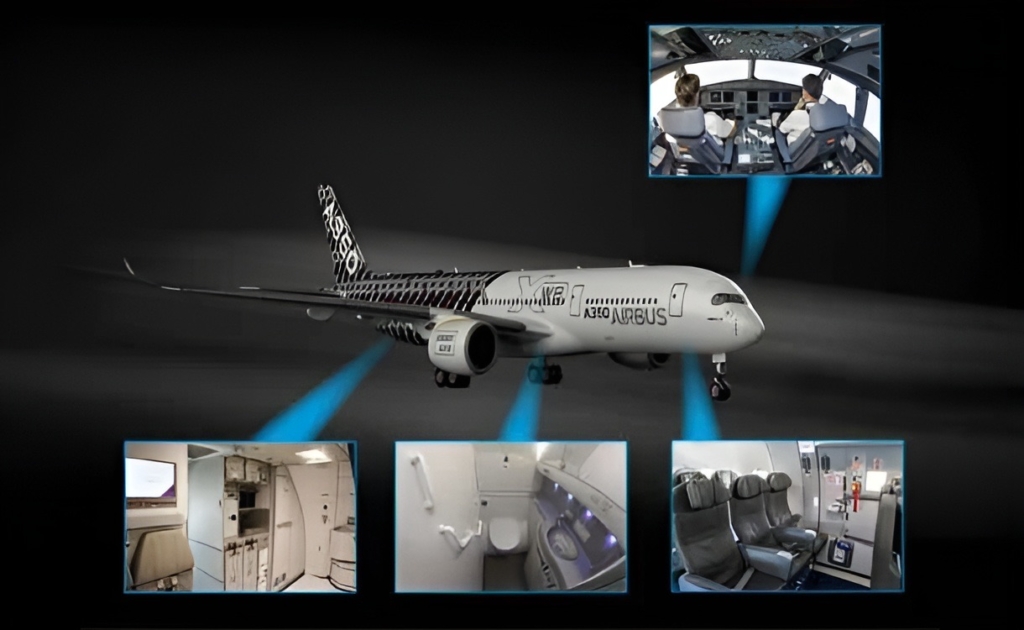
From the initial placing of an order for a spare seat component with Stratasys, Airbus has since embraced the process of additive manufacturing. It now has over 200,000 certified Stratasys polymer parts in active service with airlines and air forces worldwide.
3D printed parts reduce weight on aircraft
Stratasys shares that the implementation of’ 3D printed parts in the production process of the Airbus A350 long-haul jet has resulted in a 43% weight reduction.
For Airbus, this process eliminated the Minimum Order Quantity (MOQ) requirement, and led to an 85% reduction in lead time.
Airbus has so far used parts produced by Stratasys on three production lines, including the A320neo family, as well as the A350 and the A400M military multirole transport aircraft.
According to Stratasys, the parts are being printed using filament Certified Grade (CG) material and are produced using its industrial-grade printers.

“Stratasys’ additive manufacturing technology is an integral part of our commitment to safe and sustainable aviation,” said Serge Senac, Airbus Industrial Leader for Polymer Additive Manufacturing. “We can produce certified, repeatable parts faster, with less reliance on complex supply chains. This manufacturing flexibility reduces costs and ensures improved response times to meet the needs of our customers around the world.”
Senac added that the technology contributes to Airbus’ roadmap to achieving carbon neutrality by 2050.
According to Stratasys, the parts being produced for Airbus all meet rigorous aerospace requirements and standards. By using 3D printing techniques, the company can produce components much faster than conventional manufacturing and do so more cost-effectively.
Other benefits of 3D printing mean that components throughout the aircraft can be produced this way and are not limited to the type or function.
Reducing supply chain bottlenecks through additive manufacturing
Stratasys adds that distributed additive manufacturing allows Airbus to produce parts where and when they’re needed, helping reduce aircraft downtime, minimise inventory storage, and avoid costly supply chain delays.
“Our collaboration with Airbus is proof that additive manufacturing is being integrated into true production at scale, and can be a huge differentiator,” said Rich Garrity, Chief Business Unit Officer at Stratasys.

“With tens of thousands of certified parts already flying, we are seeing an inflexion point, not just for Airbus, but for the entire aerospace industry. Demand for lighter, faster, and more resilient supply chains is accelerating the adoption of Stratasys technology worldwide.”
What Airbus is achieving today signals the next growth chapter for our industry: certified additive manufacturing as a mainstream production method across aviation globally.”
How Stratasys has become a leading player in 3D printing
According to the Stratasys website, the company has accumulated years of experience producing high-performance materials and additive manufacturing platforms for the aerospace, automotive, consumer products, and healthcare industries.
Crucially, the parts being produced by 3D printing techniques are easily reproduced and easily certified, making them viable alternatives in the sector where timelines can be short, and the importance of short-term fulfilment is often high.
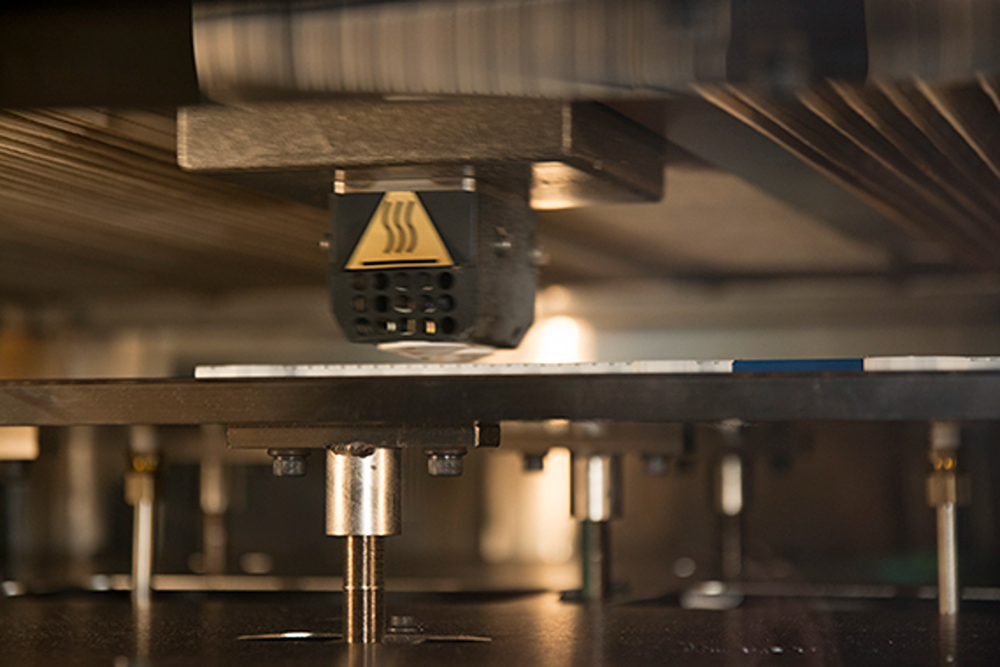
The use of 3D parts is “helping aerospace companies keep fleets flying while lowering operational costs,” concludes the company.
The rapid advancement of 3D printing
3D printing has come a long way in a relatively short period, with many parts of the aerospace industry embracing the benefits that it can offer.
Just this week, Saab Aircraft in Sweden unveiled a world-first in aerospace manufacturing: a five-metre aircraft fuselage that has been entirely 3D printed using an additive production system, which is intended to fly for the first time in 2026.
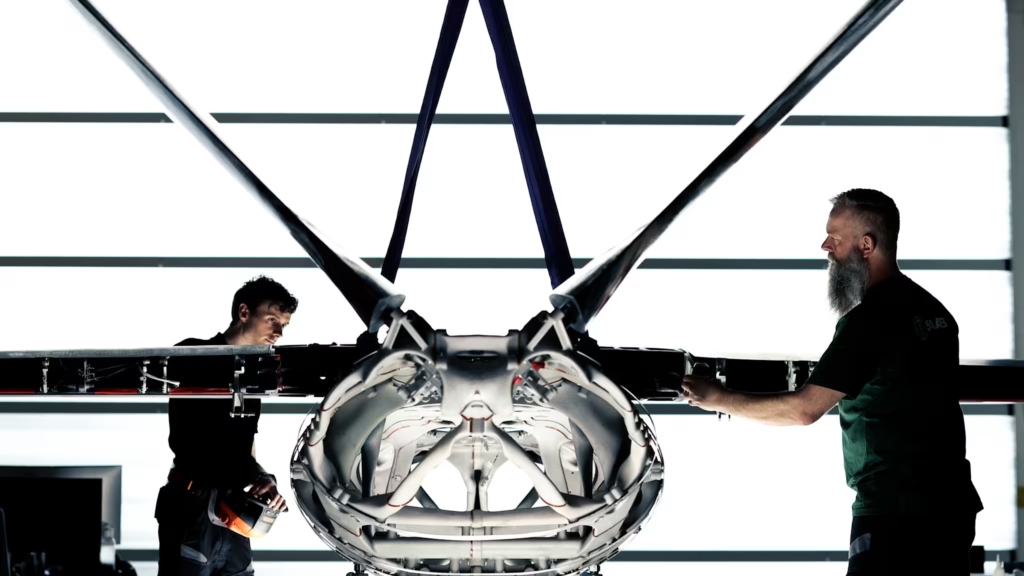
If flight tests succeed, Saab believes the concept could open the door to a new industrial model in which aircraft can be redesigned, built and iterated almost as quickly as software releases.
The new 3D-printed fuselage is the latest expression of that mindset, bringing together additive manufacturing, AI-driven optimisation and model-based engineering in a single physical structure.
Meanwhile, in August, the UK Royal Air Force (RAF) announced it had successfully installed an in-house manufactured 3D-printed component in an operational Eurofighter Typhoon for the first time.
Specialists from No. 71 Inspection & Repair Squadron manufactured the component at the Hilda B. Hewlett Centre at RAF Wittering in Cambridgeshire. It was then installed by No. 29 Squadron engineers on the Typhoon on 7 August at RAF Coningsby.
According to the RAF at the time, while the fix wasn’t intended to be permanent, it showed the potential for additive manufacturing to keep aircraft operational while replacement parts are awaited.


