1st Boeing T-7A Red Hawk arrives at US Air Force to modernise fighter jet pilot training

4 min read

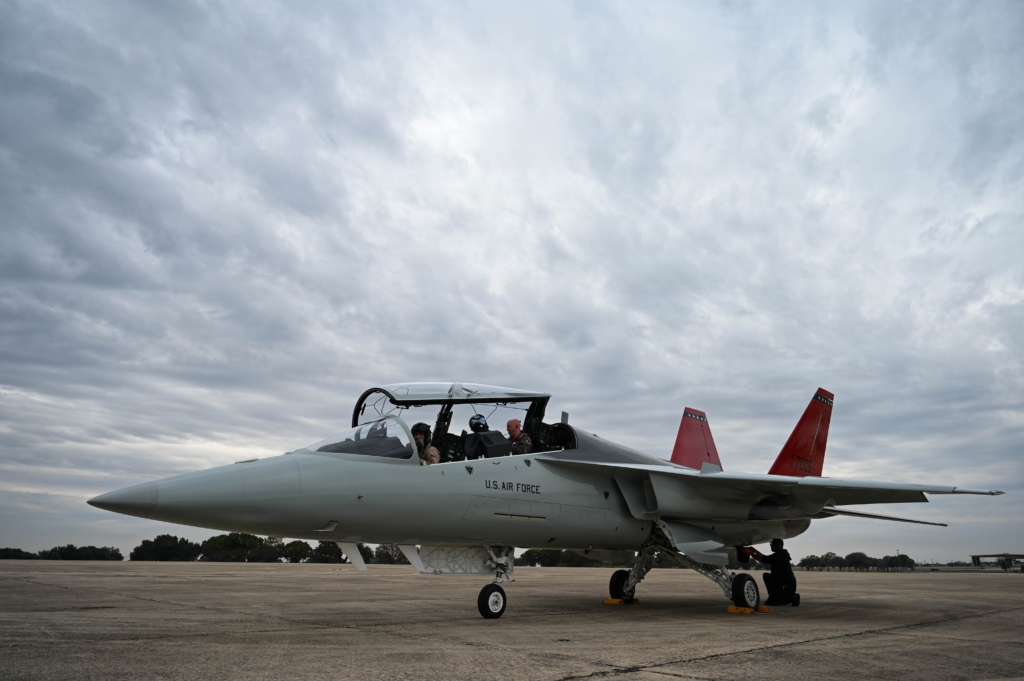
The US Air Force has officially taken delivery of its first Boeing T-7A Red Hawk advanced jet trainer for operational use, marking a significant turning point in the modernisation of its pilot training programme.
The aircraft touched down on 5 December at Joint Base San Antonio Randolph, home of the 12th Flying Training Wing under Air Education and Training Command (AETC). The arrival signals the opening move in replacing the T-38 Talon, a faithful but ageing workhorse introduced more than 60 years ago.
For the first time since the 1960s, America’s future fighter and bomber pilots will learn on a jet designed for their generation and the digital battlespace ahead.
“The aircraft delivery is the first physical representation of progress within the programme,” said Brig Gen Matthew Leard, AETC’s Director of Plans, Programmes, Requirements and International Affairs.
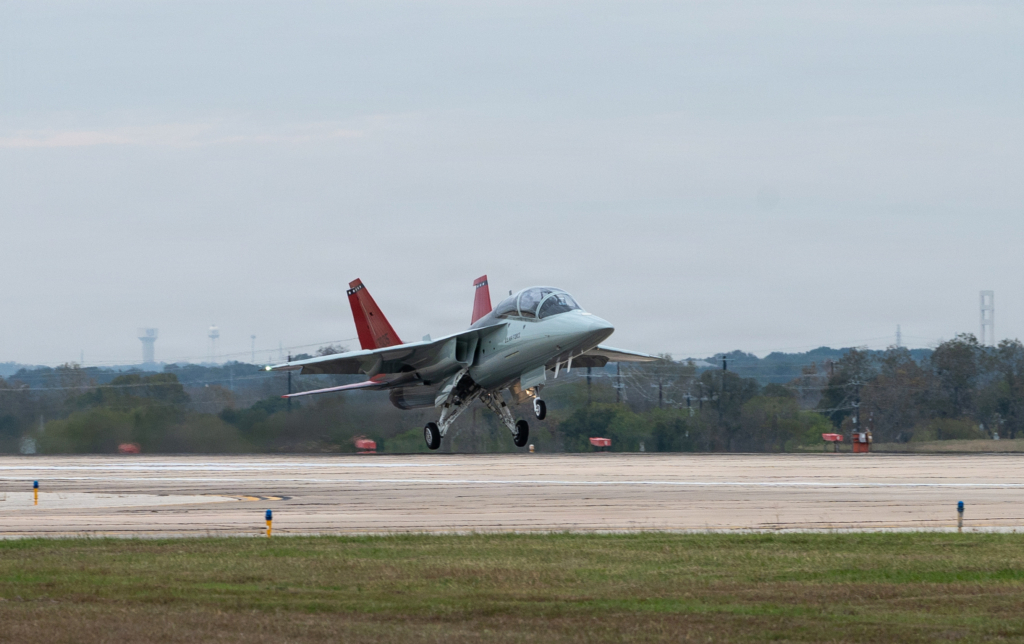
A formal ceremony will follow, but the T-7A’s presence already marks a symbolic shift. Named in honour of the Tuskegee Airmen, the Red Hawk will join the squadron that carries their legacy, the 99th Flying Training Squadron “Red Tails”.
T-7A Red Hawk integration with the 99th Flying Training Squadron
Lt Col Michael Trott, commander of the 99 FTS, said the unit is ready for both transformation and tradition.
“We intend to continue the legacy of breaking barriers and challenging assumptions by utilising the advanced capabilities of the T-7 training system,” he said. “The 99th will rewrite what pilot production looks like and shape the future of pilot training for the next generation of warfighters in America.”
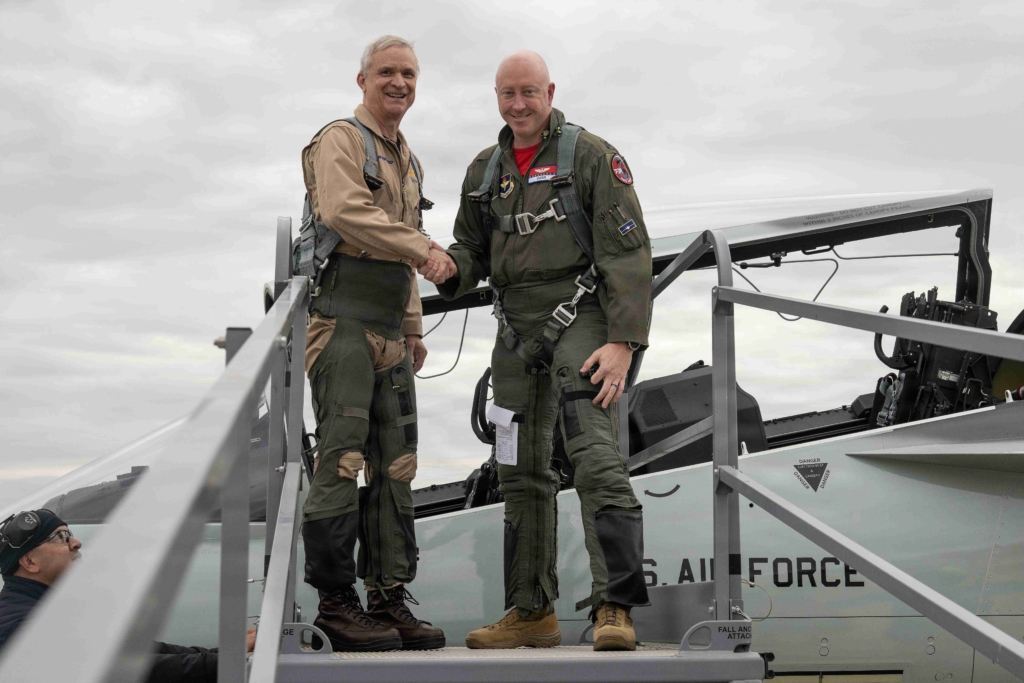
Initially, the aircraft will be used for Type 1 training to build instructor and maintainer proficiency before entering the student syllabus. Over time, the jet will expand across undergraduate pilot training (UPT) bases, eventually replacing not only the T-38 but, later, the T-6 Texan II.
Next-generation T-7A cockpit and digital training capabilities
From the F-35 and B-21 Raider to classified sixth-generation programmes, the future USAF force requires pilots who can think, process and decide within multi-domain environments. The T-7 is designed precisely for this shift, featuring:
- Fly by wire controls
- All glass cockpit with advanced displays
- Embedded simulation and networking
- Open architecture mission systems
- Stadium seating for improved instruction
- High agility airframe and modern performance envelope
It represents a move away from traditional “stick and rudder” flying alone and towards managing information in high-threat scenarios.
“Students won’t just be learning to fly, they’ll be learning to manage information,” said Maj Gen Gregory Kreuder, commander of 19th Air Force. “The T-7 closes the gap between entry-level flying and fifth-generation warfare.”
The open architecture design means cockpit systems can evolve through iterative software updates rather than major redesigns, keeping training aligned with emerging technologies and threats.
New USAF training ecosystem: GBTS, LVC and data-driven instruction
The aircraft is just one pillar of a wider transformation. The T-7A introduces a connected training ecosystem that will fundamentally change how instructors teach and how students progress.
- Ground-Based Training System (GBTS): High-fidelity simulators replicate the aircraft’s logic, displays and data, reducing live sorties while increasing complexity.
- Live Virtual Constructive (LVC): Crews in the jet can train alongside virtual aircraft or threats piped into the scenario, something impossible with the T-38.
- Data-driven progression: Performance analytics allow personalised learning strategies based on individual strengths and weaknesses.
“The challenge is to avoid plugging our new jet into an old model,” Kreuder said. “We are redesigning pilot training itself.”
T-7A development timeline and Boeing–Saab programme history
The T-7 is the product of a decade-long Boeing-Saab partnership. Development progressed at an unusually rapid pace:
2013: Joint development agreement signed
2016: First production representative jets unveiled
2018: USAF selects the design and orders 351 aircraft
2019: Officially named “Red Hawk”
The programme famously went from concept to first flight in just three years.

But, as with many modern aerospace efforts, the path was not entirely smooth. Software maturity, flight control characteristics, and escape system performance prompted additional scrutiny.
Earlier in 2025, AETC requested four Production Representative Test Vehicles (PRTVs) to accelerate certification and rebuild confidence before full production.
With the arrival of the first training assigned aircraft, that strategy is now bearing fruit.
How the T-7A will replace the T-38 and reshape the pilot pipeline
Initial Operational Capability is forecast for August 2027, with 14 aircraft stationed at Randolph. Planned follow-on deliveries include:
- Columbus AFB – FY2027
- Laughlin AFB – FY2032
- Vance AFB – FY2034
- Sheppard AFB – FY2035
The T-38 fleet will remain in use until enough T-7s are online to avoid bottlenecks in pilot production.
Boeing continues airframe assembly in St Louis, while Saab builds the aft fuselage in Linköping, Sweden – a notable example of transatlantic industrial cooperation.
Pilots trained on the T-38 often arrive at advanced weapons courses needing to unlearn habits shaped by an earlier cockpit philosophy. The T-7A is designed to close that gap from day one, developing the ability to fuse information, manage automation, make rapid tactical decisions, handle high-G manoeuvres and build a defensive mindset from the start of training.
Leard summed up the shift: “The T-7 is more about displaying and ingesting large amounts of information. That is the challenge of the fifth or sixth generation world.”
In essence, the Red Hawk prepares pilots not just to fly, but to fight and survive in the digital battlespace.
Featured image: USAF