


Could Ukraine fly America’s retired F-15 Eagles? A former US general makes the case

4 min read
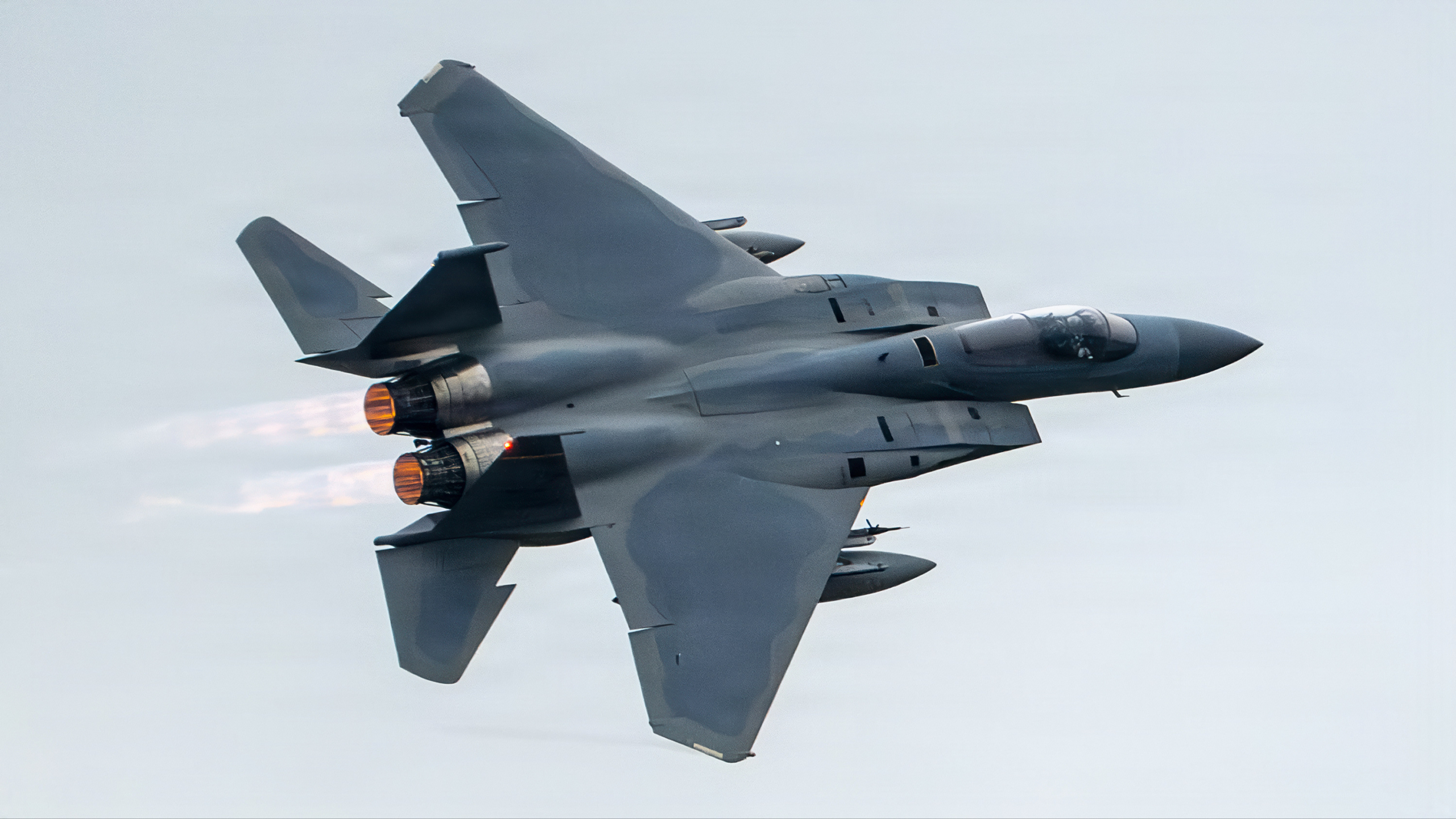

Retired United States Air Force Lieutenant General David A. Deptula has written an opinion piece for Forbes arguing that the US should consider transferring 50-60 retired F-15C/Ds to Ukraine.
Deptula is now the dean of the Mitchell Institute for Aerospace Studies think tank. He is also a senior scholar at the U.S. Air Force Academy’s Institute for Future Conflict. The retired general recently returned from Ukraine, where he worked with the Ukrainian Air Force to improve its air operations.
The US has hundreds of mothballed retired F-15C/Ds
Deptula argues that Ukraine is in sore need of more fighter jets and that the US’s recently retired F-15C/Ds stored at the Davis-Monthan boneyard could be a solution. These have been replaced by F-35As and F-15EXs in US Air Force service.
He writes, “The United States should assess whether it can refurbish, equip, and transfer roughly 50–60 F-15C/D Eagles to Ukraine.”
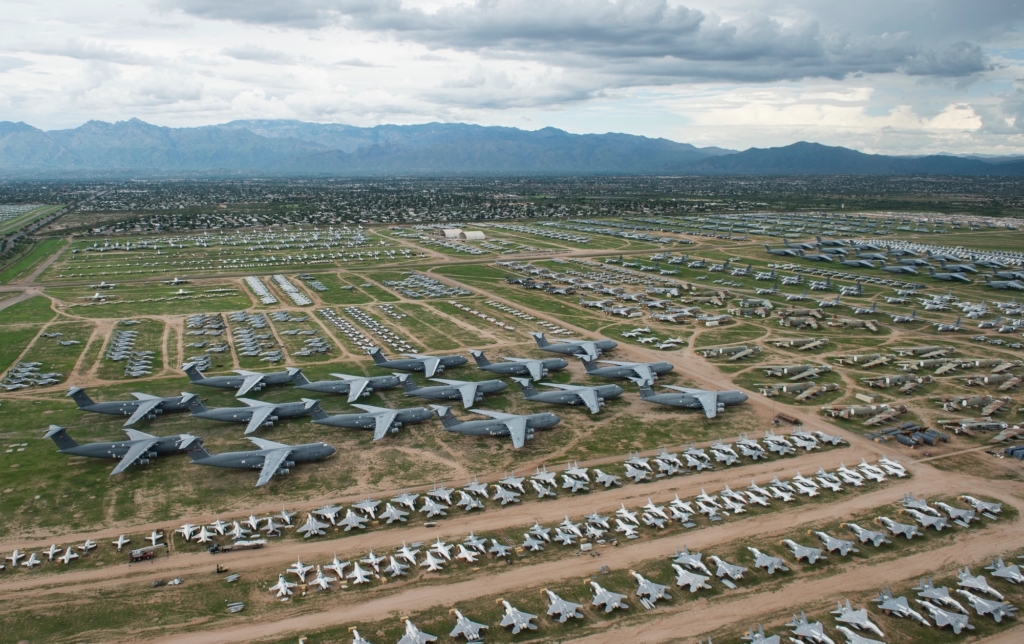
The US has over 240 F-15C/Ds in storage at the Arizona boneyard, with more expected to join in the next few years. Some of these would require little work to be ready to be transferred.
Ukraine needs more aircraft in the air at any one point in time than it can manage with its existing fleet; fighter jets are indispensable for fighting off Russian air attacks.
Ukraine’s F-16s, Mirage 2000s, and legacy Soviet era fighters pay for these missions in heavy maintenance. He argues that with its fighters tied up in air defence, Ukraine lacks units to carry out offensive missions against Russia.
A case for sending F-15C/Ds to Ukraine
The F-15 Eagle is a much larger aircraft than the light/medium weight F-16 and can carry more rounds (940 vs 511 rounds) and many more rockets for short-range air defence. If older F-15s could take over air defence, then Ukraine’s F-16s could receive multirole missions for which they are better suited.
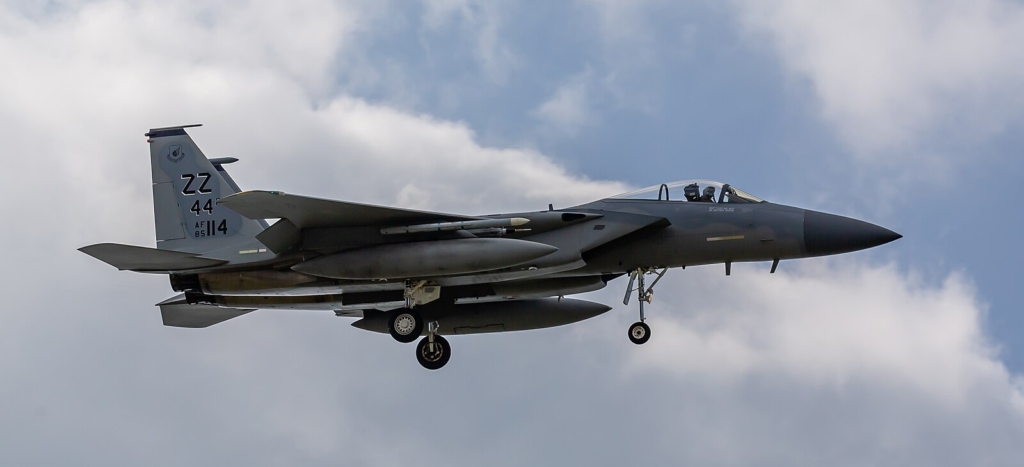
Some of the retired F-15C/Ds have received the APG-63(V)3 active electronically scanned array (AESA) radar, giving pilots markedly better detection range, tracking, and reliability than the radars on the F-16s or any of Ukraine’s other fighters.
He says the strongest argument is speed, as it takes time to produce and deliver new F-16s, Gripens, and Rafales. It also takes over a year to train pilots and maintenance crews.
Deptula notes, “Introducing another fighter type will pose some challenges for Ukraine: pilot training, maintenance, spare parts, ground equipment, infrastructure, and weapons supply must be resolved before aircraft are transferred.”
Washington unlikely to transfer F-15C/Ds to Ukraine
Even under the Biden administration, Washington refused to transfer retired F-16 Fighting Falcons to Ukraine, even though it has hundreds sitting mothballed in its boneyard.
This is not to say Washington didn’t aid Ukraine with F-16s. It did and does. Washington provided critical training and other facilitation roles, but it insisted the airframes had to come from European stocks.
In the last few weeks of 2026, Ukraine is expected to receive ten ex-Belgium F-16s, two ex-French Mirage 2000-5F, and possibly two or so ex-Polish MiG-29s depending on that particular set of colourful negotiations. The first of 16 ex-Swedish Gripen C/Ds are to arrive in January 2027.
🇺🇦 Ukraine will begin receiving Swedish Gripen aircraft in January 2027, President Volodymyr Zelenskyy said on November 23 📸: Wikipedia 🔗https://t.co/QjBBLbvX8m https://t.co/5fT4TrDcLW
— The New Voice of Ukraine (@NewVoiceUkraine) November 24, 2026
There is some wisdom to the maxim “never say never”, but under the current Trump administration, it seems highly unlikely it would seriously consider transferring old Eagles to Ukraine.
The latest opinion piece is no revelation that Uncle Sam has deep stores of active and mothballed fighter jets that Europe collectively lacks. The latest piece is an opinion of what Washington could do if it chose to, not a realistic assessment of what it will likely choose to do.
Instead, Ukraine is looking long-term to Europeans for its fighter needs. Its ageing, worn-out, and attrited fleet of Soviet Su-25s, Su-24s, MiG-29s, and Su-27s is likely to retire at the earliest convenience post-war.
These will be replaced by a fleet of up to 250 fighters (subject to political, financial, and industrial constraints). The fleet is to be made up primarily of Saab Gripens (mostly new Es), Rafales, and older ex-European F-16s.
Sign up for our newsletter and get our latest content in your inbox.