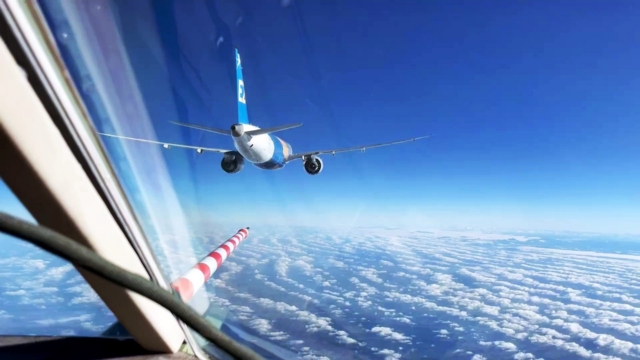


Air India resumes non-stop New York flights as airspace restrictions ease

5 min read
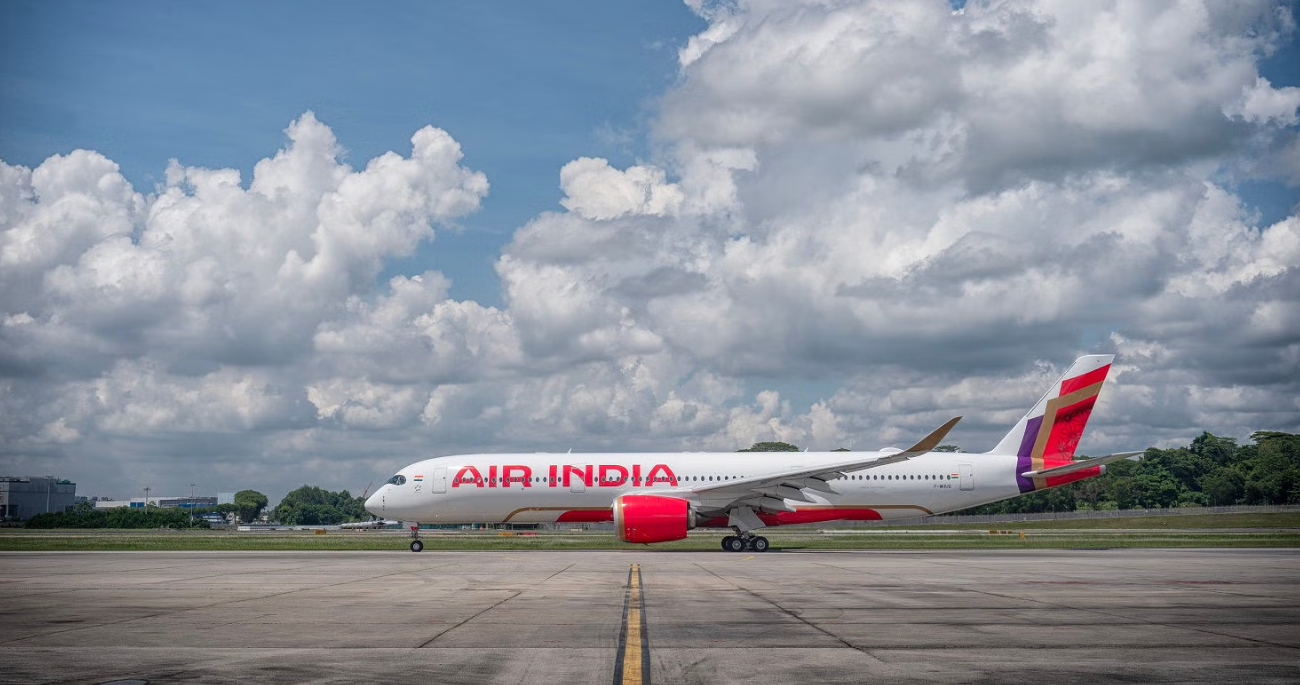

Air India has restored non-stop flights from Delhi and Mumbai to New York and Newark after the easing of airspace restrictions that had forced the airline to make refuelling stops in Rome, adding up to five hours to journeys between India and the United States.
The airline announced the resumption on 15 November, confirming that all four routes are again operating without technical stops. Flights that had taken around 22 hours because of the diversions are now taking only approximately 17 hours.
Why Air India temporarily stopped direct flights to New York
The disruption began earlier this year when neighbouring country Pakistan closed its airspace to Indian airlines. Further restrictions across parts of the Middle East, amid regional conflict, forced Air India to take longer routes to North America.

The resulting increase in flying distance meant some aircraft could no longer complete the journeys without stopping for additional fuel. Rome became the refuelling point for affected services to New York’s John F. Kennedy International Airport (JFK) and Newark Liberty International Airport (EWR).
“With airspace restrictions eased, Air India has now resumed non-stop operations on all four India-New York routes,” the airline said in its statement.
The change follows several months of operational difficulties for Air India’s long-haul network, particularly on flights to North America, where avoiding restricted airspace increased flying time and fuel requirements.
According to an Air India official, the airline began restoring the non-stop services during the first week of November, using Iraqi airspace as part of the revised routings.
How airspace closures affected flights
Pakistan’s airspace restrictions prevented Indian carriers from using routes that would ordinarily take aircraft westwards across the country towards Europe and North America.
Restrictions in parts of the Middle East further complicated flight planning, requiring aircraft to fly farther south through alternative corridors.
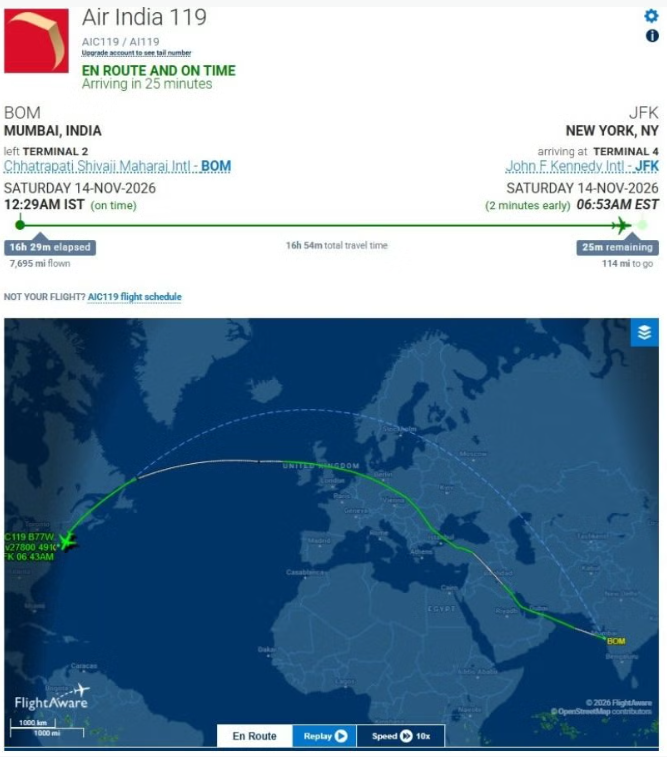
The longer routings increased fuel consumption and, on some services, made intermediate refuelling necessary.
An Air India official had previously described the operational impact of the restrictions, saying that the greater the number of closed airspaces, the farther south aircraft had to fly.
“The more airspaces are closed, the more southwards flights have to go… the more southwards flights have to go, the more the fuel bill,” the official said.
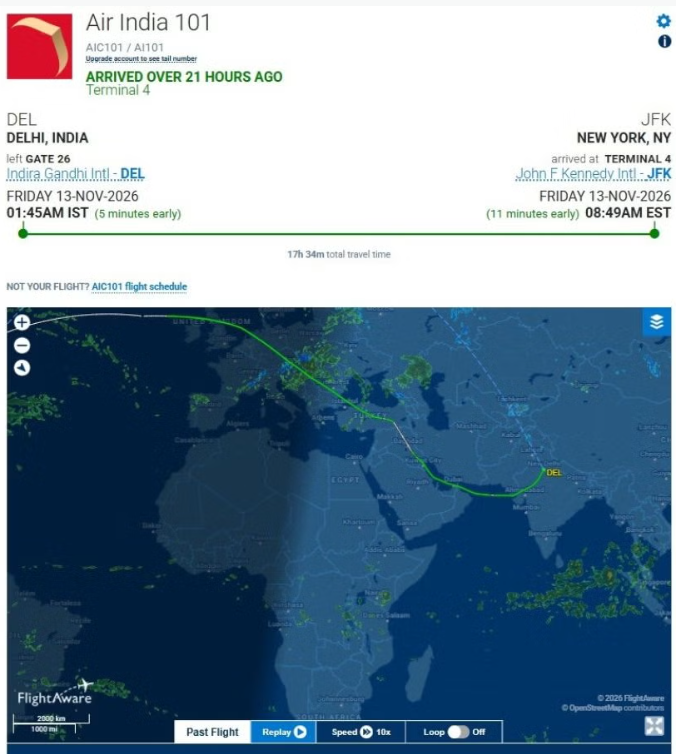
The official added that the impact of the restrictions had been worse than the previous year.
Air India’s latest announcement does not indicate that all airspace restrictions affecting Indian carriers have been removed. It confirms that sufficient restrictions have eased to allow the four New York-area services to operate without refuelling stops.
A350s and Boeing 777s operate the routes
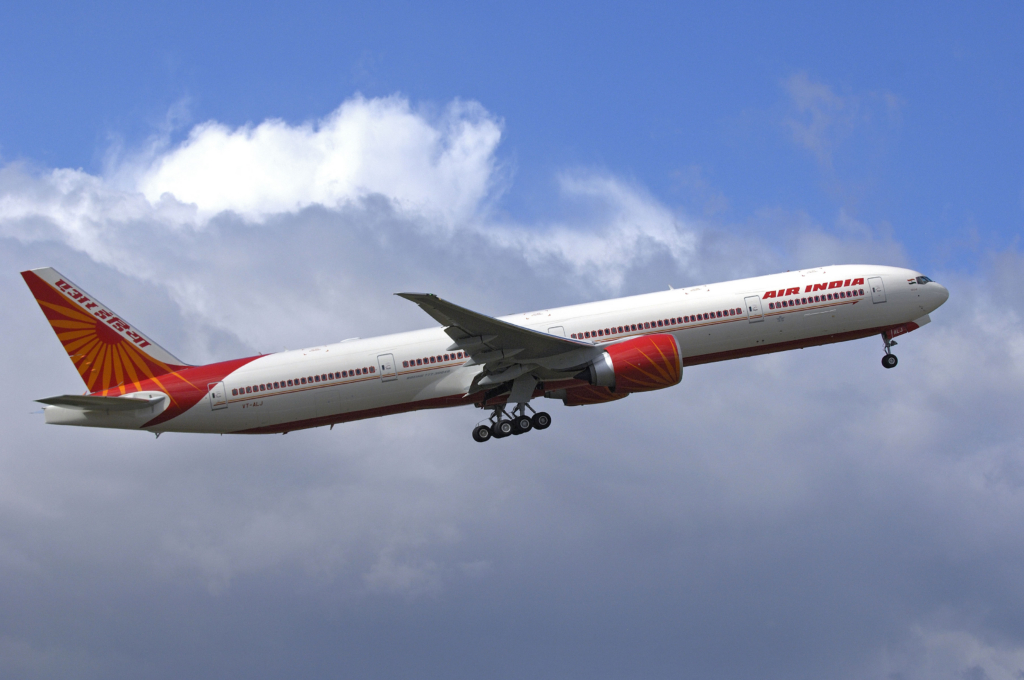
Air India is using two widebody aircraft types on the restored services, with Airbus A350-900s operating from Delhi and Boeing 777-300ERs flying from Mumbai.
The airline currently operates one daily flight from Delhi to JFK and four weekly services to Newark. Both routes use the A350-900.
Mumbai has one daily service to JFK and three weekly flights to Newark, operated by the Boeing 777-300ER.
Together, the four routes account for 21 weekly departures from India to the New York metropolitan area.
The A350-900 is among the newest aircraft in Air India’s long-haul fleet and forms part of the airline’s ongoing fleet modernisation programme.
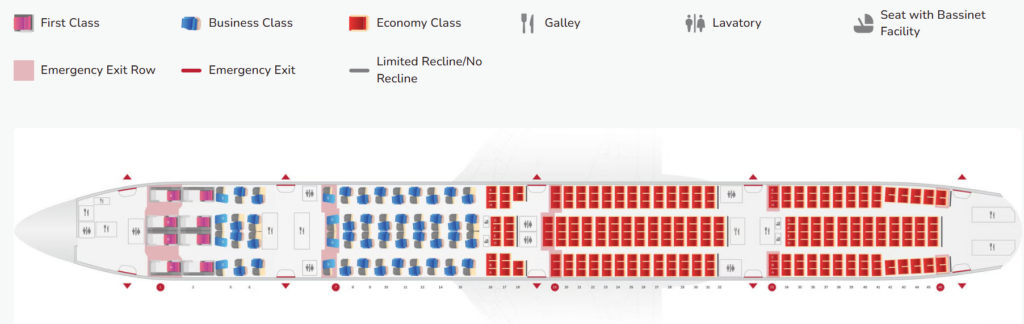
The aircraft has 316 seats in three classes: 28 in Business, 24 in Premium Economy and 264 in Economy.
Business Class is arranged in a 1-2-1 configuration, giving every passenger direct aisle access. The seats convert into fully flat beds and have sliding privacy doors.
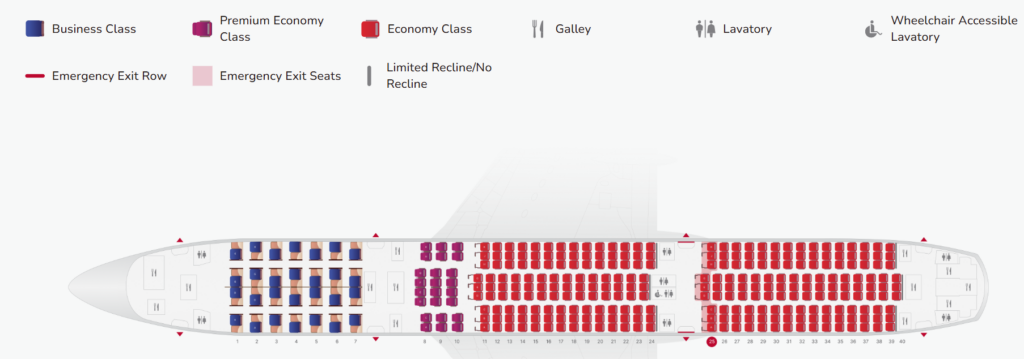
Premium Economy has a separate cabin with 38 inches of seat pitch, while Economy seats have a pitch of 31 inches.
The A350s also have individual entertainment screens across all cabins, including 21-inch displays in Business Class, 13.3-inch screens in Premium Economy and 12-inch screens in Economy.
Air India introduced the A350-900 into its fleet in 2024, initially deploying the type on domestic services before expanding its use to international routes.
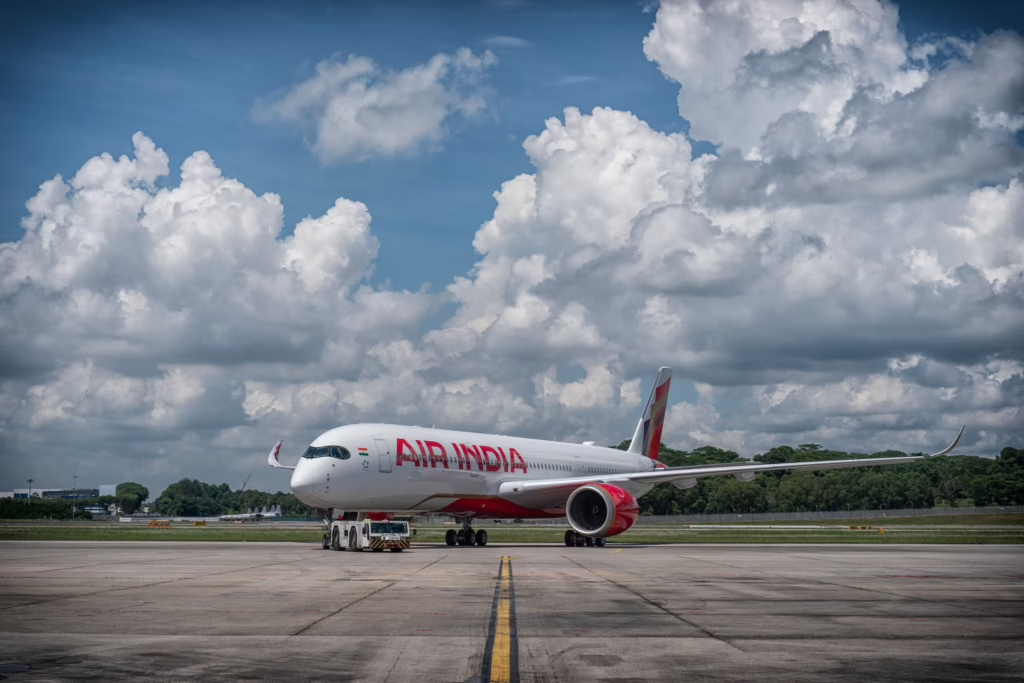
The aircraft subsequently became part of the airline’s long-haul operations, including flights to London and New York.
Upgraded cabins on Mumbai flights
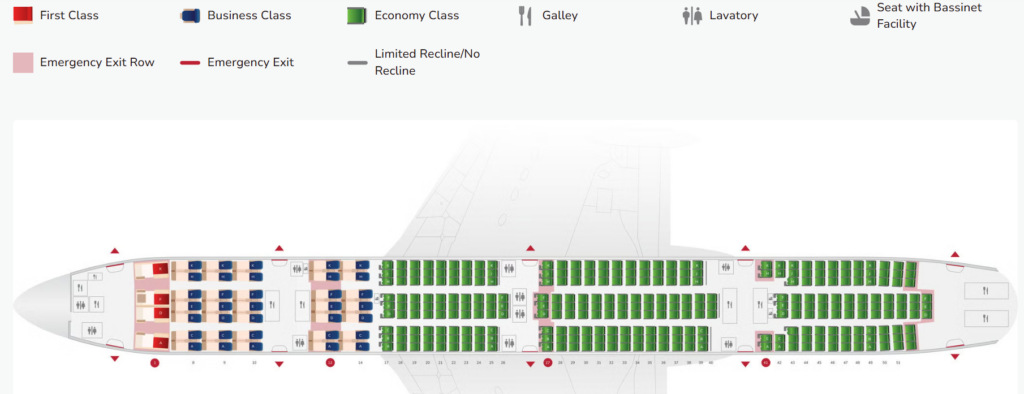
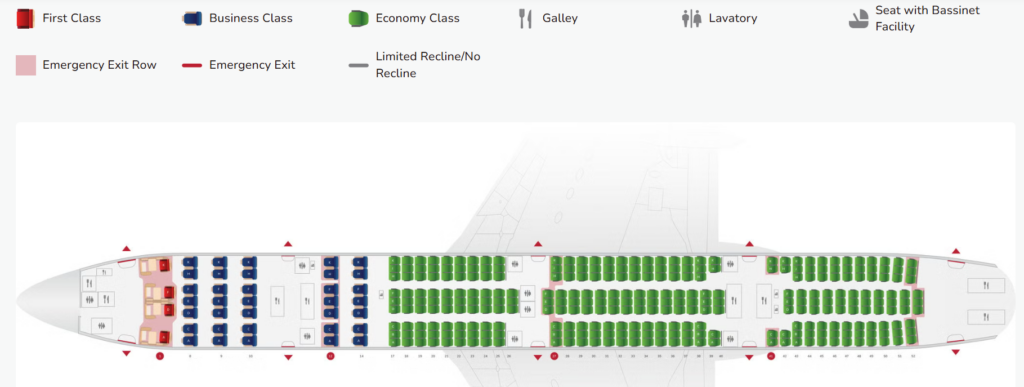
The Boeing 777-300ERs operating from Mumbai have a different cabin layout, with 328 seats across First, Business and Economy classes.
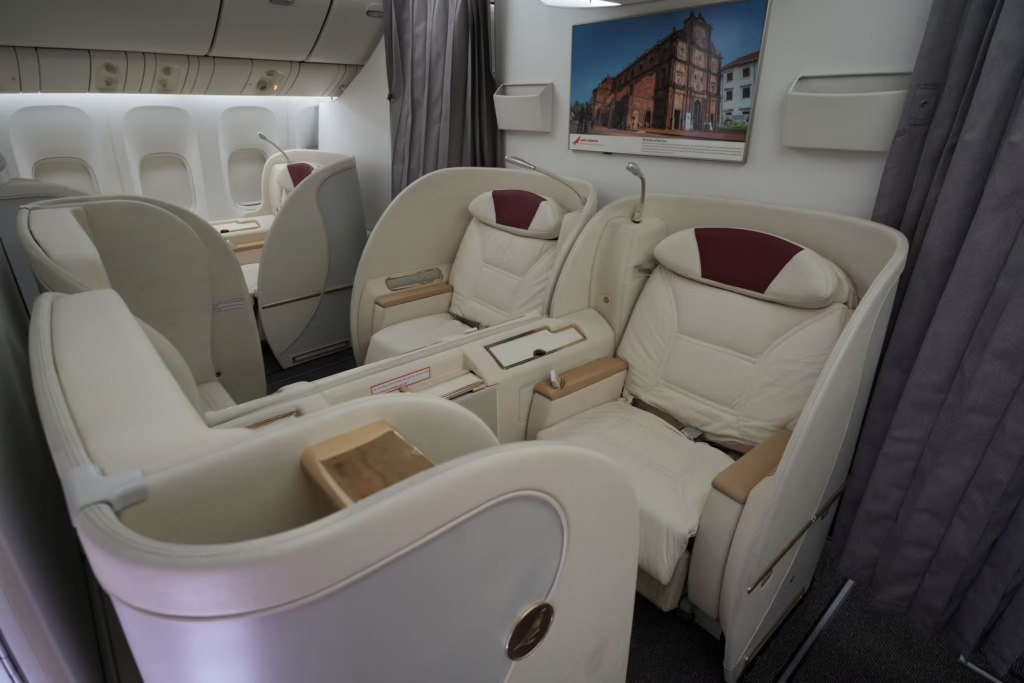
These aircraft have eight First Class suites with sliding privacy doors, 40 fully flat Business Class seats and 280 Economy seats.
Air India says the aircraft feature upgraded cabin interiors, although the configuration differs from the three-class A350s operating from Delhi.
The airline has been investing in new aircraft, cabin improvements and onboard services as part of its wider transformation following its return to Tata Group ownership in January 2022.
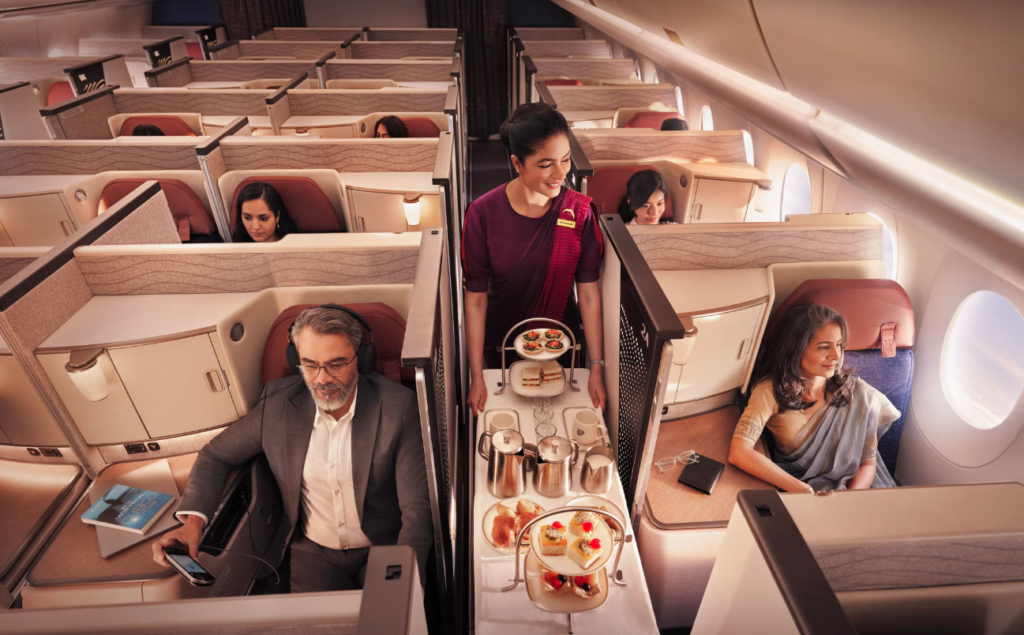
The A350 fleet introduced new seats, entertainment systems and cabin furnishings, while the airline has also been upgrading its existing widebody aircraft.
On the A350, the changes include new bedding, tableware and amenity kits in premium cabins, alongside updated inflight entertainment and charging facilities.
The airline’s A350 entertainment system offers more than 3,000 hours of content, according to its aircraft specifications. Internet connectivity is also available on selected routes.
The improvements are particularly relevant to Air India’s long-haul services, where passengers can spend 17 hours or more aboard the aircraft.
Sign up for our newsletter and get our latest content in your inbox.



More from

November 19, 20264 min read