

PLD Space signs Mitsubishi Electric launch deal for MIURA 5 satellite mission

7 min read

Spanish rocket manufacturer PLD Space has signed a commercial launch contract with Japan’s Mitsubishi Electric Corporation to carry a small satellite aboard its MIURA 5 rocket, turning one of its major investors into a launch customer as the company prepares for its first orbital flight in 2027.
The agreement, announced in Tokyo on Wednesday, 18 November, will see Mitsubishi Electric’s satellite fly on MIURA 5’s second test flight into low Earth orbit. The satellite will support the Japanese company’s plans to develop a large constellation capable of providing services including communications and Earth observation.
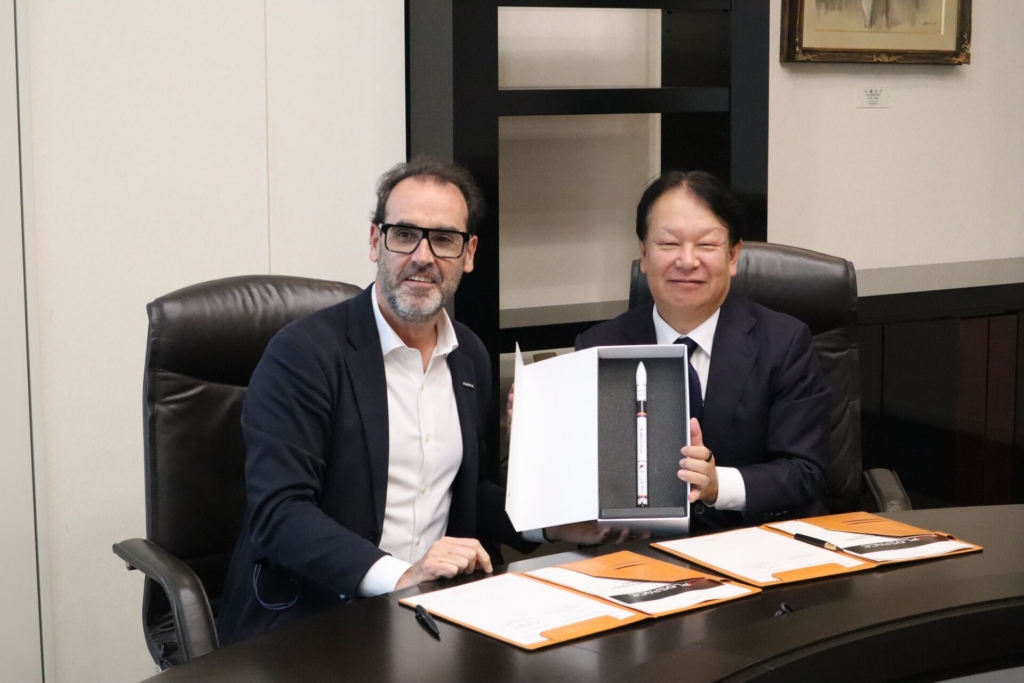
The companies did not disclose the contract’s financial value.
No launch date has been fixed. PLD Space said the timing of the mission will depend on the progress and outcome of MIURA 5’s maiden flight, currently planned for the first half of 2027.
The contract also strengthens an existing financial and industrial relationship between the two companies. Mitsubishi Electric led a €108 million ($119 million) extension of PLD Space’s Series C funding round in September, bringing the round’s total to €288 million ($316 million). The Japanese company is also a strategic partner of the Spanish rocket manufacturer.
Mitsubishi Electric plans satellite constellation
The satellite booked for the mission is an in-orbit demonstration (IOD) spacecraft intended to help Mitsubishi Electric develop the system architecture for its proposed mega-constellation.
A satellite constellation consists of multiple spacecraft operating together to provide services across different geographical areas. Larger constellations can offer wider coverage and more frequent access to communications or Earth observation data than individual satellites.
Mitsubishi Electric is working towards a highly reliable system in which numerous satellites would operate in coordination. The demonstration mission will contribute to developing that concept before wider deployment.
The company has not disclosed the number of satellites planned for the constellation or the technical specifications of the spacecraft assigned to MIURA 5.
Masahiko Arai, Executive Officer and Group President, Defence & Space Systems at Mitsubishi Electric, said the agreement would support the company’s space business plans.
“PLD Space is an important partner for our space business strategy. This agreement represents an important step forward in our collaboration with PLD Space and will contribute to advancing our mega-constellation initiative,” Arai said.
“We value the flexibility of MIURA 5 and PLD Space’s commitment to developing a launch solution tailored to our payload requirements.”
The mission will also give PLD Space an opportunity to demonstrate its ability to accommodate commercial payload requirements during the rocket’s early flight programme.
Raul Verdu, PLD Space’s co-founder and Chief Business Development Officer, described Mitsubishi Electric’s decision to book a launch as an important commercial development.
“Securing Mitsubishi Electric as a launch customer is a major commercial validation of MIURA 5. As an investor and strategic partner, the company has first-hand knowledge of PLD Space, our technology and our execution capabilities,” Verdu said.
“Their decision to fly with us reflects confidence in our ability to deliver a launch service tailored to each mission and marks a major step in bringing MIURA 5 to market.”
What is MIURA 5?
MIURA 5 is a two-stage orbital rocket being developed by PLD Space to launch small satellites. Unlike its predecessor, MIURA 1, which performed a suborbital test flight in 2023, the larger vehicle is designed to place payloads into orbit.
The rocket is being developed with reusable capabilities and is intended to provide dedicated launches tailored to individual satellite operators, allowing customers greater control over their target orbit and mission schedule.

PLD Space plans to operate MIURA 5 from the Guiana Space Centre in Kourou, French Guiana.
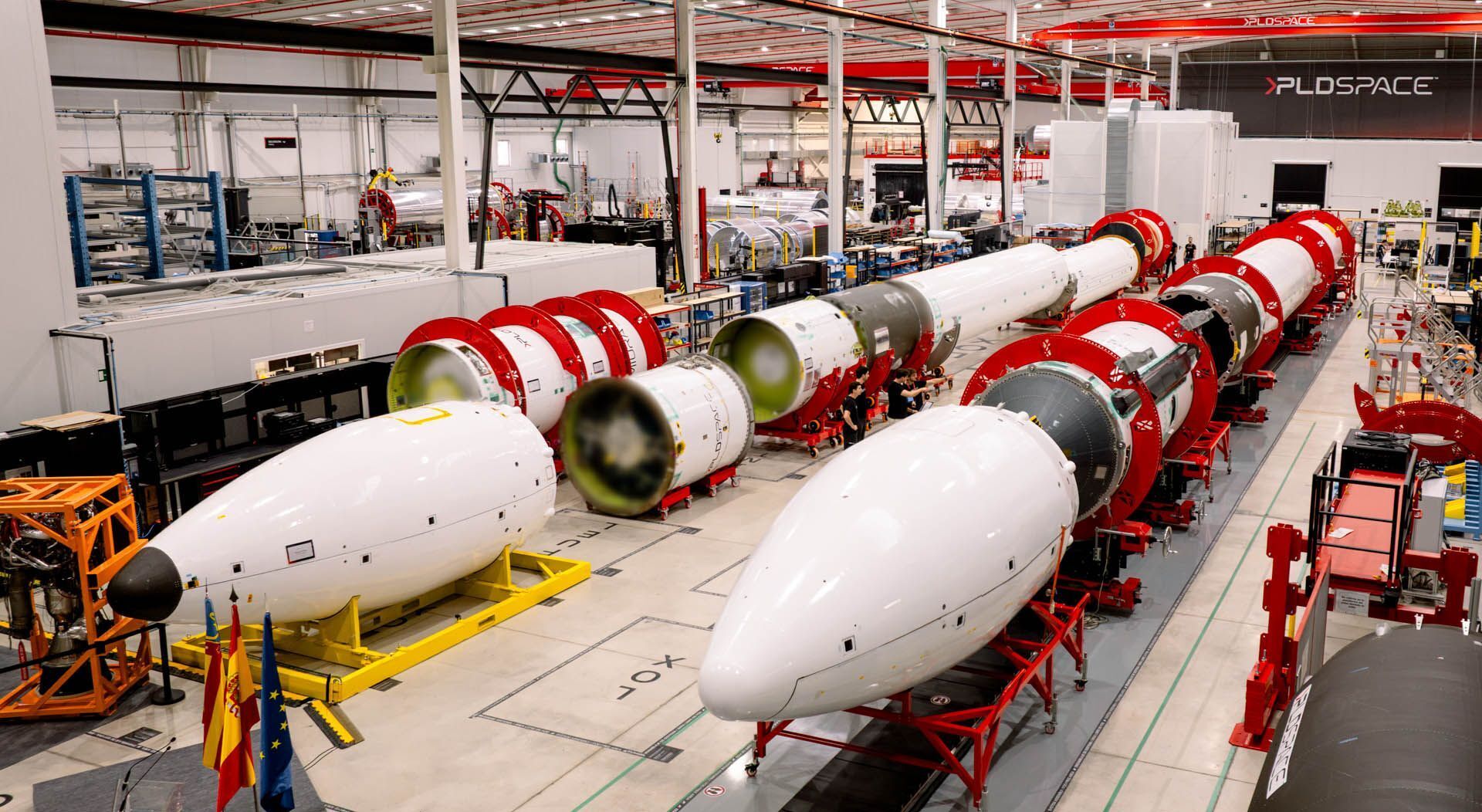
The company’s latest development update, issued on 19 October, showed that three MIURA 5 vehicles had already been manufactured. Two are qualification units intended for ground testing, while the third is the first flight vehicle undergoing integration.
The qualification programme is intended to verify how the rocket’s various systems work together before the first launch.
PLD Space has completed stage-separation testing, checking the commands, interfaces and timing needed to separate the rocket’s first and second stages during flight.
It has also completed qualification campaigns for two payload fairing test models. The fairing protects satellites during the initial stages of launch before separating once the vehicle reaches the appropriate point in its ascent.
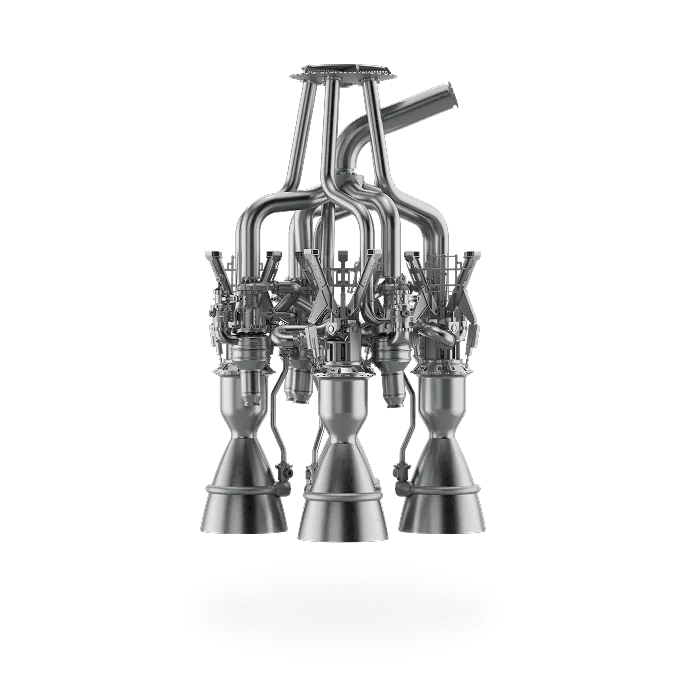
The first flight versions of the TEPREL-C and TEPREL-C Vac engines have entered testing. By October, the company reported manufacturing and integrating seven complete engines, alongside 35 combustion chambers, 40 gas generators and 15 turbopumps.
The company has also manufactured 13 propellant tanks covering qualification and flight hardware, while completing enough flight avionics sets for four rockets.
Second-stage testing moves forward
PLD Space has begun qualification work on MIURA 5’s second stage, which combines its avionics, propellant feed system, reaction control system and primary and secondary structures.
These systems have been developed and manufactured in-house.
The second stage is responsible for completing the rocket’s ascent and delivering its payload towards the intended orbit after separation from the first stage.
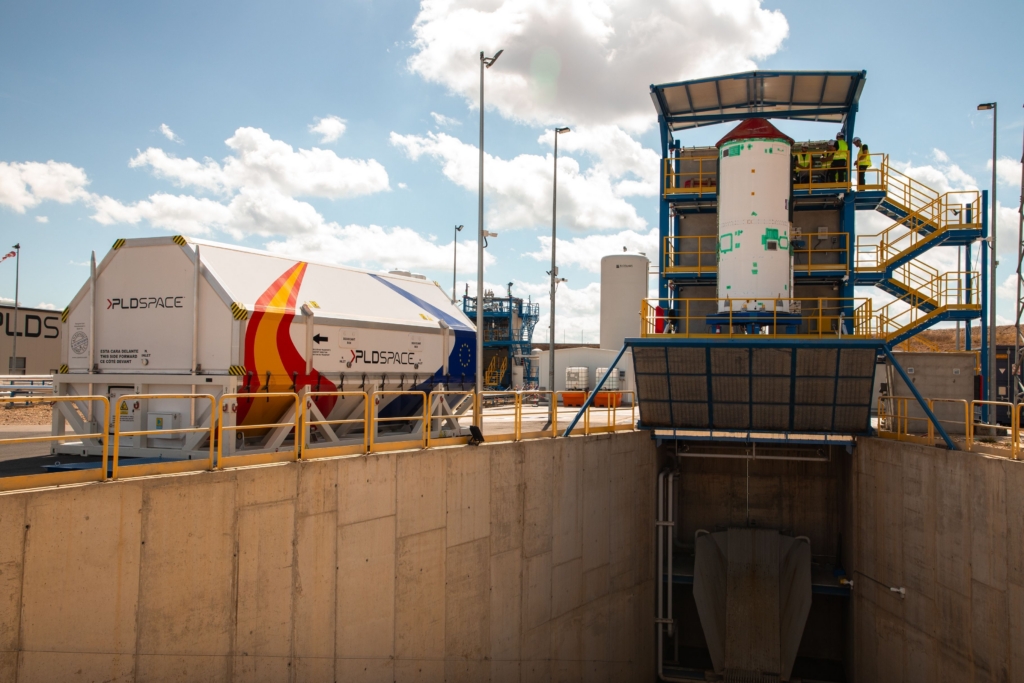
Its qualification campaign includes checks of electromagnetic compatibility, which are designed to establish whether electronic systems can operate together without interfering with one another.
Following these tests, the stage is scheduled to return to PLD Space’s facilities in Elche for engine integration before undergoing further testing at Teruel.
The planned campaign includes a wet dress rehearsal, during which the stage is prepared and fuelled to simulate launch operations, followed by a static hot-fire test of its propulsion system.
In July, PLD Space also validated MIURA 5’s tank pressurisation architecture under nominal propellant-flow conditions.
That campaign examined the control avionics, flight software and pressurisation and venting systems associated with the rocket’s first- and second-stage tanks.
These tests are important because the rocket must maintain the correct tank pressures and propellant flow throughout flight to ensure reliable engine operation.
The next major step is full-stage testing, which will bring the individual systems together under conditions closer to those expected during an actual launch.
Mitsubishi Electric leads the $316 million funding round
Mitsubishi Electric’s decision to book a launch follows its investment in PLD Space’s Series C financing.
Mitsubishi Electric led the extension, alongside Spanish public investment manager COFIDES. Other investors included Endeavor Catalyst and the Spain Oman Private Equity Fund, managed by MCH Private Equity.
The money is intended to support MIURA 5 manufacturing, testing facilities, launch infrastructure and the transition towards regular commercial operations.
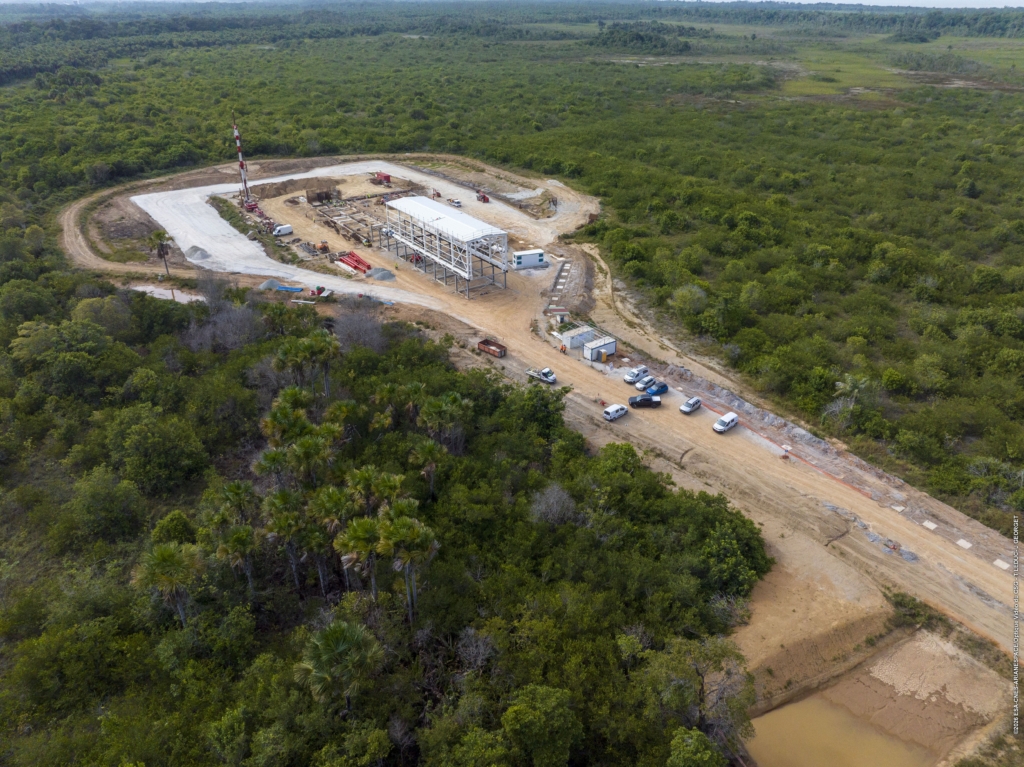
PLD Space has expanded its industrial facilities in Elche to 17,000 square metres, supported by ten in-house test benches in Teruel. Work is also progressing on launch infrastructure and ground equipment at the Guiana Space Centre.
The company has already secured another commercial customer. In February, it signed an agreement with Spanish satellite operator Sateliot for a dedicated MIURA 5 launch carrying two Tritó satellites, each weighing approximately 160 kilograms.
That mission, also planned for 2027, will support Sateliot’s development of satellite-based 5G connectivity, including direct communications with compatible devices.
The Mitsubishi Electric agreement is therefore PLD Space’s first commercial launch contract with the Japanese company, rather than its first commercial launch contract overall.
From MIURA 1 to European orbital launches
PLD Space was founded in 2011 by Raul Torres and Raul Verdu, with the aim of developing privately operated launch vehicles.
Its first rocket, MIURA 1, completed a suborbital flight from the El Arenosillo test centre in southern Spain on 7 October 2023.
The flight lasted 306 seconds and reached an altitude of 46 kilometres before the rocket descended into the Atlantic Ocean. PLD Space said the mission achieved its primary objectives, including validating engine thrust, trajectory tracking and vehicle behaviour.
The data gathered during that flight helped the company advance development of MIURA 5.
PLD Space has also secured support from the European Space Agency. In August, ESA selected the company under its European Launcher Challenge, awarding a contract valued at €169 million ($185 million).
The programme will support the development of commercial orbital launch services and improvements to MIURA 5, including greater payload capacity, expanded orbital reach and technologies intended to enable propulsive landing.
Those developments will also feed into MIURA Next, PLD Space’s proposed family of heavier launch vehicles.
Sign up for our newsletter and get our latest content in your inbox.



More from

November 19, 20264 min read