


NASA unveils X-70 Fractal experimental aircraft to test advanced flight controls

2 min read

NASA has unveiled the X-70 Fractal, a new crewed experimental aircraft designed to test advanced flight-control systems and explore new levels of aircraft manoeuvrability. The agency expects the aircraft to make its first flight under NASA operations within two years.
NASA announced the new X-plane on 4 November during the UP.Summit at NASA’s Kennedy Space Centre in Florida.
The X-70 Fractal will be a flexible research platform, allowing engineers to test emerging aviation technologies in flight rather than relying solely on simulations or ground-based experiments.
Its rapidly reconfigurable flight-control system would support manoeuvres that NASA says have never previously been demonstrated in crewed flight.
“The X-70 Fractal gives NASA a crewed, high-performance platform to test advanced flight-control, manoeuvrability, and other cutting-edge technologies in real flight,” said NASA Administrator Jared Isaacman.
What are the X-70 Fractal’s capabilities?
The X-70 is designed to cruise at Mach 0.75, reach altitudes of up to 45,000 feet and operate over distances of approximately 1,500 nautical miles (2,778 km). Its maximum takeoff weight is 10,000 lb (4,536 kg).
| Specification | X-70 Fractal |
|---|---|
| Aircraft type | Crewed experimental aircraft |
| Cruise speed | Mach 0.75 |
| Maximum altitude | 45,000 ft |
| Operational range | Approx. 1,500 nautical miles |
| Takeoff weight | 10,000 lb |
| Experimental payload capacity | Up to 2,000 lb |
The aircraft will accommodate up to 2,000 lb (907 kg) of experimental equipment, carried internally or externally.
“Its modular design and ability to rapidly swap internal and external payloads will keep our teams flying, learning, and moving quickly from one experiment to the next,” Isaacman said.
X-70 joins NASA’s X-59 and historic experimental aircraft
The X-70 is the latest addition to NASA’s long-running experimental aircraft programme, which has contributed to advances in high-speed flight, aerodynamics and aircraft technology.
Previous X-planes include the Bell X-1, which became the first crewed aircraft to exceed the speed of sound in level flight in 1947, and the rocket-powered X-15, which conducted hypersonic research during the 1950s and 1960s.
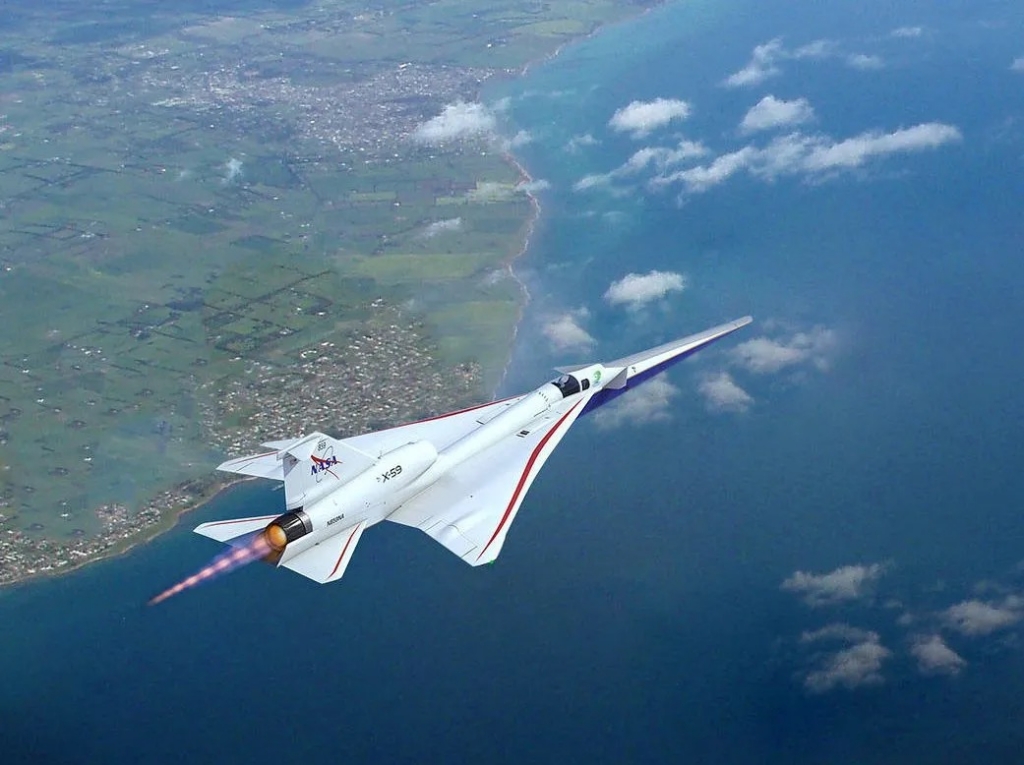
NASA is also continuing work on the X-59 quiet supersonic aircraft, designed to reduce the sonic boom and collect data on the sound generated by supersonic flight.
The X-70 will investigate advanced flight-control systems and manoeuvrability.
“For decades, NASA Aeronautics has used X-planes to develop technologies that advance aviation,” said Laurie Grindle, director of the Aeronautics Division within NASA’s Research and Technology Mission Directorate. “It’s exciting to bring on another X-plane to accelerate and drive aeronautics research.”
Why is NASA developing another X-plane?
The X-70 will expand NASA’s capacity to conduct flight research, particularly in advanced flight controls and aircraft handling.
Unlike experimental aircraft developed around a single technology, the Fractal will accommodate different research equipment and flight-test objectives. Its reconfigurable controls could allow researchers to investigate how new control systems affect aircraft behaviour across a range of flight conditions.
“We expect her first flight under the NASA banner within the next two years, and X-70 is just one part of this new beginning for aeronautics,” Isaacman said. “This is why people come to NASA: to build, to learn, and most importantly, to fly.”


