SpaceX ignites giant Super Heavy booster engines ahead of daring Starship launch

6 min read
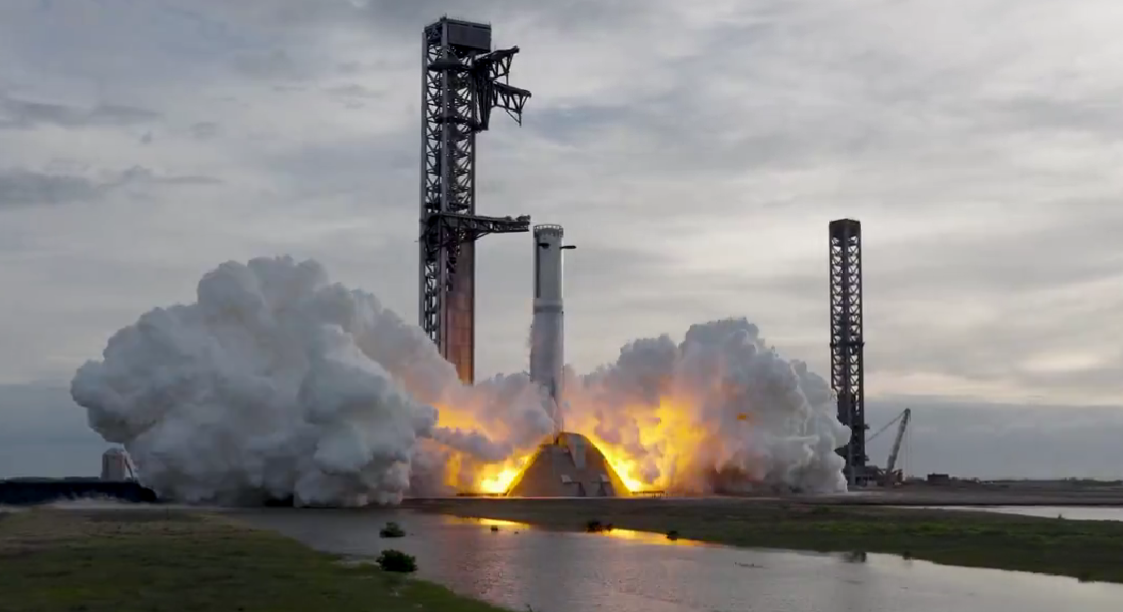
SpaceX has fired all 33 engines of its giant Super Heavy booster in Texas, completing a major test ahead of a Starship mission that could see the company attempt something it has never done before: catch both halves of the world’s most powerful rocket after flight.
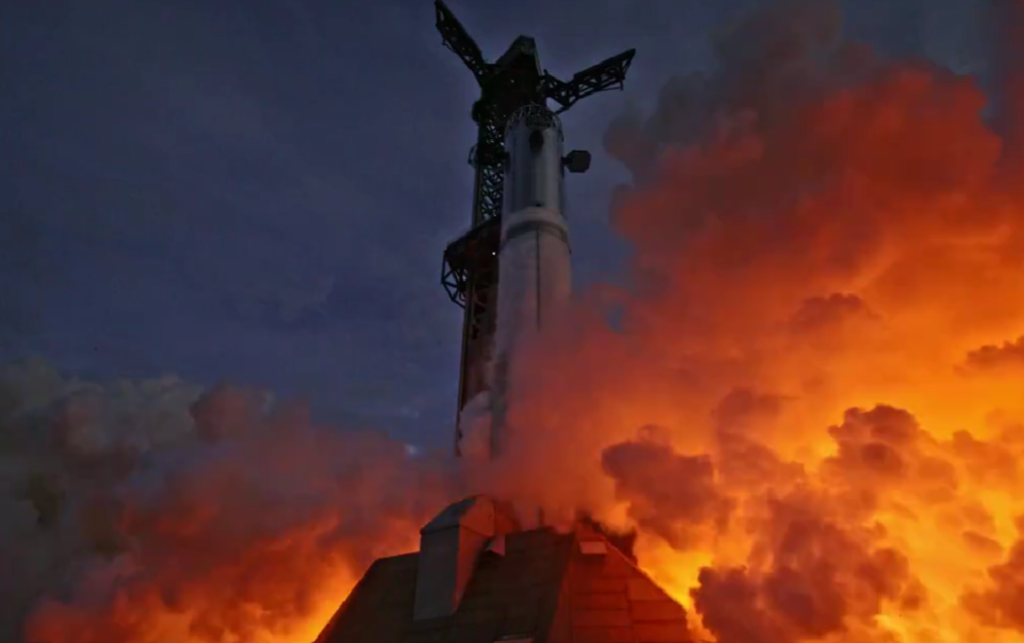
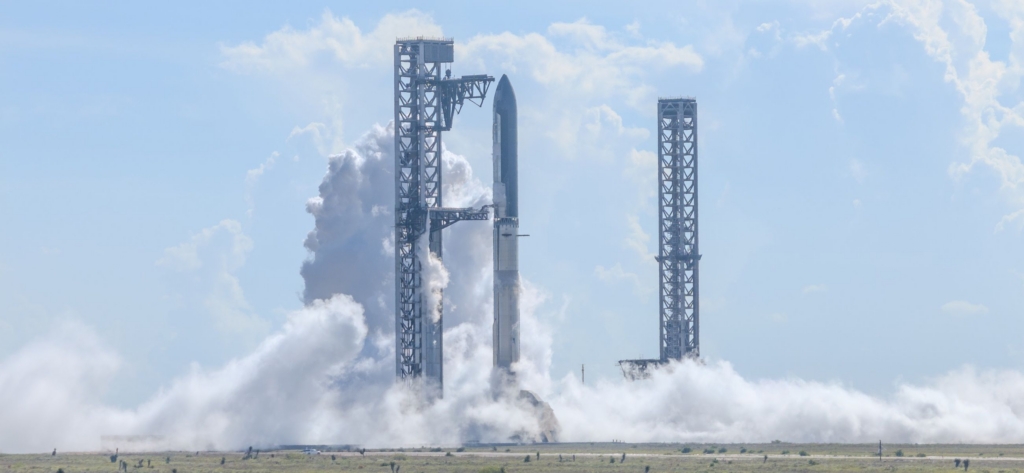
The full-duration static fire took place on Sunday (October 25) at SpaceX’s Starbase facility in South Texas. The booster remained secured to the launch pad while its Raptor engines fired, producing a huge cloud of exhaust and steam.
SpaceX confirmed the test in a post on X, describing it as a “full duration 33-engine static fire for the Super Heavy booster preparing for Flight 15”.
The test comes as the company prepares for the 15th flight of Starship, tentatively planned for November. Elon Musk has said the mission will attempt to recover both the Super Heavy booster and the Starship upper stage using giant mechanical arms attached to launch towers.
SpaceX has successfully caught Super Heavy boosters before. But it has never attempted to catch the Starship spacecraft itself after a flight.
If both catches succeed, the company would recover the complete two-stage launch vehicle for the first time, bringing it closer to its goal of making Starship fully and rapidly reusable.
“For Flight 15, which we expect to happen next month, we’re going to attempt to catch both the booster and the ship,” Musk said during SpaceX’s third-quarter earnings call on October 20.
“If we succeed, it will be the first time that an orbital launch vehicle has been fully recovered. This is a massive technology milestone.”
Why Flight 15 will be different
Starship consists of two enormous sections. The Super Heavy booster provides the thrust needed to lift the vehicle off the ground, while the Starship spacecraft separates from the booster and continues towards space.
Together, they stand approximately 124 metres tall, with a diameter of nine metres. SpaceX says the system is designed to carry more than 100 tonnes into orbit in its fully reusable configuration.
Previous flights have concentrated on proving that the spacecraft can survive launch, operate in space and return through Earth’s atmosphere.
Flight 15 will go a step further.
Under the planned mission, Super Heavy will separate from Starship after launch, reverse course and return towards the launch site. Rather than landing on legs, the booster will descend between two enormous arms on the launch tower, which will close around the vehicle and support its weight.
The Starship upper stage faces a more difficult journey.
After travelling into space, it must re-enter the atmosphere, endure extreme heating, slow itself down and manoeuvre back towards the launch site. It would then descend vertically for a separate tower catch.
The spacecraft has previously completed controlled descents into the ocean, but bringing it back to the launch site requires considerably greater precision.
Flight 15 is also expected to use the upgraded Starship Version 3 system. Launch tracking service Next Spaceflight lists Booster 22 and Ship 42 for the mission, with the first catch attempt involving a Version 3 Super Heavy booster.
The flight is currently listed for no earlier than November 2026. November 8 has circulated as a possible target, although SpaceX has not publicly confirmed a firm launch date.
A successful engine test, but more checks remain
The static fire was an important step towards launch because it allowed engineers to test the booster engines and supporting systems without sending the rocket into flight.
During the test, all 33 Raptor engines operated for the planned duration while the booster remained anchored to the ground.
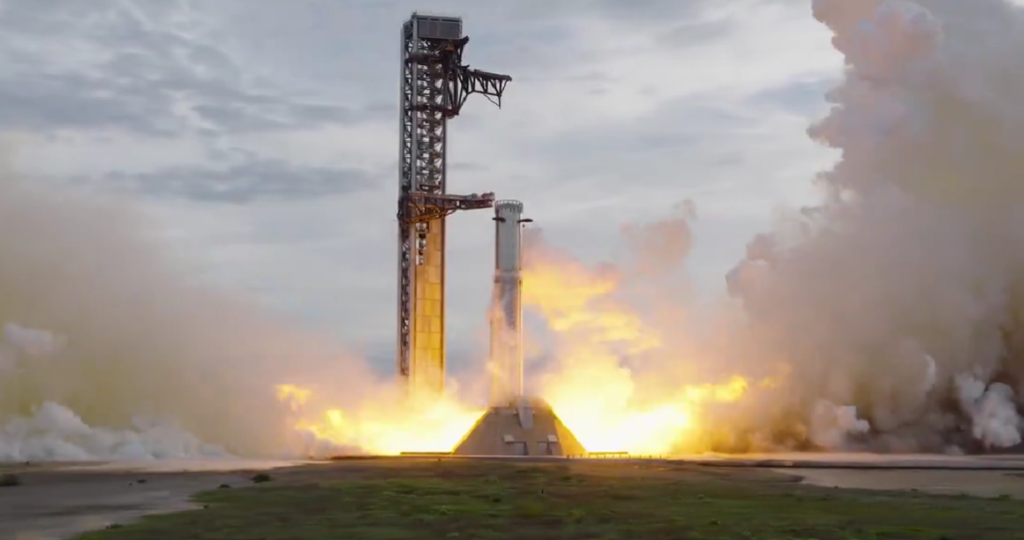
Engineers can use the data to check engine performance, fuel delivery, pressure levels and the interaction between the booster and launch pad.
A successful static fire does not mean the entire rocket is ready to launch. SpaceX must still complete preparations involving the Starship upper stage, integrate the two vehicles and obtain the necessary regulatory approval.
SpaceX president and chief operating officer Gwynne Shotwell said during the October 20 earnings call that the company expected its Flight 15 licence from the Federal Aviation Administration (FAA) to cover the return and recovery of both stages.
“We have had significant constructive engagement with the FAA, and we expect the license for our Flight 15 to include return to launch site and tower catch for both stages,” Shotwell said.
The company has not yet announced whether the upper stage has completed its own pre-flight engine testing.
Building on Starship’s first orbital mission
Flight 15 follows a major achievement during Flight 14 in September, when Starship reached orbit and deployed operational third-generation Starlink satellites for the first time.
The mission demonstrated the rocket’s ability to carry satellites into space, rather than simply testing the launch vehicle itself.
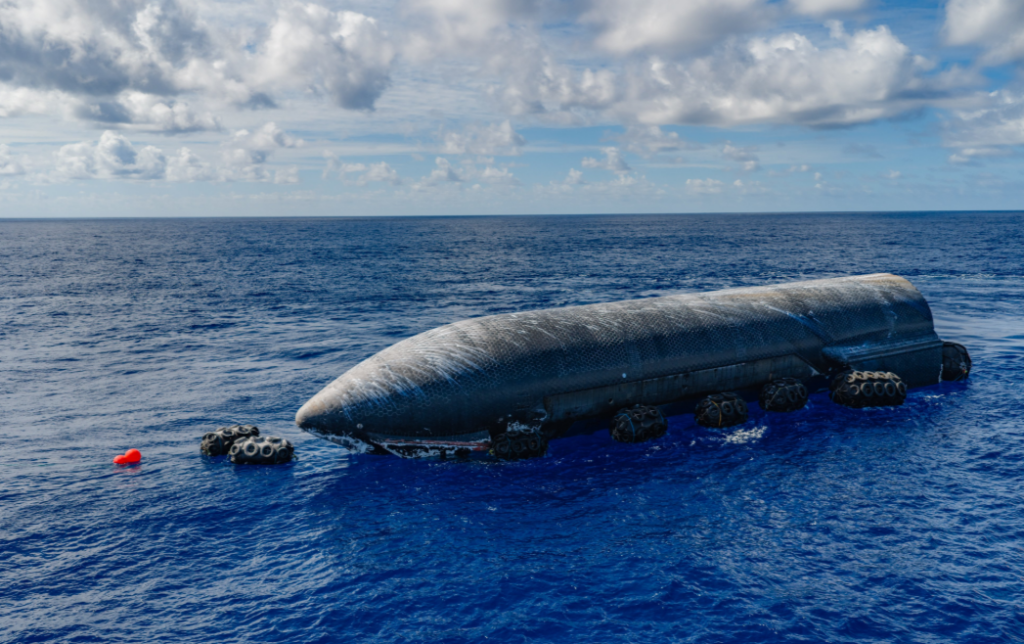
Both stages subsequently made controlled ocean splashdowns, providing engineers with further information about their performance during descent and re-entry.
Flight 15 is intended to build on those results by replacing ocean recovery with an attempt to return both stages to the launch site.
Seawater exposure, transportation and extensive inspection can complicate recovery. Bringing the vehicle directly back to a launch tower could eliminate much of that work.
It would also allow SpaceX to examine the condition of the engines, heat shield and other systems after a complete mission.
Musk acknowledged that the planned catches would be difficult.
“Success is not guaranteed on these first flights, but I’d say it’s more likely than not that this succeeds next flight,” he told investors.
“If we don’t succeed in Flight 15, we’ll get there.”
Why catching both stages matters
SpaceX already reuses the first stages of its Falcon 9 rockets, but the upper stages are discarded after completing their missions. Starship is designed to change that by recovering both stages and flying them again.
The company believes this could substantially reduce the cost of reaching orbit, particularly for missions requiring large payloads or frequent launches.
Starship is also central to NASA’s Artemis programme, which relies on a modified version of the spacecraft to carry astronauts to the lunar surface. Before such missions can take place, SpaceX must demonstrate several capabilities, including reliable spacecraft operations, orbital refuelling and safe landings.
For SpaceX, full reusability is equally important to its plans for deploying larger Starlink satellites and eventually sending people and cargo to Mars.
“The only way that we can extend consciousness beyond Earth on a sustained basis is with a fully reusable orbital launch vehicle,” Musk said during the earnings call.
He described the planned recovery as a major technological milestone, while acknowledging that the company may need several attempts to achieve it.
SpaceX is targeting a much faster launch schedule in 2027. Musk has outlined plans for weekly Starship flights during the first half of the year, increasing to twice weekly or more towards the end of 2027.
That timetable depends on proving that both stages can be recovered safely and prepared for another launch without extensive rebuilding.
For now, Flight 15 remains an experimental mission. Even if both catches succeed, SpaceX will still have to demonstrate that the recovered hardware can be inspected, refurbished where necessary and flown again.
The October 25 engine test has brought that next attempt closer. Whether SpaceX can bring both enormous sections of Starship safely back to their launch towers will be decided when Flight 15 takes to the skies.