First Canadian F-35As arrive as Ottawa considers Gripen fighter purchase

3 min read
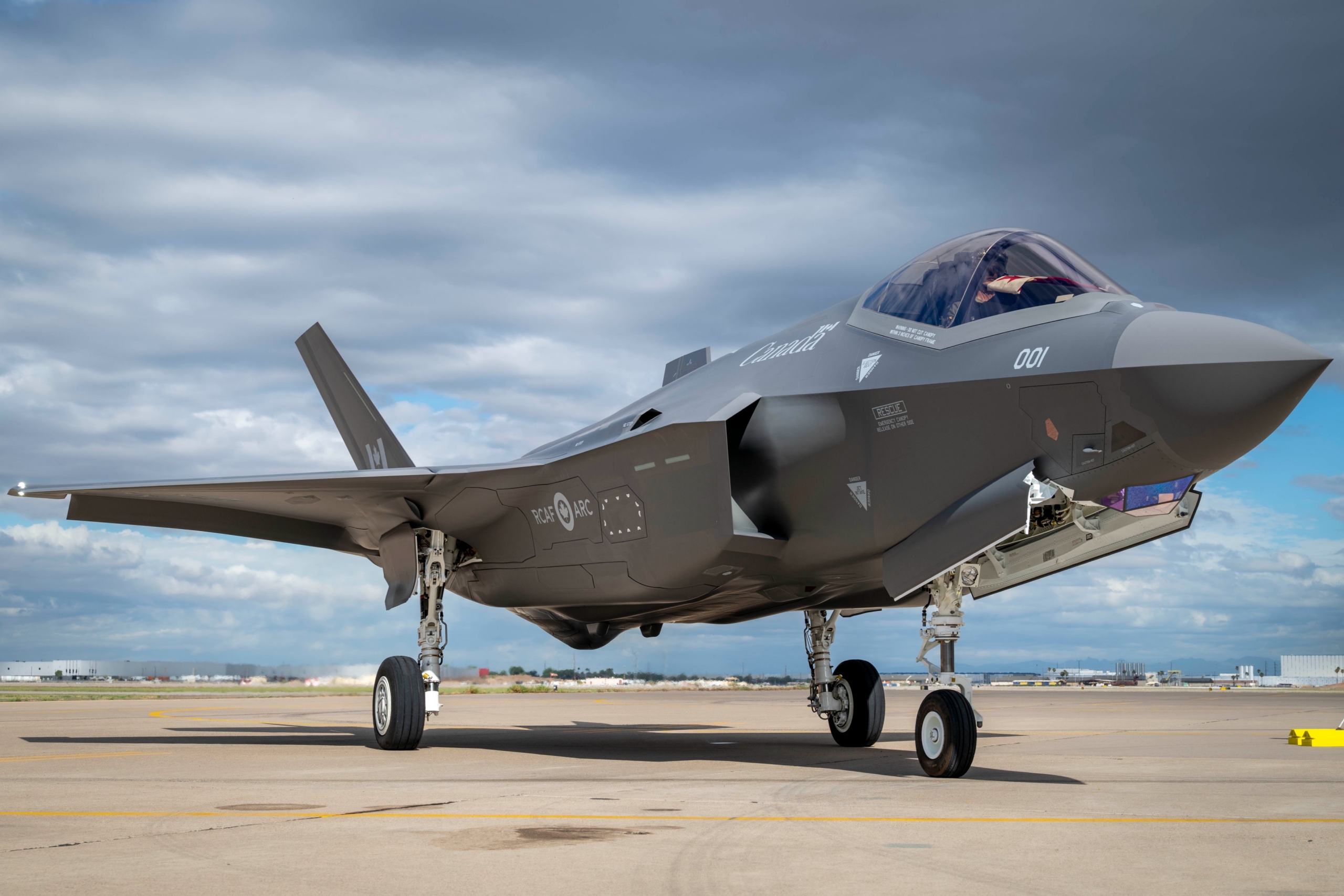
The first two Canadian F-35As (Canadian designation CF-35As) have been received at Luke Air Force Base, where Canadian pilots can start training ahead of F-35s arriving in Canada.
Over the weekend, the Royal Canadian Air Force posted, “The RCAF received its first two CF-35As yesterday at Luke Air Force Base in Arizona. The future of air and space power is built on more than equipment alone.”
The announcement follows the first CF-35A (production number AR-1) completing its maiden flight at Lockheed Martin’s Fort Worth, Texas facility in September 2026.
The initial eight aircraft are expected to arrive at Luke Air Force Base during 2026 and 2027. The first aircraft are scheduled to arrive in Canada (4 Wing Cold Lake, Alberta) in late 2028.
The RCAF received its first two CF35As yesterday at Luke Air Force Base in Arizona. The future of air and space power is built on more than equipment alone. https://t.co/mieJL6YDtQ
— Royal Canadian Air Force (@RCAF_ARC) October 23, 2026
Main deliveries are to take place between 2028 and 2032, with Canada targeting Initial Operational Capability (IOC) in 2029 and Full Operational Capability (FOC) around 2033.
Canada’s F-35 continues despite the ongoing review
Despite the ongoing geopolitical drama between the United States and Canada, and Canada’s potential looming Saab Gripen fighter jet purchase, its programme to acquire F-35As (CF-35s) remains on track.
For now, Canada retains its programme of record for 88 F-35As, which are badly needed to replace its fast-aging fleet of CF-18 legacy Hornets. Debate is currently ongoing in Canada about acquiring a mixed fleet of F-35s and Gripens.
Conversation in Ottawa is not about canceling the order for F-35s, but there is debate about reducing it. Canada has committed to the first 16 aircraft, and CBC News reports it is quietly making the advance payments on the next batch of 14 aircraft.
This indicates that Canada has taken steps to preserve production positions for at least another 14 aircraft, although the government has not confirmed a commitment to procure them. If true, it would suggest Canada has committed to at least 30 F-35s.

One of Canada’s key challenges is meeting its NORAD commitments. Requirements relating to interoperability, security and intelligence sharing played a significant role in the fighter competition and contributed to the withdrawal of some competing aircraft.
NORAD requirements were a reason why Airbus (Eurofighter) and Dassault (Rafale) previously withdrew from Canada’s fighter jet competition.
At the time, in 2018, Defense News stated that Dassault’s withdrawal was “over concerns that interoperability and intelligence sharing requirements were too extensive.”
Moving towards a mixed F-35 and Gripen fighter jet fleet
In June 2026, CBC News wrote, “According to various sources, the federal government would still be looking at a fleet of 72 to 88 F-35s, even if it moves forward with the Gripen.”
It added that Ottawa is exploring a purchase of 72 Gripen E, with negotiations ongoing with Saab about substantial workshare in Canada for these aircraft.
Commentators have linked the GlobalEye decision to the emerging Gripen discussion, particularly because Saab’s proposed Canadian industrial model could potentially extend beyond the AEW&C programme.
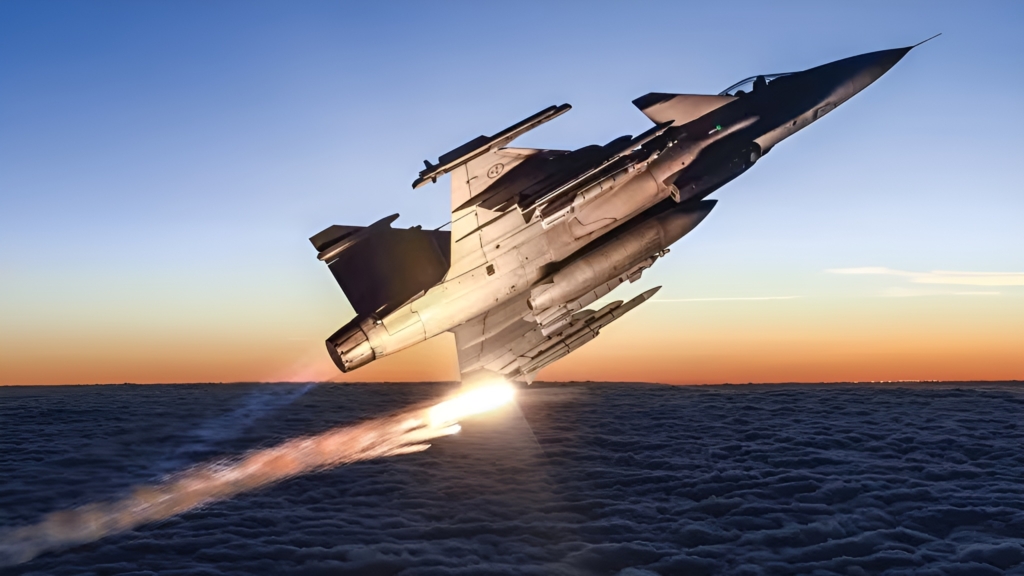
Canada could eventually acquire a fleet of 140 fighter jets. Supporters of a mixed fleet argue it could allow Canada to maintain a fighter force optimised for NORAD missions while also diversifying its suppliers and industrial partnerships.
A leaked report suggested that the F-35 outperformed the Gripen during Canadian competitions ‘by a mile ‘, achieving a ‘near perfect’ score of 95% vs 33% for the Gripen E.
Canada is having to balance a range of industrial, political, geopolitical, and military concerns with its fighter jet programme.