


Is it time for airlines to ban power banks in the passenger cabin?

9 min read

Power banks have become an essential travel accessory, keeping smartphones, tablets, laptops, and other electronic devices running during long journeys. Yet the lithium-ion batteries that make these portable chargers so convenient can also pose a serious fire risk when they fail.
Reports of fires involving power banks aboard passenger aircraft have raised an important question for airlines, regulators and travellers – should power banks be banned altogether, or can the risks be managed through stricter safety rules?
A complete ban might appear to be the simplest solution. However, it would also remove a useful technology from passengers and could do little to eliminate the underlying danger posed by lithium-ion batteries carried in other devices.
The more important challenge is deciding how power banks should be transported, stored and used to ensure that a battery failure does not develop into an onboard emergency.
How often do power banks catch fire on planes?
Lithium batteries can enter a condition known as thermal runaway, in which an internal failure triggers a rapid temperature rise.
This can cause a battery to release flammable gases, produce intense heat, emit toxic smoke and ignite neighbouring materials. Once thermal runaway begins, extinguishing the flames can be difficult, and a battery may reignite after appearing to have been put out.
In January 2025, a fire aboard an Air Busan aircraft at Gimhae International Airport (PUS) in South Korea, was likely caused by a power bank according to investigators. The aircraft was evacuated, and seven people were reported injured. The aircraft was destroyed by fire.
Although the incident occurred while the aircraft was on the ground, it demonstrated how quickly a battery fire can threaten passengers and require an emergency response. Investigators examined the source of the fire, and the event contributed to renewed scrutiny of portable batteries in air travel.
Other incidents have reinforced these concerns. In February 2025, a passenger’s power bank reportedly caught fire aboard a KLM flight from São Paulo to Amsterdam, with cabin crew responding to the incident. As recently as 11 October, an IndiGo flight in India had to be diverted to Hyderabad after a power bank caught fire in an overhead bin.
Such events highlight the importance of identifying a burning battery quickly, isolating it where possible, and preventing smoke and flames from spreading. There have also been numerous reports of battery-related incidents involving mobile phones, laptops, e-cigarettes and other portable electronic equipment.
These examples matter because banning power banks alone would not remove every lithium-battery hazard from an aircraft. A damaged phone battery or an overheating laptop can present similar challenges.
WATCH: Powerbank fire breaks out in the overhead luggage compartment on an IndiGo flight on Sunday. The aircraft was diverted to Hyderabad, where it landed safely. https://t.co/G9JevuFVPp
— Breaking Aviation News & Videos (@aviationbrk) October 11, 2026
The incidents therefore support a clear conclusion: lithium-ion battery fires deserve serious attention. However, they do not, by themselves, establish that an outright ban on every power bank would be the most effective safety measure.
That decision requires an assessment of the frequency and severity of incidents, the effectiveness of existing controls and the risks associated with alternative policies.
Can you take a power bank on a plane?
International aviation rules distinguish between spare lithium-ion batteries and batteries installed in electronic devices. Power banks are generally treated as spare lithium-ion batteries because they are designed to supply power to other equipment rather than operate as an installed component of a device.
Under the International Civil Aviation Organisation (ICAO) framework and the International Air Transport Association (IATA) dangerous-goods guidance, power banks must generally be carried in cabin baggage rather than checked baggage.
The reason is straightforward: if a battery overheats in the passenger cabin, the crew may be able to detect the problem and respond. A fire inside an unattended cargo hold is more difficult to access and manage.
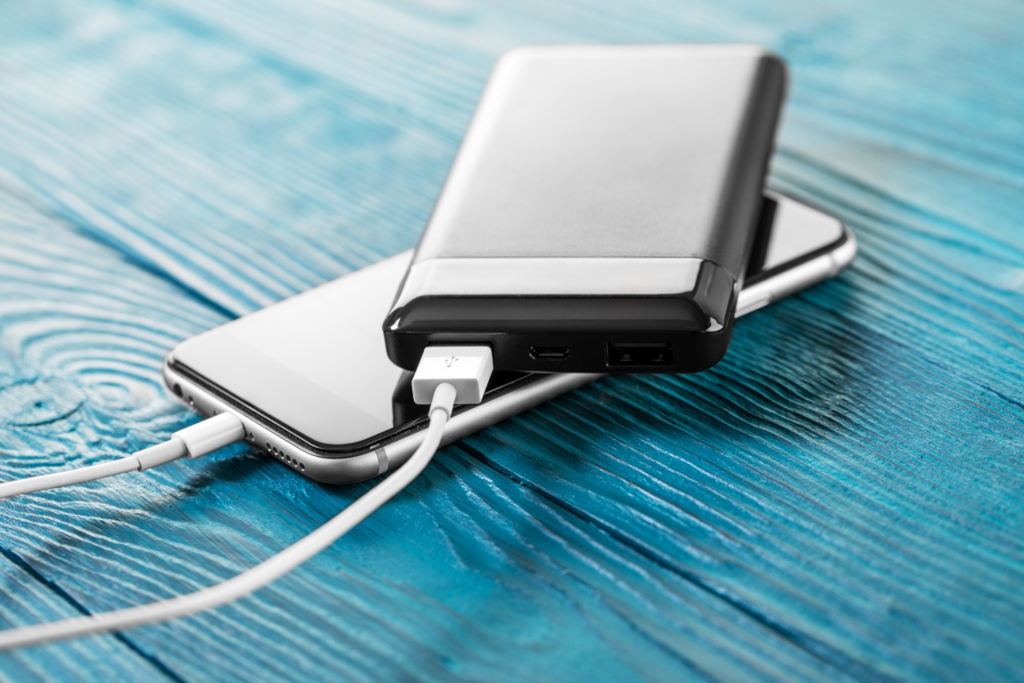
Capacity is another important consideration. Lithium-ion batteries rated at up to 100 watt-hours (Wh) are generally permitted in carry-on baggage without prior airline approval, subject to applicable requirements.
Batteries between 100 Wh and 160 Wh may be permitted with airline approval, while those exceeding 160 Wh are generally prohibited on passenger aircraft under the relevant dangerous-goods provisions, apart from specific exceptions for certain equipment.
Power banks must also be protected against short circuits. Measures may include keeping them in their original packaging, covering exposed terminals or placing each battery in a separate protective pouch. Damaged, defective, or recalled batteries may be subject to additional restrictions or prohibited from carriage.
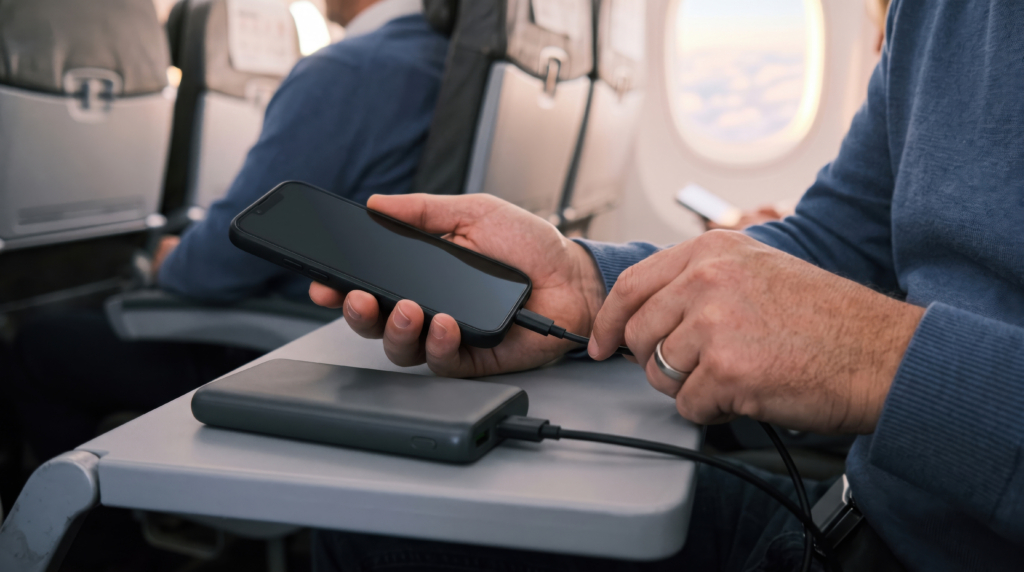
Importantly, permission to carry a power bank does not automatically mean permission to use it during a flight. Airlines can impose stricter conditions than the international baseline, including restrictions on charging devices with power banks, recharging the power banks themselves or storing them in particular locations.
Passengers must therefore check the rules of their airline and any applicable national aviation authority before travelling. Requirements can differ by carrier and jurisdiction, and policies have become more restrictive in response to recent incidents.
What are the new airline rules for power banks in 2026?
The rules have recently become more restrictive. On 27 March 2026, ICAO introduced new international requirements specifically addressing power banks, reflecting growing concern about lithium-battery incidents.
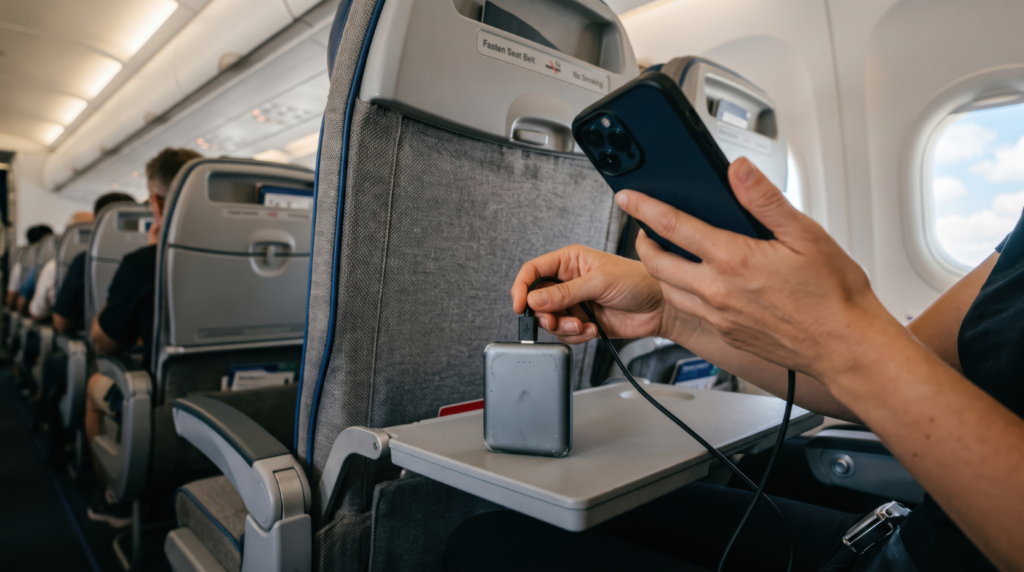
Under the updated provisions, passengers are limited to two power banks per person, power banks must be carried in cabin baggage and individually protected against short circuits, and passengers are prohibited from recharging power banks during flights.
Passengers are also advised not to use them to charge other portable electronic devices onboard.
The UK Civil Aviation Authority (CAA) has published guidance reflecting these changes. Power banks rated up to 100 Wh can generally be carried without airline approval, while those above 100 Wh and up to 160 Wh require approval.
The updated rules seek to reduce the likelihood and consequences of battery fires without banning portable chargers altogether.
Further evidence of the risk emerged in Australia in July 2025, when a passenger’s power bank began smoking during disembarkation from a Virgin Australia Boeing 737 following a flight from Hobart.
The Australian Transport Safety Bureau subsequently investigated the incident. Its findings highlighted how a battery can experience thermal runaway even without obvious prior damage. The bureau also identified eight power-bank-related in-flight fire incidents recorded by the US Federal Aviation Administration over the preceding decade.
What do aviation safety experts recommend?
The position of aviation authorities generally favours risk reduction rather than a blanket prohibition. ICAO’s 2026 measures demonstrate that regulators consider the risks sufficiently serious to warrant stricter controls but have chosen to retain limited passenger access to power banks.
The International Air Transport Association (IATA), which represents airlines worldwide, similarly emphasises appropriate packing, battery-capacity limits and passenger awareness.
Its guidance advises travellers to keep power banks in cabin baggage, protect their terminals against short circuits and alert cabin crew immediately if a device becomes unusually hot, damaged or starts smoking.
IATA explains that cabin carriage allows the crew to respond to a developing battery incident more quickly than they could if the battery were in the cargo hold.

The CAA has also warned that incorrectly packed lithium batteries pose a significant aviation safety threat. Its guidance reinforces the importance of carrying power banks in the cabin and complying with restrictions on their number and use.
These recommendations support the view that better handling, clearer passenger instructions and rapid emergency response are essential parts of battery safety.
Speaking exclusively to Aerospace Global News, Joji Waites, BALPA (British Airline Pilots Association) Director for Flight Safety, Policy and Regulation, said,
“BALPA members take the fire risk from lithium batteries extremely seriously. Power banks are now the most common type of lithium battery-related device involved in incidents onboard aircraft. The cabin is the best place for them because if a device does overheat, cabin crew can spot it straight away and are trained to deal with it quickly.
“BALPA does not support banning power banks. Instead, as part of the International Federation of Air Line Pilots’ Associations, we work with pilots’ associations worldwide to increase passenger awareness of the rules that already exist, so that people understand why power banks must always travel in their hand luggage, never in checked bags, and must be protected from damage while on board an aircraft,” Waites added.
Airlines have also adopted additional precautions. Following the Air Busan fire, the carrier introduced restrictions preventing power banks from being placed in overhead luggage bins. Keeping them accessible to passengers and cabin crew can make overheating easier to detect before a fire develops.
However, this approach must be balanced against the need to store batteries securely and prevent accidental damage.
Should power banks be banned completely?
Some aviation experts argue there is a strong argument for an outright ban on power banks. An aircraft is a confined environment in which smoke, toxic fumes and intense heat can threaten hundreds of people.
Even a relatively small battery fire may require an emergency diversion, evacuation or precautionary landing. A ban would also eliminate the risk associated specifically with passengers carrying power banks, including faulty, counterfeit or poorly manufactured products.
Nevertheless, a complete prohibition would have drawbacks. Power banks are widely used by travellers who need reliable access to communication, navigation and medical-support applications.

Furthermore, other lithium-ion batteries remain common in phones, laptops, cameras and other electronic devices. Prohibiting power banks alone would therefore reduce one source of risk without eliminating the wider hazard.
A more proportionate approach is to enforce the existing restrictions rigorously, prohibit the use and charging practices identified as unacceptable, and require airlines to provide clear, consistent instructions.
As Airlines of America told Aerospace Global News, “Airlines follow all applicable FAA regulations and continue to work closely with our federal regulators and the broader aviation industry to prioritize safety as technology evolves.”
“Additionally, airlines have implemented multiple layers of protection: passenger education on the safe carriage of lithium batteries and portable electronic devices; restrictions on damaged, defective or recalled batteries; crew training and procedures for responding to smoke, fire or overheating devices; onboard firefighting procedures and equipment; and the use of safety-management processes and incident data to identify hazards and refine mitigations.”
The future relies on power banks
Power banks should not necessarily be banned outright from passenger aircraft, but their carriage and use should remain subject to strict controls.
Recent incidents demonstrate that battery fires can adevelop unexpectedly, while the updated ICAO rules show that international aviation authorities recognise the need for stronger safeguards.
The priority should be preventing battery failures where possible and ensuring that any incident can be detected and contained quickly.
If future evidence shows that the revised restrictions are insufficient, a more extensive prohibition may become justified. For now, a carefully regulated approach offers a reasonable balance between passenger convenience and aviation safety.





