


General Atomics showcases passive kill chain with CCA and F-5

3 min read
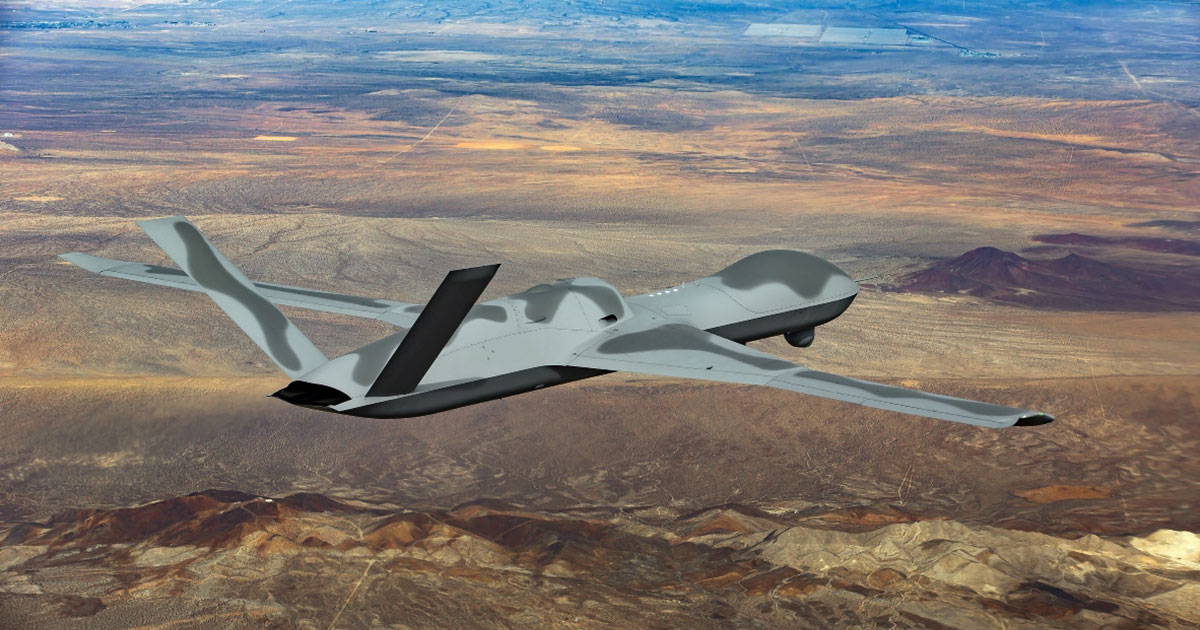
General Atomics announced today that it has collaborated with Tactical Air Support on a flight test during a large-force exercise that demonstrated Infrared Search and Track (IRST) Multi-Ship Ranging (MSR).
This test moves beyond just flying an autonomous jet and shows how a manned fighter and an autonomous wingman could work together in finding, tracking, and conducting a simulated engagement against an airborne target using passive sensors and shared autonomy.
While the Air Force has publicised relatively few demonstrations showing how CCAs contribute to operational kill chains, this test sought to demonstrate that role in a more realistic combat scenario.
General Atomics CCA test teamed with Tactical Air Support F-5
The latest test took place in July, with Tactical Air Support providing one of its aggressor training F-5 Advanced Tiger light attack aircraft, and General Atomics provided an unmanned Collaborative Combat Aircraft (CCA) test aircraft. It is unclear which CCA was used, although the statement featured a Predator C Avenger.
A recent large force exercise paired an uncrewed GA-ASI CCA test aircraft with a Tactical Air Support F-5 Advanced Tiger, highlighting how human-machine teaming closes the kill chain using passive sensors and autonomy. #UAS
— General Atomics Aeronautical Systems, Inc (GA-ASI) (@GenAtomics_ASI) September 15, 2026
Read the news: https://t.co/BDvaS8YcTy#AFANational pic.twitter.com/20D5XKP3tG
General Atomics said the test highlighted how “Human-Machine Teaming closes the kill chain using passive sensors and autonomy.”
The two aircraft were equipped with its TacACE (Tactical Autonomy Ecosystem) software. TacACE is based on the Autonomy Government Reference Architecture (A-GRA) and the Agile Mission Suite (AMS-GRA). Both aircraft also carried an infrared search-and-track sensor.
The exercises demonstrated that a CCA and a manned fighter can collaborate to fuse sensor data from AMS-GRA-compliant sensors to track, engage, and conduct a simulated engagement against an airborne target while using a Beyond Line of Sight (BLOS) data link to “accomplish seamless coordination between the two aircraft.”
The demonstration used BLOS communication between the F-5 and CCA, allowing the F-5 Tiger to send data about targets from an AMS-GRA-compatible system.
Open architecture takes centre stage
Arguably one of the most interesting aspects of the announcement was not the BLOS communication or sensor fusion itself; after all, this is fundamental to the concept of the CCA program.
Perhaps more importantly, General Atomics stated that the test showed that many companies’ platforms can “interoperate using the plug-and-play government reference architectures ecosystem.” It added that the Air Force isn’t “locked into using a single vendor or system.”
The Air Force has repeated emphasised open-architecture requirements to avoid vendor lock-in and simplify future upgrades, integration and competition between suppliers.
CCA contractors have repeatedly said their systems come with open architecture, while Shield AI and Collins have said their autonomy software systems, Hivemind and Sidekick, respectively, are platform agnostic.
Part of a wider human-machine teaming campaign
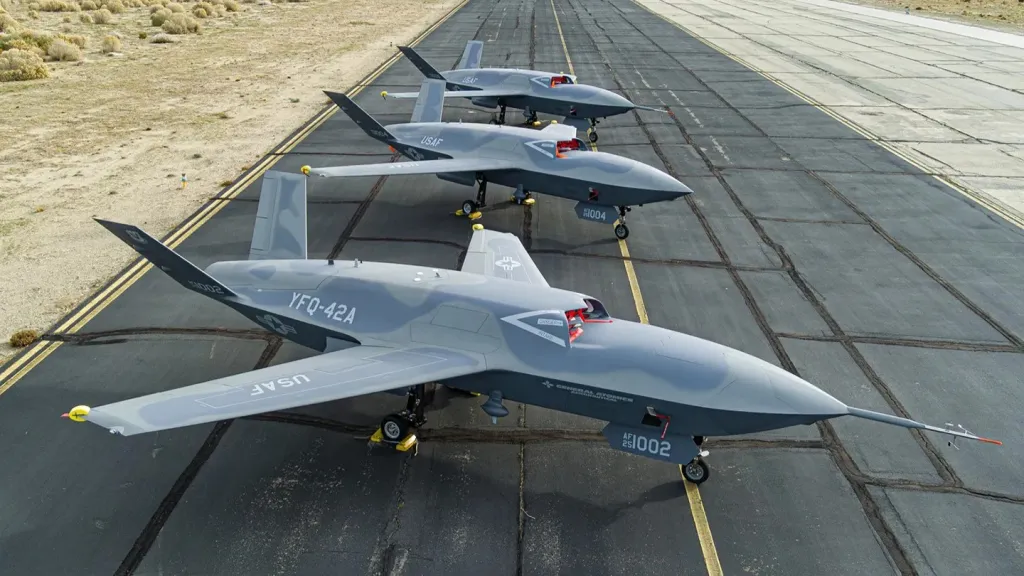
General Atomics has become one of the leading industrial participants in the CCA programme and has been heavily involved in flight-testing human-machine teaming concepts. It was selected by the Air Force to develop its FQ-42 Vengeance drone for Increment 1 of its CCA programme.
This mission with the Northrop F-5 is part of its broader ongoing series of flights intended to build the foundation for operational human and machine teaming.
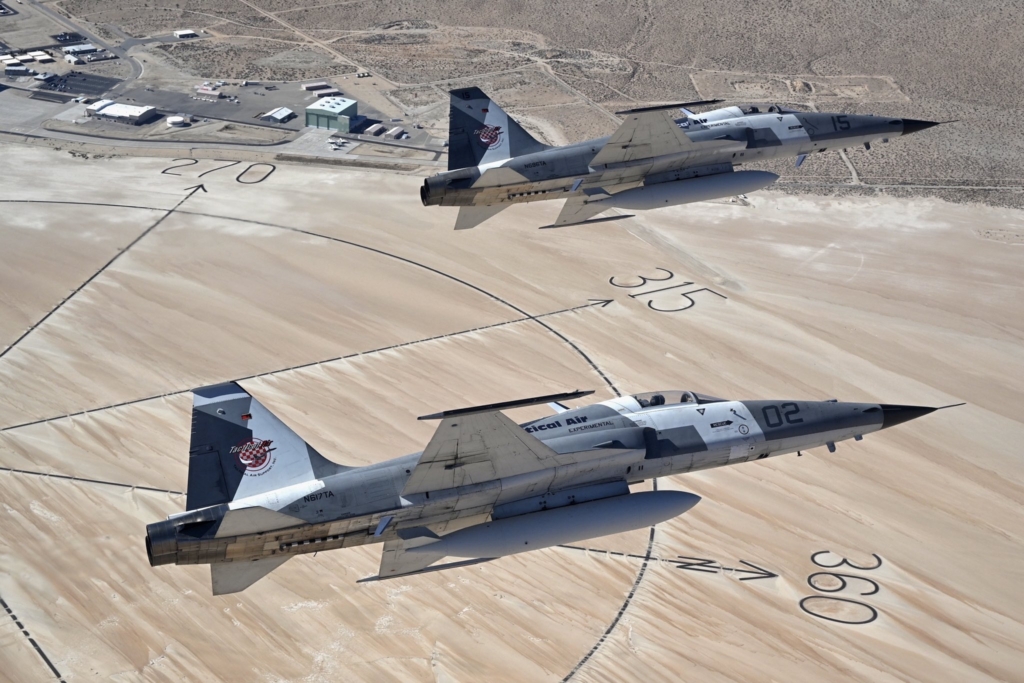
The tests are progressively getting more complex and operationally representative, combining live aircraft, live sensors, and mission autonomy. It has recently flown test flights with F-35s, F-22s, and F-5s.
Manned fighter jets teaming with highly autonomous wingmen are seen as the future of airpower.
Tactical Air Support is a Nevada-based private ‘red air’ commercial adversary support contractor, but it hasn’t released a statement on this latest effort, similar to General Atomics.
Sign up for our newsletter and get our latest content in your inbox.


More from


September 12, 20264 min read


