


US confirms for first time it has weapons deployed in orbit

7 min read
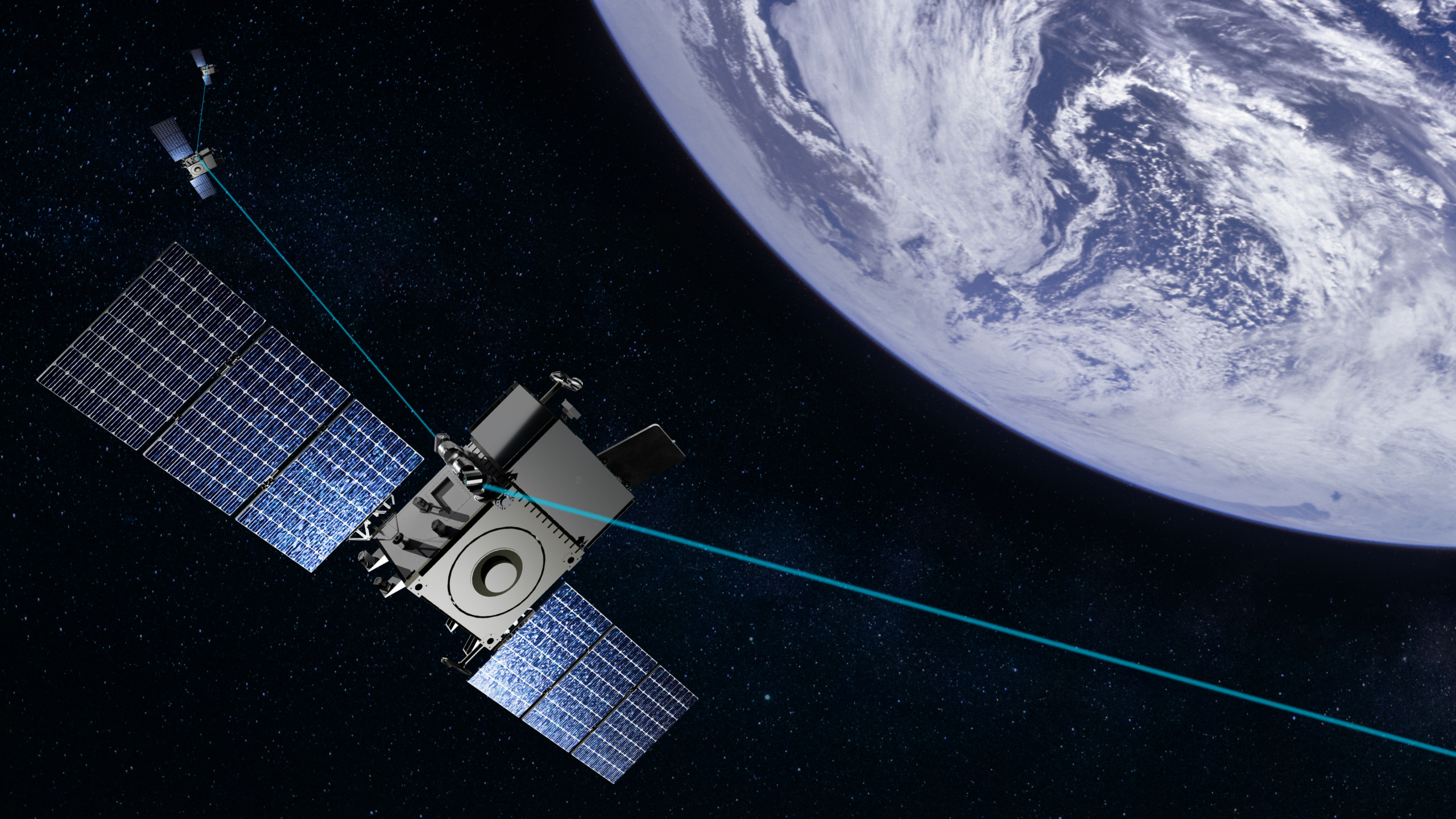
The United States has publicly confirmed for the first time that it has weapons deployed in orbit, lifting a layer of secrecy around the Pentagon’s ability to fight in space as competition with China and Russia increasingly extends beyond the atmosphere.
US Secretary of the Air Force Troy Meink made the disclosure during the Air, Space and Cyber Conference in Maryland on 14 September, saying the Space Force already possesses weapons capable of protecting American forces from hostile action.
“We are increasing readiness against existing threats, and the United States has on-orbit space control weapons capable of defending the Joint Force against hostile adversary action,” Meink said.
The acknowledgement is significant because Washington has spent years discussing counter-space capabilities without publicly confirming that weapons intended for the mission were already operating in orbit.
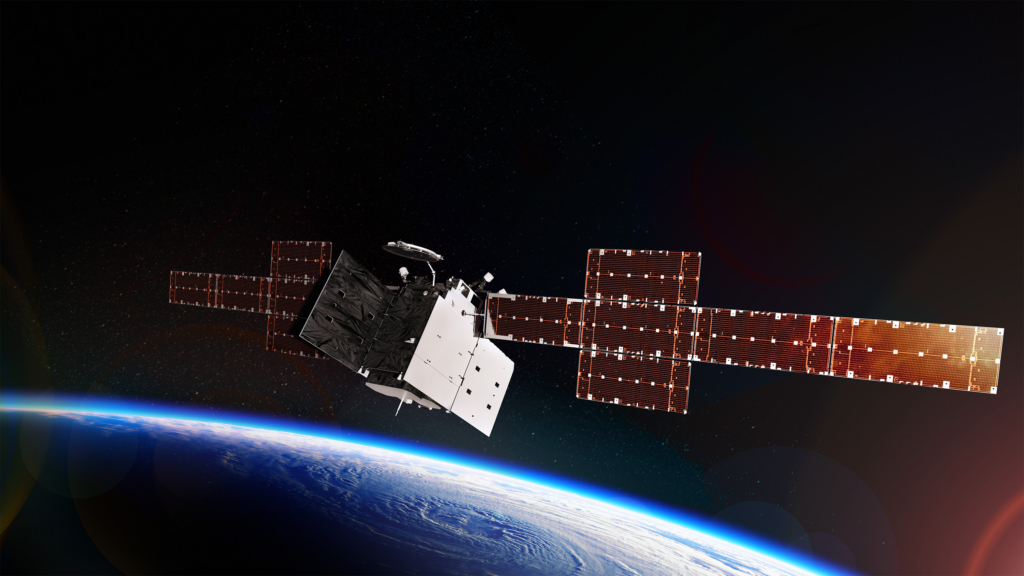
Meink did not identify the systems. Nor did he disclose how many are deployed, when they were launched, where they operate or whether they are capable of physically destroying another spacecraft.
That leaves one of the most consequential details unanswered: exactly what the Pentagon now classifies as an “on-orbit space control weapon”.
Washington reveals the capability but keeps the weapon secret
The language used by Meink is broader than simply describing an armed satellite.
Space control covers capabilities intended to secure freedom of action for US forces while potentially denying an adversary the same advantage. Those effects can be produced without physically destroying another spacecraft.
The Space Force says the mission can employ kinetic and non-kinetic means to disrupt, degrade or, if necessary, destroy an adversary’s capabilities. It also says those systems can be used offensively or defensively.
That opens several possibilities, as an orbital weapon could potentially interfere with communications, disrupt sensors or electronics, or use other non-kinetic methods against a satellite. At the more destructive end of the spectrum are systems capable of physically damaging or disabling another spacecraft.

Meink provided no indication of where the newly acknowledged weapons sit on that spectrum.
The deliberate lack of detail is important. Publicly confirming that the capability exists gives potential adversaries something new to consider without revealing how it works or how it might be defeated.
Meink placed the disclosure within a much broader warning about the speed at which military technology and potential adversaries are changing.
“The threat is changing actually faster than I thought possible when I took this job 18 months ago,” he said.
“Today, we face a mix of rapidly changing technologies, adversaries moving aggressively to employ them, and a budget process for a different pace of warfare.”
His response, he said, was for the US to increase combat power and innovate more quickly while keeping new capabilities affordable.
“We must increase our combat power and innovate faster than anyone else, affordably. We need cost-effective combat power,” Meink said.
For the Space Force, part of that change is already happening in orbit.
Disclosure follows first US live-fly exercise for contested space operations
The announcement comes days after the US military completed Apollo Maneuvers 2026, its first live-fly exercise centred on spacecraft manoeuvring in a contested orbital environment.
As AGN previously reported, the exercise represented a move away from treating military satellites largely as assets following predictable orbital paths. US Space Command instead rehearsed how spacecraft could manoeuvre, survive and continue operating when challenged by an adversary.
The timing now gives Apollo Maneuvers greater context.
The Pentagon has demonstrated that it is preparing spacecraft to operate more dynamically during a conflict, while the civilian head of the Air Force and Space Force has confirmed that US space-control weapons are already deployed in orbit.
It is a notable progression for a military whose dependence on space has grown enormously. Satellites provide missile warning, intelligence, surveillance, communications, navigation and targeting to forces operating on Earth. A major disruption to those networks could quickly affect operations in the air, at sea and on land.
Washington has increasingly argued that protecting those systems cannot depend solely on passive defence.
China and Russia remain central to US concerns over space warfare
The shift has been driven in large part by capabilities being developed by China and Russia.
US military officials have repeatedly warned that both countries are building systems capable of disrupting, disabling or destroying satellites.
The Space Force says China develops and operates counter-space capabilities as part of its military modernisation, while Russia regards space as a warfighting domain and believes superiority there could become decisive in a future conflict.
Some of those threats already extend beyond conventional anti-satellite missiles.

China has developed increasingly sophisticated spacecraft capable of manoeuvring and conducting rendezvous and proximity operations. Such technologies have legitimate applications, including inspection and servicing, but the ability to approach another satellite also has obvious military implications.
Russia has prompted similar concern with Washington claiming in 2024 that Moscow had launched a satellite the US believed could be capable of attacking other spacecraft. US intelligence has also accused Russia of developing a nuclear anti-satellite system that could potentially disable large numbers of satellites through an electromagnetic pulse. Moscow has denied the nuclear weapon allegation.
Meink’s announcement does not establish that the US has deployed equivalent systems. It does show that Washington is now prepared to acknowledge its own ability to conduct operations against threats in orbit.
US is also accelerating work on space-based missile interceptors
The official account of Meink’s speech provides another significant detail about the pace of US military development in space.
The Department of the Air Force is increasingly moving towards proliferated constellations, distributing capabilities across larger numbers of spacecraft rather than depending on a small number of expensive satellites.
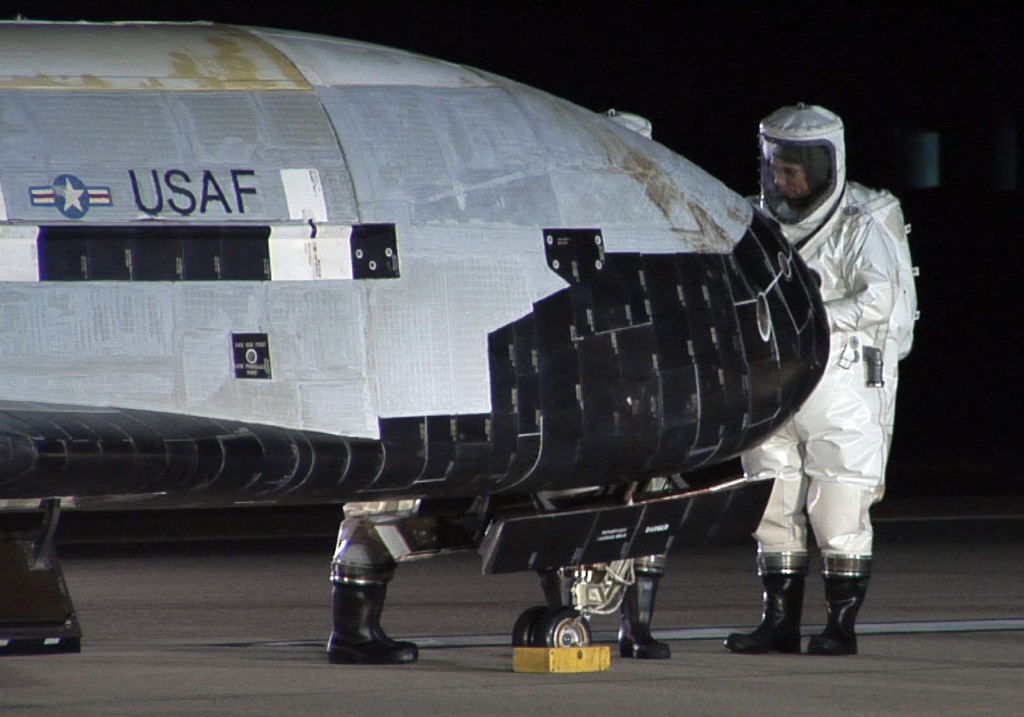
Meink singled out the Space-Based Interceptor programme as an example.
“One example is our Space-Based Interceptor programme, which moved from initial contract to flight-ready hardware in less than one year,” he said.
“We are making similar progress in our Space Data Network, and we start launching our Air Moving Target Indication constellation this month.”
The interceptor programme is particularly important because space-based interceptors are expected to form part of the Trump administration’s planned Golden Dome missile defence architecture.
But there is no evidence that the interceptors are the same systems as the “on-orbit space control weapons” Meink disclosed.
The distinction is crucial.
Space-control weapons are intended to contest or protect access to the space domain and may be directed against adversary space capabilities. Space-based interceptors are being developed to engage missile threats.
Meink’s speech indicates that both efforts are advancing, but it does not link them as a single weapon system.
Conventional orbital weapons are not banned outright by the Outer Space Treaty
The acknowledgement also raises an inevitable question about the legal framework governing weapons in space.
The 1967 Outer Space Treaty prohibits placing nuclear weapons or other weapons of mass destruction in Earth orbit. It also prohibits stationing such weapons on celestial bodies.
It does not impose a blanket prohibition on conventional weapons in orbit.
There is nothing in Meink’s statement to suggest that the systems he disclosed carry nuclear weapons or another weapon of mass destruction.
That means the confirmation alone does not establish a violation of the Outer Space Treaty.
Space Force moves beyond protecting satellites towards fighting through an attack
The change is part of a wider transformation of the US military’s approach to space.
When the Space Force was established in 2019, much of the public argument centred on protecting the satellites upon which American military operations depend. The emphasis has since broadened.
Space Force leaders increasingly talk about achieving space superiority, denying adversaries the ability to exploit the domain and ensuring US forces can continue operating through an attack.
The events of September have made that shift particularly visible.
Apollo Maneuvers demonstrated how spacecraft could manoeuvre and survive in a contested environment. Meink has now confirmed that weapons designed for space-control missions are already on orbit.
At the same time, the Pentagon is pushing a separate space-based interceptor from contract towards flight hardware at unusually high speed.
Meink said those investments were intended to allow the force to adapt and scale against both current and future threats.
Sign up for our newsletter and get our latest content in your inbox.


More from


September 12, 20264 min read


