


Why aircraft carriers need specialised fighter jets

6 min read
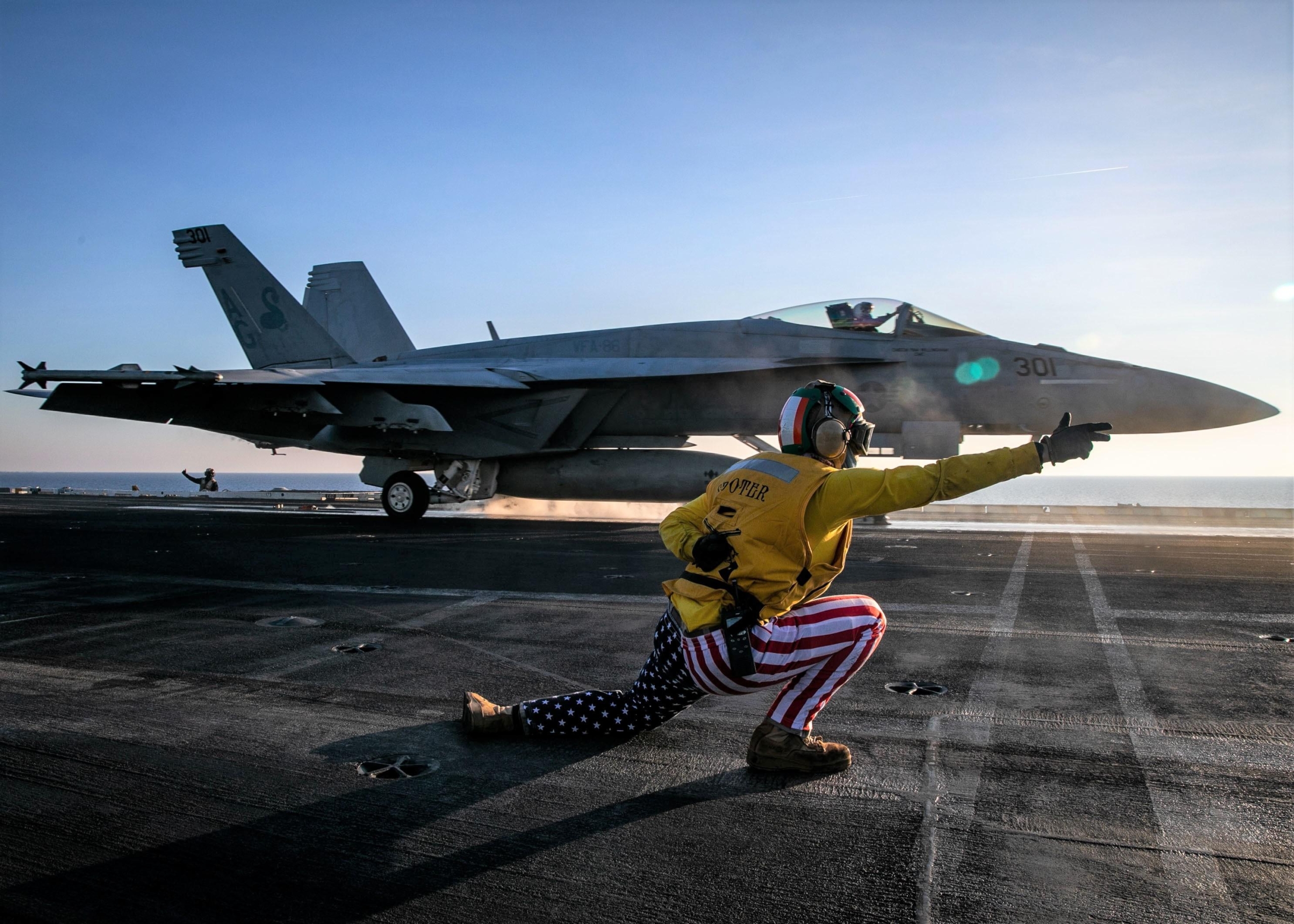
It is no simple task for modern heavy fighter jets to operate from aircraft carriers.
Aircraft carriers cannot usually operate standard land-based fighters. Short decks, arrested landings, limited deck space and the corrosive saltwater environment require extensive modifications. Different carrier designs also impose different launch and recovery requirements.
Special variants of fighter jets have to be designed to operate from carriers with tail hooks, reinforced landing gear, folding wings, corrosion protection, reinforced airframes, and more.
For the purpose of this article, amphibious assault ships will be included with aircraft carriers.
Why carriers can’t use standard fighter jets
Carrier-based fighters have to handle a short, moving runway with violent deceleration on landing in a saltwater environment. They also have to be modified to take up as little room as possible, with folding wings to allow the ship to carry more fighters.
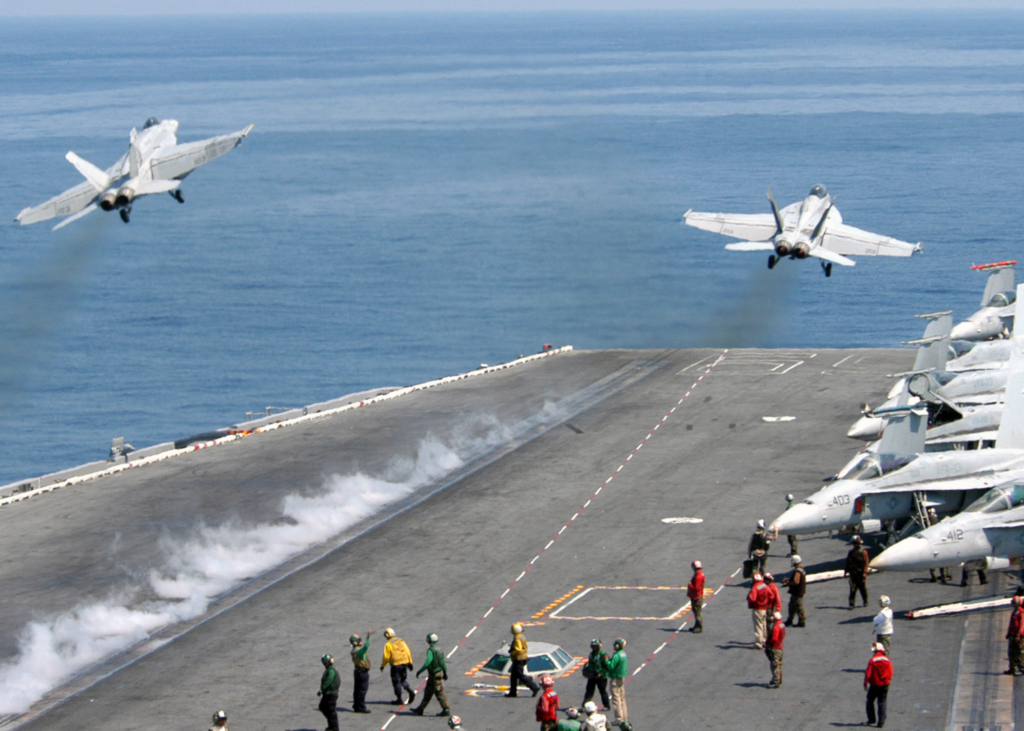
For fighter jets, arrested landings are brutal. They must touch down on the carrier at around 120-150 knots on a runway that’s 250-300 metres long. To stop in that distance, they have arresting hooks; stopping the aircraft in around 100 metres strains the airframe.
Landing gear needs to be significantly reinforced. Carrier landings resemble something closer to controlled crashes than the soft landings of land-based aircraft. They must handle high vertical descent rates, hard deck impacts, and rapid deceleration.
For CATOBAR operations, the nose gear is particularly specialized. But the structural reinforcement extends to the fuselage frame, wing roots, engine mounts, and more. This also means that the aircraft come with increased structural weight compared with land-based fighters.
Fighters like the F-35C and Super Hornet also come with folding wings; this saves extremely valuable ship space, but also adds weight and complexity to the aircraft.
The salty environment is also extremely hostile to aircraft, and they require specialised primers and coatings, sealants, corrosion-resistant materials, regular washing, more aggressive maintenance regimes, and more. Even the engines have to be modified and intensively maintained.
Why carrier design determines the aircraft it can operate
Not all aircraft carriers operate aircraft in the same way. The method used to launch and recover aircraft largely determines which fighter jets can operate from the ship and how much fuel and weaponry they can carry.
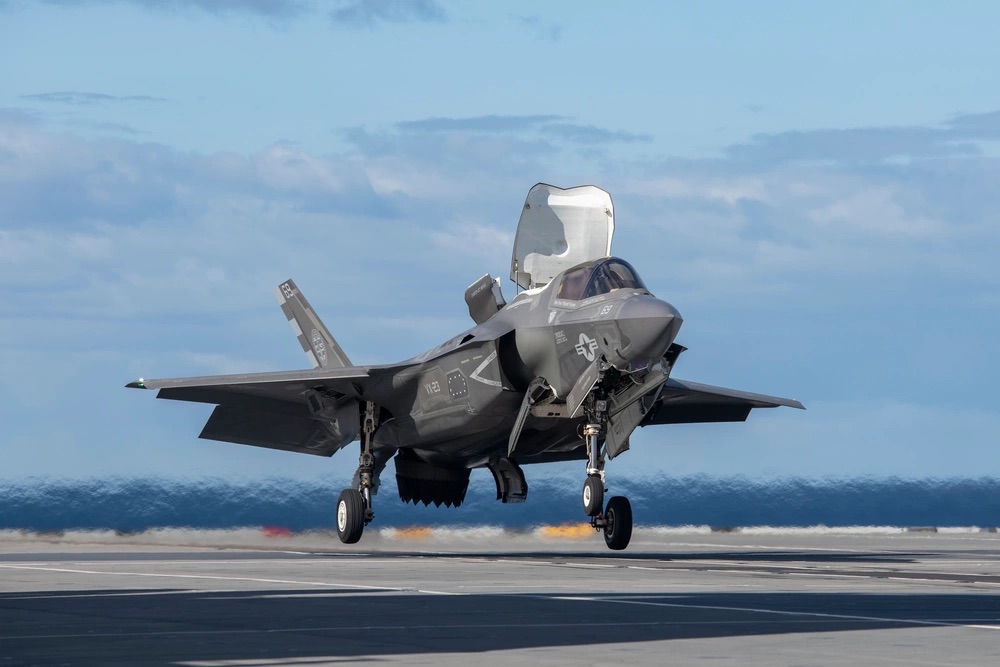
Aircraft carriers come with three major types of takeoff systems. CATOBAR (Catapult-Assisted Take-Off But Arrested Recovery) uses catapults like a slingshot (steam or EMALS) for takeoff and arresting wires for landing.
Examples include the US Nimitz class, the Ford class (with EMALS), the French Charles de Gaulle, and the Chinese Type 003 Fujian. These ships can essentially operate all carrier-based aircraft, like the E-2D Hawkeye radar airplane.
Another type is STOBAR (Short Take-Off But Arrested Recovery). These use ski-jumps for takeoff and arresting wires for landing. Examples include the Indian Vikramaditya/Vikrant and the Chinese Type 001/002 Liaoning/Shandong.
Aircraft operating from STOBAR carriers need to be lighter, and this can come at the expense of weapons and fuel.
The third is STOVL (Short Take-Off and Vertical Landing), using a short rolling takeoff and verhicle/short landing. Examples include the Marines’ amphibious assault ships and the Royal Navy’s Queen Elizabeth-class carriers.
The best modern example is the F-35B with the Rolls-Royce LiftSystem. This system eliminates catapults and arresting wires and allows fighters to operate from large amphibious assault ships and smaller carriers, but the fighter is forced to carry the heavy and space-consuming lift system.
Why carrier-capable fighters are more difficult and expensive to develop
The additional structural requirements of carrier operations can make naval fighter variants more complex and expensive to develop than their land-based counterparts.
It is widely understood that one of France’s requirements for the former Franco-German-Spanish FCAS 6th-generation fighter programme was for it to come with a carrier-based variant. This was one of the major sources of friction.
The Germans did not need a carrier-based fighter, and making the FCAS carrier-capable added a large amount of complexity and engineering headaches. It is seen as a contributing factor to the collapse of the programme.
The F-35 was famously developed in three variants: the conventional land-based F-35A, the STOVL F-35B, and the carrier-based F-35C. Originally, this was seen as a cost-saving measure, but it turned out to possibly be more expensive and time-consuming. The three variants share little commonality.
While the programme was ultimately successful, the US Air Force and US Navy are now pursuing separate next-generation fighter programmes. The USAF is developing its own next-generation F-47 air superiority fighter, while the Navy is going it alone with its F/A-XX programme.
Which navies operate carrier-based fighters?
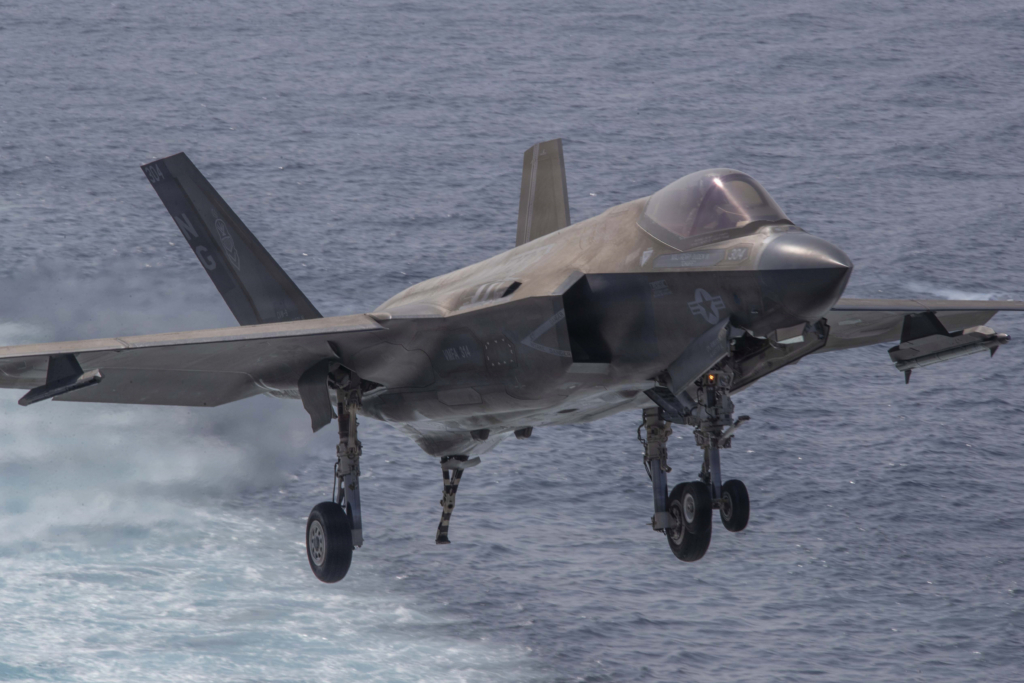
The Boeing F/A-18 Hornet/Super Hornet and the Lockheed Marin F-35B/C currently dominate the carrier-deployed fighter jets. These make up the overwhelming majority of carrier fighters.
In 2026, the Marine Corps phased out the last of its legacy AV-8B Harrier II STOVL jets, leaving limited numbers remaining in the Italian and Spanish navies.
By mid-2026, the Marine Corps has around 200 F-35Bs, over 50 F-35Cs, and around 130 active F/A-18 legacy Hornets in service, with a total fleet of around 380 carrier-based fighters.
| Aircraft carrier-operating navies | Approx. number of carrier-capable fighters | Fighter jet types |
| US Navy/Marine Corps | 1,000+ | F/A-18 Super Hornet, F/A-18 Hornet, F-35B, F-35C, EA-18G Growler |
| Chinese PLANAF | 100-150+ (numbers opaque) | J-15, J-35 |
| British Royal Navy | 47 | F-35B (shared with RAF) |
| French Navy | 41 | Rafale M (shared with French Air Force) |
| Indian Navy | 36-40 | MiG-29K |
| Italian Navy | 21+ | F-35B, AV-8B Harrier |
| Spanish Navy | 12 | AV-8B Harrier |
| Japanese Navy | 8+ | F-35B |
The US Navy has around 550-585 F/A-18 Super Hornets, 156 EA-18G Growlers, and over 70 F-35Cs in inventory. This gives it a fleet of around 800 carrier-based fighters.
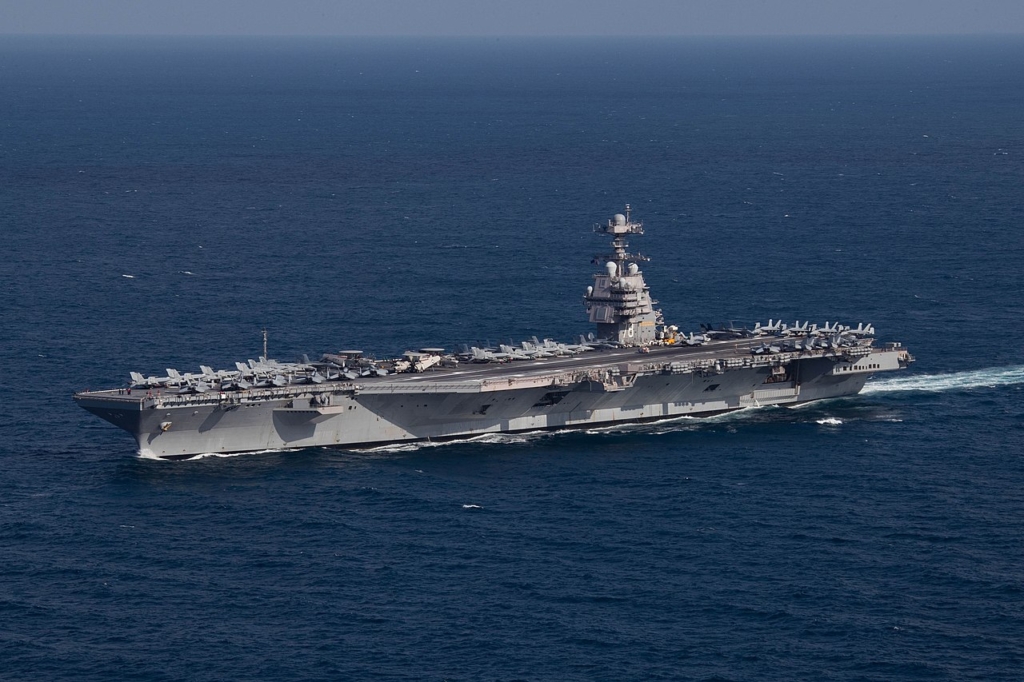
The Chinese PLANAF has the second-largest fleet, made up of at least 100 carrier-capable fighter jets. These are made up of 75–120+ J-15s and 10-30+ new J-35s. Chinese numbers are opaque.
Other navies have smaller fleets. The Royal Navy has 47 F-35Bs (shared with the RAF), the French Navy has 41 Rafale Ms (shared with the French Air Force), the Indian Navy has around 36 MiG-29Ks, the Italian Navy has over 20 F-35Bs and legacy Harriers.

The Spanish Navy has around 12 legacy AV-8B Harriers, while the Japanese Navy is in the early stages of growing its F-35B fleet.
The Russian Navy continues to operate diminishing numbers of carrier-capable MiG-29Ks and Su-33s, although it is no longer a carrier-operating country.
Why aircraft carriers need specialised fighter jets
Carrier aircraft require structural strengthening, specialised landing gear, corrosion protection and, in some cases, entirely different take-off and landing systems.
Different carrier designs also impose different requirements, which is why navies typically operate dedicated naval variants rather than standard land-based fighters.
Sign up for our newsletter and get our latest content in your inbox.


More from


September 17, 20265 min read

September 17, 20263 min read


September 18, 20263 min read

