


87 years ago today: The first flight of the Heinkel He 178 beat Britain into the jet age

6 min read
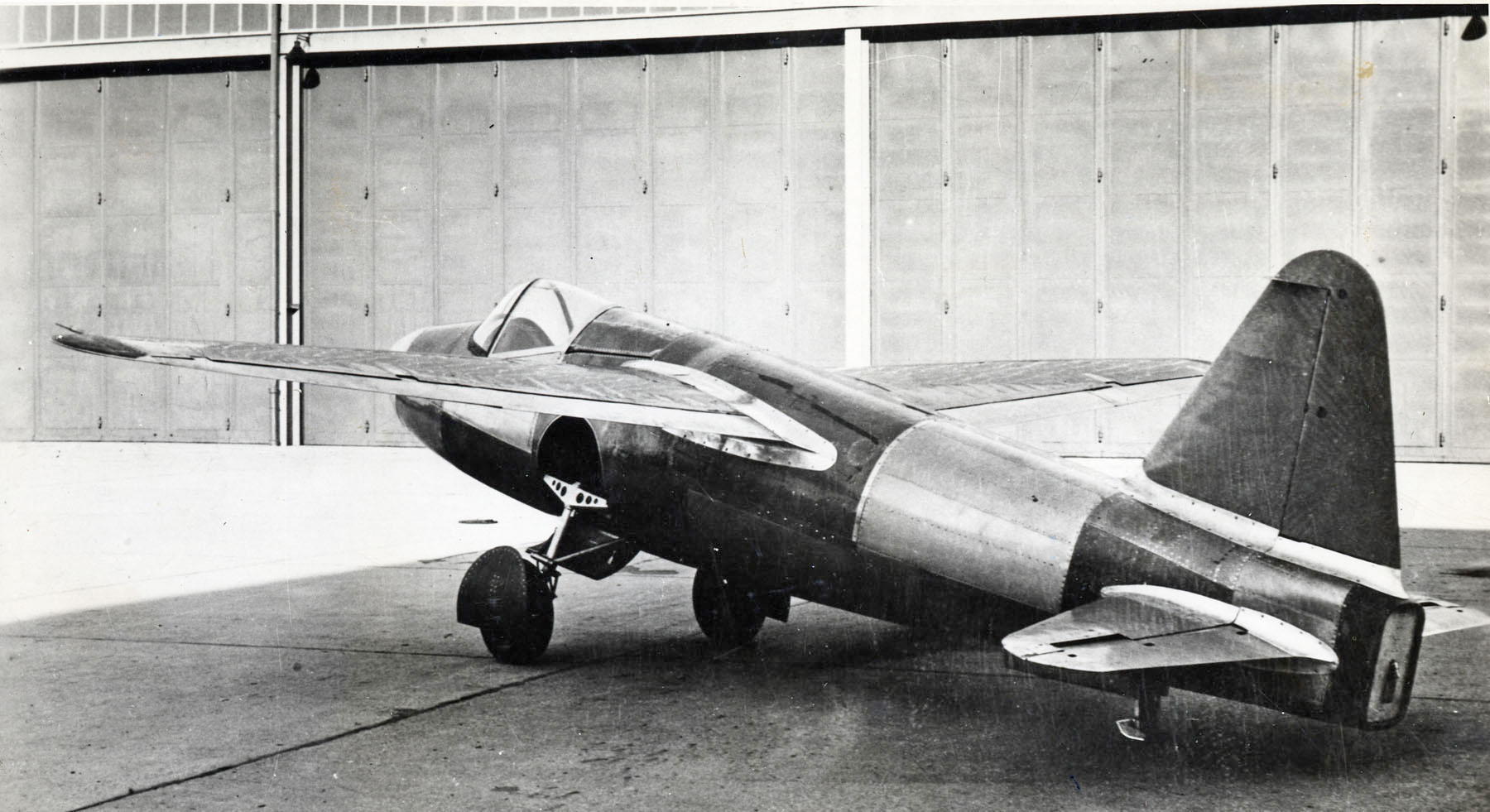
On the morning of 27 August 1939, with Europe standing on the brink of the Second World War, a small and rather ungainly aircraft without a propeller waited on the runway at Heinkel’s Marienehe works near Rostock on Germany’s Baltic coast.
It did not carry guns. It was not intended for combat. Its turbojet engine had never powered an operational aircraft, and its performance was still largely an unknown quantity. Yet when test pilot Erich Warsitz opened the throttle and the aircraft began to move, aviation history was about to change forever.
The aircraft was the Heinkel He 178, and it would become the world’s first aircraft to fly solely under turbojet power.
Designing a pioneering jet aircraft – the Heinkel He 178
The achievement had been years in the making. At the centre of it was Hans Joachim Pabst von Ohain, a young German physicist who had become fascinated by the possibility of producing thrust without a propeller.
His concept was radically different from the piston engines that powered virtually every aircraft of the period. Instead of turning a propeller, a turbine engine would compress incoming air, mix it with fuel, burn the mixture, and accelerate the resulting gases rearwards.
The reaction would produce thrust, which would push the aircraft forwards.
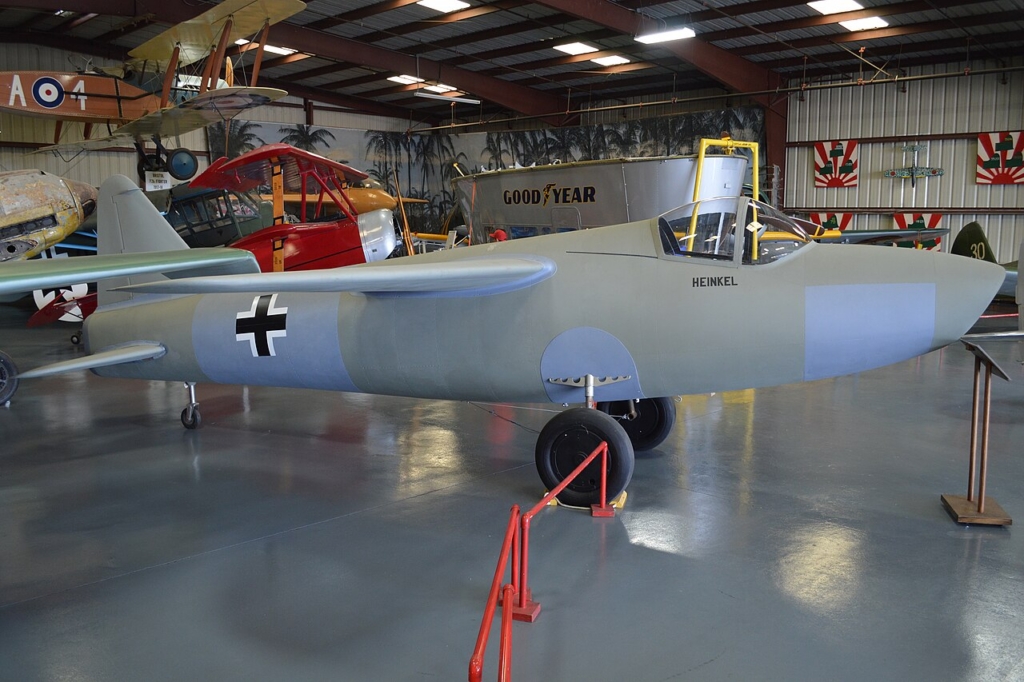
Ernst Heinkel, whose company was already deeply involved in high-performance aircraft, recognised the potential. He gave von Ohain the resources to pursue his ideas.
By September 1937, the first experimental Heinkel jet engine, the HeS 1, had successfully run on a test stand. The next step was obvious – to put a jet engine into an aircraft and see whether the idea actually worked in the sky.
The resulting He 178 was remarkably compact. It had a duralumin fuselage, wooden wings and a shoulder-mounted wing arrangement. Most striking of all was its propulsion layout.
Air entered through an intake in the nose, passed through the engine buried inside the fuselage, and then exited through a long tailpipe at the rear.
In broad outline, the configuration anticipated the layout that would become familiar on countless single-engine jet aircraft after the war.
The Heinkel He 178 was far from the perfect jet aircraft
The He 178 was not without its problems. The early engine offered only modest thrust, and the aircraft’s flight endurance was extremely limited.
During the ground-testing programme, an alarming incident occurred when a bird was sucked into the engine intake, damaging the powerplant and delaying the first flight.
Repairs were completed, however, and the aircraft was eventually ready. There was a preliminary hop on 24 August, when the He 178 briefly left the ground. Three days later came the flight that mattered.
Warsitz took the controls and guided the He 178 into the air. For roughly six minutes, the little aircraft flew under the power of its turbojet alone. It was not a spectacular flight by later standards, but technically it was extraordinary.
There was no propeller pulling the aircraft forwards, no piston engine driving a shaft, and no conventional powerplant anywhere in the equation. The aircraft was being propelled by a jet of exhaust – the first time such a feat had been achieved.
Its achievement was particularly remarkable because Britain was working on essentially the same revolutionary idea. Frank Whittle had been developing his own turbojet concept since the 1930s.
Eventually, British government backing allowed a flight engine to be developed, and the British aircraft company Gloster was tasked with constructing an aircraft specifically to test it.
Close behind the Heinkel He 178 came the Gloster E.28/39
Here the story takes on an intriguing sense of competition, even though the two programmes were not really a straightforward race between opposing aircraft companies.
The Heinkel project had been a privately funded company venture, while the British E.28/39 was built as a government-backed testbed for Whittle’s engine. Nevertheless, the dates tell a remarkable story. Heinkel’s aircraft flew in August 1939, while Gloster’s aircraft did not make its official first flight until 15 May 1941.
The difference was not a matter of days but of roughly twenty-one months. The E.28/39 therefore followed the He 178 into the air by nearly two years.
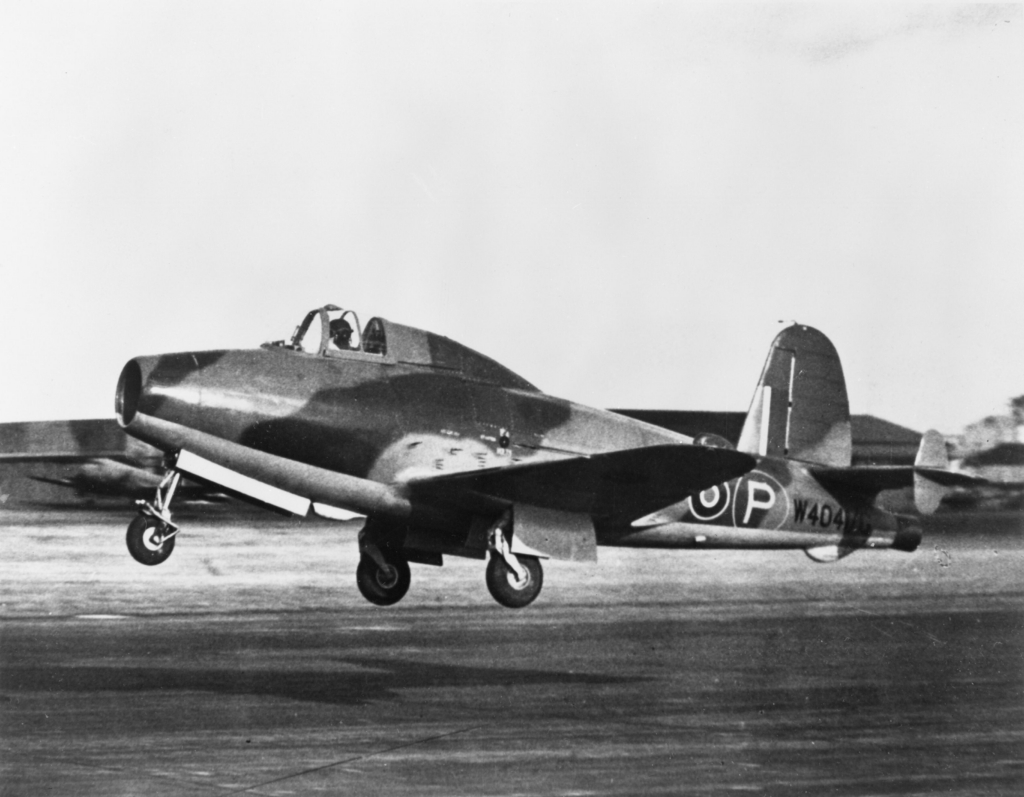
There is, however, an interesting qualification to the popular story that the He 178 ‘beat’ the Gloster by days. The British machine did make several short airborne hops during taxi testing on 8 April 1941, when test pilot Gerry Sayer lifted the aircraft a few feet above the ground for short distances.
But those were not regarded as its official first flight. The proper flight came at RAF Cranwell on 15 May, when Sayer flew the E.28/39 for seventeen minutes. In other words, the He 178 had not merely beaten the Gloster into the air by days. It had beaten it by months and, in practical terms, almost two years.
The Heinkel He 178 never saw Luftwaffe service
The He 178’s historic achievement did not translate into Luftwaffe service. This is perhaps the most ironic part of the story. The aircraft that had opened the jet age was never introduced into operational Luftwaffe service.
The He 178 remained an experimental aircraft, and its small size, limited endurance and experimental engine made it unsuitable as a practical combat aircraft.
When the prototype was demonstrated to senior Luftwaffe figures, including Ernst Udet and Erhard Milch, it failed to generate the enthusiasm Heinkel had hoped for. A later demonstration on 1 November 1939 attracted senior officials, but there was still no immediate decision to put the aircraft into production.
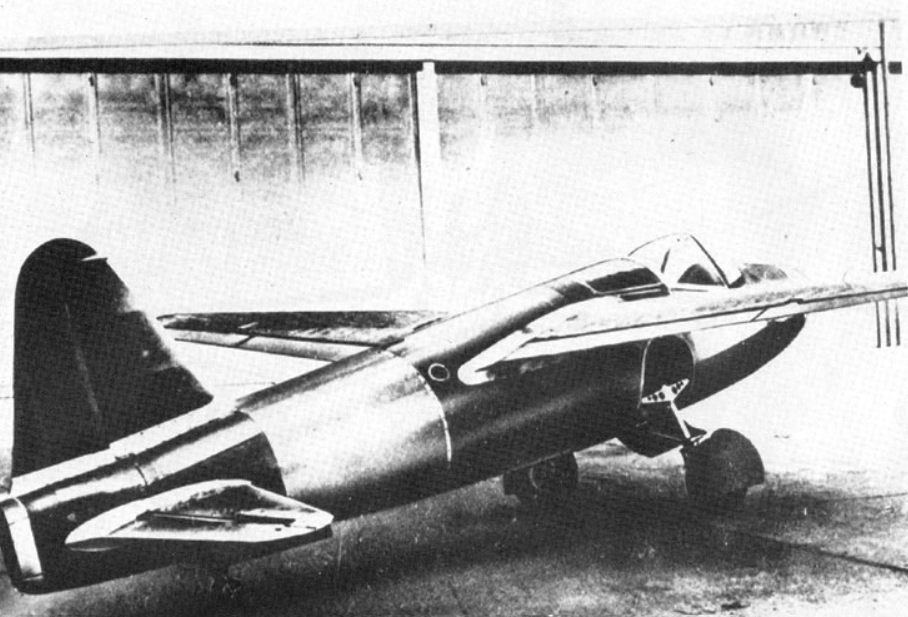
That lack of official interest would prove costly. Germany possessed the world’s first true jet aircraft at a moment when the Second World War was about to begin, yet the He 178 itself went nowhere.
Heinkel instead moved towards a more ambitious design, the twin-engine He 280, which was intended to demonstrate the military potential of jet propulsion more convincingly.
Britain followed a different path. The E.28/39 was never intended to be an operational fighter either, but its test programme provided valuable information about jet engines and high-speed flight.
Its work ultimately contributed to the development of the Gloster Meteor, which became the first Allied jet fighter to enter operational service in July 1944.
The He 178 holds a strange place in aviation history
The He 178 therefore occupies a strange place in aviation history. It was the first turbojet-powered aircraft into the air but was not successful as a weapon.
It demonstrated the future, but its own designers could not persuade their military customers to embrace that future quickly enough.
On that August morning in 1939, however, none of that was yet known. Erich Warsitz simply climbed into a strange little aircraft and opened the throttle.
Behind him, the old world of piston engines and propellers began to fade in his wake. Ahead lay an age of jet fighters, airliners and aircraft capable of speeds that seemed impossible only a few years earlier.
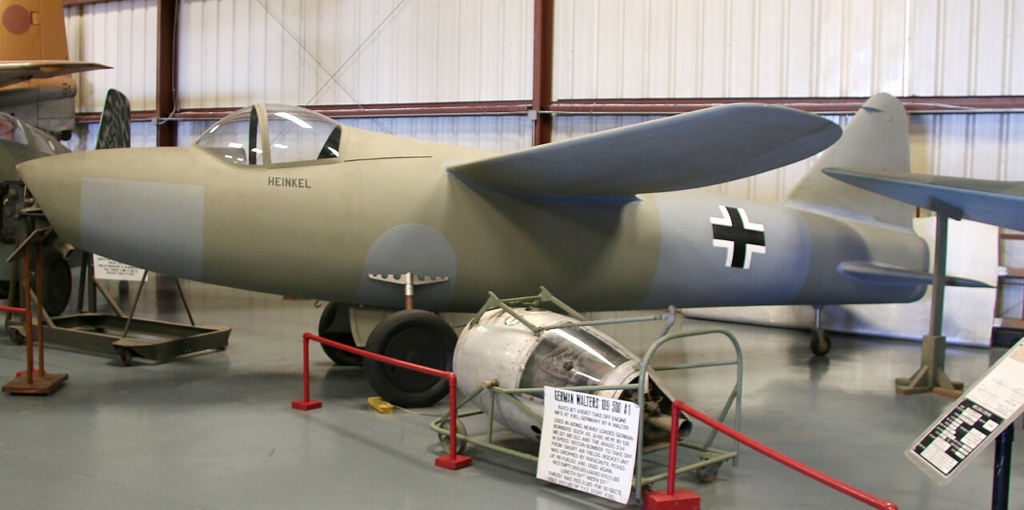
The Heinkel He 178 never served in the Luftwaffe. It never fired a shot and never entered production. But it did something arguably more important: it proved that an aircraft could fly on jet propulsion alone.
And when the Gloster E.28/39 finally rose into the British sky in 1941, it was following a path that Heinkel, von Ohain and Warsitz had already opened nearly two years earlier.
While the first-in-the-air crown may have been lost, the legacy of the Whittle-designed jet turbine engine lives on today.


