The F-35: America’s most expensive fighter jet programme just got $51 billion more expensive

10 min read
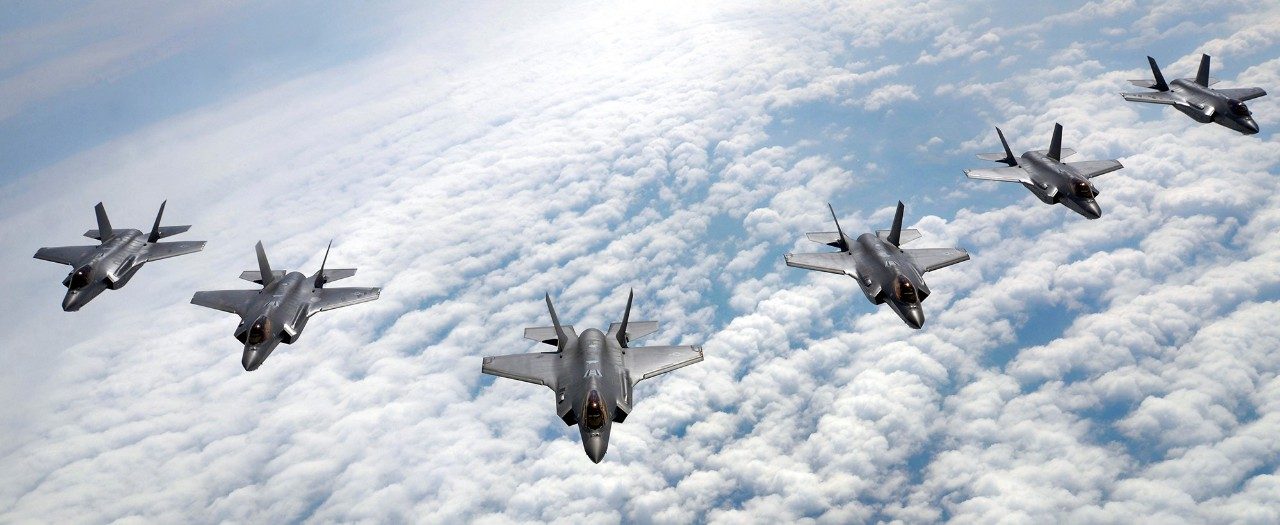
The estimated cost of acquiring the US military’s F-35 fleet has jumped by about $51 billion since late 2023, pushing the programme’s acquisition bill to roughly $536 billion.
The increase of more than 10% is detailed in the Pentagon’s latest Modernized Selected Acquisition Report, dated April 21, 2026. Higher aircraft and engine procurement costs account for about $32 billion of the increase, while roughly $19 billion comes from additional development spending.
It is another sharp rise for the Pentagon’s most costly weapon system. When the Joint Strike Fighter programme entered development in 2001, its acquisition cost was estimated at about $233 billion.
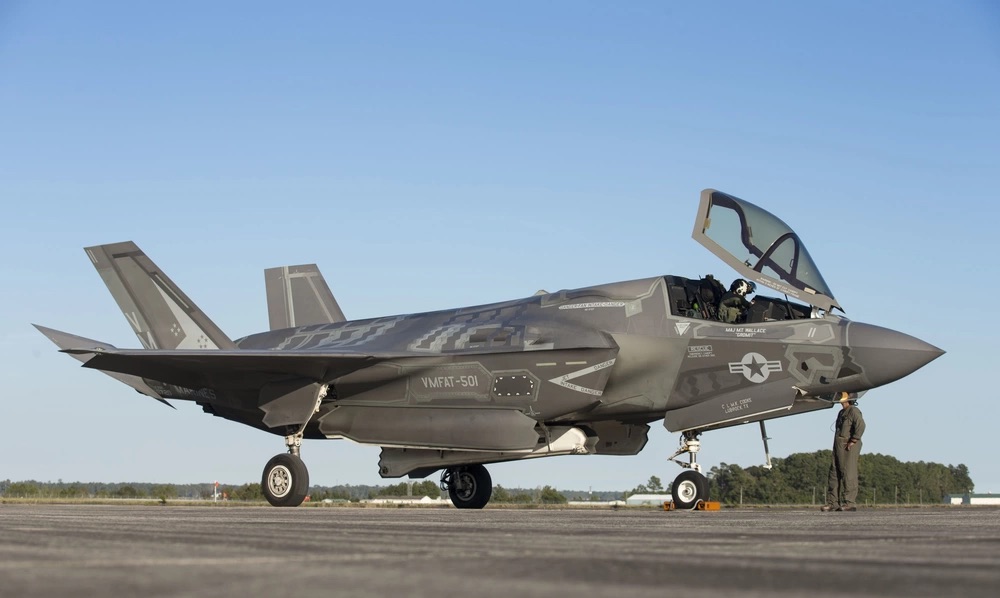
The new figures arrive at a difficult point for the programme. The F-35 is now firmly established in the US military and allied air forces, with more than 1,200 aircraft operating across 20 nations. Production reached a record 191 deliveries last year.
Yet the Pentagon is still working through delays to the fighter’s next major upgrade, while the proportion of US aircraft fully ready for all assigned missions fell to just 25% in fiscal 2025.
Where the $536 billion goes
The new acquisition estimate is easier to understand when the aircraft and its engine are separated.
The Pentagon now puts acquisition of the aircraft portion of the programme at about $446.7 billion in then-year dollars. That includes $355.4 billion to buy the aircraft, $87.3 billion for research and development and about $4 billion for military construction.
The Pratt & Whitney F135 turbofan engine programme adds about $89.6 billion, including $70.2 billion for procurement and $19.4 billion for development.
Those numbers cover development and acquisition. They should not be confused with the much larger estimates often quoted for the F-35’s total lifetime cost, which include decades of flying, maintenance, personnel, fuel, training and upgrades.
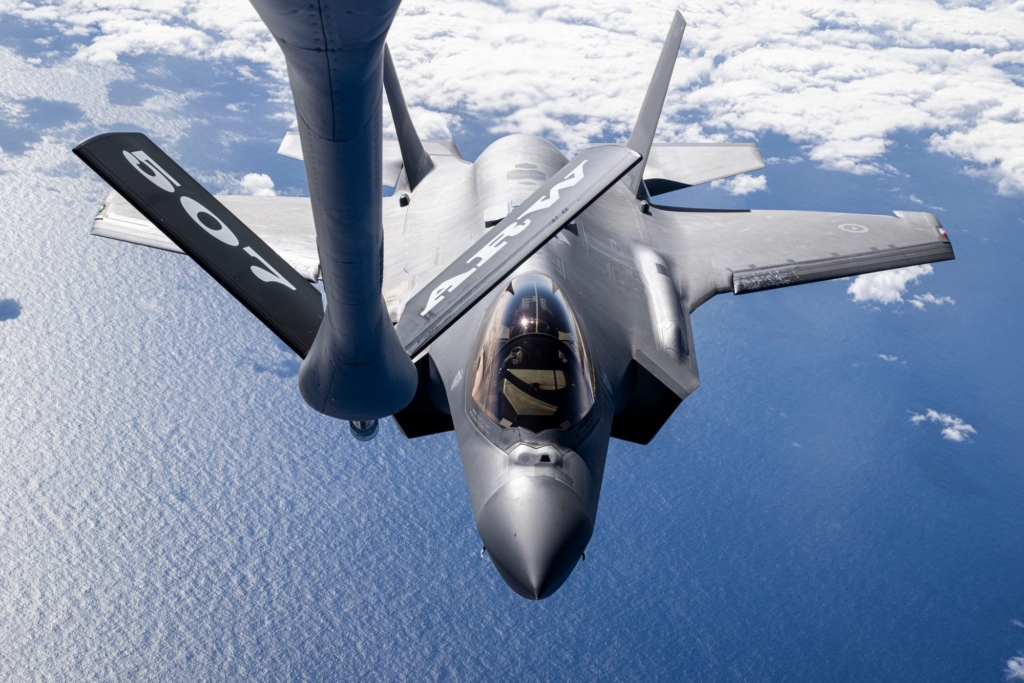
Part of the latest increase reflects firmer prices for aircraft and engines still to be delivered. In September 2025, the F-35 Joint Program Office and Lockheed Martin finalised a $24 billion agreement covering production Lots 18 and 19 and up to 296 aircraft. Pratt & Whitney received a $6.6 billion award for Lot 18 and 19 engines in March 2026.
The estimate also incorporates new costs including Northrop Grumman’s APG-85 radar and changes to the mix of aircraft the US services plan to operate.
That matters because of the sheer number of fighters involved. The US programme covers 2,470 aircraft, including 14 development jets and 2,456 production aircraft. The planned fleet includes 1,763 Air Force F-35As, 280 Marine Corps F-35Bs and 413 F-35Cs for the Marine Corps and Navy.
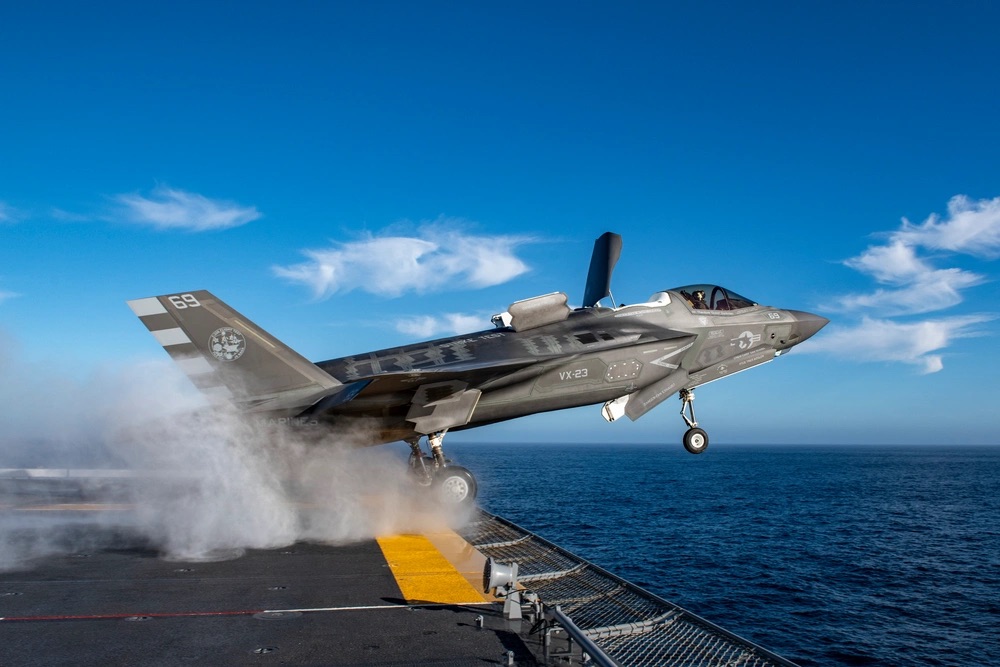
The three versions were designed around different requirements. The F-35A is the conventional take-off and landing model used by the Air Force and most international customers. The Marine Corps’ F-35B can make short take-offs and vertical landings, allowing it to operate from amphibious ships and austere locations. The larger-winged F-35C was developed for aircraft carrier operations.
Block 4 is proving harder than planned
Building new aircraft is only one side of the F-35 programme. The Pentagon is simultaneously trying to give aircraft already entering service the capabilities they will need against more advanced threats. That effort centres on Block 4.
Block 4 brings new weapons, electronic warfare improvements, sensor enhancements and other changes intended to keep the F-35 effective against increasingly sophisticated air defence systems.
The programme now plans to prioritise 55 critical Block 4 capabilities, including improvements for air superiority and suppression of enemy air defences, as well as integration of high-priority weapons.
Getting there has been difficult.
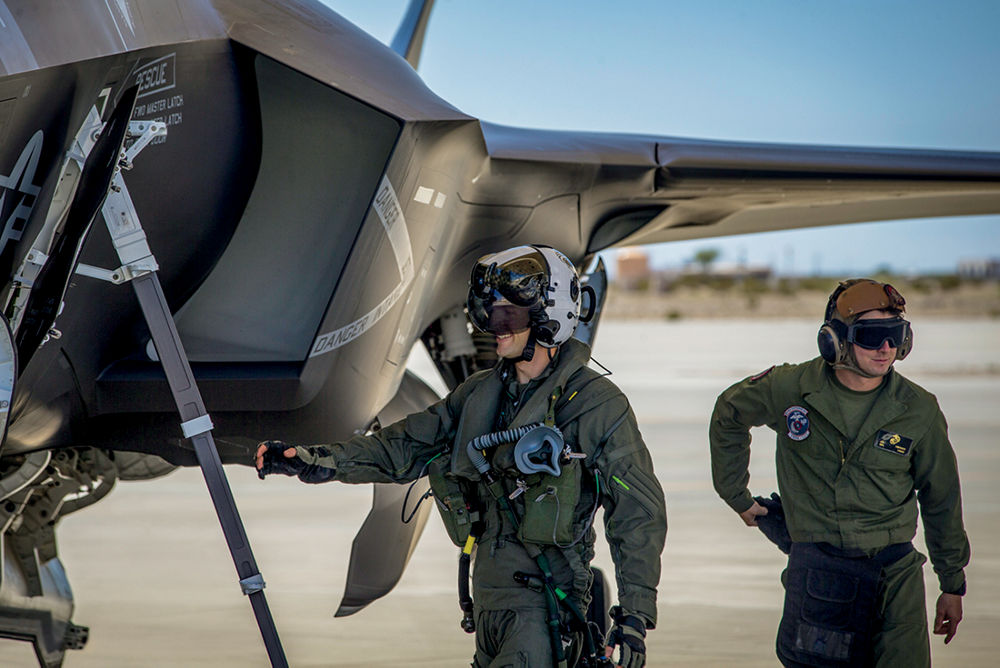
The foundation for Block 4 is Technology Refresh 3, or TR-3, which replaces core computing equipment and provides the processing power and memory required for many of the new capabilities.
TR-3 hardware is now being installed in production aircraft, but software development has encountered problems. The Pentagon itself says “the program has faced challenges with the delivery of its complex software”.
The problems are visible deep inside the latest MSAR.
One TR-3 contract shows an unfavourable cost variance of about $1.17 billion. The report attributes it primarily to technical complexity, design changes and additional engineering work involving the Integrated Core Processor, Panoramic Cockpit Display and Aircraft Memory System. Supplier delays involving the same systems also hurt the schedule.
Another part of the programme has suffered delays because TR-3 Integrated Core Processor modules were not qualified on time. Modification kits have consequently arrived late, while some shipments have been redirected to give priority to Marine Corps aircraft undergoing Block 4 modifications.
The Pentagon now lists the technical maturity of advanced Block 4 capabilities as a continuing schedule risk.
Pentagon expands testing to get upgrades out faster
The response includes a significant expansion of F-35 testing.
The programme is increasing laboratory capacity and making greater use of digital twins, modelling, simulation and threat emulation. Where possible, some simulation work will substitute for flight testing.
It is also buying nine new fully instrumented Flight Science Aircraft to replace an ageing test fleet. The aircraft will be used for Block 4 development, weapons integration and certification work.
The engine must change as well.
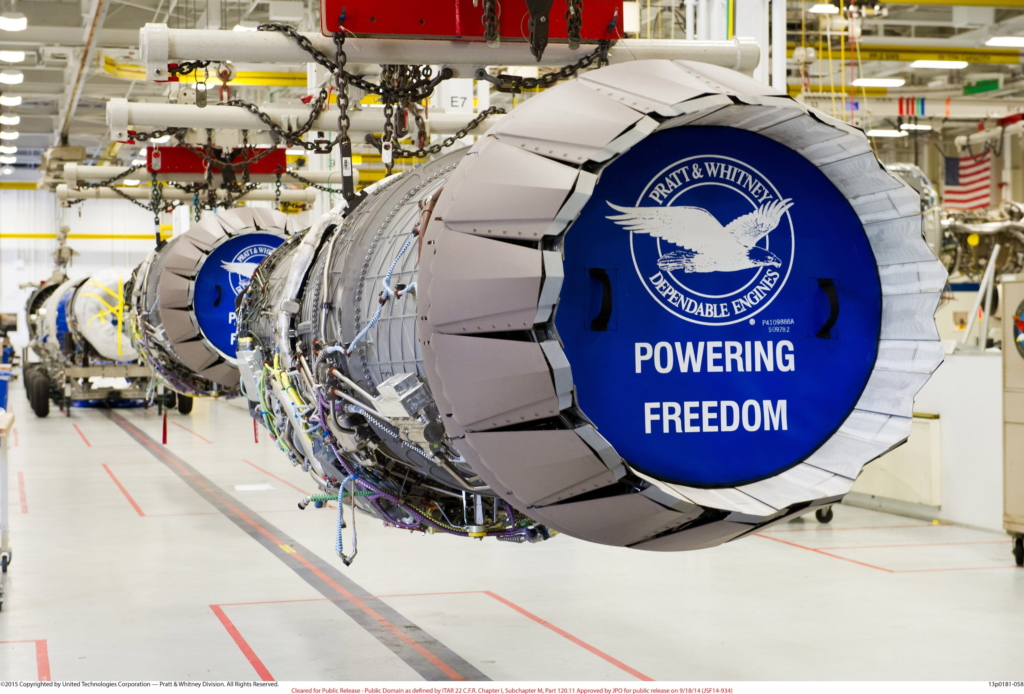
Block 4 and future upgrades place heavier demands on the aircraft’s electrical power and cooling systems. Pratt & Whitney is therefore working on an Engine Core Upgrade for the F135, while the programme is planning a wider Engine and Power Thermal Management modernisation.
The Pentagon says those changes are necessary to provide enough power and cooling for future capabilities. It also expects the upgrades to increase engine time on wing by 16% to 25%, meaning engines should be able to remain installed and operating longer before they need to be removed for maintenance.
The bigger bill comes after the aircraft are bought
The $536 billion acquisition figure is enormous, but most F-35 spending will ultimately come from keeping the fleet operating.
The Pentagon’s latest estimate puts US operating and support costs at about $1.395 trillion in then-year dollars, with F-35 operations extending into the 2080s.
That figure includes manpower, flying operations, maintenance, training, continuing improvements and other costs across decades of service.
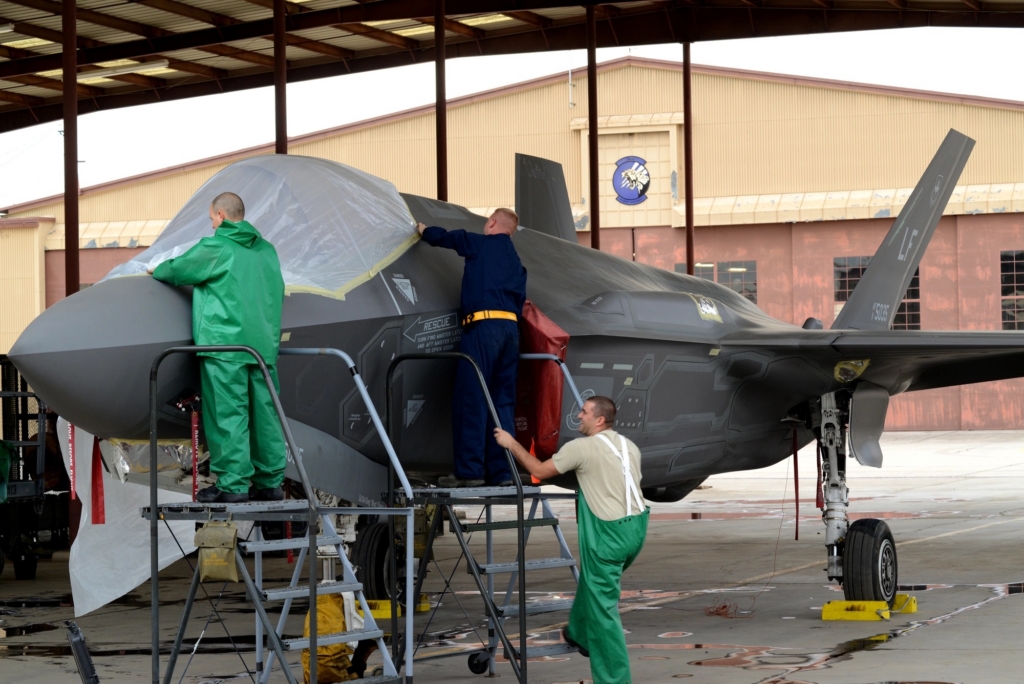
The programme office argues that the roughly $2 trillion figure commonly associated with the F-35 can therefore be misleading without context.
“The $2T price tag commonly reported in the media doesn’t come close to telling the whole story,” the programme says in the MSAR.
It points out that the calculation spans roughly 90 years, from the 1990s into the 2080s, and includes aircraft, engines, maintenance and training systems, simulators, combat data systems, long-term sustainment and future capability development. Fuel and the personnel required to maintain the fleet are included as well.
The programme also says costs per flying hour and per aircraft have fallen significantly over the past decade.
Its “War on Cost”, launched in February 2023, produced 60 cost-reduction initiatives that it says lowered the FY2025 sustainment estimate by $23.3 billion in constant 2012 dollars, equivalent to $52.2 billion in then-year dollars.
That has not solved the more immediate problem of getting enough aircraft ready to fly.
Readiness fell despite rising sustainment spending
A separate Government Accountability Office report released in June paints a stark picture.
Between fiscal 2021 and 2025, the F-35 fleet’s mission capable rate fell from 67% to 44%. That measure means an aircraft can perform at least one of its assigned missions.
The fully mission capable rate, a tougher measure showing whether the aircraft can perform all of its assigned missions, dropped from 38% to 25%.
In other words, only about one in four US F-35s was fully mission capable last year.
Those declines occurred while sustainment costs continued to rise.
The Pentagon and GAO agree on two of the biggest causes: shortages of spare parts and insufficient depot repair capacity.
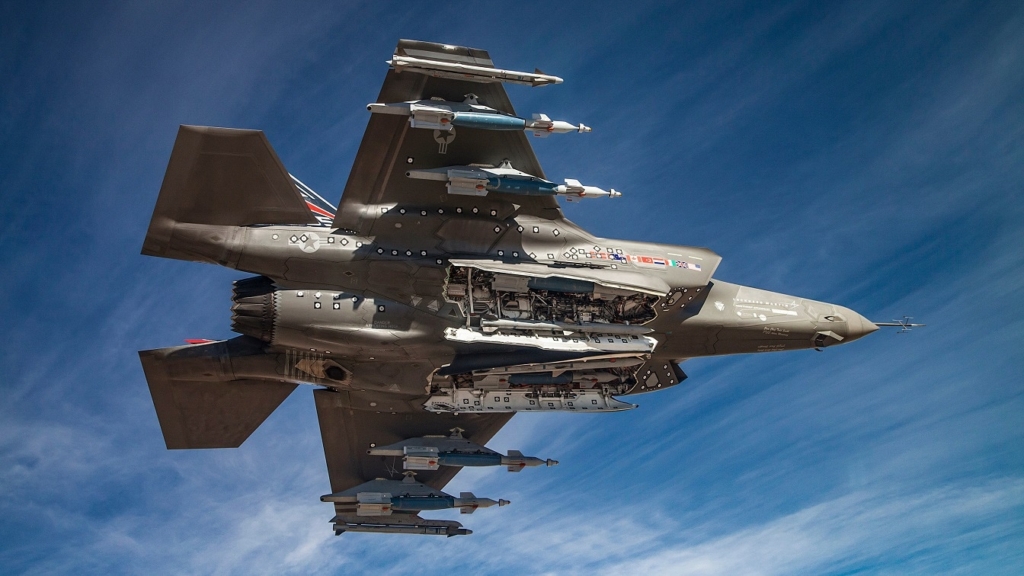
The programme is attempting to address them through a major overhaul of its support system called the Global Support Solution Reset. It plans to increase the global pool of spares, improve maintenance planning and expand repair capacity.
The target is an 80% mission-capable rate and 65% fully mission-capable rate across the F-35 enterprise.
Getting there will not be cheap.
GAO says the reset will require an estimated $13.7 billion more than previously planned through fiscal 2031. More than $7 billion in additional parts and other material will have to come from industry, despite continuing capacity constraints for some components.
The funding pressure is already visible.
For fiscal 2026, the Joint Program Office estimated that the services would need about $9.8 billion for F-35 sustainment. Approved funding stood at roughly $6.7 billion. The Air Force allocated another $1 billion for spare parts, but GAO said that still left the programme more than $2 billion short of its estimated requirement.
From fiscal 2027 through 2031, the programme estimates that sustainment will require another $50.8 billion from the services, about $12.7 billion more than they had previously planned for the period.
The lifetime estimate has risen too. GAO found that the programme office’s 2025 estimate increased lifetime sustainment costs by $18.8 billion in constant 2012 dollars compared with the previous year. The largest reason was not the support-system reset, but changes in how the services intend to use their aircraft, including longer fleet lives and additional Navy flying hours.
GAO also found problems with the way contractors were rewarded. Some incentive payments were made against performance standards that did not match what the military services actually required, meaning contractors could earn fees without delivering the level of aircraft readiness the services wanted.
Pentagon blocks release of separate GAO review
Scrutiny of the programme took another turn in July when the Pentagon prevented the public release of a separate GAO report examining F-35 production and modernisation.
Bloomberg News and The Hill first reported the decision on July 15.
The congressionally mandated report, titled F-35 Joint Strike Fighter: Update on Production and Modernization Efforts, was designated as containing Controlled Unclassified Information.
The decision meant GAO could not publish the review in the normal way, the first time in two decades that it has been prevented from doing so.
That report is separate from the June sustainment study containing the readiness figures cited above. The distinction is important: the publicly released GAO sustainment report remains available, while the production and modernisation assessment was withheld.
From troubled development to record production
The latest difficulties come against an unusual history.
Lockheed Martin and Pratt & Whitney received the development contracts in October 2001. The first F-35A flew in December 2006 and the F-35B followed in 2008.
By 2010, cost growth had become serious enough to trigger a critical Nunn-McCurdy breach, forcing the Pentagon to recertify and restructure the programme.
The Marine Corps declared the F-35B operational in 2015, followed by the Air Force’s F-35A in 2016 and the Navy’s carrier-based F-35C in 2019. The original 17-year development flight-test effort involved more than 9,200 sorties and 17,000 flight hours.

The Pentagon finally approved full-rate production in March 2024.
That decision coincided with delivery of the 1,000th F-35, but TR-3 problems temporarily interrupted the production rhythm. The backlog began clearing as aircraft equipped with the new hardware were accepted, helping drive deliveries to a record 191 in 2025.
The FY2027 budget would support another 85 US aircraft in Lot 21.
F-35 has become too large to view only through its cost
For all its problems, the F-35 is now woven deeply into American military planning and the US defence industry.
The Air Force is using the F-35A to replace ageing F-16s and A-10s. The Marines have replaced the AV-8B and older F/A-18s with F-35s, while the Navy is adding the F-35C to its carrier air wings.
International participation has continued to grow. The Pentagon says more than 1,200 aircraft are now operating across 20 nations, with the Czech Republic, Greece and Romania among the countries added to the programme.
Its economic footprint is similarly large. Lockheed Martin’s latest estimate says the programme supports about 317,000 direct and indirect jobs in the United States and contributes more than $79 billion annually to the US economy. Those are company figures rather than Pentagon estimates. The F-35 supply chain stretches across thousands of companies.
That industrial scale sits alongside a programme that the US military increasingly depends upon operationally. GAO describes the F-35 as vital to US combat operations and homeland defence. The Pentagon operates more than 800 of the aircraft and still plans to buy roughly 1,700 more by the mid-2040s.