


Super-refueller: Marking 70 years since the first flight of the Boeing KC-135 Stratotanker

11 min read
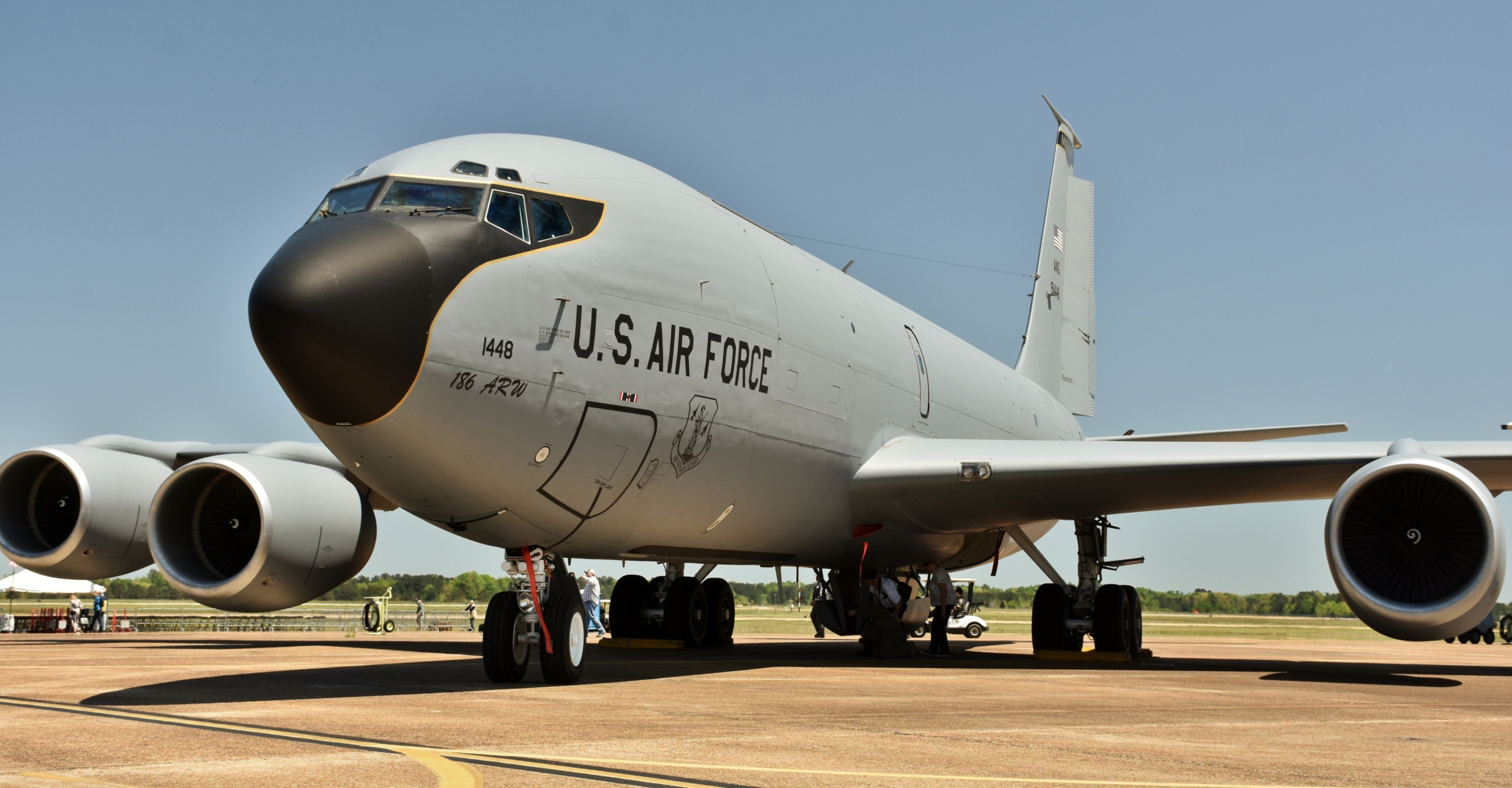
On August 31, 1956, the KC-135 took to the skies for the first time. Now, seven decades later, the Boeing KC-135 Stratotanker has been one of the most important aircraft in the history of the United States Air Force (USAF).
Designed in the 1950s to refuel the new generation of jet-powered bombers and fighters, the KC-135 transformed aerial warfare by allowing aircraft to remain airborne for much longer periods and to operate thousands of miles from their home bases.
What makes the Stratotanker particularly remarkable is its longevity. Although the first KC-135 flew in 1956, many upgraded examples remain in frontline service today.
Although the aircraft has been surpassed by newer tankers such as the KC-46 Pegasus, the KC-135 continues to provide a large proportion of America’s aerial-refuelling capability. The USAF currently expects the type to remain in service into at least the 2040s.
Origins of the KC-135 at the dawn of the jet age
The origins of the KC-135 can be traced to the early 1950s, when the United States was rapidly transitioning from propeller-driven aircraft to jets.
The USAF’s principal tanker was then the KC-97 Stratofreighter, a large four-engined piston aircraft derived from Boeing’s C-97 transport.
The KC-97 was effective, but it had an increasingly serious disadvantage: it was simply too slow for the new generation of jet aircraft.
Strategic Air Command’s bombers were becoming faster and more capable, while fighter aircraft were also adopting jet propulsion.
A tanker based on a piston-engined transport could not provide the same level of performance as a jet-powered aircraft.
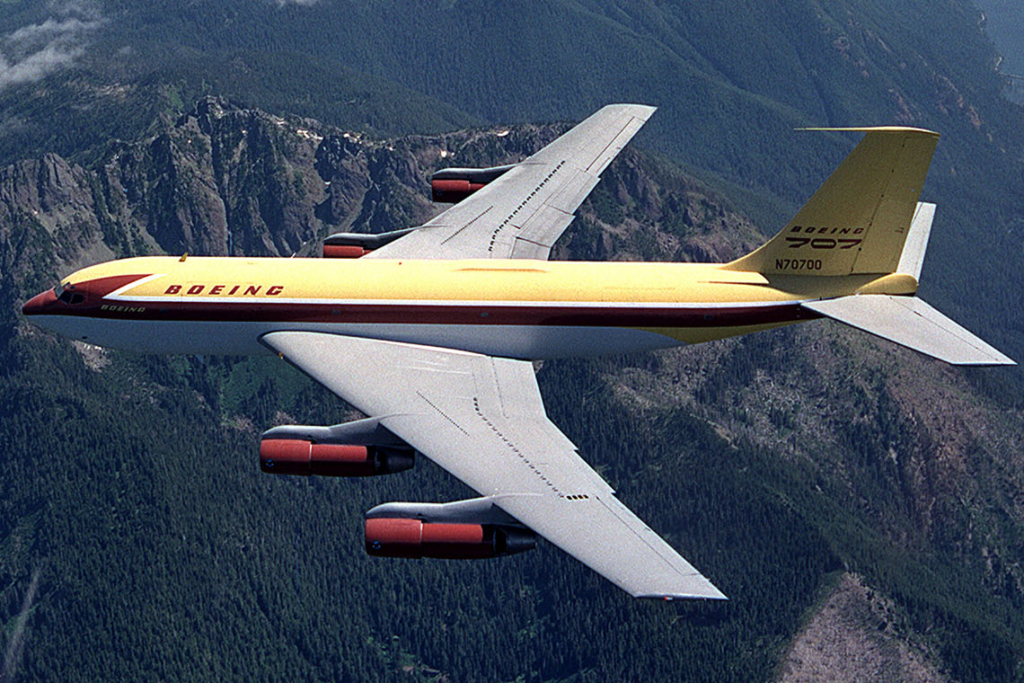
In 1952, the Boeing Company began developing an advanced swept-wing jet prototype designated the 367-80, commonly known as the ‘Dash 80.’ The aircraft first flew on July 15, 1954, and demonstrated that large jet aircraft could be both practical and commercially viable.
The Dash 80 would eventually provide the basic design for both the Boeing 707 airliner and the KC-135 Stratotanker.
The USAF immediately recognised the potential of the design as an aerial-refuelling platform. In 1954, it ordered its first 29 aircraft from what would eventually become a fleet of 732 KC-135s.
The Birth of the Boeing KC-135 Stratotanker
The first KC-135 prototype flew from Boeing’s Renton plant in Washington on 31 August 1956. Piloted by Boeing test pilots Tex Johnston and Richard ‘Dix’ Loesch, the aircraft remained airborne for approximately an hour and nineteen minutes during its first flight.
It was subsequently nicknamed the ‘City of Renton,’ after the Washington city where it was built.
Its four jet engines were mounted beneath swept wings, giving it the speed and altitude necessary to operate alongside modern jet fighters and bombers.
It also used the flying-boom refuelling system that had become standard in American USAF tankers.
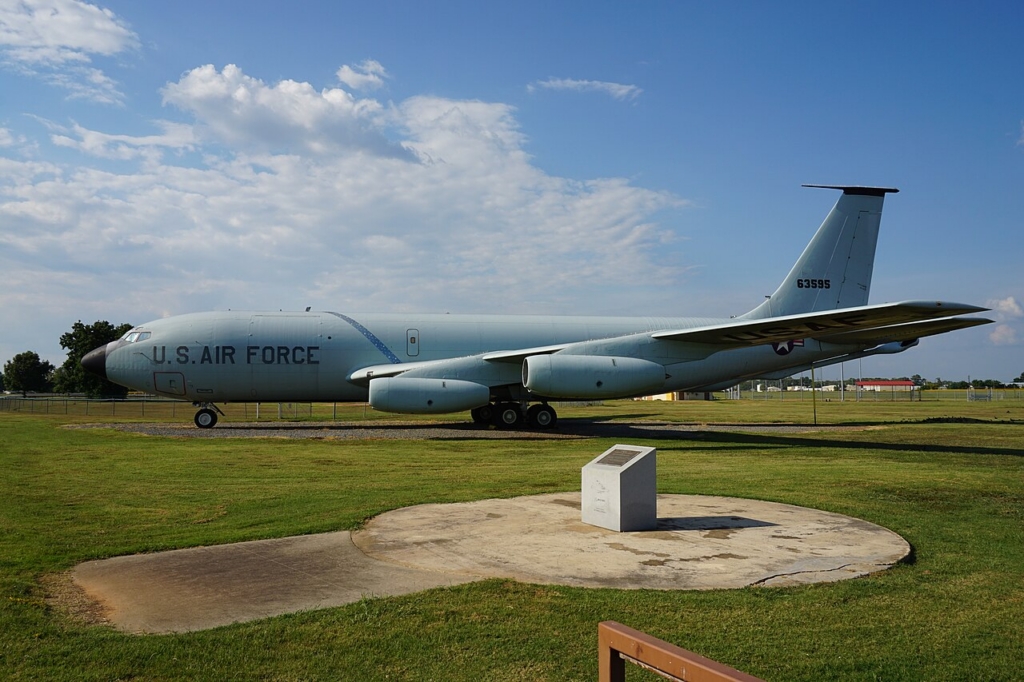
The first production KC-135 was delivered to the USAF in June 1957, entering service with the 93rd Air Refuelling Squadron at Castle Air Force Base, California.
Production continued until 1965, by which point Boeing had delivered all 732 KC-135s ordered by the Air Force.
The KC-135 was therefore introduced at exactly the right moment. The Cold War was intensifying, Strategic Air Command was expanding its nuclear bomber force, and the ability to keep aircraft airborne for extended periods was becoming strategically vital.
The KC-135 sees Cold War service
The Stratotanker’s original purpose was closely linked to America’s nuclear deterrence strategy. B-47 Stratojets and later B-52 Stratofortresses had to be capable of reaching targets thousands of miles from their bases.
Aerial refuelling allowed bombers to take off carrying less fuel, receive additional fuel in flight and extend their range substantially.
The KC-135 therefore became an essential component of the Strategic Air Command’s nuclear mission. For the first 15 years of its career, the Stratotanker was the principal tanker used by Strategic Air Command.
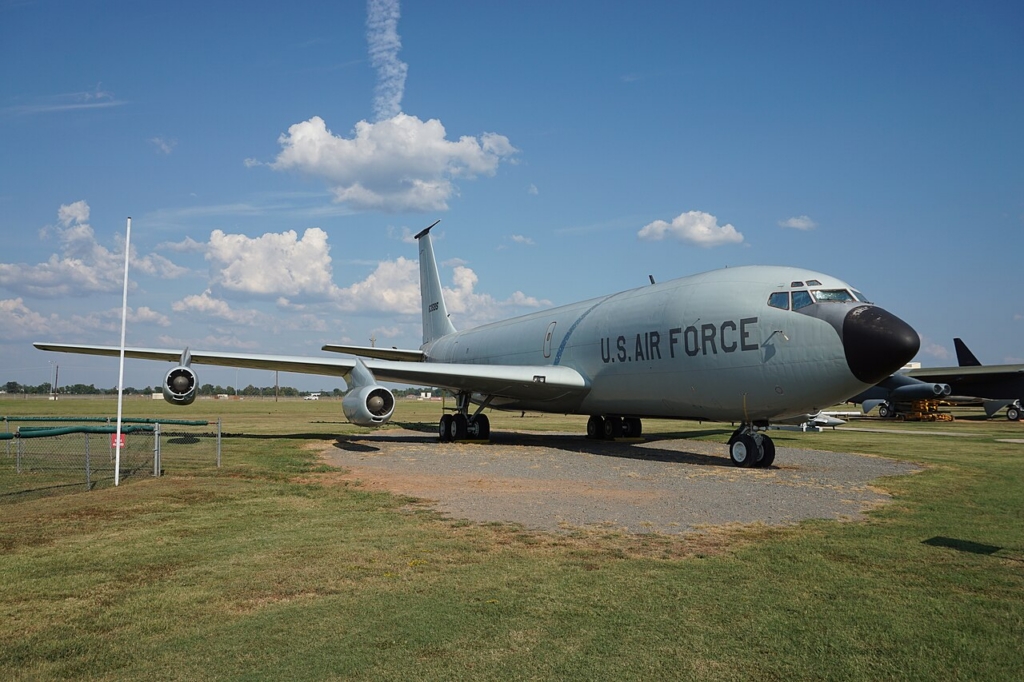
But its importance extended well beyond nuclear deterrence. As American fighter and transport aircraft became increasingly dependent upon aerial refuelling, the KC-135 became a general-purpose strategic asset.
The aircraft’s flying boom was controlled by a dedicated boom operator, who sat at the rear of the tanker and guided the refuelling boom into a receptacle on the receiving aircraft. The process demanded precision from both aircraft crews.
KC-135s could also be fitted with a drogue adapter attached to the boom, allowing them to refuel aircraft equipped with probes rather than receptacles.
Some aircraft received multipoint systems that allowed two receiver aircraft to be refuelled simultaneously through wing-mounted pods.
The KC-135 goes on to serve in the Vietnam War
The KC-135’s first major combat test came during the Vietnam War. Beginning in the 1960s, Stratotankers supported American combat operations throughout Southeast Asia.
They refuelled fighters, fighter-bombers, and other aircraft, extending their time over the battlefield and allowing missions to be conducted at much greater distances.
The importance of the tanker force became particularly apparent during long-range operations. Aircraft such as the F-4 Phantom II and F-105 Thunderchief consumed enormous quantities of fuel during combat, and aerial refuelling allowed them to remain on station or return safely to distant bases.
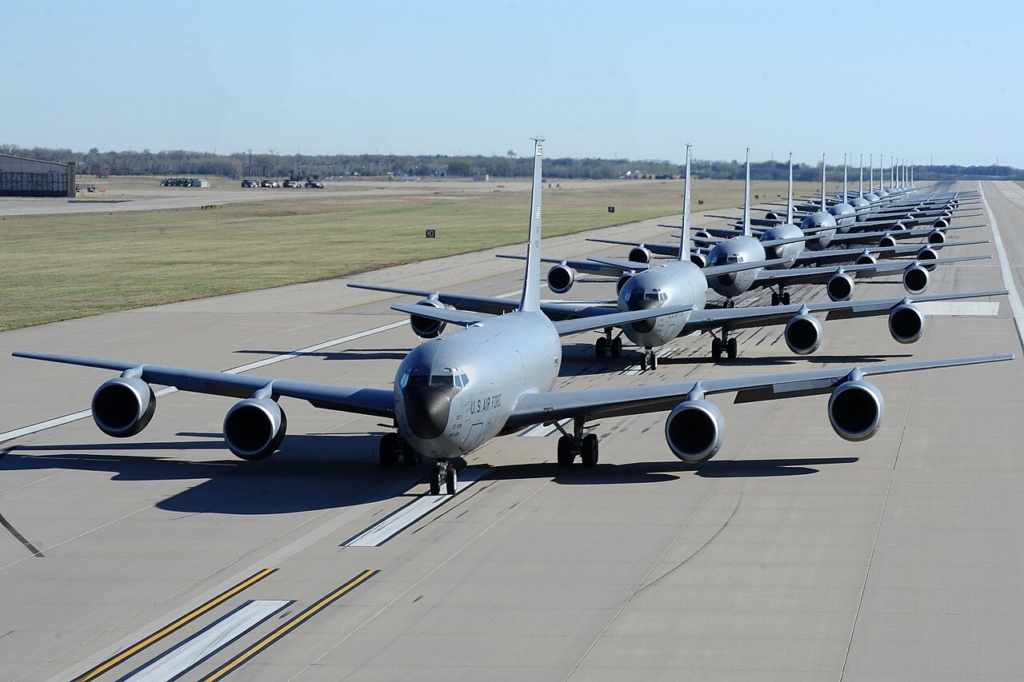
According to Boeing, during the nine years of the Vietnam conflict, KC-135 crews conducted approximately 813,000 aerial refuelling missions of combat aircraft.
This was one of the clearest demonstrations of the Stratotanker’s fundamental value: the tanker did not destroy targets itself, but it made it possible for other aircraft to do so.
Introducing the next generation: The KC-135R arrives
By the late 1970s and early 1980s, the KC-135 was already an ageing aircraft. Yet the basic airframe remained sound. The biggest problem was its original engines.
The KC-135A was powered by four Pratt & Whitney J57 turbojets. These engines were powerful for their era but noisy, fuel-hungry, and maintenance-intensive. The solution was an ambitious re-engining programme.
Beginning in the 1980s, more than 400 KC-135s were fitted with CFM-56 turbofan engines, producing the KC-135R and KC-135T variants. The change dramatically improved the aircraft’s performance, economics, and efficiency.
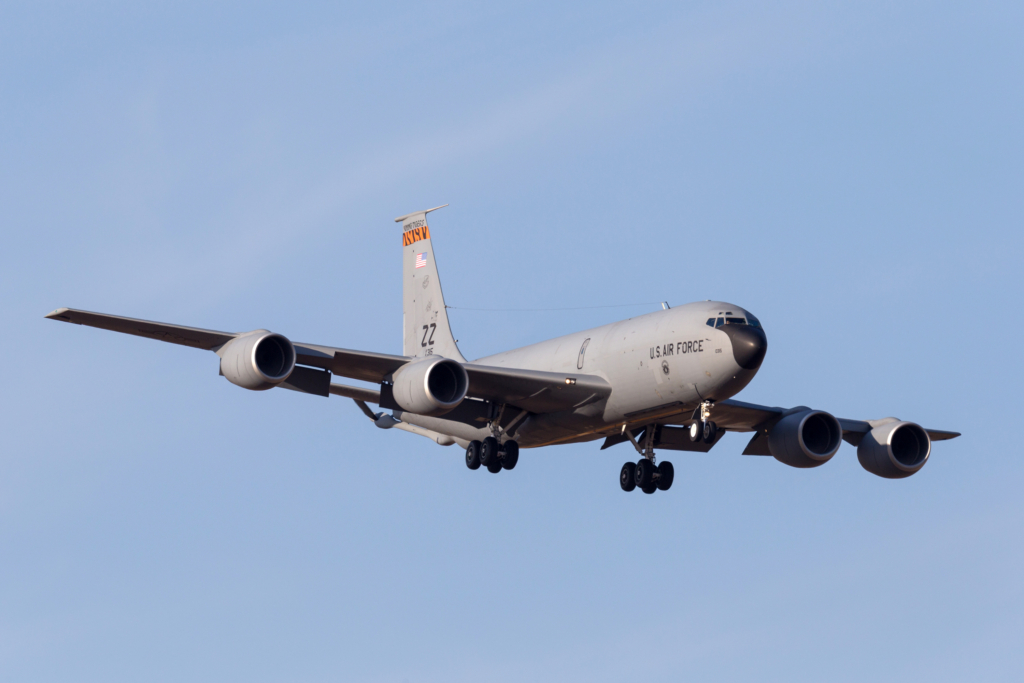
According to the USAF, the re-engined aircraft could offload approximately 50% more fuel, was about 25% more fuel efficient, cost roughly 25% less to operate and was 96% quieter than the original KC-135A.
The difference was transformative. The new engines provided considerably greater thrust and eliminated the need for the water-injection system used by the original aircraft during heavy-weight takeoffs.
The result was effectively a new-generation tanker using an airframe designed in the 1950s. The KC-135E, another re-engined version using TF33 engines, also served for many years, but the last KC-135E was retired in 2009.
1990s and the Gulf War
The Stratotanker once again demonstrated its importance during Operation Desert Storm in 1991. The liberation of Kuwait required an enormous multinational air campaign, with aircraft operating from bases across the Middle East and beyond. Tankers were essential to sustaining this force.
KC-135s supported fighters, bombers, electronic-warfare aircraft, and other platforms throughout the conflict. Boeing recorded approximately 18,700 refuelling hookups during the Persian Gulf War, with KC-135s transferring about 278 million pounds of fuel.
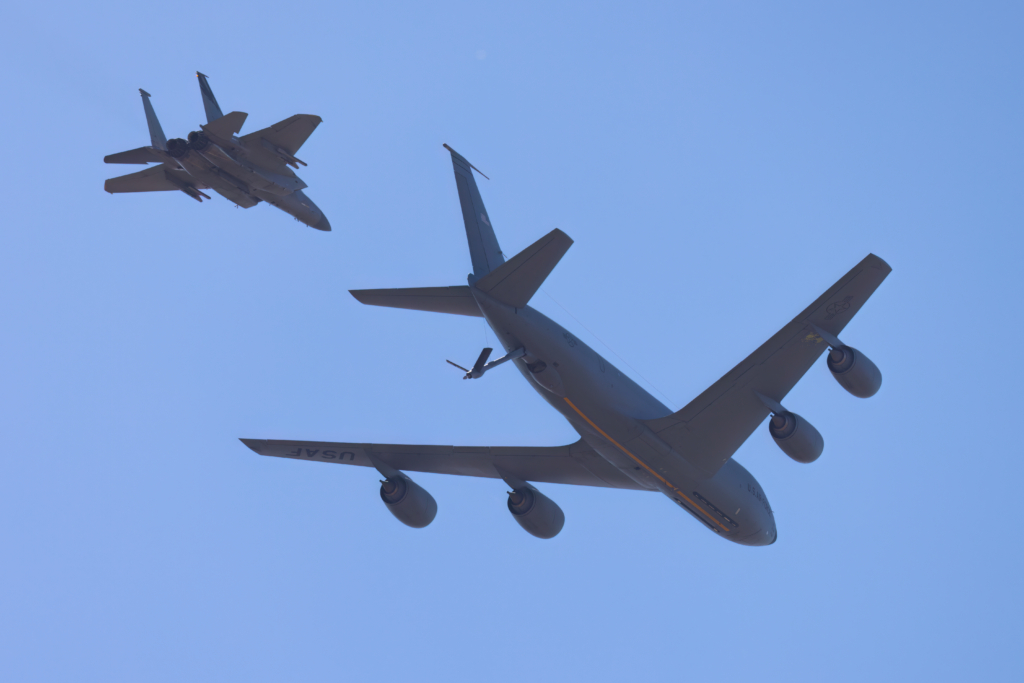
The Gulf War also demonstrated that the tanker was no longer merely a supporting component of Strategic Air Command’s bomber force. It had become an indispensable element of modern expeditionary warfare.
From the Balkans to the War on Terror
Following the end of the Cold War, the KC-135 faced an uncertain future. The collapse of the Soviet Union reduced the need for the enormous nuclear forces that had originally justified the aircraft. However, the Stratotanker quickly found new relevance.
During operations over the Balkans in the 1990s, KC-135s supported NATO air operations. Following the 11 September 2001 terrorist attacks, Stratotankers became central to the enormous American air campaign in Afghanistan and later Iraq.
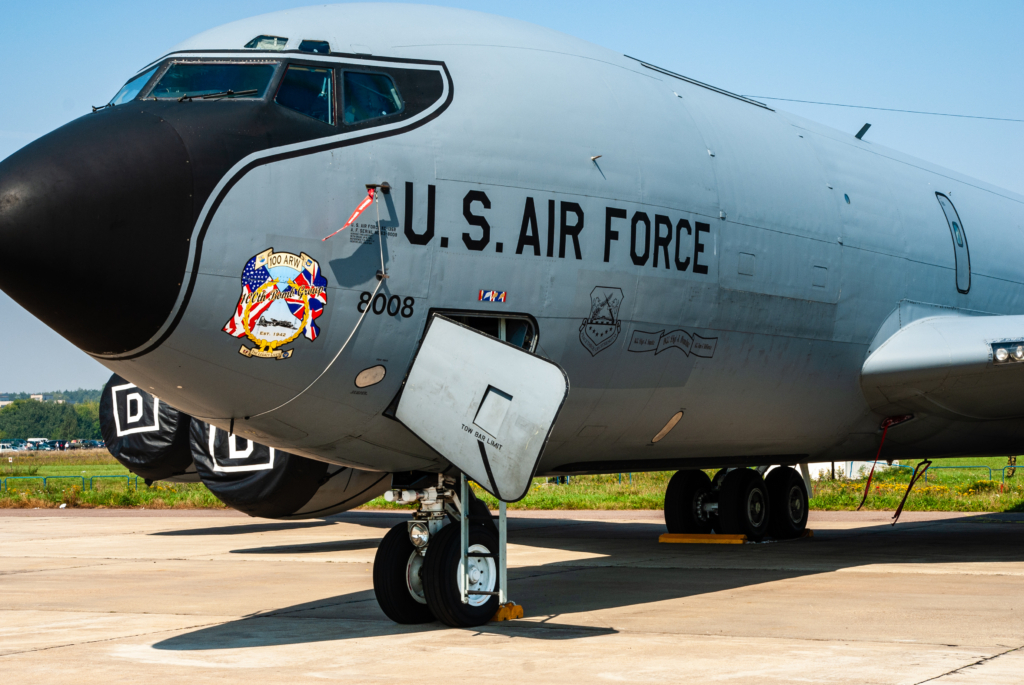
The aircraft supported fighters and bombers operating over vast distances, often from bases far removed from the combat zone.
Its ability to remain airborne for extended periods also made it useful for homeland defence, air patrols, and contingency operations. The KC-135’s mission gradually evolved from being primarily about supporting America’s nuclear bomber fleet to supporting almost every aspect of US air power.
More than just an aerial fuel tanker
Although aerial refuelling is its primary mission, the KC-135 has always been more versatile than its name suggests. The aircraft can carry cargo and passengers, and it can be configured for aeromedical evacuation.
The Air Force describes its primary functions as aerial refuelling and airlift.
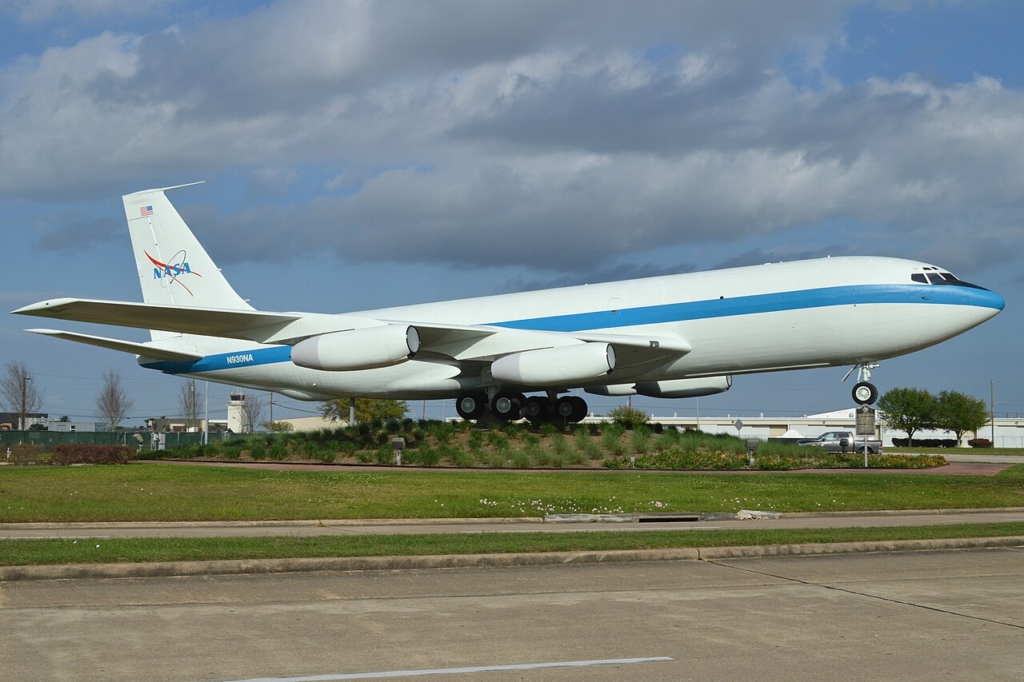
The wider C-135 family also produced aircraft for an extraordinary variety of missions. Variants included the RC-135 reconnaissance aircraft, EC-135 command-post aircraft, and WC-135 atmospheric sampling aircraft.
NASA even operated a modified KC-135 for parabolic flights designed to simulate weightlessness. These derivatives demonstrated just how adaptable the underlying airframe had become.
The KC-135 in the 21st century
Despite its age, the KC-135 remains a major component of America’s aerial-refuelling fleet.
The aircraft has received continuous upgrades to communications, navigation, surveillance, autopilot, and other systems. These modifications have allowed a 1950s airframe to operate safely within an increasingly sophisticated modern air-traffic environment.
The modern KC-135R is dramatically different from the aircraft that entered service in 1957.
Today’s aircraft has CFM56 engines, modernised avionics and improved communications systems, while retaining the fundamental airframe and refuelling concept developed during the Cold War.
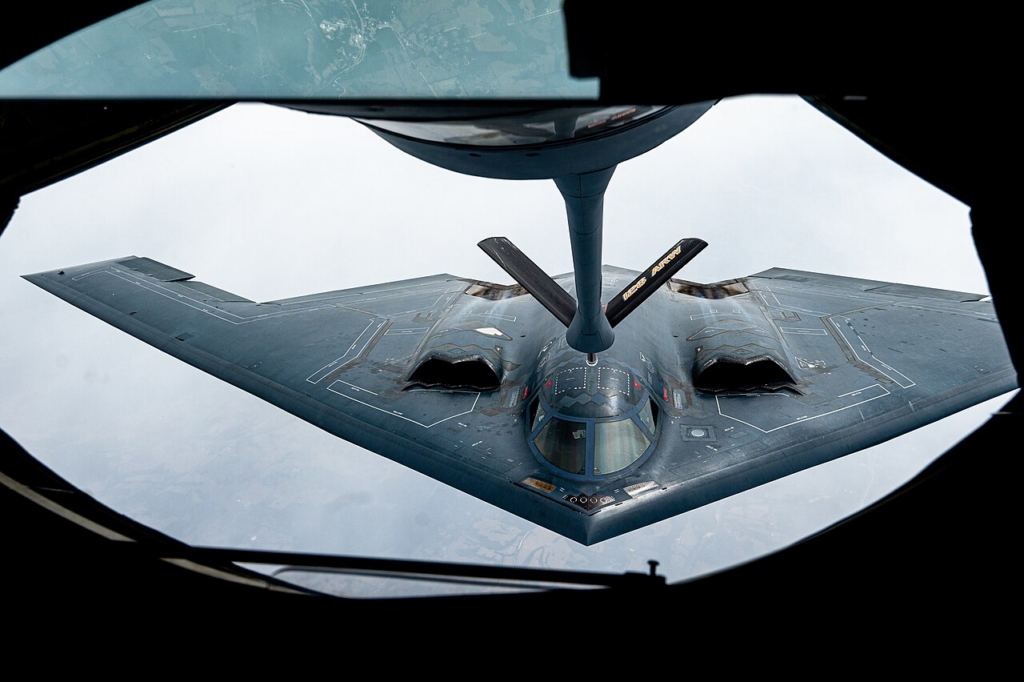
The current aircraft can carry up to 200,000 pounds of transferable fuel and has a maximum take-off weight of approximately 322,500 pounds. The USAF, Air Force Reserve, and Air National Guard continue to operate the aircraft.
Recent USAF documentation has placed the total KC-135 inventory at approximately 396 aircraft, with 243 operated by the USAF Reserve and Air National Guard.
The arrival of the KC-46: the end for the KC-135?
The KC-135’s eventual replacement is the Boeing KC-46 Pegasus, itself derived from the Boeing 767. The USAF selected the KC-46 programme as part of its long-term effort to replace the ageing KC-135 and KC-10 fleets.
Boeing announced in 2011 that it had received the contract to build the next-generation tanker, with the programme ultimately intended to replace 179 KC-135s.
The transition is gradual, however. The sheer size of the KC-135 fleet, combined with the complexity of introducing a new tanker, means that the Stratotanker cannot simply disappear overnight.
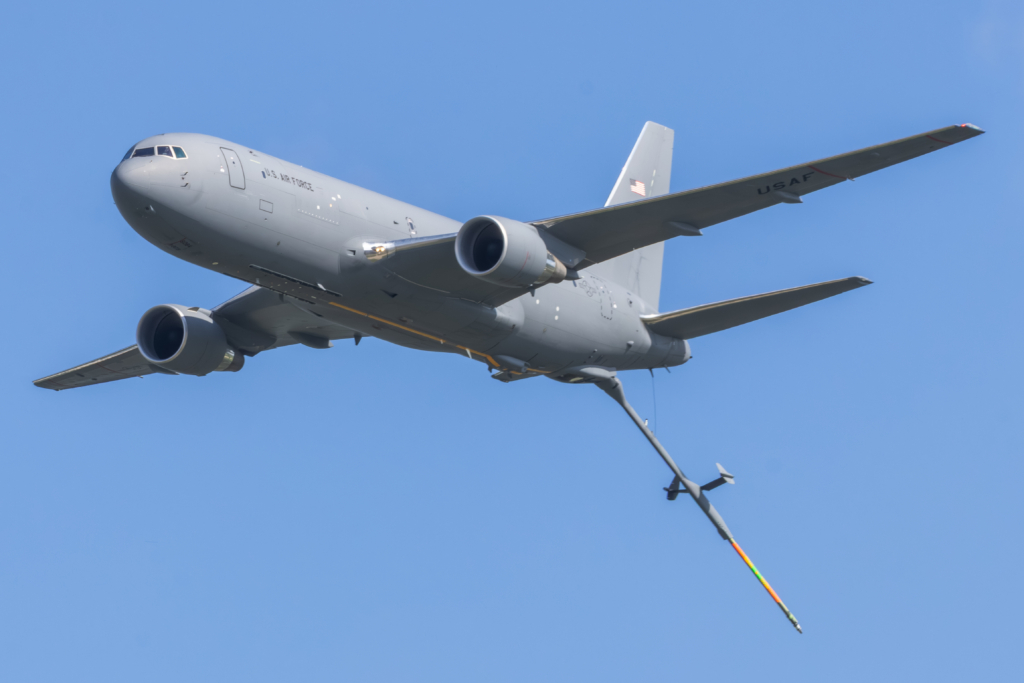
Indeed, the aircraft is still actively transitioning between bases. In July 2026, for example, McConnell Air Force Base began moving its KC-135s to other locations as part of the base’s transition away from the type.
One aircraft was sent to Davis-Monthan Air Force Base in Arizona for eventual storage at the 309th Aerospace Maintenance and Regeneration Group, while another moved to MacDill Air Force Base.
These movements represent the beginning of the final chapter at individual bases, rather than the immediate end of the KC-135 as a whole.
What does the future hold for the KC-135?
As of 2026, the KC-135 remains operationally important despite its extraordinary age. The USAF’s current expectation is that the aircraft will remain in service until at least the 2040s.
That means some KC-135s could potentially spend almost nine decades between their first flights and final retirement.
Few military aircraft have achieved anything comparable. The explanation is partly the aircraft’s original design. The KC-135 was built around a relatively simple and robust airframe, and its swept-wing configuration gave it enough performance to remain relevant for successive generations.
More importantly, aerial refuelling itself has become increasingly important rather than less important.
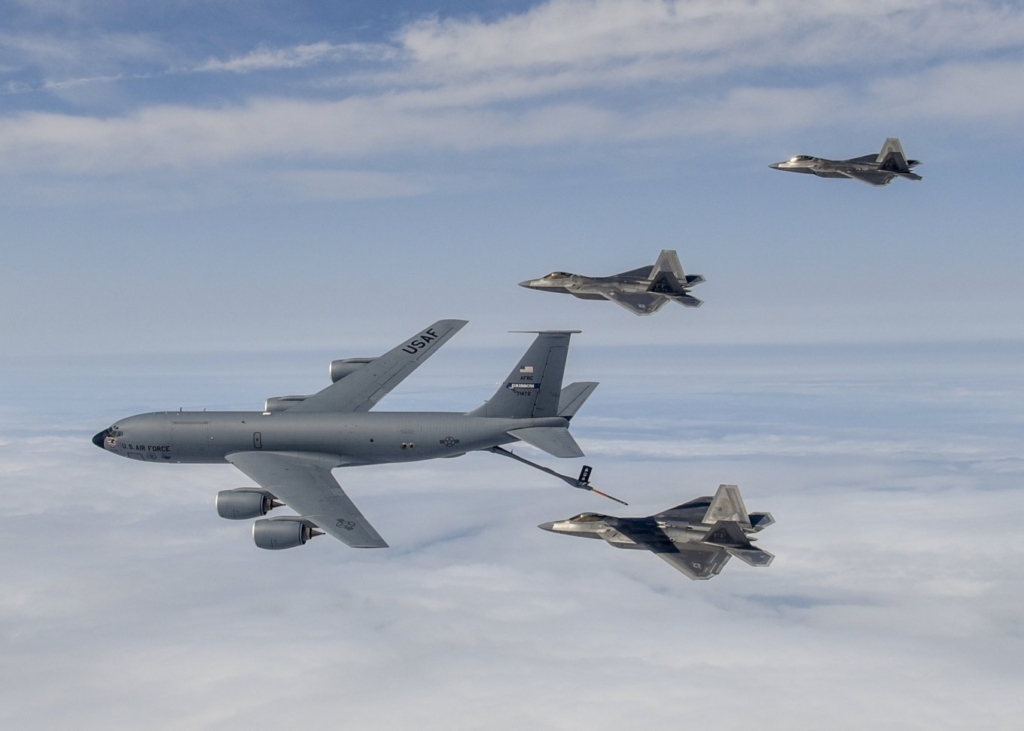
Modern fighters such as the F-15, F-16, F-22, and F-35 have sophisticated capabilities but still depend upon fuel. Bombers such as the B-1B, B-2, and B-52 can reach distant targets, but tanker support can significantly increase their operational flexibility. The tanker, therefore, remains the aircraft that quietly makes global air power possible.
The enduring legacy of the KC-135
The Boeing KC-135 Stratotanker began life as a response to a specific Cold War requirement: a jet-powered tanker capable of keeping up with America’s new generation of jet bombers. Instead, it became something much larger.
It supported the nuclear deterrent during the Cold War, refuelled combat aircraft during Vietnam, enabled the Gulf War air campaign, supported operations in the Balkans, Afghanistan and Iraq, and continues to provide aerial refuelling for American and allied aircraft around the world.
More than 700 KC-135s were built, and the type’s remarkable longevity has been made possible through successive generations of modifications and upgrades.
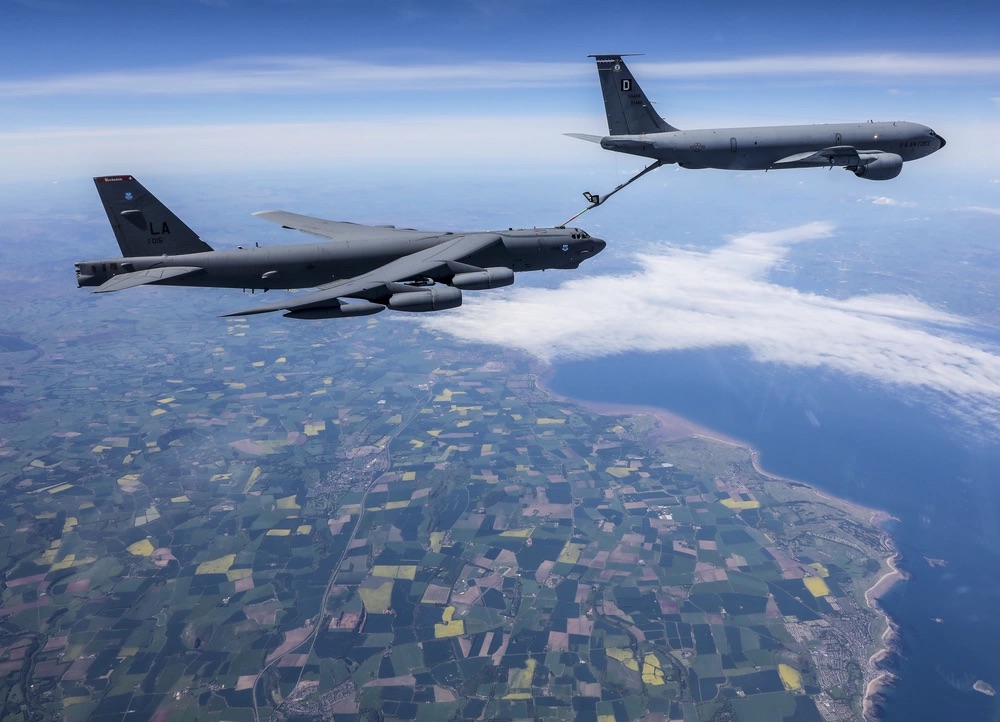
The KC-135 is now entering the final phase of its career. The KC-46 Pegasus represents the future, while individual KC-135 units are beginning to be retired.
Yet the Stratotanker’s legacy is secure. The aircraft fundamentally changed what military aviation could achieve. By making fuel transferable in the air, it effectively extended the range of almost every aircraft it supported.
Its crews rarely received the same public attention as fighter pilots or bomber crews, but without the tanker, many of the most demanding air operations of the past seventy years would have been considerably more difficult.
From its first flight in 1956 to its continued service in 2026, the KC-135 has survived not because the world remained the same, but because the aircraft repeatedly adapted to a changing one.
That is the real achievement of the Stratotanker: a jet designed at the dawn of the Cold War that remains, seven decades later, one of the essential tools of American air power.
Sign up for our newsletter and get our latest content in your inbox.


More from

August 31, 20265 min read


August 29, 20264 min read


