


National Airlines flies the world’s longest commercial Boeing 777F flight

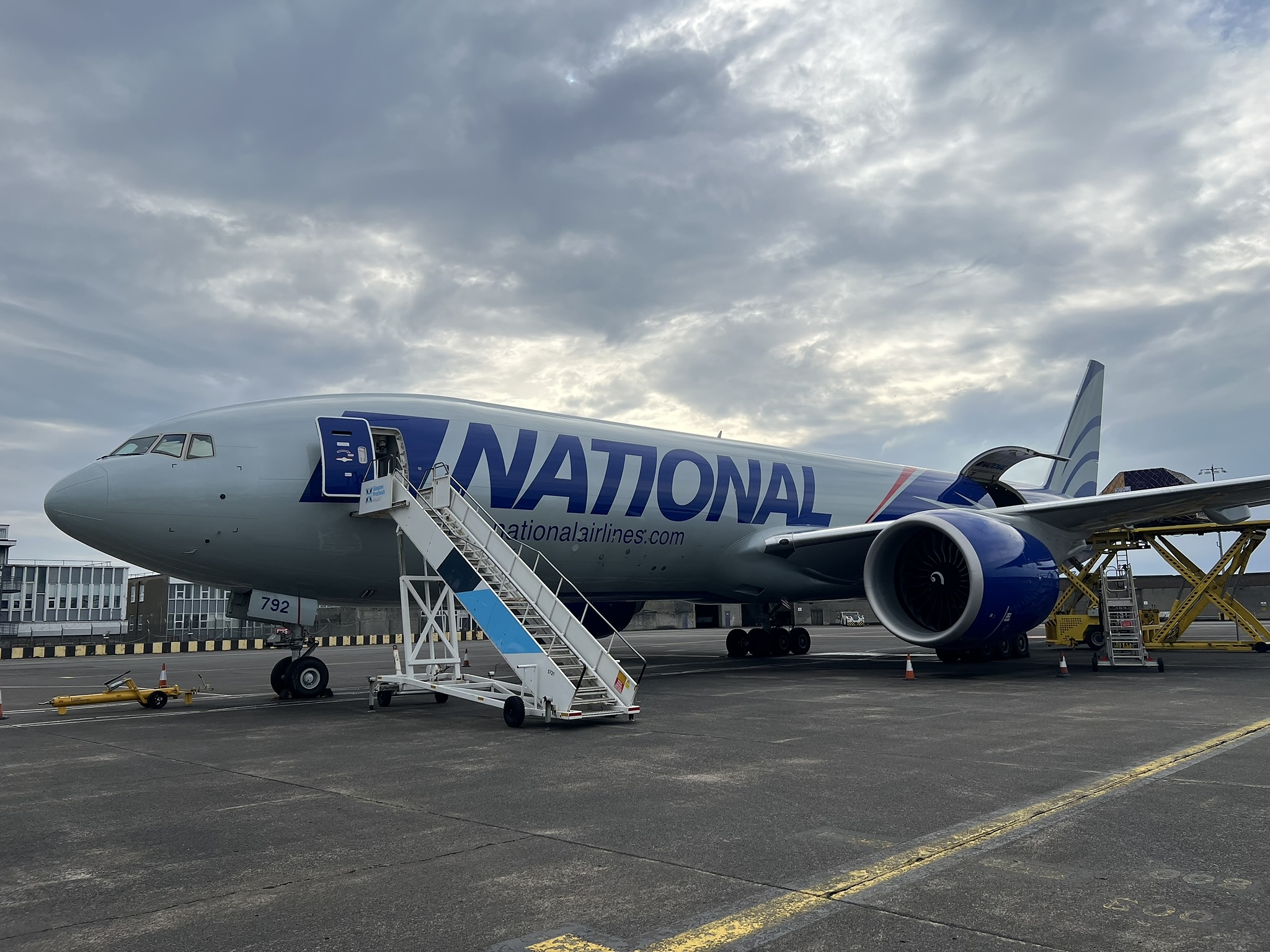
A National Airlines Boeing 777 Freighter has completed what the carrier says is the longest commercial cargo flight ever operated by the type, flying nonstop from Scotland to Australia.
The record-setting flight travelled 9,849 nautical miles (18,240 km) from Glasgow Prestwick Airport to Melbourne in 19 hours and 23 minutes.
It was operated by N792CA, one of National Airlines’ newest Boeing 777 Freighters.
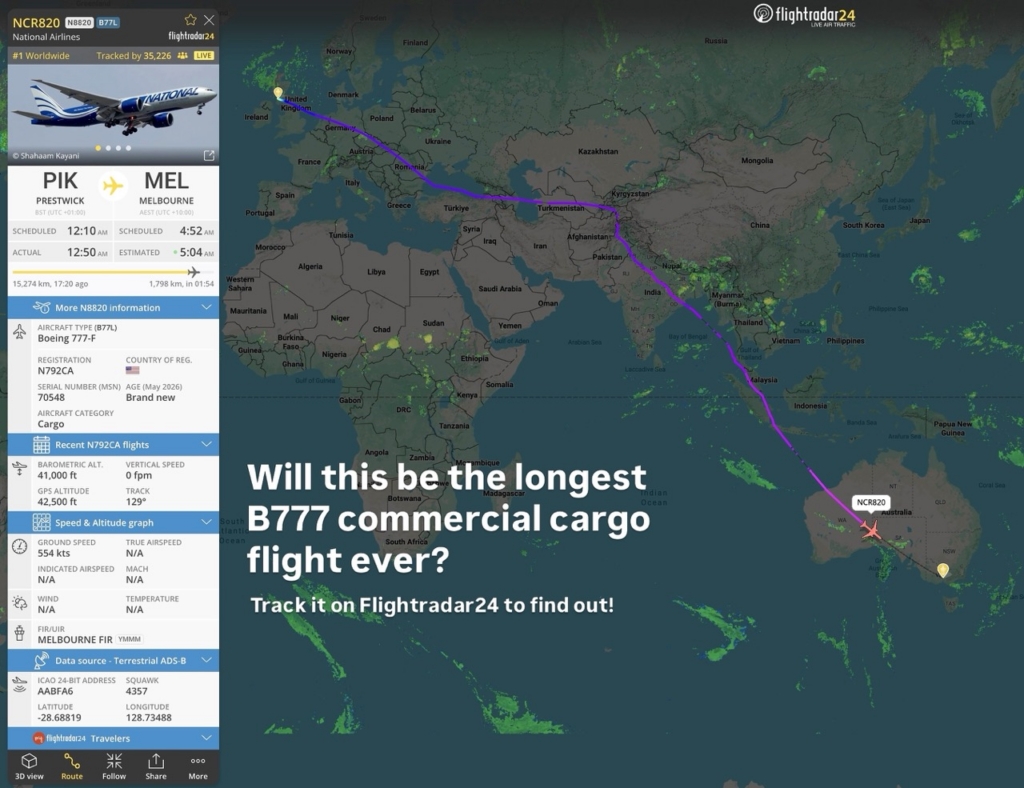
National said the flight carried critical Aircraft on Ground (AOG) components needed by another airline in Melbourne. The urgent shipment meant reducing transit time was more important than carrying a large payload.
The entire charter was planned, coordinated and launched within just 30 hours of the customer’s initial enquiry.
The flight also attracted considerable attention online. Flightradar24 shared the unusual operation on X as it unfolded.
When your aircraft is stuck in Melbourne, but the part you need is in Prestwick. National Airlines is currently operating what will likely be the longest 777 commercial cargo flight. https://t.co/4vhgD3aYyU pic.twitter.com/QNlIQjN004
— Flightradar24 (@flightradar24) August 4, 2026
National Airlines said more than 35,000 people tracked its progress in real time.
Why a 777F flew nonstop from Scotland to Australia
The industry goes out of its way to address urgent AOG needs, helping airlines reduce the high costs of aircraft downtime.
“This mission exemplifies what National Airlines is built to do: deliver mission-critical cargo anywhere in the world with speed, precision, and reliability,” National Airlines chairman Chris Alf said.
“Completing this historic flight is not only a remarkable operational achievement but also a testament to the dedication, expertise, and collaboration of our global teams.”
The 9,849-nautical-mile flight is well beyond the range normally associated with a Boeing 777 Freighter carrying a substantial payload.

The 777F is based on the 777-200LR and powered by GE90-110B1L engines. It has a published range of around 4,970 nautical miles (9,200 km) when carrying its maximum revenue payload.
Aircraft range, however, is not a fixed number. It varies with payload, fuel load, weather, routing and other operating conditions. With a much lighter payload, more of the aircraft’s allowable take-off weight can instead be allocated to fuel.
That made this unusual demonstration of the 777F’s ultra-long-range capabilities possible.
National Airlines’ cargo and passenger fleet
National ordered four new 777 Freighters from Boeing at the 2024 Farnborough International Airshow as part of a wider fleet modernisation programme.
N792CA, which operated the record-setting flight, is a particularly new example, having joined National Airlines’ fleet in April 2026.
National Airlines now operates three Boeing 777 Freighters, with a fourth on order, alongside its long-established fleet of nine Boeing 747-400 freighters. Its charter passenger operation uses one Airbus A330-300 and two A330-200s.
The airline says the expanding 777F fleet is improving its ability to operate long-range missions while offering more fuel-efficient operations.
This isn’t the longest Boeing 777 flight ever
While National Airlines may have set a new commercial freighter record, it’s not the overall Boeing 777 distance record.
In November 2005, Boeing flew a 777-200LR Worldliner nonstop from Hong Kong to London Heathrow — deliberately travelling east across the Pacific and North America rather than taking the much shorter westbound route. The aim was to set a Guinness World record for distance flown. The flight was coordinated to mark the inauguration of “Guinness World Records Day” on November 9.
The aircraft operated with a full load of fuel but only 35 passengers and crew onboard. They included a representative from the United States National Aeronautics Association who monitored the record-setting attempt.
The Boeing 777 covered 11,664 nautical miles (21,601 km) in 22 hours and 42 minutes. The Guinness record still stands as the farthest flight by a commercial aircraft.
While still official, Boeing’s Guinness World Record has a potential challenger. In July 2026, an Airbus A350-1000ULR test aircraft flew approximately 12,460 nautical miles (23,076 km) from Melbourne to Toulouse in 24 hours and 24 minutes as part of testing for Qantas Project Sunrise.
Still, National has accomplished the world’s longest commercial Boeing 777 Freighter flight carrying cargo.
Other record-setting ultra-long-haul flights
National Airlines’ 9,849-nautical-mile flight sits among a small group of extraordinary ultra-long-haul operations.
Air Tahiti Nui: Tahiti to Paris
The COVID-19 pandemic produced exceptional ultra-long-haul flights.
In March 2020, Air Tahiti Nui operated a nonstop Boeing 787-9 flight from Papeete, French Polynesia, to Paris after its usual stop in Los Angeles became impractical due to US travel restrictions.
The flight covered roughly 8,485 nautical miles (15,715 km) between the two airports and took 15 hours and 46 minutes.
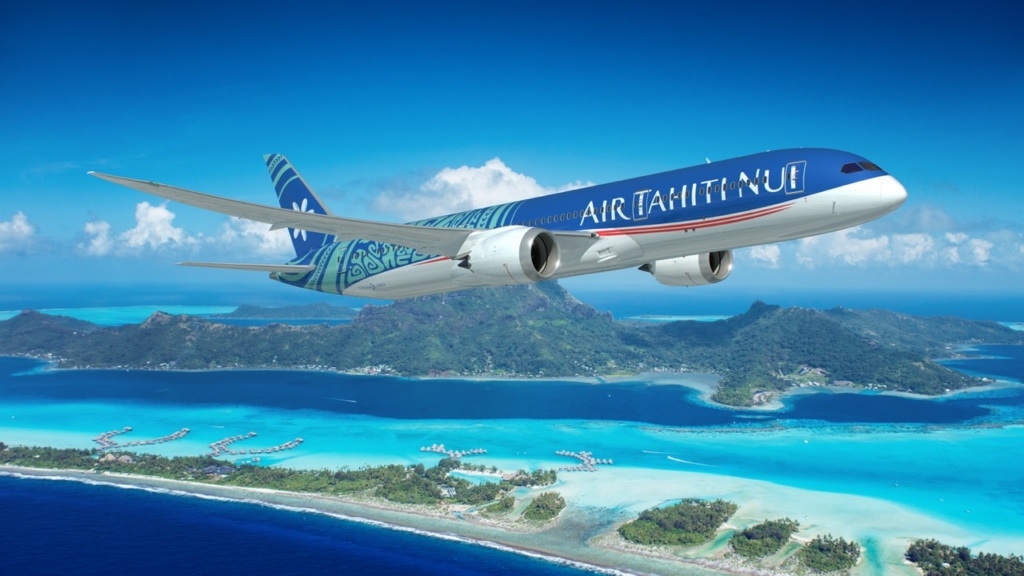
At the time, it was widely described as the world’s longest domestic passenger flight because French Polynesia is part of the French Republic.
French Bee later operated a nonstop Papeete-Paris flight with an Airbus A350-900, covering an actual ground track of 16,129 km.
Qatar Airways: Doha to Auckland
The Boeing 777-200LR also briefly held the record for the world’s longest regularly scheduled passenger route.
Qatar Airways launched nonstop Doha-Auckland services in February 2017 using the type.
The route covered around 14,535 km, with the inaugural flight spending more than 16 hours in the air. At the time, it was the world’s longest scheduled passenger service by distance.
It was later surpassed as a new generation of ultra-long-range aircraft enabled airlines to extend scheduled services farther.
Singapore Airlines: Singapore to New York
Today, the most prominent ultra-long-haul scheduled passenger services are Singapore Airlines’ flights between Singapore and the New York area.
The airline uses a specially configured Airbus A350-900ULR, designed for extremely long sectors.

Singapore-New York services cover more than 15,000 km and can take up to 19 hours, depending on routing and winds.
These services present a difficult commercial challenge. Airlines and OEMs must figure out how to operate ultra-long-haul flights repeatedly with passengers, baggage and enough payload to make the route economically viable.
Air India: Delhi to San Francisco the long way around
As Flightradar24 has reported, Air India increased the distance of its Delhi-San Francisco service in 2016 by changing the routing to cut flight time.
Instead of its previous polar routing, flight AI173 began flying east through China and across the North Pacific to take advantage of favourable jet-stream winds.
The new route was more than 1,000 km longer, but the flight could be between one and three hours shorter.
At the time, the Times of India reported that one flight covered 15,300 km in 14.5 hours, two hours less than the alternate routing.
The return flight still operated on the polar route, as there would be no jet stream advantage going back.
AOG solved by National Airlines’ ultra-long 777F flight
What makes the National Airlines flight especially notable is not its distance but its purpose.
Some of aviation’s most extreme flights have been demonstrations. Others were specifically designed for ultra-long-haul operations, with years of planning and adaptations.
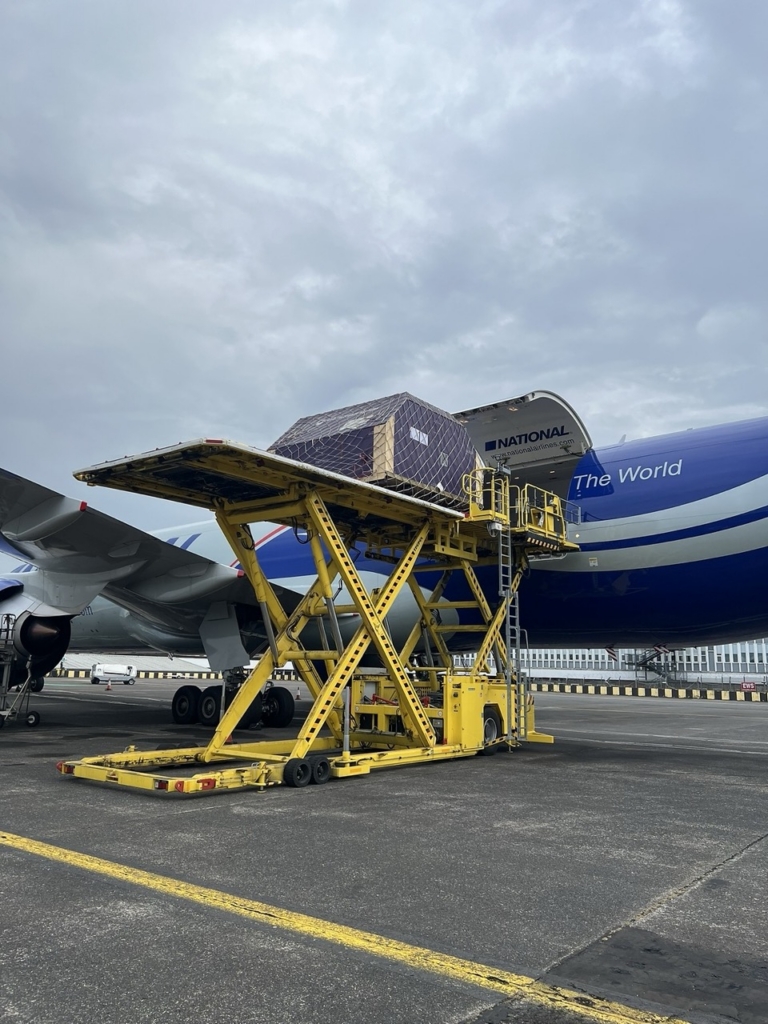
The National 777F instead departed on the 9,849-nautical-mile Prestwick-Melbourne operation to deliver an urgently required aircraft component.
National Airlines didn’t set out to prove that a 777F could fly almost 10,000 nautical miles. It aimed to solve a genuine commercial problem and set a neat record while helping another critically needed aircraft get off the ground.


