


Why CFM’s RISE Open Fan engine needs Dowty’s propeller expertise

5 min read
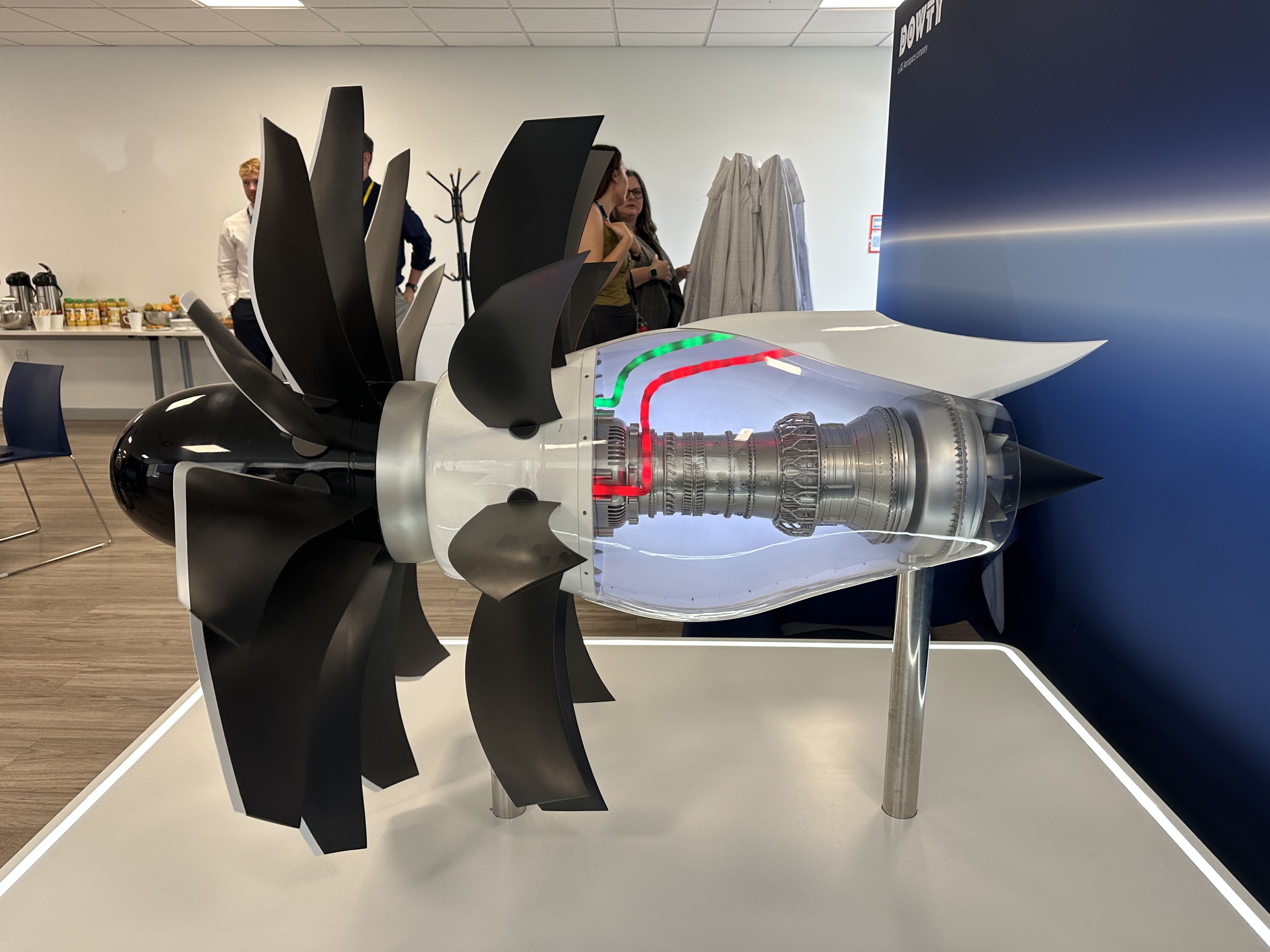
Gloucestershire-based propeller specialist Dowty is joining the next phase of CFM’s Revolutionary Innovation for Sustainable Engines (RISE) programme, bringing almost a century of blade, pitch-control and composite propeller expertise to one of the most closely watched engine demonstrators in aviation.
The GE Aerospace-owned company will support development of the RISE Open Fan architecture, a next-generation propulsion concept intended to deliver more than 20% lower fuel burn than today’s commercial engines.
CFM, the 50-50 joint company between GE Aerospace and Safran Aircraft Engines, unveiled RISE in 2021 as a broad technology demonstration programme for future narrowbody aircraft. The work includes an Open Fan propulsor, a compact core, hybrid-electric systems and alternative fuel compatibility.
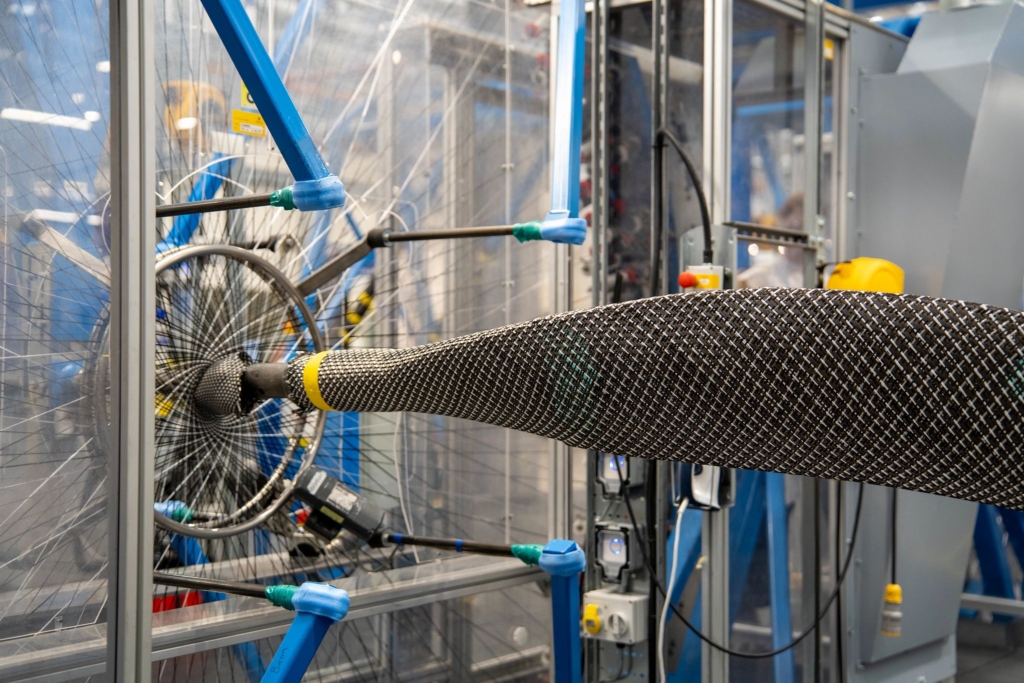
For Dowty, the announcement marks a new role for technology rooted in the propeller age. The company’s experience in variable-pitch, all-composite blades is now being applied to an engine architecture that looks very different from today’s ducted turbofans.
“Open Fan is the next step in the evolution of aviation propulsion to deliver durability and efficiency performance improvements,” said Arjan Hegeman, vice president for future of flight engineering at GE Aerospace. “The Open Fan architecture combines the best of our turbofan and turboprop experience, building on proven technology for highly reliable future products.”
GE Aerospace has invested approximately £12 million in Dowty to date, funding machinery, testing capability and hiring at the company’s Gloucester site.
Why CFM needs a propeller specialist for Open Fan
The logic behind Dowty’s role lies in the basic design of the Open Fan engine.
Modern turbofans have become more efficient partly by increasing bypass ratio, using larger fans to move more air around the engine core rather than through it. But as fans grow, the nacelle around them also becomes larger, adding drag and limiting the efficiency gains.
The Open Fan removes that casing. Instead of enclosing the fan within a duct, the architecture uses large exposed fan blades, a static second stage of blades and a compact gas turbine core. The aim is to capture much of the propulsive efficiency associated with turboprops while still operating at the speeds expected of modern single-aisle jets.
That is where Dowty comes in.
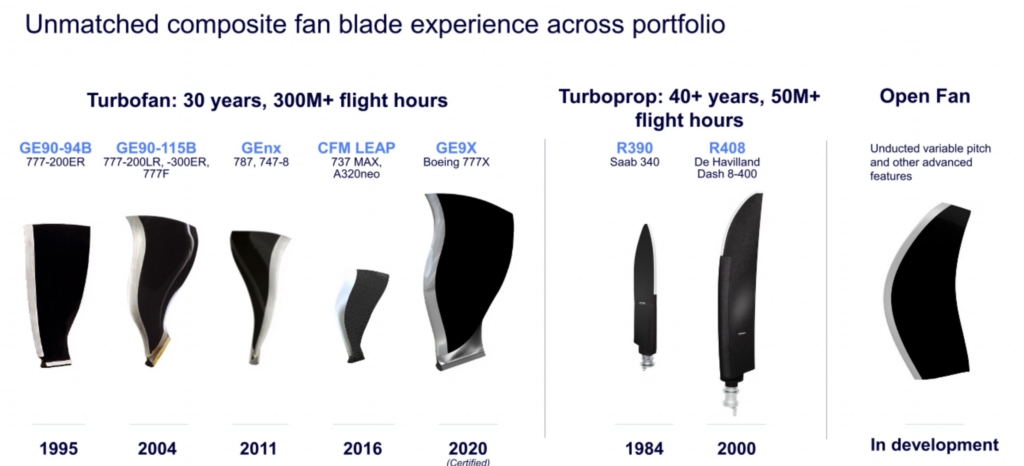
Dowty’s propellers serve aircraft including the De Havilland Canada Dash 8-400 and Lockheed Martin C-130J, giving the company experience across commercial airline operations and demanding military environments. Its work spans composite blades, blade retention, pitch actuation, electronic propeller control and long-life support.
At a media briefing in Gloucester, Dowty technical director Jonathan Chesney said the company’s Open Fan contribution draws on more than 40 years of all-composite blade experience, as well as an even longer heritage in variable-pitch mechanisms.

That experience, he said, has taught Dowty “what is required to make a durable product, to make a maintainable product,” with some Saab 340 propeller blades still operating after more than 50,000 flight hours.
“Hopefully now it becomes clear why we’re marrying these two capabilities together,” Chesney said. “We can address the challenges that are required to make that model into reality.”
Open Fan looks radical, but GE says the roots are familiar
Although the RISE Open Fan looks unusual compared with current narrowbody engines, GE Aerospace is keen to stress that the demonstrator is not a leap into the unknown.
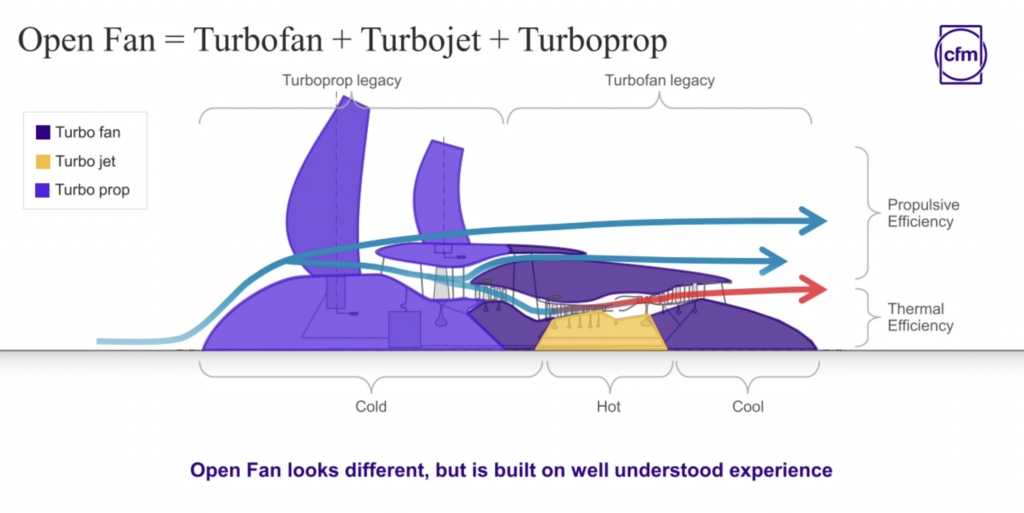
Hegeman said the architecture builds on two mature bodies of knowledge: turbofan engine design and turboprop blade experience.
“We know how to do turbofans, and what we’re adding in front of it is a turboprop,” he said. “The RISE Open Fan engine is realistically nothing new. We’re building on our turbofan experience, and we’re building on our turboprop experience. That’s all there is to it.
“It looks very different, which can be perceived as, oh, this is risky. It’s all new. It really isn’t.”
One major difference from earlier unducted fan concepts is the use of a static second stage behind the rotating fan, rather than a counter-rotating second stage. Hegeman said that the choice simplifies the architecture while retaining the efficiency benefit.
Moving to a static second stage, he said, “takes a lot of hardware out,” while reducing potential durability concerns, weight and cost.
Dowty’s role is therefore not just about building blades. It is about helping CFM understand how large, exposed, variable-pitch fan blades can be made efficient, durable and maintainable enough for airline service.
“Dowty is feeding into CFM all that experience on turboprop blades; slow-moving blades, very light blades, extreme high durability, while hitting the efficiency targets that we’re aspiring to on the Open Fan engine,” Hegeman said.
The RISE Open Fan still needs a new aircraft around it
CFM is working towards an Open Fan flight demonstrator for the next generation of narrowbody aircraft. Hegeman said the programme is already producing empirical data and “hitting the milestones” set at the start of the decade, with the demonstrator intended to prove the technologies are mature enough for future commercial engine programmes.
But Open Fan is not being designed as a retrofit for today’s aircraft.
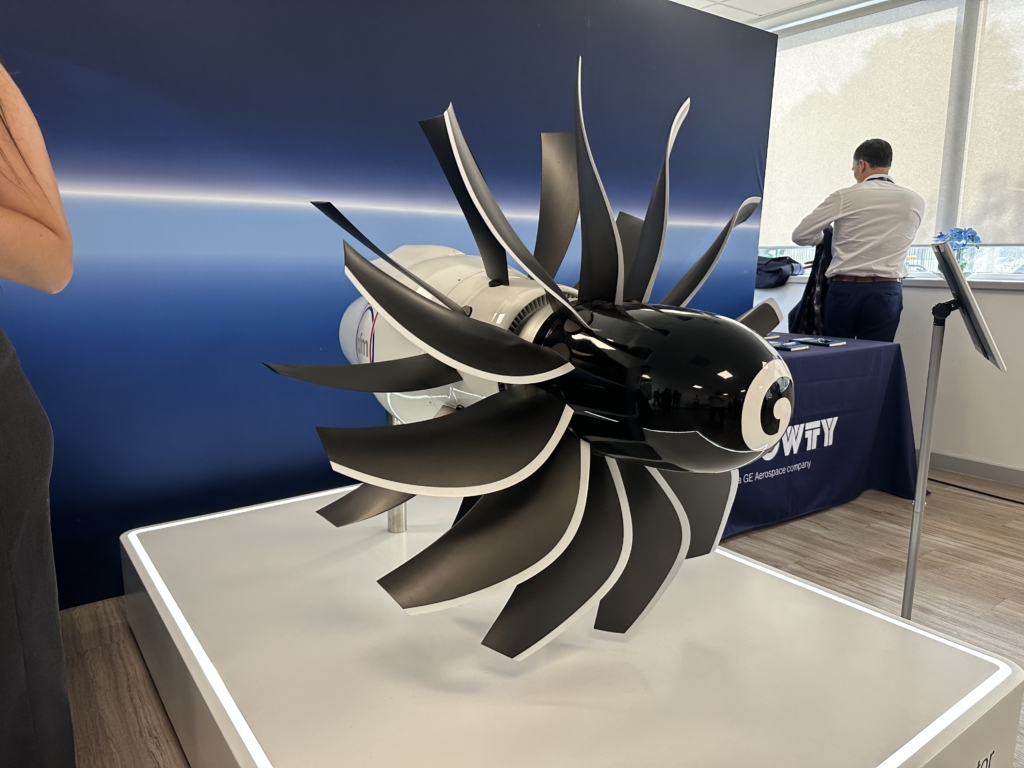
Hegeman said the architecture is “not a re-engineering option” for current 737 MAX or A320neo platforms, because the engine’s interaction with the wing and wider airframe must be considered from the outset.
CFM is working with airframers to assess the best installation for the engine, including how the Open Fan should be mounted and what parts of the aircraft may need additional protection.
The company is still targeting a demonstrator towards the end of this decade, with the technology potentially available for new aircraft in the late 2030s.
Its success will therefore depend not only on CFM proving the engine, but on aircraft manufacturers designing a new generation of narrowbodies around Open Fan from day one.
Featured image: Joanna Bailey / AGN
Sign up for our newsletter and get our latest content in your inbox.


More from

September 3, 20264 min read


