NATO’s largest air drill sees F-35s take to Finnish highways in Ramstein Flag 2026

NATO’s largest air drill of the year, Exercise Ramstein Flag 2026, is nearing completion after almost two weeks of intensive multinational training across northern and southern Europe.
The latest iteration of the alliance-led exercise, which began on 8 June and concludes on 19 June, has been notable not only for its scale, but for the breadth of operations being rehearsed at the same time.
Ramstein Flag 2026 becomes NATO’s largest air exercise of the year
From dispersed operations in Scandinavia to maritime strike training over the Western Mediterranean, RAFL-26 has tested NATO’s ability to command, connect and sustain airpower across a vast operating area.
More than 200 aircraft from 18 Allied nations have taken part, operating from more than 20 locations across Europe. Denmark, Norway, Finland, Spain and Sweden have all served as host nations, with activity spread across main operating bases, forward locations and highway strips.
The exercise has also marked a command-and-control milestone for NATO’s air component. Allied Air Command has led the drill, reflecting growing confidence in NATO’s ability to plan and execute complex, multinational air operations under its own command structure.
Conducted under NATO’s enhanced Vigilance Activity Eastern Sentry framework, Ramstein Flag is a tactical-level live and synthetic training exercise designed to improve readiness, interoperability and collective defence. This year’s edition has placed particular emphasis on Integrated Air and Missile Defence, counter-anti-access and area-denial operations, rapid information-sharing and Agile Combat Employment.
According to NATO’s AIRCOM, “[RAFL-26] focuses on Integrated Air and Missile Defence (IAMD), Counter Anti-Access/Area Denial (C-A2AD) operations, rapid information-sharing and Agile Combat Employment (ACE). Synthetic training will complement live-flying activity, allowing allied [air/ground] personnel to rehearse complex scenarios and refine common tactics, techniques and procedures (TTPs) in contested operating environments.”
Which nations and aircraft are participating in Ramstein Flag 2026?
The latest edition of the Ramstein Flag drill series has seen a plethora of aircraft flock to various operating locations across Europe, including a strong mix of fourth- and fifth-generation combat aircraft. This includes:
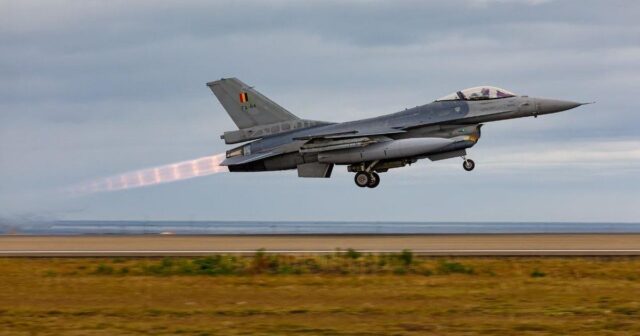
- Belgian Air Force (BAF): F-16AM/BM (MLU) Fighting Falcons;
- Czech Air Force (CzAF): JAS 39C/D Gripens;
- Finnish Air Force (FAF): F/A-18C/D Hornets;
- French Air and Space Force (FASF): Mirage 2000-5Fs and Rafale B/Cs;
- French Naval Aviation (FNA): Rafale Ms;
- German Air Force (GAF): Eurofighter EF-2000s and Tornado ECR/IDSs;
- Italian Air Force (ItAF): F-35A Lightning IIs and Tornado ECR/IDSs;
- Polish Air Force (PoAF): F-16C/D Block 52 Fighting Falcons and M-346 Masters;
- Royal Air Force (RAF) and Royal Navy Fleet Air Arm (FAA): F-35B Lightning IIs;
- Royal Danish Air Force (RDAF): F-35A Lightning IIs;
- Royal Norwegian Air Force (RNoAF): F-35A Lightning IIs;
- Spanish Air and Space Force (SASF): EF-18M/BM Hornets;
- Swedish Air Force (SwAF): JAS 39C/D Gripens;
- Turkish Air Force (TuAF): F-16C/D Fighting Falcons;
- US Air Force (USAF): F-35A Lightning IIs;
- US Marine Corps (USMC): F-35B Lightning IIs.
Participating air arms have also dispatched a variety of assets to support the exercise, comprising tankers (namely A330-243MRTTs and KC-135Rs) and various strategic/tactical airlifters (like A400Ms, C-17As and C-130H/Js).
NATO-operated E-3As have heavily supported the event, along with alliance-operated RQ-4D Phoenix high-altitude, long-endurance (HALE) intelligence, surveillance and reconnaissance (ISR) drones. A Turkish E-7T AEW&C has also been deployed to Norway in support of the drill.
First day of exercise Ramstein Flag 2026 has concluded, 11 more to come! 🔥
— NATO Air Command (@NATO_AIRCOM) June 8, 2026
18 nations, 200+ aircraft deploying to and launching from 20 different locations all across Europe. #RamsteinFlag #WEWARENATO #NATO pic.twitter.com/faP5idPDDS
Three NATO operating areas stretch from Scandinavia to Spain
RAFL-26 divides European airspace into three distinct Joint Operations Areas (JOAs) that span the continent’s northern and southern flanks.
Daily air operations are conducted across all three JOAs, combining live-flying missions with synthetic training to create complex multi-domain threat scenarios that reflect what allied NATO air arms could face in a real conflict.
While NATO’s Combined Air Operations Centre (CAOC) in Bodø, Norway, is coordinating fighter missions – including suppression or destruction of enemy air defence (SEAD/DEAD) and IAMD scenarios – across Scandinavian airspace, Spanish bases are leading the maritime strike and Offensive/Defensive Counter-Air (OCA/DCA) training operations over the Western Mediterranean.
USMC F-35B highway operations mark a first in Finland
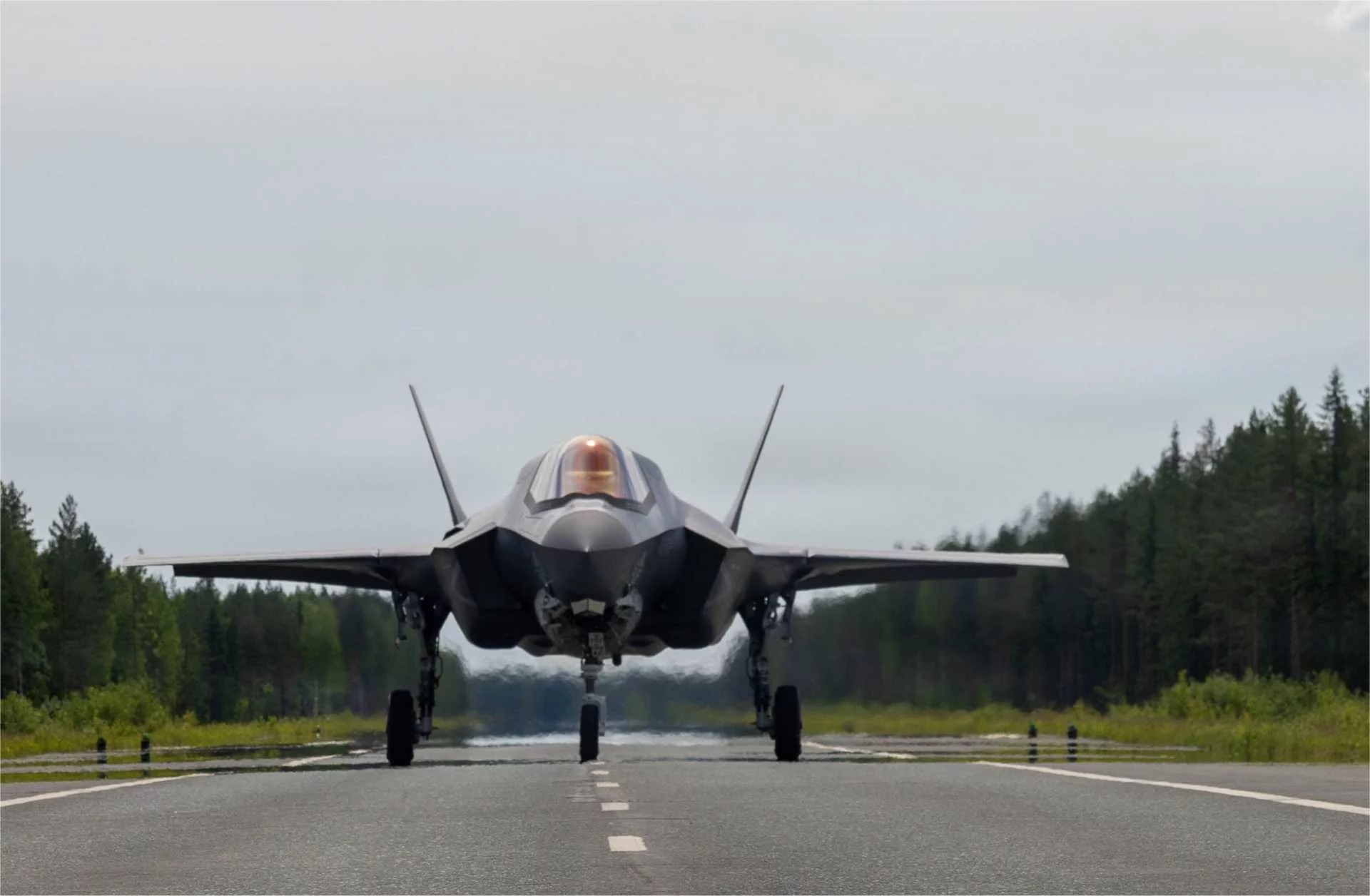
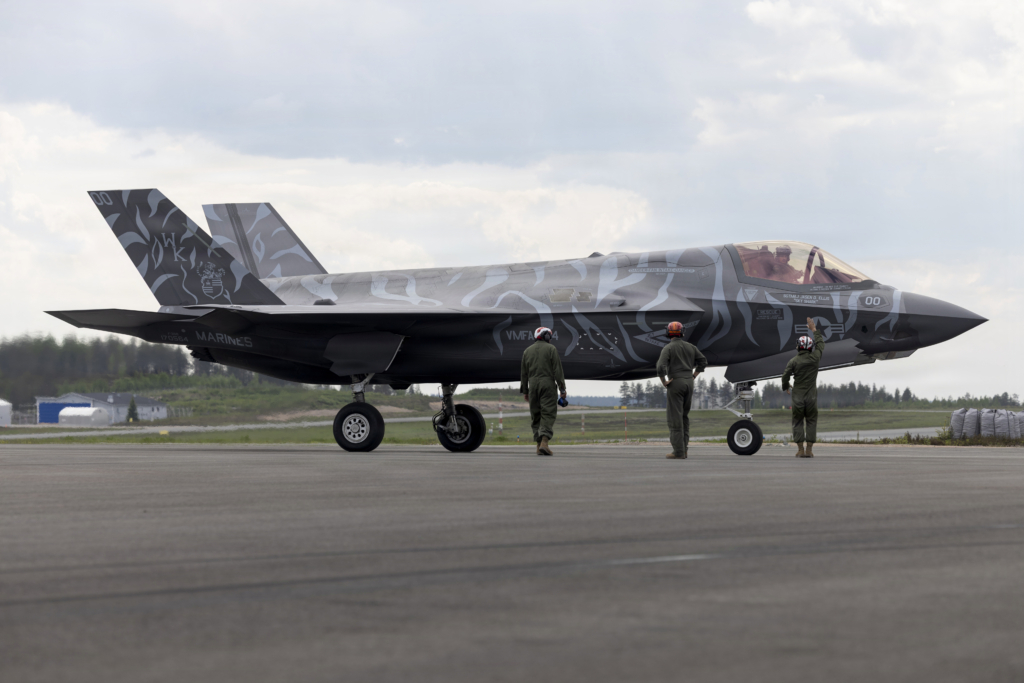
One of the most headline-grabbing moments of RAFL-26 came when F-35Bs from the USMC’s Marine Fighter Attack Squadron 224 (VMFA-224) ‘Fighting Bengals’ conducted take-off and landing operations on a highway in Finland’s Tervo region during the aircraft’s first deployment to the country.
Held from 8-12 June and carried out alongside Polish F-16C/Ds and Spanish EF-18Ms, this element of the wider RAFL-26 exercise was designed to demonstrate how NATO allies can extend their combat capabilities by operating from austere locations away from traditional airfield networks as part of ACE operations.
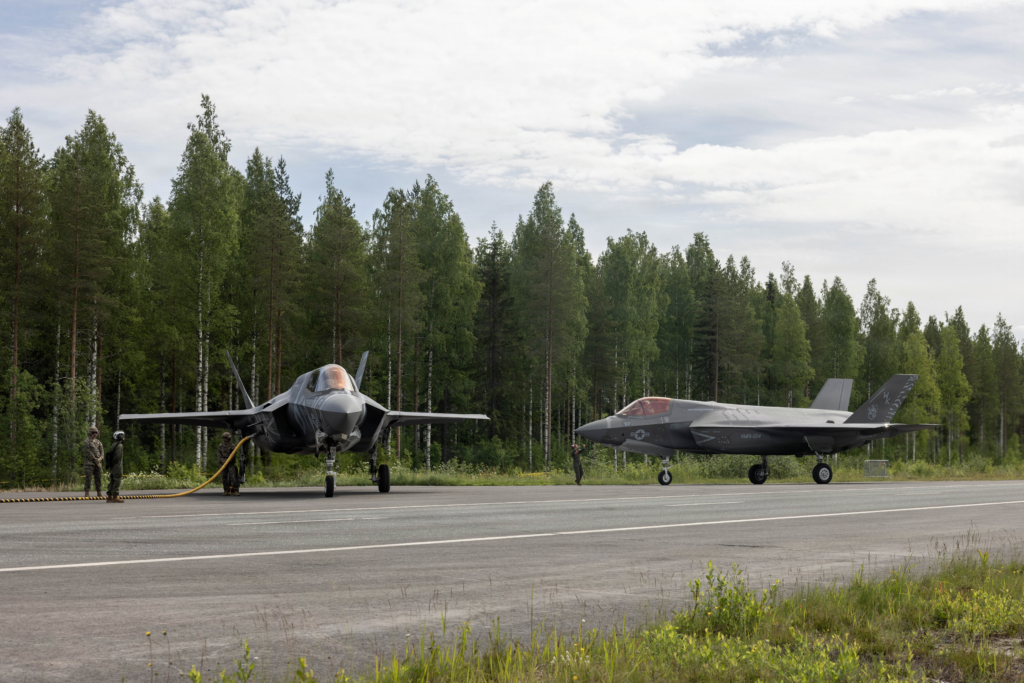
Such training will better familiarise air and ground crews with ACE operations from non-traditional locations, enabling them to remain effective in degraded environments.
Commenting on this milestone, USAF Lt Gen Jason T Hinds – commander of NATO’s AIRCOM – said: “This iteration of Ramstein Flag stretches from the northernmost parts of Norway to the southern reaches of Spain, showcasing allied airpower’s 360° approach to defend every inch of NATO territory.
“The scale of this exercise is a testament to NATO’s determination to counter modern and emerging threats through distributed operations across NATO’s [JOAs],” he added.
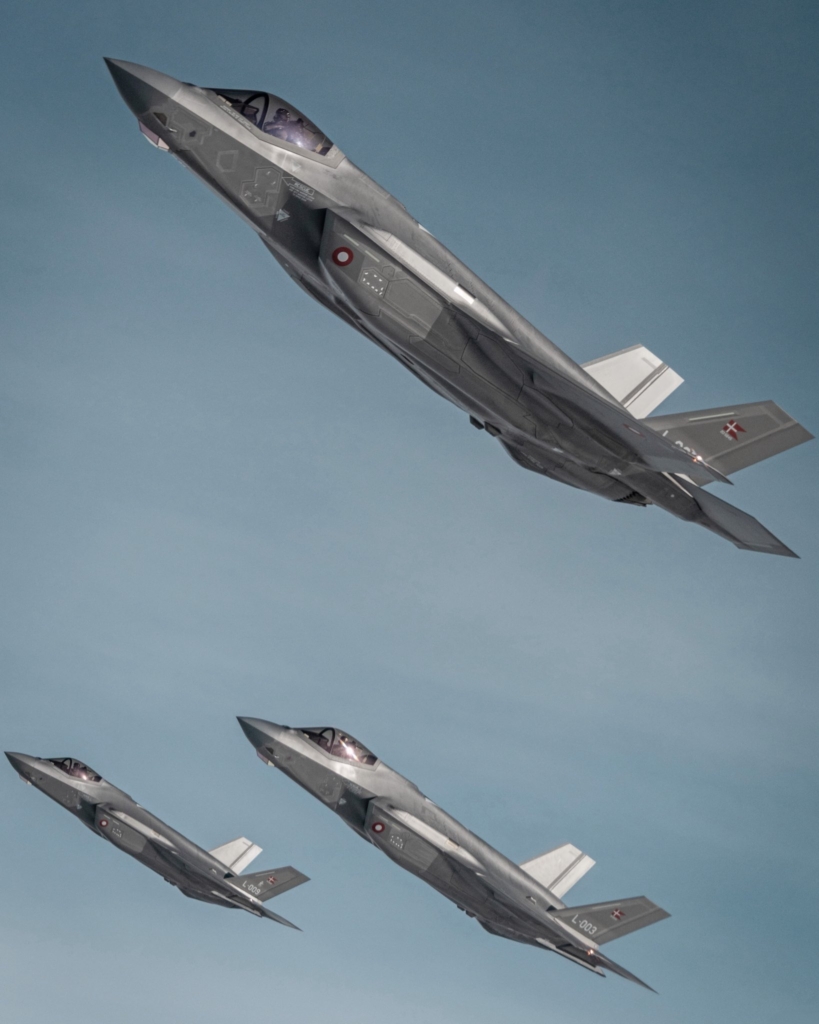
Another notable first was achieved during RAFL-26, when a non-US F-35 securely transmitted classified data to a Dutch command-and-control (C2) network, known as Keystone, in flight for the first time.
The data was subsequently relayed to a ground-based rocket artillery unit, which neutralised a simulated threat that was detected by the F-35. This marked the first successful demonstration of a seamless sensor-to-shooter kill chain between a non-US fifth-generation multi-role fighter and a ground fires element.
Ramstein Flag 2026 points to a more integrated NATO air force
As the exercise draws closer to its conclusion, military planners are expected to evaluate lessons learned and identify opportunities for further integration among allied air forces.
The growing scale and complexity of the Ramstein Flag drill series underline NATO’s continued investment in high-end multinational training amid an evolving European defence and security environment.
Featured Image: Two JAS 39C Gripens (one from Sweden and the other from the Czech Republic) fly together in formation with a Mirage 2000-5F and Rafale C from the French Air and Space Force during Exercise Ramstein Flag 2026. Image: NATO AIRCOM