


Russia’s third Oreshnik strike shows the limits of Putin’s wonder weapons

6 min read
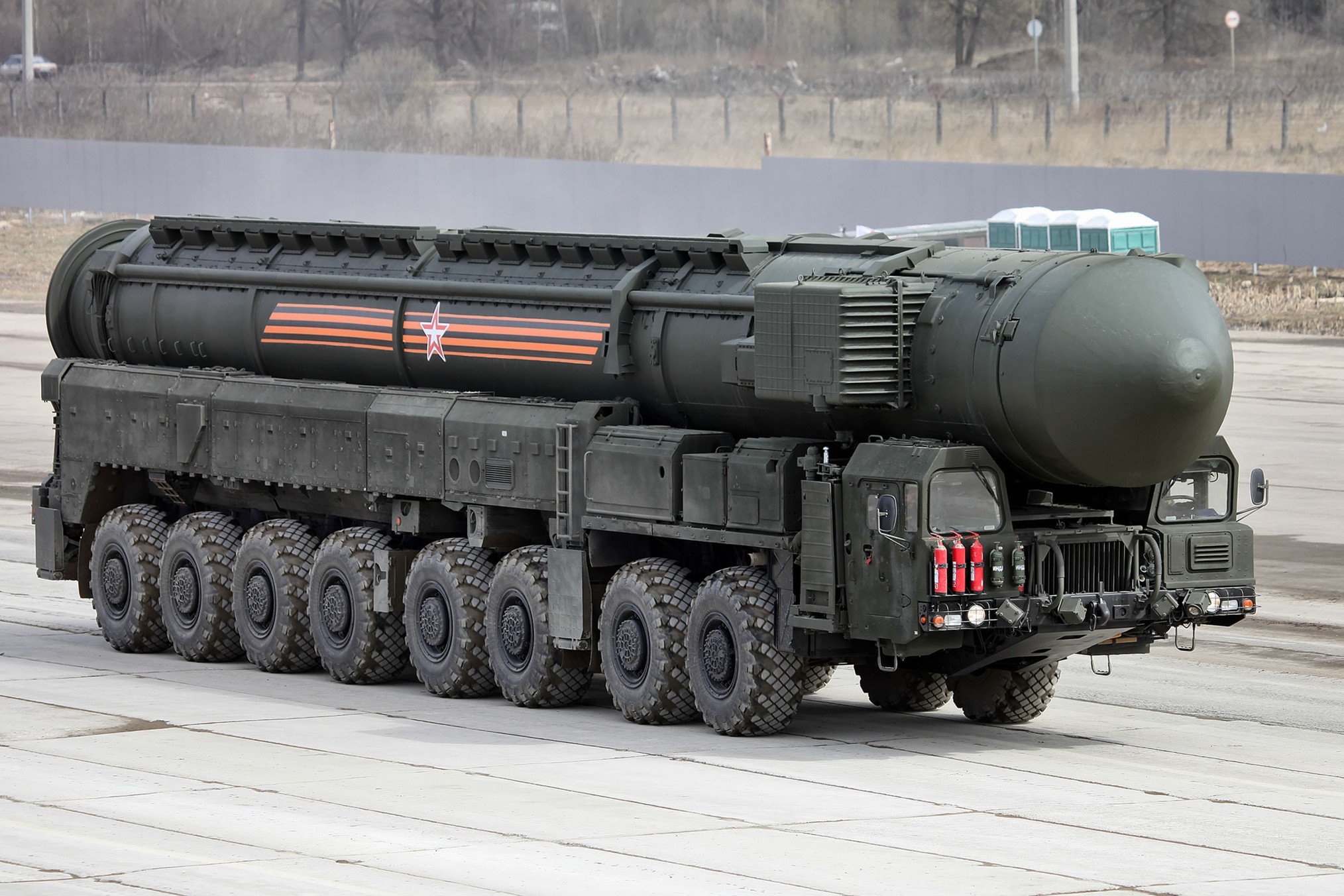
Russia’s third known use of the nuclear-capable Oreshnik missile has renewed alarm in Europe, but the strike also underlines how Moscow’s prestige weapons remain more politically useful than battlefield decisive.
Russia launched one of its heaviest drone and missile attacks on Kyiv and the surrounding region over the weekend, firing hundreds of drones and dozens of missiles in a combined overnight assault.
Among the weapons used was the Oreshnik intermediate-range ballistic missile (IRBM), a nuclear-capable system first used against Ukraine in 2024 and now deployed for the third known time in the war.
Russia uses Oreshnik IRBM against Ukraine for the third time
Russia’s use of Oreshnik immediately drew attention, not least because Moscow has repeatedly presented the missile as a futuristic “hypersonic” weapon that can evade Western air defences.
The missile has been heavily promoted by Russian officials and state media, with President Vladimir Putin previously describing it as a system capable of flying at around Mach 10 and striking with little warning.
Russia used an Oreshnik intermediate-range ballistic missile (IRBM) against the Kyiv region, with the impact area identified near Bila Tserkva.
— OSINTWarfare (@OSINTWarfare) May 23, 2026
Footage also appears to show the missile’s post-boost separation phase, with multiple reentry vehicles descending toward the target… pic.twitter.com/NkUxI5TP7P
But the Oreshnik is better understood as a ballistic missile with hypersonic re-entry characteristics, rather than as a manoeuvring hypersonic glide vehicle or hypersonic cruise missile.
Like other ballistic missiles, its re-entry vehicles can travel at hypersonic speeds during parts of their flight. That does not automatically place it in the same category as more advanced hypersonic weapons designed to manoeuvre unpredictably through the atmosphere at sustained high speed.
The same distinction has often been made with Russia’s Kh-47M2 Kinzhal air-launched ballistic missile, which Moscow has also promoted as a hypersonic game-changer.
Although dangerous and difficult to intercept, Kinzhal has been repeatedly targeted by Ukrainian Patriot air defence batteries, undermining some of Russia’s claims about its invulnerability.
Oreshnik’s impact appears more political than military
In the case of Oreshnik, the political effect may matter more than the military result.
Footage from the latest strike appeared to show the missile’s post-boost separation phase, with multiple re-entry objects descending toward the target area. The reported impact area was near Bila Tserkva, south of Kyiv.
Images circulating after the strike showed small impact craters, consistent with the use of inert or non-explosive kinetic payloads rather than large conventional warheads.
One of the impact craters left by Oreshnik inert kinetic rod after the strike on Bila Tserkva, Kyiv Oblast. pic.twitter.com/X0vDMFNbUE
— Special Kherson Cat 🐈🇺🇦 (@bayraktar_1love) May 25, 2026
That would fit the pattern seen in earlier Oreshnik strikes. When Russia first used the missile against Dnipro in November 2024, the launch created significant international alarm, but subsequent analysis suggested the weapon had carried dummy or inert warheads and caused limited physical damage.
The result is a paradox. Oreshnik is undoubtedly a serious and strategically sensitive missile system. But its battlefield effect so far appears to have been limited compared with the political and psychological impact Moscow clearly hopes to generate.
Why the IRBM distinction matters
The more important issue is not simply whether Oreshnik is “hypersonic”, but that Russia is willing to use an intermediate-range ballistic missile in a conventional war.
IRBMs sit below intercontinental ballistic missiles in range. ICBMs are generally defined as ballistic missiles with a range of at least 5,500 kilometres, while IRBMs occupy a shorter but still strategically significant range bracket.
That distinction matters because missiles in this class are closely associated with nuclear delivery. Oreshnik is not an ICBM, but it is nuclear-capable and belongs to a family of weapons designed to carry multiple re-entry vehicles over long distances.

In a conventional strike, that creates deliberate ambiguity. A missile launch may be non-nuclear, but the target state and its allies cannot know the payload with certainty until impact.
That does not mean NATO would automatically interpret such a launch as nuclear. But it does mean Russia is using a nuclear-capable missile category to create anxiety, complicate Western decision-making and send a political message well beyond the battlefield in Ukraine.
That is likely part of the point. Oreshnik allows Moscow to suggest escalation without crossing the nuclear threshold. It can be used to intimidate Ukraine, warn Europe and portray Russia as technologically resilient despite heavy losses and years of war.
Russia’s expensive wonder weapon problem
Oreshnik also exposes a familiar problem with prestige weapons. They may be advanced, dramatic and useful for propaganda, but that does not mean they are efficient instruments of war.
Reports have suggested Russia’s stockpile of Oreshnik missiles remains limited, with production capacity still constrained. Even if Moscow can increase output, a nuclear-capable IRBM is not an expendable battlefield munition in the way a drone, glide bomb or artillery shell is.
That matters because the war in Ukraine has increasingly rewarded systems that are cheap, numerous and scalable.
There are now enough drones over the Russian land corridor to Crimea for operators to coordinate their actions for joint attacks on priority targets. Which is good. https://t.co/aI1o8R2AkC pic.twitter.com/tDbiTRasUB
— Special Kherson Cat 🐈🇺🇦 (@bayraktar_1love) May 25, 2026
Russia has achieved much of its destructive effect through massed Shahed-type drones, glide bombs, cruise missiles, artillery and incremental ground assaults. Ukraine, meanwhile, has developed a rapidly expanding long-range strike ecosystem built around drones, adapted missiles, commercial technology, satellite imagery and distributed targeting.
Against that backdrop, Oreshnik looks less like a war-winning system and more like a strategic theatre piece.
It is too expensive and too scarce to become a routine strike weapon. Its conventional payload appears limited if used with inert re-entry vehicles. And its main value lies in the fact that it looks and feels like escalation.
That makes it useful for Russian messaging, but not necessarily decisive in military terms.
Russia’s wonder weapons have rarely changed the war
Since the full-scale invasion began in February 2022, Moscow has repeatedly promoted advanced weapons as proof of technological superiority. The T-14 Armata tank, Su-57 Felon fighter, Kinzhal missile and Oreshnik IRBM have all been presented at various points as symbols of Russian military modernisation.
But their battlefield impact has been uneven at best.
The T-14 has not appeared in meaningful numbers. The Su-57 has played only a limited role compared with Russia’s older tactical aircraft. Kinzhal has proven dangerous, but not unstoppable. Oreshnik has generated headlines, but its visible military effect has so far been limited.
That does not mean these systems are irrelevant or harmless. Russia remains capable of producing advanced weapons, adapting under pressure and sustaining a long war. It would be a mistake to dismiss its defence industry or treat its prestige systems as mere propaganda props.
But there is a difference between a weapon that is technically impressive and a weapon that changes the course of a war.
In Ukraine, the decisive pressures remain more mundane: production rates, manpower, air defence capacity, drone attrition, logistics, satellite connectivity, electronic warfare and the ability to sustain operations over time.
Those are the areas shaping the battlefield every day.
Oreshnik’s role is different. It is a signal. It is a warning. It is a way for Russia to remind Ukraine and Europe that the war still carries escalation risks.
But it is not, at least on the evidence so far, a battlefield game-changer.
That may be the real lesson of Russia’s third known Oreshnik strike. The missile is dangerous. The escalation signal is real. But Moscow’s most dramatic weapons are not necessarily the ones doing the most to determine the course of the war.
Featured Image: Russian Media
Sign up for our newsletter and get our latest content in your inbox.


More from


September 12, 20264 min read


