US Air Force EA-37B Compass Call sees first operational deployment in Middle East

April 2, 2026
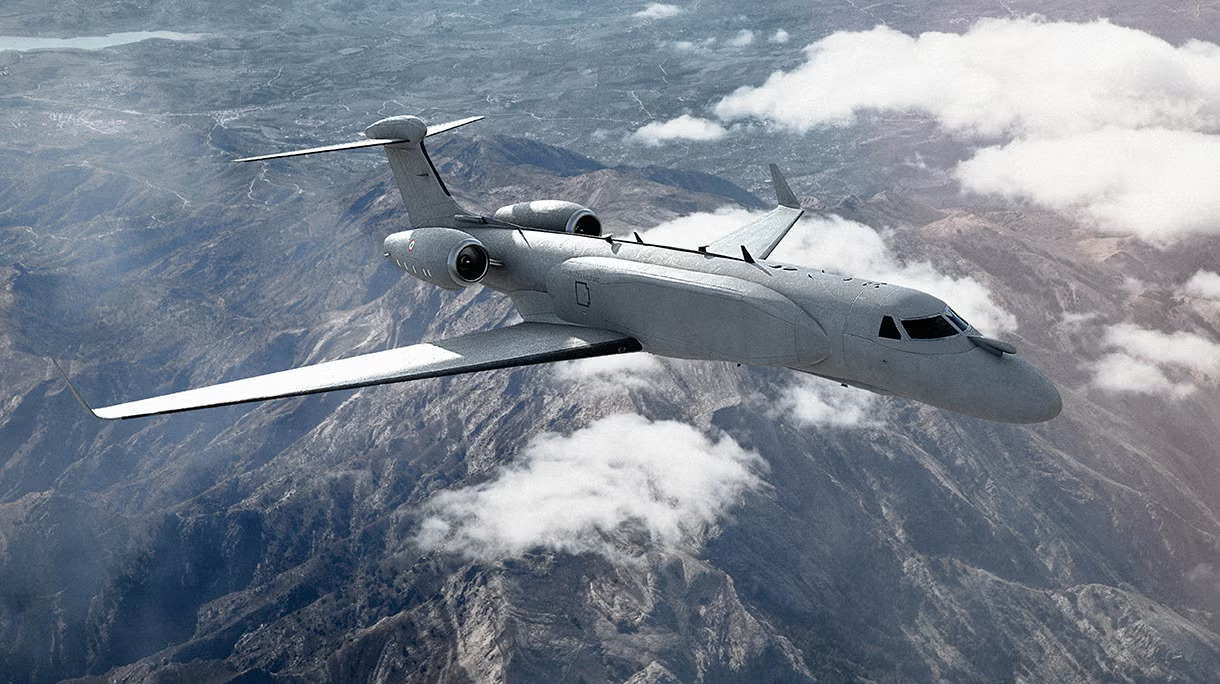
CENTCOM has confirmed that the US Air Force’s specialised electronic warfare jet, the EA-37B Compass Call, has been operationally deployed for the first time.
The aircraft, based on the Gulfstream G550 business jet, was spotted at RAF Mildenhall earlier this week, sparking rumours that it could be deployed in support of the conflict in Iran.
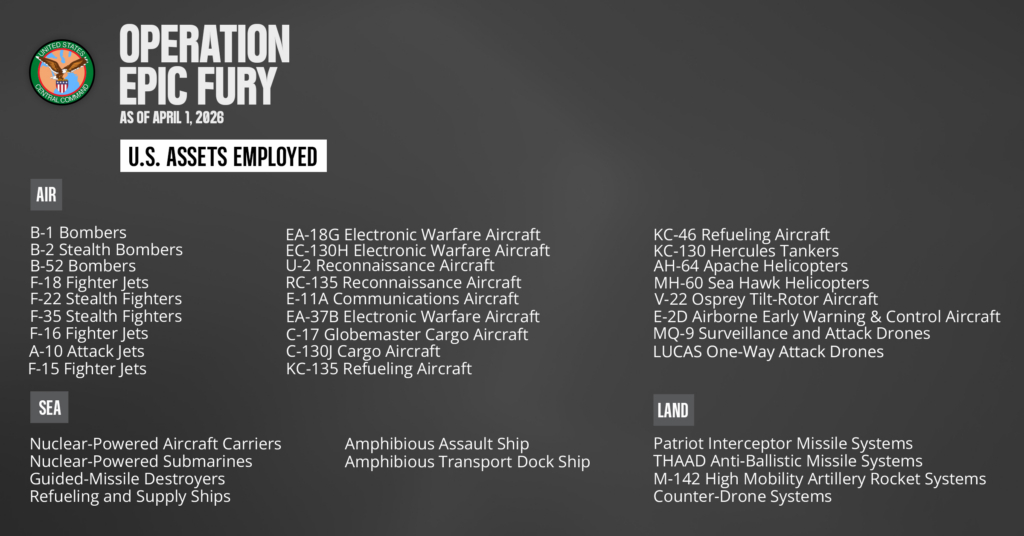
In a 1 April update, CENTCOM confirmed this was the case, including the aircraft in its listing of assets deployed.
EA-37B Compass Call disrupts enemy systems rather than destroying them
The Compass Call is an electronic warfare aircraft based on Gulfstream’s popular G550 business jet. It entered service with the US Air Force in August 2024, and will replace the EC-130H Compass Call based on the Hercules.
The aircraft is used to disrupt enemy communications, radars and navigation systems, something that is emerging as even more important in the drone-based conflict in the Middle East.
| Specification | Details |
|---|---|
| Crew | Up to nine: two pilots and up to seven mission crew including mission crew commander (EWO), weapon system officer (EWO), mission crew supervisor (cryptologic linguist), analysis operators (linguists), acquisition operator and/or airborne maintenance technician |
| Maximum take-off weight | 98,000 lb (44,452 kg) |
| Powerplant | 2 × Rolls-Royce BR700-710 C4-11 turbofan, 15,385 lbf (68.44 kN) thrust each |
| Maximum speed | Mach 0.82 |
| Range | 4,410 mi (7,100 km, 3,830 nmi) |
| Service ceiling | 45,000 ft (14,000 m) |
Using wideband receivers, it first detects and analyses communications, radar emissions, and data links across a broad range of frequencies.
Once identified, its onboard mission system selects the most effective countermeasure, either noise jamming, where high-power transmitters flood the frequency with interference, or deception jamming, where false signals are injected to confuse or mislead.
This allows it to disrupt everything from VHF and UHF radios to satellite communications and tactical networks, effectively breaking the links between command and frontline units.

The aircraft’s effectiveness comes from its software-defined electronic warfare suite, developed by BAE Systems and L3Harris Technologies, combined with directional antennas mounted along the fuselage that can focus jamming energy precisely on specific targets.
It can also jam or spoof GPS signals, degrading navigation and weapon accuracy. Operated by a dedicated mission crew of electronic warfare officers and analysts, the EA-37B doesn’t physically destroy systems; instead, it renders them ineffective by overwhelming, manipulating, or severing the signals they rely on to function.
EA-37B Compass Call is not in the Middle East theatre… yet
The inclusion of the EA-37B in an active warzone for the first time came to light on 31 March, when a pair of Compass Call aircraft were spotted arriving into RAF Mildenhall from Davis-Monthan AFB. The pair flew under callsigns AXIS41 and AXIS43, making a stop at McGuire AFB on route.
USAF EA-37B #AXIS41 & #AXIS43 out of Davis–Monthan AFB are inbound to RAF Mildenhall after a stop at McGuire AFB.
— EISNspotter (@EISNspotter) March 31, 2026
19-1587 / #AE17CD
17-5579 / #AE142E pic.twitter.com/3QqHtFgqJS
When CENTOM released its 1 April update, the two aircraft were still on the ground in the UK. However, in the last hour, both have departed Mildenhall and are heading to Naval Support Activity Souda Bay, a US Navy installation near Crete in Greece.
USAF EA-37B Compass Call #AXIS41 & #AXIS43 are now heading on to NSA Souda Bay from RAF Mildenhall.
— EISNspotter (@EISNspotter) April 2, 2026
19-1587 / #AE17CD
17-5579 / #AE142E https://t.co/I3dN3CHulY pic.twitter.com/wBoMbWmaNa
As well as the Compass Calls, the US has a number of other electronic warfare jets in theatre. These include the iconic EA-18G Growler and the outgoing EC-130H Compass Call.
Given the transfer time, it’s unlikely the EC-37Bs will arrive in the Middle East much before the weekend. when they do, they will take on a SEAD (Suppression of Enemy Air Defences) role, alongside the many other US assets in the region.
For the US Air Force, this first operational deployment of its most modern electronic warfare aircraft will be a great opportunity to put it through its paces in a real-world scenario.
Featured image: L3Harris