Exclusive: Inside the year-long overhaul of the Blue Angels C-130J ‘Fat Albert’ in the UK

March 22, 2026
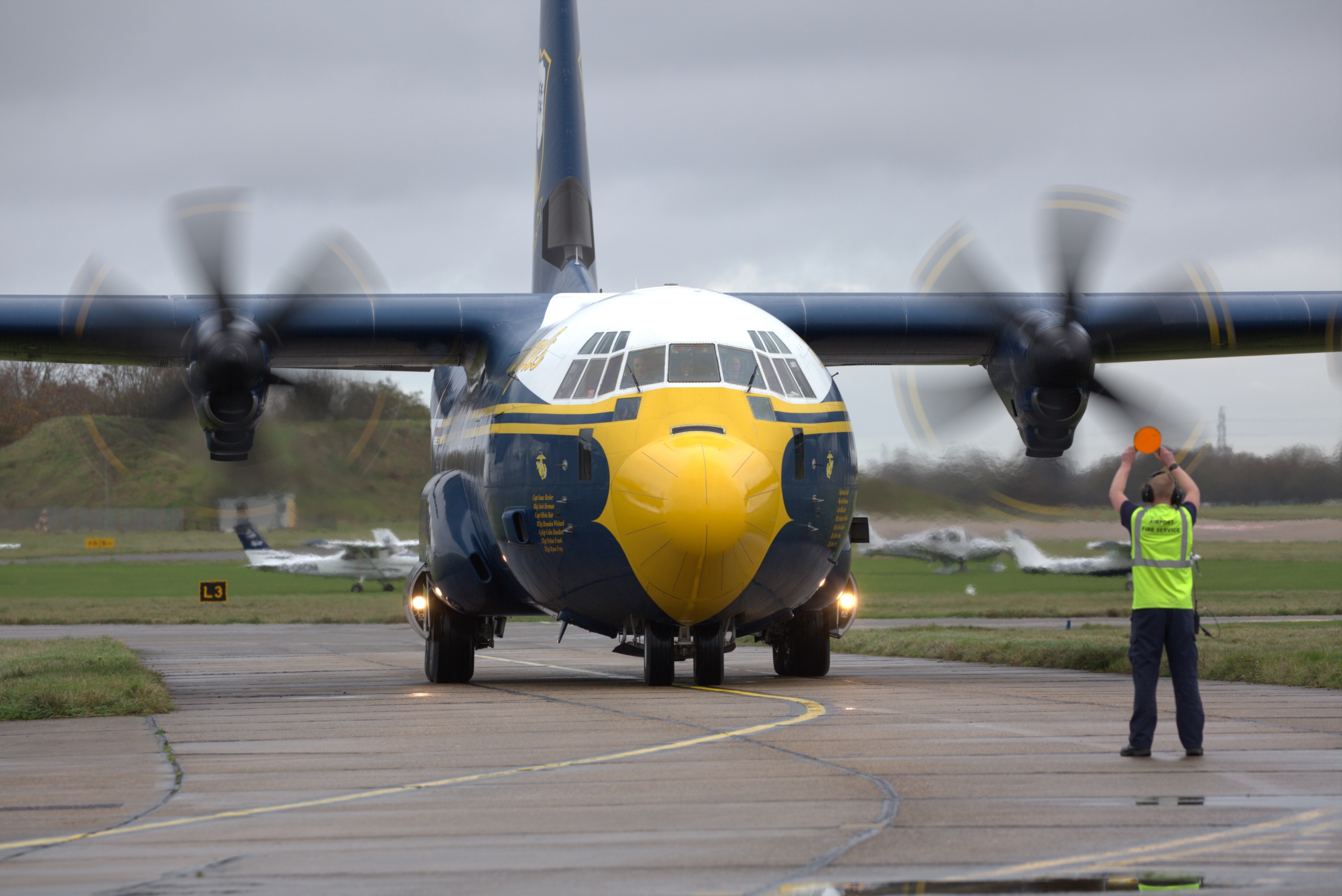
The US Navy’s Blue Angels C-130J support aircraft ‘Fat Albert’ is undergoing a major structural overhaul in the UK, with its centre wing box being replaced at Marshall Aerospace in Cambridge, one of the world’s leading specialists in C-130 heavy maintenance.
The aircraft arrived in November 2025 for the extensive work, which is expected to keep it out of the US airshow circuit for at least a year. Once complete, the upgrade will extend its operational life by more than 20 years, allowing it to return to service for the 2027 display season.
Marshall Aerospace, a Lockheed Martin C-130 centre of excellence, is the only maintenance provider outside the United States authorised to carry out this highly specialised procedure.
Aerospace Global News visited Marshall’s Cambridge Airport facility to see how the programme is progressing and to understand the scale and complexity of the work involved.
Why do CWBs need replacing on C-130Js like Fat Albert?
According to Marshall, the C-130J CWB is an example of a ‘lifed article’ – a critical component with a finite operational lifespan in terms of total flight hours or years in service. As the major primary structure that connects the aircraft’s outer wings to its fuselage, the CWB bears significant operational load and sustains exceptional stress during flight.
Once it has reached its end of life, the CWB needs to be replaced in order for the aircraft to remain airworthy without compromising safety and performance. If this does not happen, the aircraft will be grounded. Not unlike the shoulders of a human skeleton, it bears a significant load and experiences considerable stress during operation.
Installing a new enhanced service life CWB manufactured by Lockheed Martin is a highly cost-effective way to extend Fat Albert’s useful lifespan by more than 20 years.
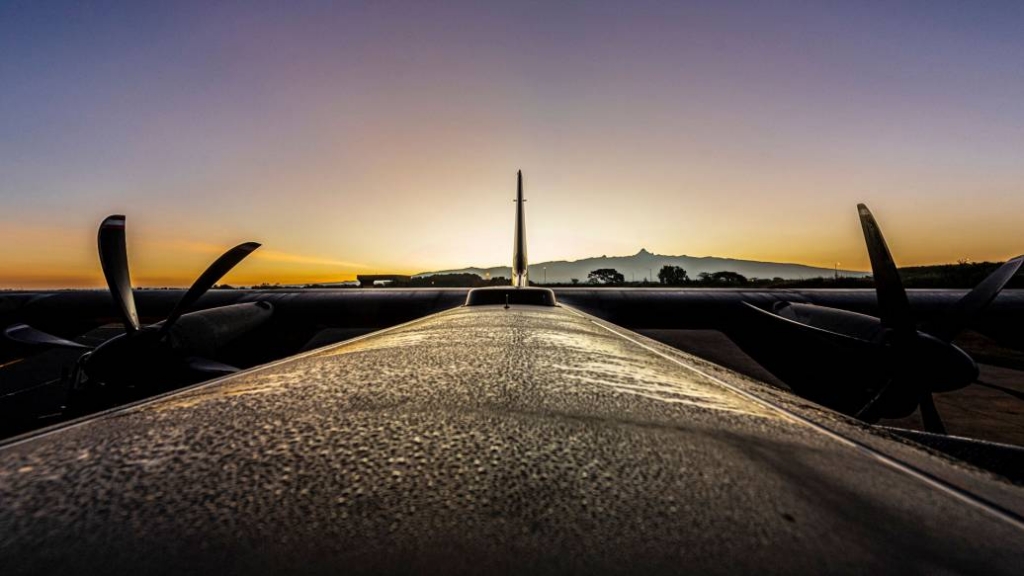
However, this is not a simple process. It involves swapping out an 11-metre section of wing primary structure for a new section. It is the aerospace equivalent of major surgery and can only be carried out by a team with extensive engineering capability and specialist equipment, which has to be approved by the manufacturer, Lockheed Martin.
Marshall is one of the world’s C-130J CWB experts. Since the 1970s, the company has completed nearly 80 centre wing box replacements on both legacy C-130 models and the current production model C-130J Super Hercules, extending the collective lifespans of these aircraft by at least 1,600 years.
In 2024, Lockheed Martin named Marshall the world’s first authorised Centre of Excellence for C-130 CWB replacements.
24 November 2025 – Fat Albert arrives in the UK
After a busy 2025 display season across the US, C-130J Fat Albert arrived in the UK in November 2025 for at least a year to have its centre wing box (CWB) replaced.
This vital life-prolonging work is required to keep the aircraft airworthy for over 20 years and, once completed, will see the plane arrive back in the US for the 2027 air show season.
The work is described by Marshall as a complex engineering procedure akin to invasive spinal surgery. The CWB is the structure where the wings meet the fuselage, forming a joint between these essential aerodynamic structures and the main section of the aircraft.
Marshall is a global expert on replacing the CWB on C-130Js
Aerospace Global News was invited to Hangar 10 at Cambridge Airport as the guest of Marshall Aerospace and Adam Findlay, Marshall’s MRO Delivery Manager. Findlay started by explaining how the process of replacing CWBs on the C-130J came about.
“Available since 2009, Lockheed Martin’s Enhanced Service Life (ESL) centre wing was designed to extend the operational life of a C-130J Super Hercules beyond the original wing’s 45,000-hour rating,” Findlay said. “Recent research has found that the C-130J ESL centre wing has a lifespan of 122,500 hours – 40% longer than initial estimates of 90,000 hours.”
“That said, some C-130J centre wing boxes will need replacement sooner than others. The centre wing box’s lifespan is defined in terms of equivalent hours (EH), a metric calculated by multiplying actual flying hours by a severity factor.”
“If an aircraft’s usage patterns are particularly demanding, such as in Fat Albert’s case, its severity factor will be higher than one, meaning each flying hour reduces the remaining life of the CWB by more than one EH. These aircraft will require CWB changes after fewer years in operation. Flight duration, cruise speed, cruise altitude, pressurisation, weight and landing types all contribute to an aircraft’s severity factor.”
Before any work begins on a CWB replacement, Findlay explains that conditions for the work to be carried out have to be exactly right before any work commences.
“Firstly, because we need to control the temperature of the environment very precisely, because of the accuracy of the work we do, we increase the lighting in the hangar and tightly control the temperature,” Findlay explained. “We also had to recommission and install a new overhead gantry crane, which is a vital part of the CWB removal and replacement processes.”
“Additionally, the hangar floor had to be reinforced in specific areas where the CWB takes place to ensure no movement at all at any stage, as this process has to be exact to the tightest of tolerances.”
Findlay explained that Marshall takes delivery of ‘bare’ centre wing boxes direct from Lockheed Martin. The CWB arrives in Cambridge in a single shipping container. Other components, including trailing edges, wiring and pipework, are shipped in separate boxes.
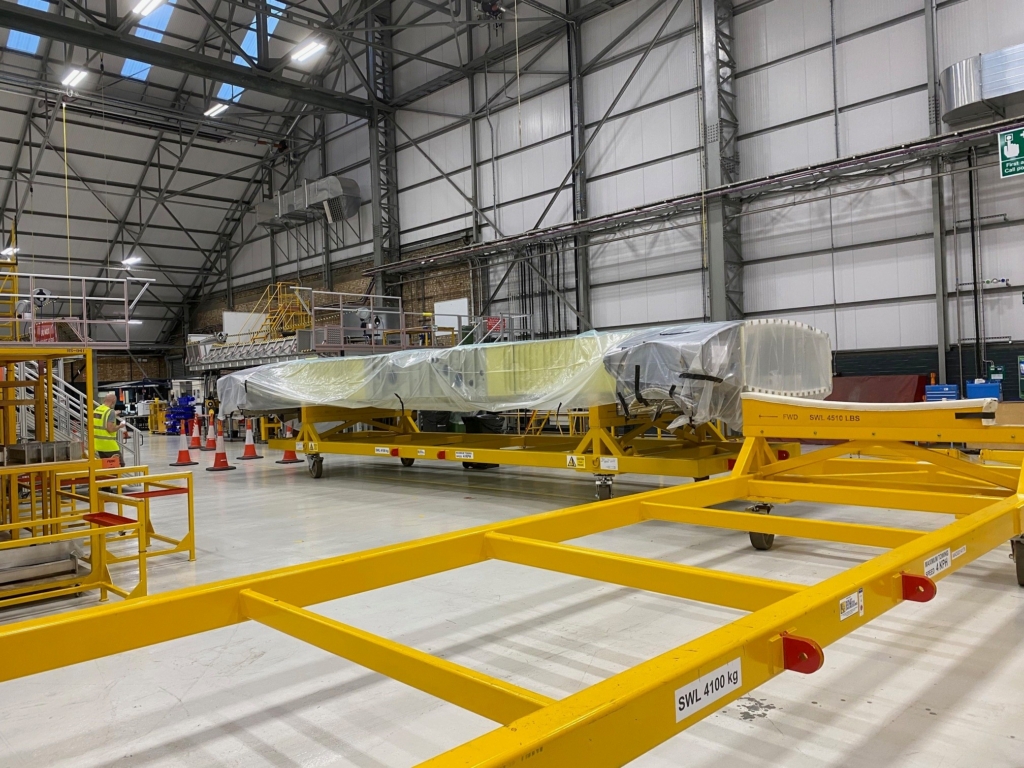
The CWB box often arrives four to six weeks before the actual aircraft arrives at the facility. But this is deliberate as it can save time later, said Findlay.
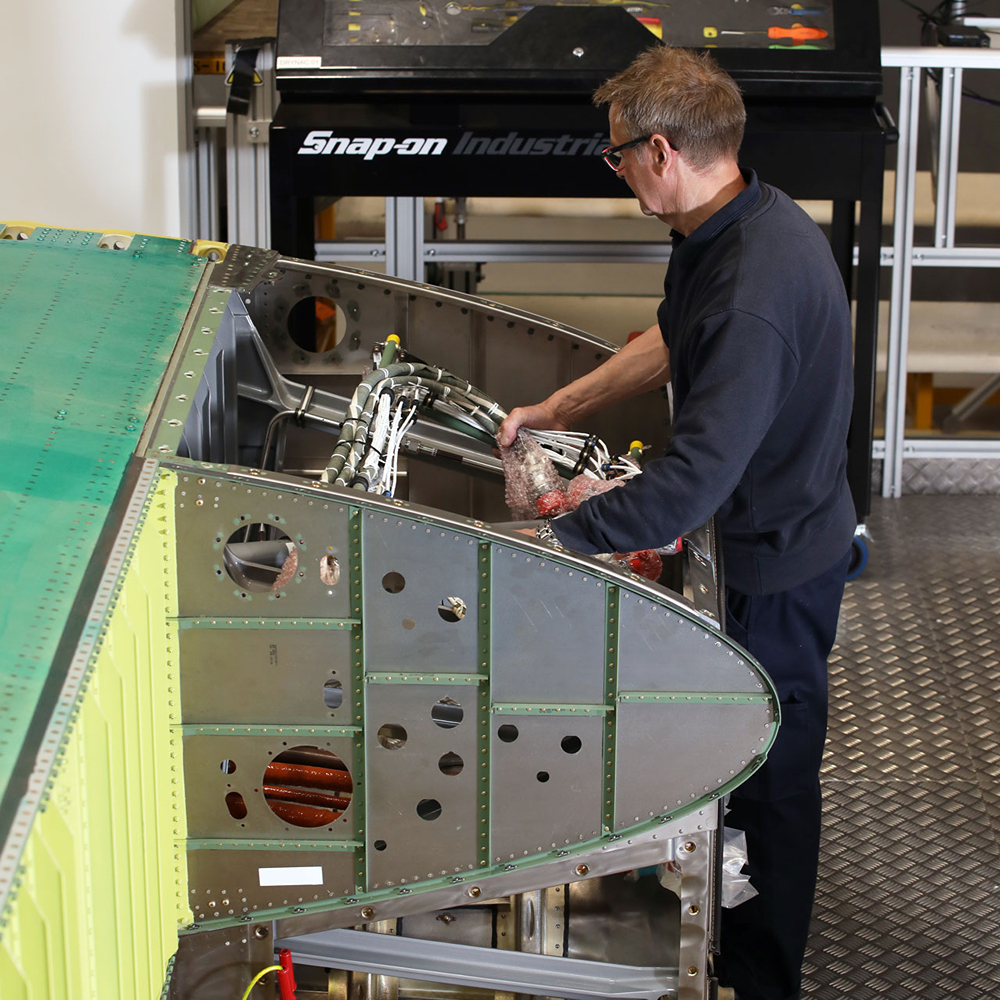
Preparing the new centre wing box (known as ‘dressing’) can take thousands of hours and sees wiring, pipework and other preparatory work carried out before the aircraft arrives. The addition of these materials can add more than 1.5 tons to the CWB structure.
“Once all the wiring and pipework have been installed on the new CWB, each system is checked and pressure tested to ensure full functionality way before it goes anywhere being installed on the actual aircraft, Findlay explained.
Fat Albert’s centre wing box replacement process at Marshall Aerospace
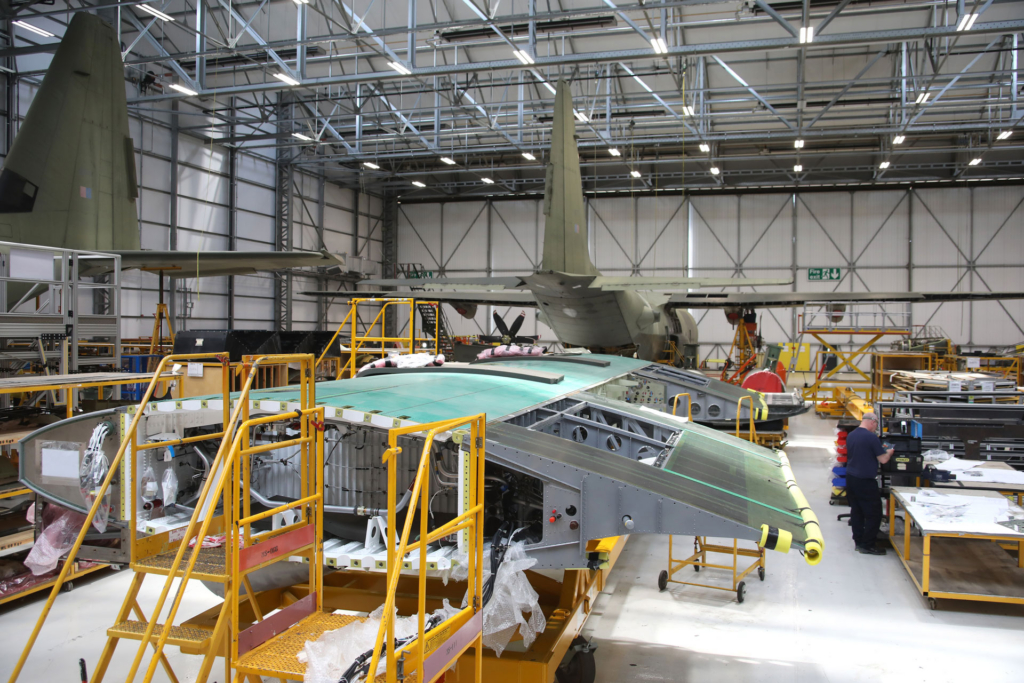
According to Findlay, once Fat Albert arrived at Marshall, the aircraft was stripped of its paintwork (a process that takes around ten days) before having its wings removed, followed by its horizontal and vertical stabilisers, its landing gear, rear loading ramp, and its engines and propellers. This effectively leaves a bare metal tube that allows the CWB work on the aircraft to commence.
Then starts the work of removing the existing CWB from the aircraft structure. Having disconnected any remaining interfacing parts and structures, Marshall then uses bespoke floor-mounted jacks to apply upward pressure, shearing off any remaining sealant and releasing the centre wing box from the fuselage.
The CWB weighs around 4.5 tons, so the overhead crane is needed to lift the CWB free from the top of the aircraft structure.
Findlay said that approximately 10 tons of force is then applied to the undersides of the CWB to displace it from the top of the fuselage. This amount of upward pressure is needed to break the sealant, which on some aircraft has been in place for around 20 years.
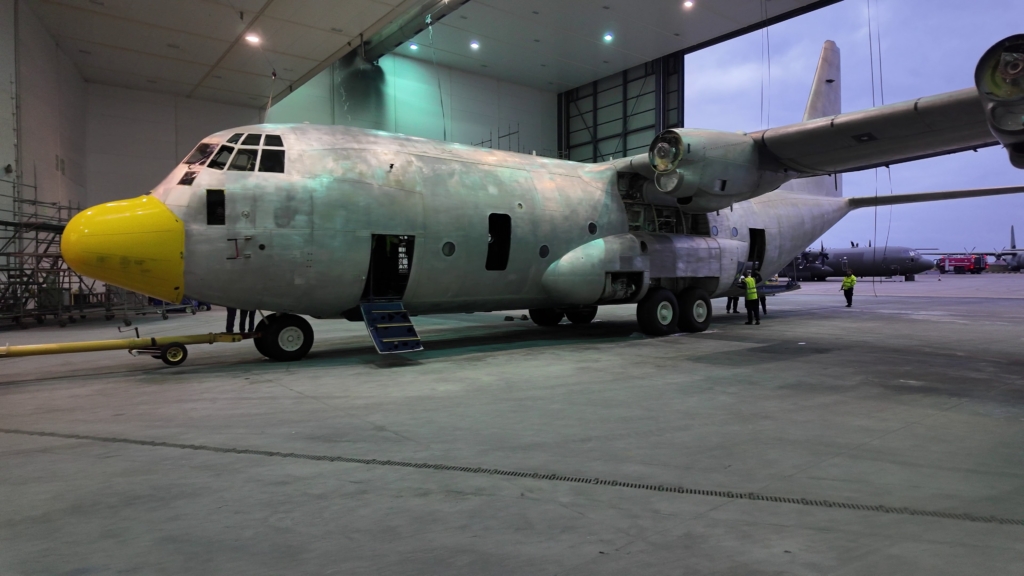
To prevent movement and absorb load, the aircraft is secured to custom-engineered tie-down points attached to reinforced steel floor plates.
Accuracy is a key part of CWB replacement. To ensure that the main structure of the airframe does not move during this process, Marshall conducts laser measurements eight times during each C-130J centre wing box replacement to ensure the aircraft is correctly aligned and remains steady throughout.
“We carry out full positional laser shoots throughout the centre wing box replacement process, using procedures developed at Marshall for the C-130J,” said Findlay.
Measurements are taken and recorded at reference points all along the aircraft, with some tolerances as strict as 0.001 inches (0.025 mm), less than the width of a human hair. These results are sent to Lockheed Martin for review and validation, he added.
At the time of AGN’s visit, Fat Albert was at this stage. With its blue, yellow and white livery removed, in bare aluminium, and with all of its main structural components stored elsewhere in Hangar 10, the aircraft was undergoing other visual inspections and receiving some other work while tasks on dressing the new CWB were being completed.
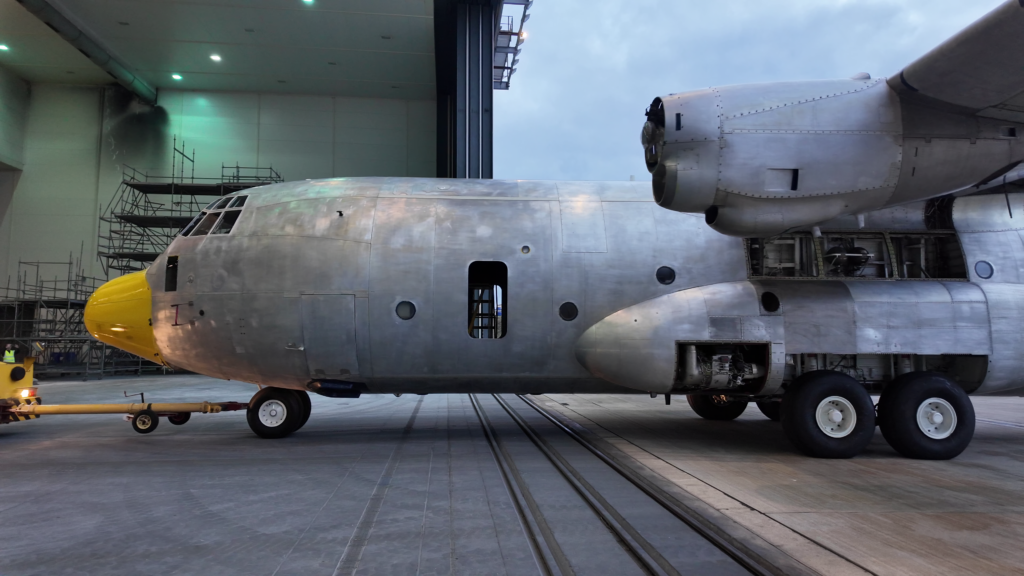
“We spend months checking and replacing parts and wiring structures connected to the C-130J centre wing box,” explained Findlay. “Usually, we discover significant cracking, corrosion, warping or wear that all need rectifying.”
Marshall’s team conducts thorough visual and non-destructive inspections and rectifies every defect discovered, either through in-house repair schemes or with support from Lockheed Martin, he explained.
Marshall also has its own in-house fabrication unit that works in conjunction with the manufacturer, should any parts need replacing or repairing.
“Structural replacements of existing fuselage sections ordinarily take two months before the new centre wing can be inserted”, advised Findlay. “During this time, the aircraft is held in place with belly trestles and tie-downs and is supported by internal bracing structures.”
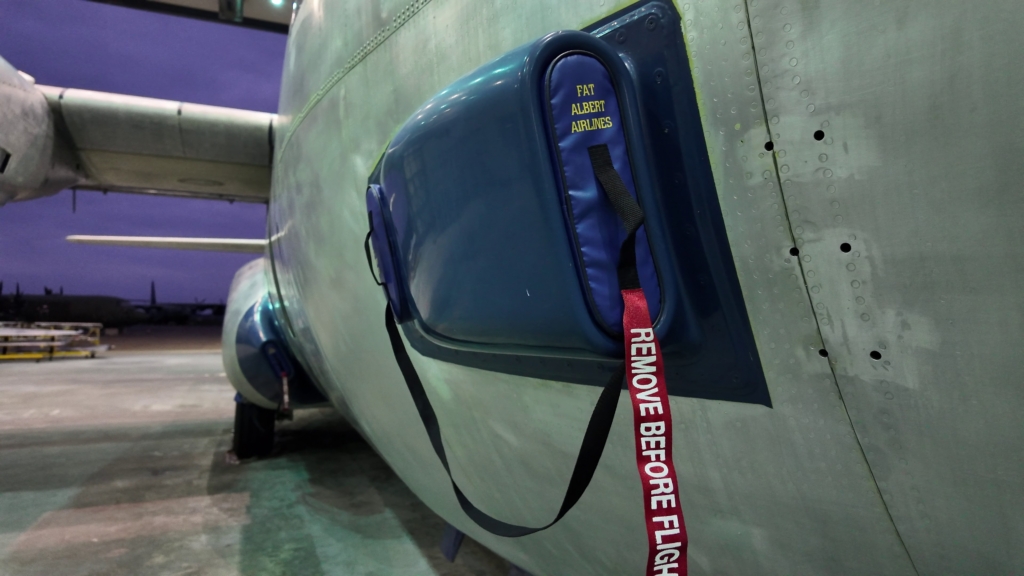
Once this work is completed, and only with the approval of Lockheed Martin, can the task of positioning the replacement CWB commence, with the use of the specially designed overhead gantry crane for lifting the CWB into position. It can take around a week to correctly position a new CWB exactly onto the top of the C-130J.
When a new CWB is installed, it is initially “dry-inserted” (meaning there is no contact within the fuselage) and measured with lasers to ensure accurate positioning. Marshall then removes the new CWB once more, applies slow-setting sealant to the main faces, re-inserts it and clamps it into place using specialised tooling developed in-house by Marshall.
Further laser measurements are taken to ensure positioning is correct to within 0.001 inches (0.025 millimetres). Due to the tolerances involved, micro-adjustments are carried out over a number of days until correct positioning is achieved.
Once the securing of the CWB in its precise position has been achieved, the Marshall team sets about working on marrying the multiple electrical, mechanical, and flight control linkages between the CWB and the aircraft itself, explained Findlay. Once the team is happy that the CWB is placed exactly where it needs to be and has been wired in, then work can begin on putting the aircraft back together.
However, Findlay warned that although the company normally allows a year or more for the entire CWB cycle to be completed, additional complications or other issues can occur at any time, and so his team need to be prepared for the slippage in re-delivery times.
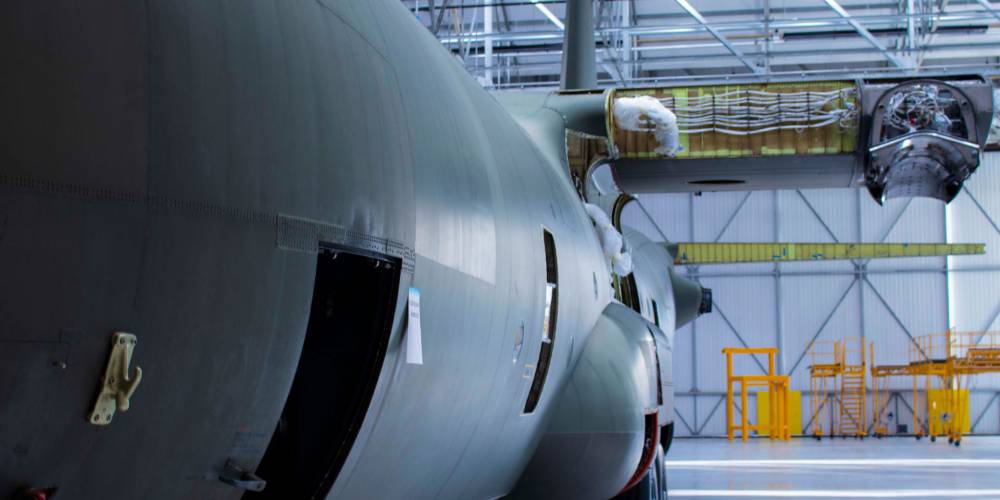
“The team does everything it can to minimise the impact of any ’emerging work’ (i.e., issues that crop up in inspections or maintenance) on delivery schedules – for example, sequencing multiple tasks to run in parallel or sourcing parts or components at short notice,” commented Findlay. “This often involves a fair amount of creative problem-solving, which is ultimately what engineering is all about.”
With everything back in place, each system is tested and retested to ensure that there are no leaks or pressure drops in any of the systems. The work of putting the aircraft back together takes place within the controlled environment of the hangar.
Additionally, everything is photographed and double-checked against original C-130J drawings from Lockheed Martin as well as by the manufacturer’s own engineering inspection team, to ensure everything is as good as it can possibly be.
“Once the aircraft is structurally complete and tested, we send it back to the paint shop for its exterior to be repainted, said Findlay. Once the painting is complete, the aircraft is sent out for engine ground runs, where tolerances and symmetries are all checked once again before the aircraft is certified as fit to fly.
Finally, once the necessary paperwork is completed, either Marshall test pilots (or, in Fat Albert’s case, test pilots from the US Navy) will take the aircraft flying for a series of test flights – the first time that the aircraft will have been flying for a year or more.
If all is well and the customer is happy to accept the aircraft, it will begin its 4,500-mile journey back to Pensacola in Florida, where it will begin preparations for the 2027 flying season with the Blue Angels.
Marshall Aerospace – a Lockheed Martin centre of excellence for CWB replacement
Marshall has now completed nearly 80 centre wing box replacements on both legacy C-130 models and the C-130J Super Hercules. The company can now complete a C-130J centre wing box replacement four months quicker than previously, thanks to various in-house improvements that have been introduced in Cambridge in conjunction with the approval of Lockheed Martin.
“Over time, we have made numerous in-house refinements to make the process significantly less risky and more efficient, including development of bespoke staging, trestling, jacking, tooling, drilling processes and repair schemes,” said Findlay.
“While these are unique to Marshall, they have all been reviewed and approved by Lockheed Martin. Our first C-130J centre wing box replacement took 14 months; our most recent was completed in just 10 months.”
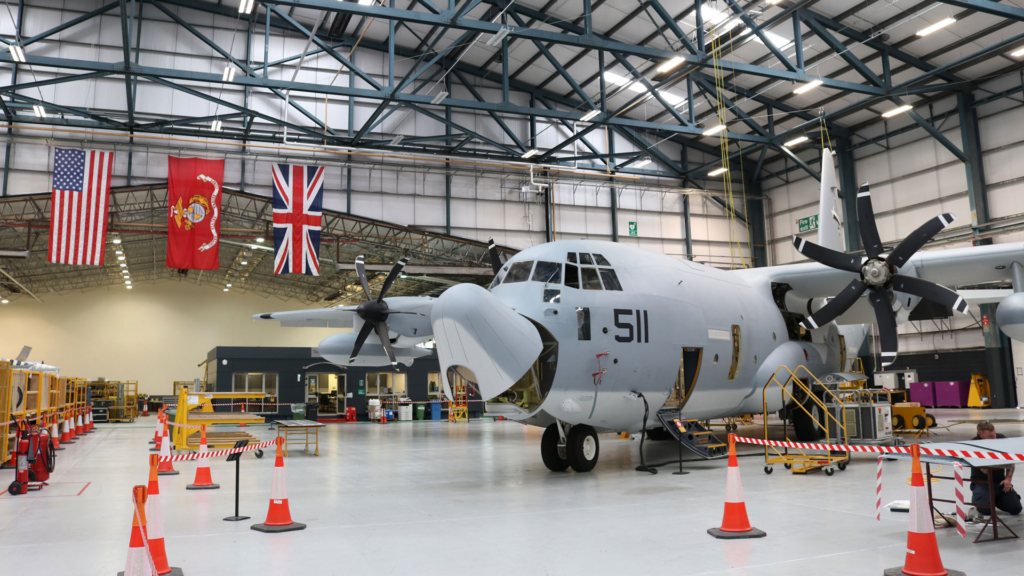
Findlay added that C-130J CWB replacements are much more than a “new-for-old” component swap. “Marrying new structure to a decades-old airframe presents unique challenges,” he explains.
“After many years in service, no two C-130 airframes are identical. Issues such as structural drift, cracks and corrosion become more pronounced over time. Since a centre wing box installation is effectively a rebuild of a large section of the aircraft in line with manufacturer specifications, the fuselage must be brought back to original production tolerances, with much of the structure reassembled to ‘as-new’ condition.”
All about the Blue Angels C-130J Super Hercules ‘Fat Albert’
The current incarnation of the Blue Angels support aircraft is not new to the UK’s skies. In fact, the aircraft is the former Royal Air Force Hercules ZH885, which was maintained by Marshall Aerospace (“Marshall”) for many years while it remained part of the active RAF fleet of C-130Js.
Like every C-130J Super Hercules, the airframe started life on Lockheed Martin’s production line in Marietta, Georgia. After crossing the Atlantic for the first time in 2001, it arrived in Cambridge to be prepared by Marshall for entry into service with the Royal Air Force (RAF).
Between 2001 and 2017, Fat Albert flew for the RAF’s 24 Squadron and returned to Marshall regularly for maintenance and engineering work throughout that period.
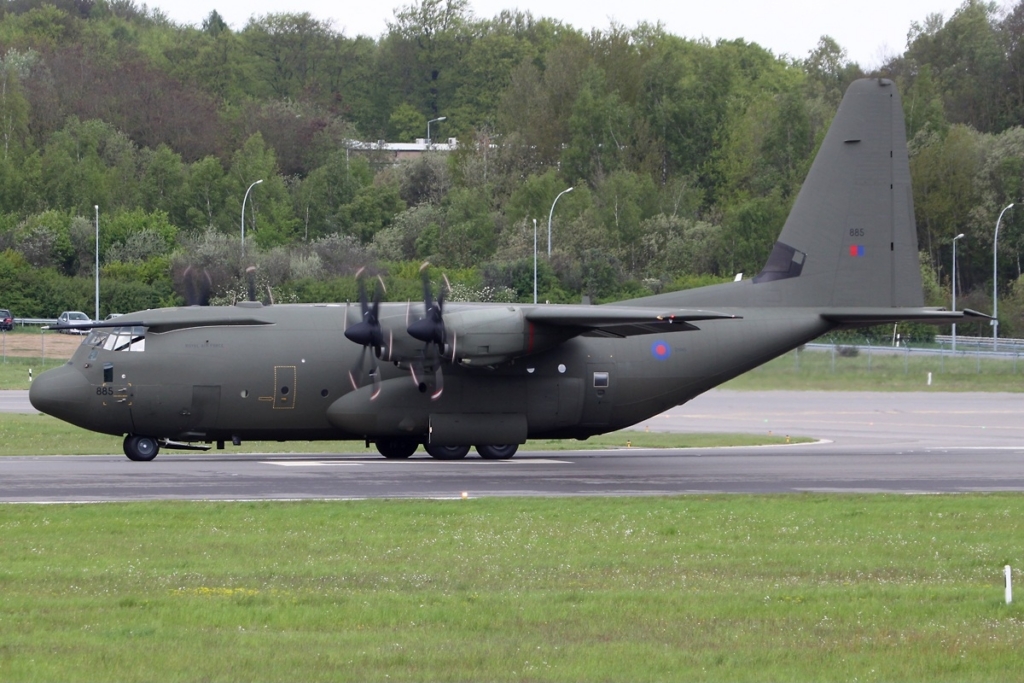
In 2019, the US Navy acquired the aircraft from the RAF as a replacement for its previous support aircraft, also known as ‘Fat Albert’, an older C-130T model. Marshall was awarded the support contract for the maintenance, repainting and modifications ahead of its entry into service with the Blue Angels.
Fat Albert crossed the pond again upon completion of work by Marshall in 2020, relocating to the Blue Angels’ operating base at the Naval Air Station in Pensacola, Florida, just a few hundred miles away from its place of manufacture.
As the logistical workhorse that makes the Blue Angels’ busy airshow schedule possible, Fat Albert covers over 100,000 miles each season as it transports up to 45 personnel and a range of specialised equipment back and forth across the United States.
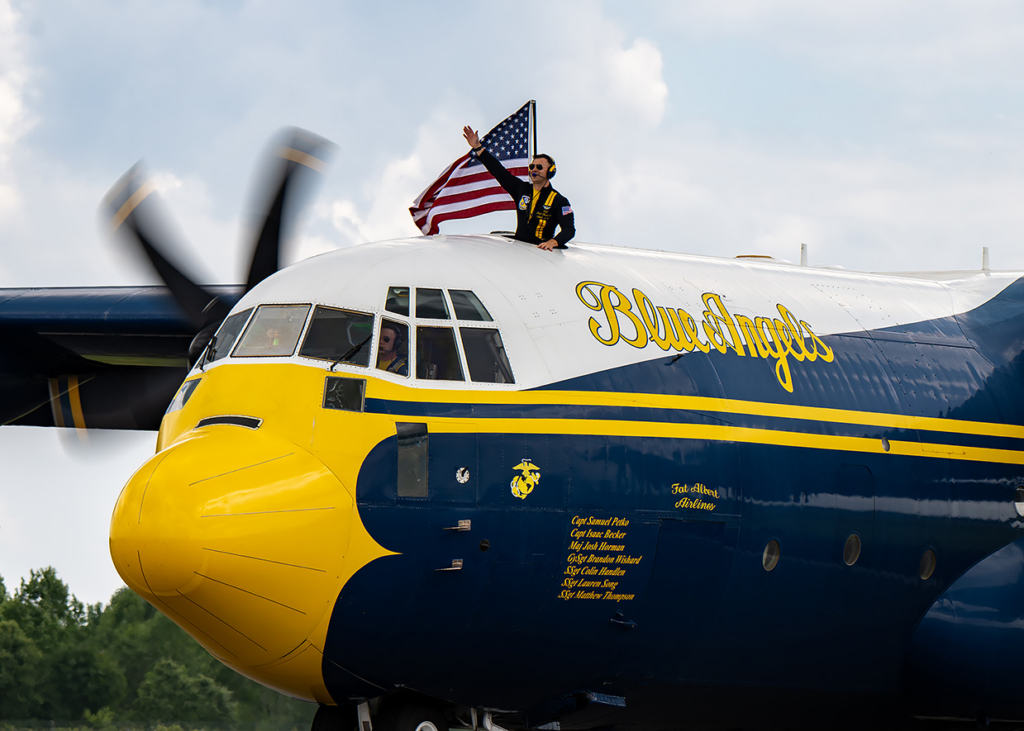
Fat Albert is also a performer in its own right, kicking off each Blue Angels show with a 15-minute demonstration of remarkable athleticism, earning fan-favourite status for a range of stunts including high-speed low-altitude passes, steep climbs, sharp banks and combat landings. It is currently the only C-130 to perform regularly in demonstration flying displays.
This constant routine of marathons and gymnastics takes a unique toll, resulting in elevated stress and fatigue on Fat Albert’s airframe over the years. From a lifecycle management perspective, this requires an unusual degree of expert care and maintenance planning by its operator, the US Navy.
In addition to CWB replacement, Fat Albert will undergo routine maintenance at Marshall, including a full paint strip and repaint back into the highly distinctive Blue Angels livery.
Fat Albert is considered the global standard-bearer for the capabilities and design philosophy of the C-130 Hercules, embodying the versatility and reliability of the most successful military airlifter in history.
Bring on the 2027 display season!
By the start of 2027, Fat Albert should be back together, fit to fly, and preparing to head home to Florida. Having been stripped down to bare metal, with all key components removed, the aircraft will have its new backbone in place, ready to face the next 20 years of air shows as part of the Blue Angels display team.
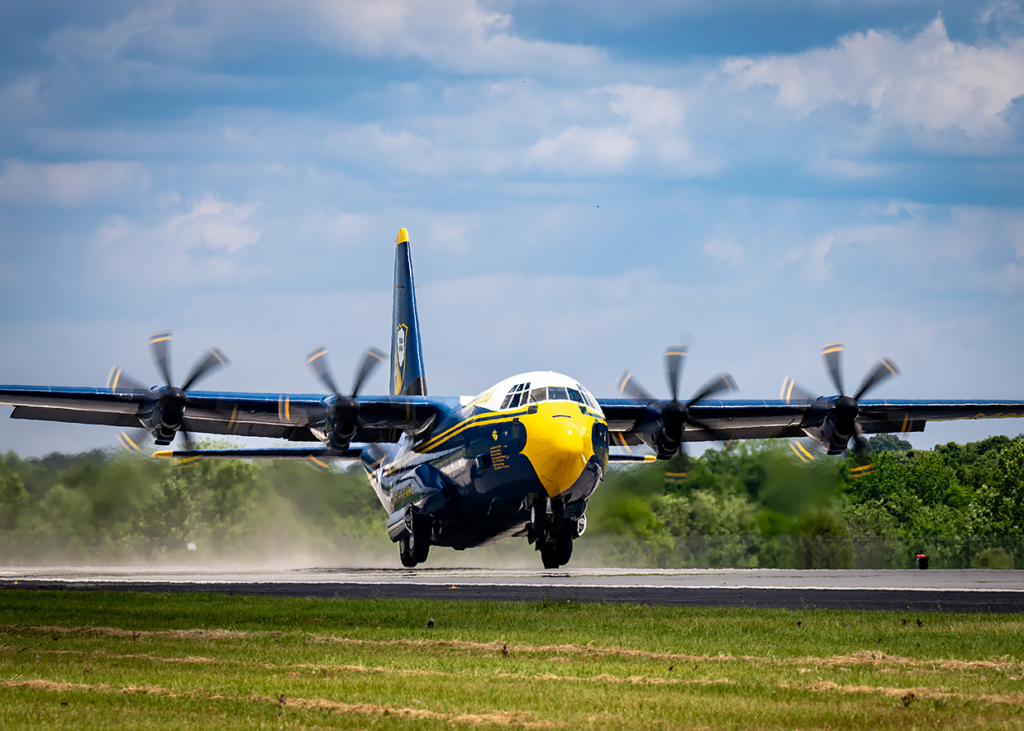
The first show of the 2027 Blue Angels air show season is due to take place on 13 March 2027 at the El Centro Festival of Flight in California.
For the iconic blue and yellow plane, its eye-catching displays will continue, with the thousands of spectators unaware of just how much work it takes behind the scenes to keep this particular aircraft flying.
Featured image: Marshall Aerospace