


Two Tu-160 strategic bombers enter service as Russia bets on Cold War-era airpower

5 min read
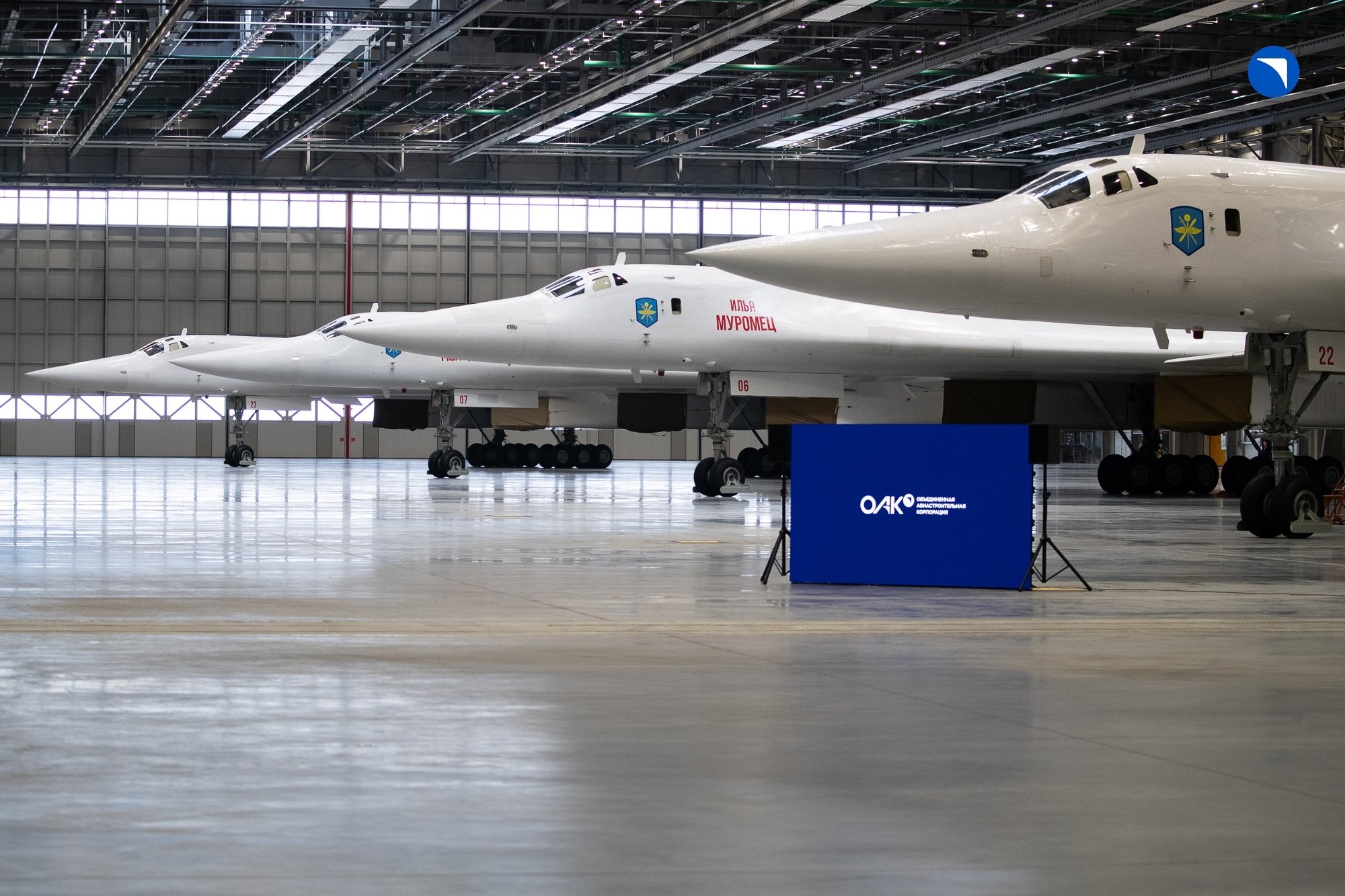
Russia quietly added two Tu-160 Blackjack strategic bombers to its fleet in 2025, even as Ukraine inflicted the heaviest losses yet on Moscow’s long-range aviation arm.
The deliveries came just months after Ukrainian strikes wiped out roughly a fifth of Russia’s operational strategic bomber force, underlining a stark paradox, Moscow is struggling to protect and regenerate ageing Cold War-era aircraft at the same time as it insists it will eventually field a fleet of 50 modernised Tu-160s.
Whether these latest bombers represent genuine new production or recycled Soviet-era airframes, their arrival highlights both the resilience and the limitations of Russia’s long-range strike ambitions under wartime pressure and international sanctions.
Two Tu-160 Blackjack bombers delivered in 2025
On 17 December, state-run news agency TASS reported that the Russian Aerospace Forces had received two Tu-160M strategic bombers. Defence Minister Andrei Belousov was quoted as saying the aircraft had been delivered to frontline service, but no further technical or operational details were disclosed.

As with previous Tu-160 announcements, transparency was limited. It remains unclear whether the aircraft are newly built examples or refurbished Soviet-era airframes upgraded to the Tu-160M standard, with “M” denoting modernisation. Russia has long blurred this distinction, and even officials have avoided clearly separating new production from deep rebuilds of existing aircraft.
By 2021, all remaining Tu-160s were slated for comprehensive modernisation, while Moscow simultaneously announced plans to restart production of the type. Even if the newly delivered aircraft are classed as “new builds,” analysts question how much of their structure may originate from semi-completed airframes dating back to the collapse of the USSR.
Modernisation of Tu-160 bombers has been woefully slow
The Tu-160 revival has been marked by persistent slippage. A contract signed in 2018 called for 10 modernised Tu-160M bombers, with broader ambitions for a total fleet of up to 50 aircraft. Initial deliveries were expected in 2019, later pushed to 2021. The first newly built Tu-160M2 prototype did not make its maiden flight until January 2022.
Production since then has remained slow. In mid-2025, Newsweek noted that only two Tu-160M2 and two Tu-160M had been commissioned in 2024, some of which have already been used to launch cruise missiles against Ukraine. Western analysts widely attribute the limited output to sanctions pressure, supply chain disruption, and workforce shortages affecting Russia’s aerospace sector.
Russia is expanding its aircraft plant in Kazan, where it produces bombers, according to Finnish broadcaster Yle. Analysts report that several new buildings have appeared on the site, with a total area roughly equal to three football fields. The expansion is expected to be… pic.twitter.com/ktFb36LjiA
— WarTranslated (@wartranslated) June 28, 2025
Russia is attempting to address these constraints by expanding the Kazan Aircraft Production Association plant, the sole facility responsible for Tu-160 manufacturing. Satellite imagery reviewed by Finnish broadcaster Yle shows multiple new buildings under construction, adding an area roughly equivalent to three football pitches. However, analysts caution that expanded floor space alone is unlikely to resolve constraints on engines, avionics, and skilled labour.
Russia is building Tu-160s while the US and China build next-gen bombers
Russia’s decision to resume Tu-160 production stands in sharp contrast to the paths taken by the United States and China. The variable-sweep, supersonic Tu-160, NATO reporting name “Blackjack,” is a product of late-Cold War design philosophy, prioritising speed, altitude, and payload over survivability.
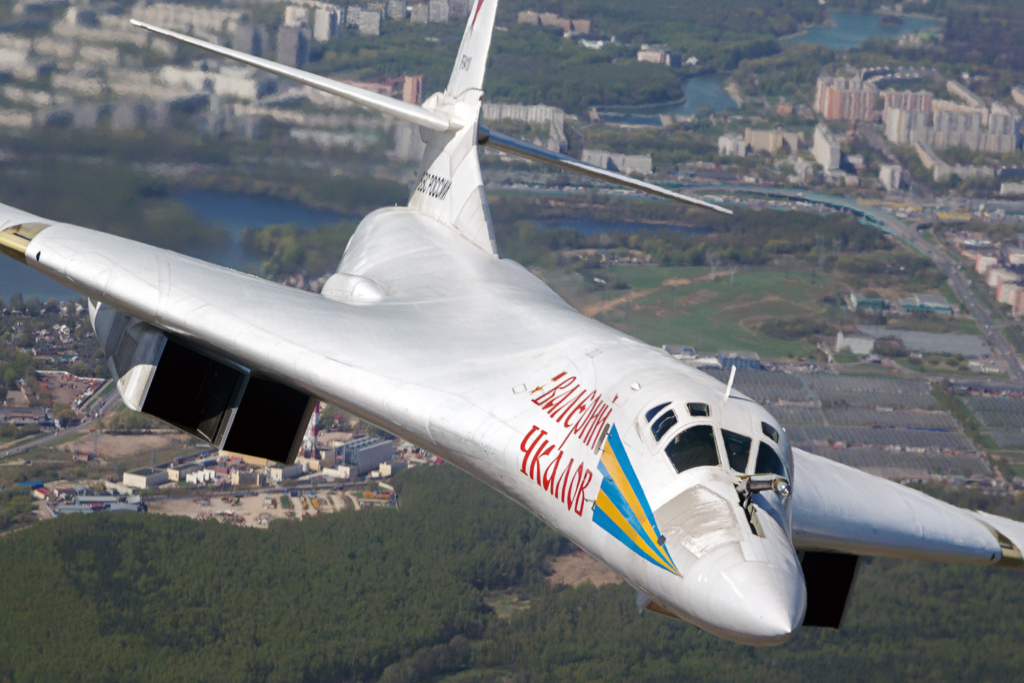
The US reached similar conclusions decades ago. While the B-1 Lancer shares the Tu-160’s variable-geometry concept, it was already considered vulnerable by the 1980s, prompting development of the stealthy B-2 Spirit. Today, the US Air Force is transitioning to the B‑21 Raider, optimised for penetrating heavily defended airspace rather than relying on standoff distance.
China has skipped the variable-sweep era entirely. Its forthcoming Xi’an H‑20 is widely expected to mirror the low-observable, subsonic design philosophy of the B-21, reflecting assumptions about future high-end conflict environments.
1/ Russia's United Aircraft Corporation (UAC) released new photos (from December 2022) of the first new-build Tu-160M prototype. This aircraft carried out its maiden flight in January 2022. According to UAC, "the aircraft has completed its factory test program." pic.twitter.com/4TRnisavbf
— Guy Plopsky (@GuyPlopsky) December 30, 2022
The Tu-160, by contrast, remains a standoff missile carrier. While it boasts the highest official payload of any bomber, its survivability in contested airspace is limited, making it ill-suited for the opening phases of a peer conflict.
Get the latest aerospace defence news here on AGN.
Russia’s Tu-160s and their role in Ukraine
Following the collapse of the Soviet Union, Ukraine inherited 19 Tu-160s. Eight were transferred to Russia in exchange for gas debt relief under de-nuclearisation agreements, while the remaining aircraft were scrapped. Russia now uses those same former Ukrainian Blackjacks to launch cruise missile strikes against Ukrainian targets.

Russia is believed to operate around 16 or 17 Tu-160s today, making the type central to the air-delivered leg of its nuclear triad. While the Tu-95 and Tu-22 can also carry nuclear weapons, the Tu-160 is regarded as the most capable and survivable of Russia’s long-range bombers.
During Operation Spiderweb in 2025, Ukraine managed to destroy an estimated 20% of Russia’s strategic bomber fleet on the ground; all confirmed hits were Tu-95s and Tu-22s.
🔥BREAKING: The SBU has released unique footage from the special operation "Spiderweb"
— Special Kherson Cat 🐈🇺🇦 (@bayraktar_1love) June 4, 2025
The video captures FPV drone strikes by the SBU on four enemy airfields: Olenya, Ivanovo, Dyagilevo, and Belaya. Among the aircraft hit are the A-50, Tu-95, Tu-22 as well as the An-12. pic.twitter.com/Jyu0bjwBvO
No Tu-160s were known to have been hit, even though there was at least one Tu-160 clearly parked at one of the airbases. Russia has sustained other Tu-95 and Tu-22 losses during the war, but no Tu-160 losses.
Featured Image: Russian state media


