Why does Boeing use the number 7 in all its aircraft names?

5 min read
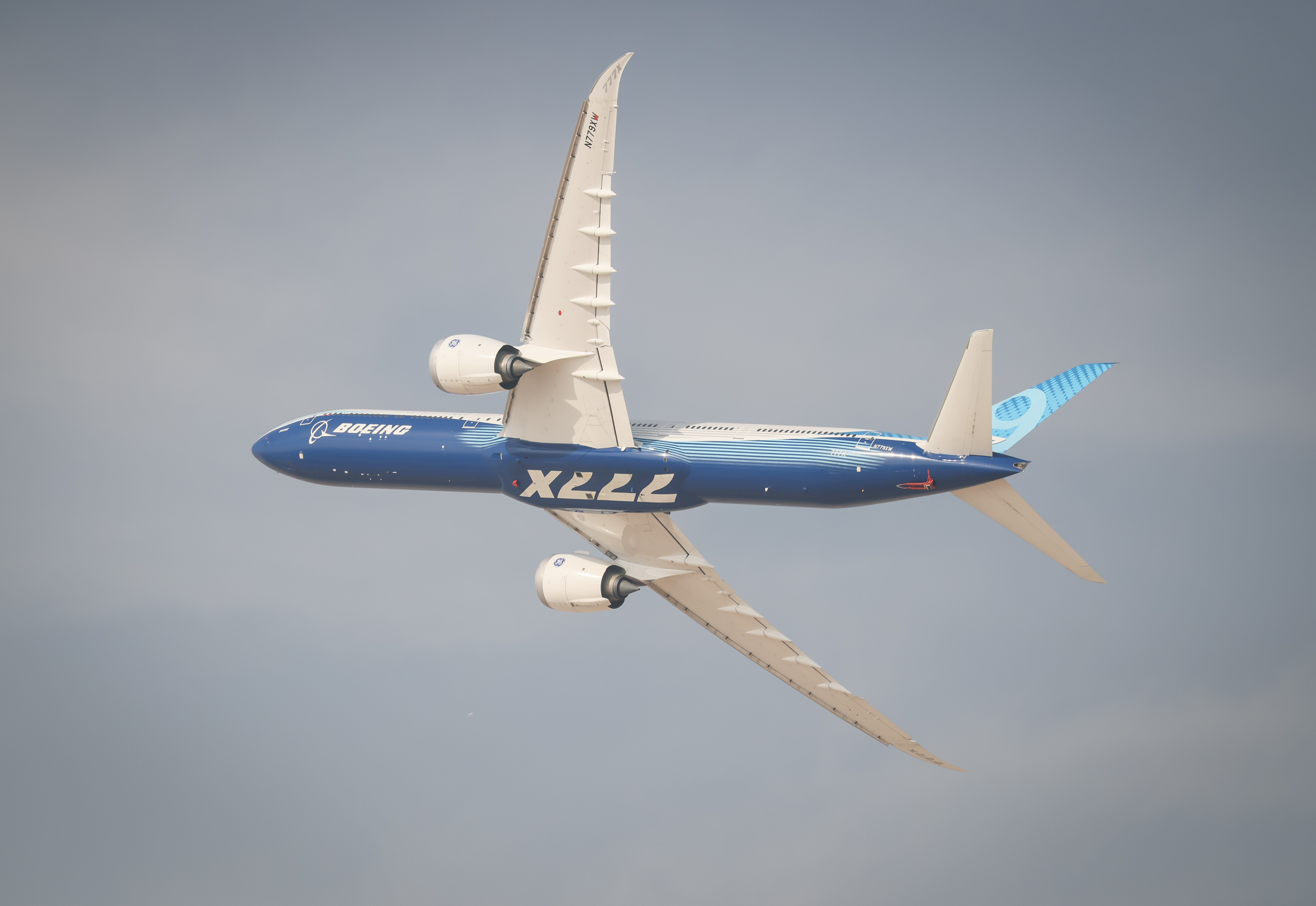
If you’ve ever wondered why almost every commercial jet from Boeing starts with a 7—from the 707 to the 787—you’re not alone. It isn’t because of superstition related to the perceived luckiness of that number. It’s a quirk of internal company logic that stuck, helped by a little good timing and a lot of success.
Here’s how it happened.
The “7” tradition started as an internal numbering system
In the early 1950s, Boeing organised its projects using hundred-series numbers. Each block was reserved for a category of work:
- 300 – piston aircraft
- 400 – military jets
- 500 – gas turbines
- 600 – missiles
- 700 – commercial jet transports
When Boeing began developing its first jet airliner, it fell neatly into the 700 series. That aeroplane became the Boeing 707.
The “7” wasn’t chosen for luck—it just meant this is a jetliner.
Why 707, specifically?
Boeing has never claimed a mystical or cultural meaning behind the number. The association with “luck” or “perfection” came after the aircraft became successful, not before.
Boeing’s first prototype jetliner was the Model 367-80—the famous “Dash 80”—which served as the baseline for the KC-135 tanker and the company’s first commercial jet: the 707. Boeing marketing wanted something cleaner and more memorable for airlines, and the 707 fit the bill: modern-sounding, symmetrical, and easy to say.
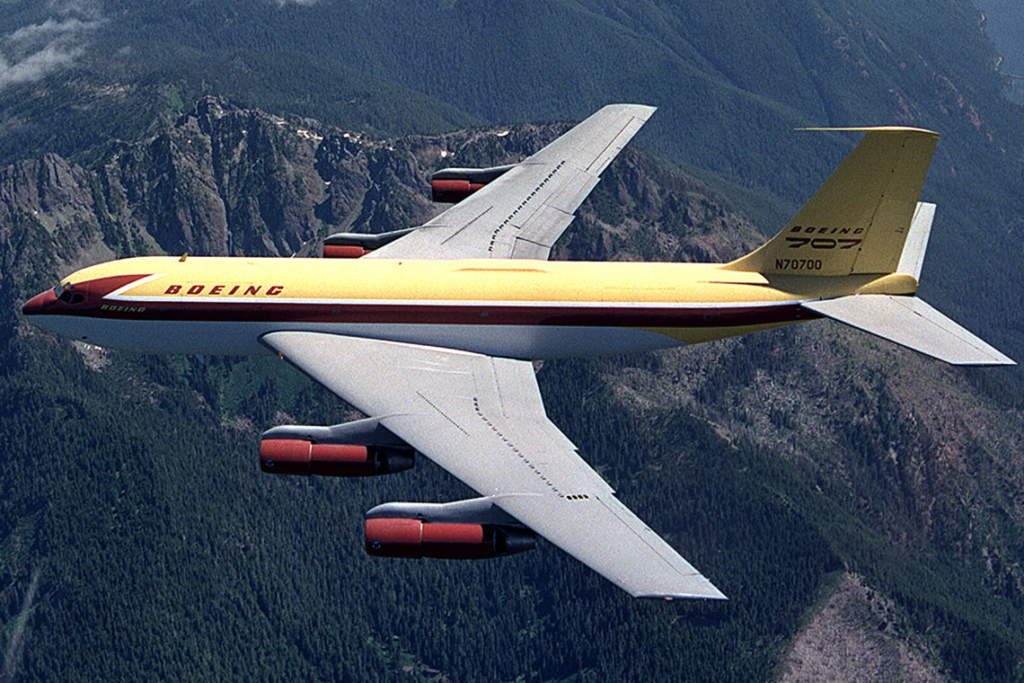
Once the Boeing 707 entered service in 1958 and proved wildly successful, the company had a naming template it didn’t want to mess with. The symbolism of the company’s 7X7 numbering pattern evolved through decades of operational dominance.
Success locked the 7X7 pattern in place
After the 707 came:
- Boeing 727 – optimised for shorter runways
- Boeing 737 – the best-selling jetliner ever
- Boeing 747 – the original jumbo jet
- Boeing 757 and Boeing 767
- Boeing 777
- Boeing 787 Dreamliner
By the time the Boeing 737 and 747 reshaped global air travel, the 7×7 pattern was forged into Boeing’s brand. Airlines, regulators, financiers, and passengers all recognised it instantly.
Changing the numbering scheme would have been like Apple renaming the iPhone to something else mid-run.
The lesser-known Boeing 7 numbers
The Boeing numbering pattern is selective and strategic, but Boeing has strayed from the 7X7 pattern and used numbers out of sequence.
- The 720 was essentially a shorter-range variant of the 707.
- The 717 began life as the McDonnell Douglas MD-95. Boeing renumbered it after acquiring the company.
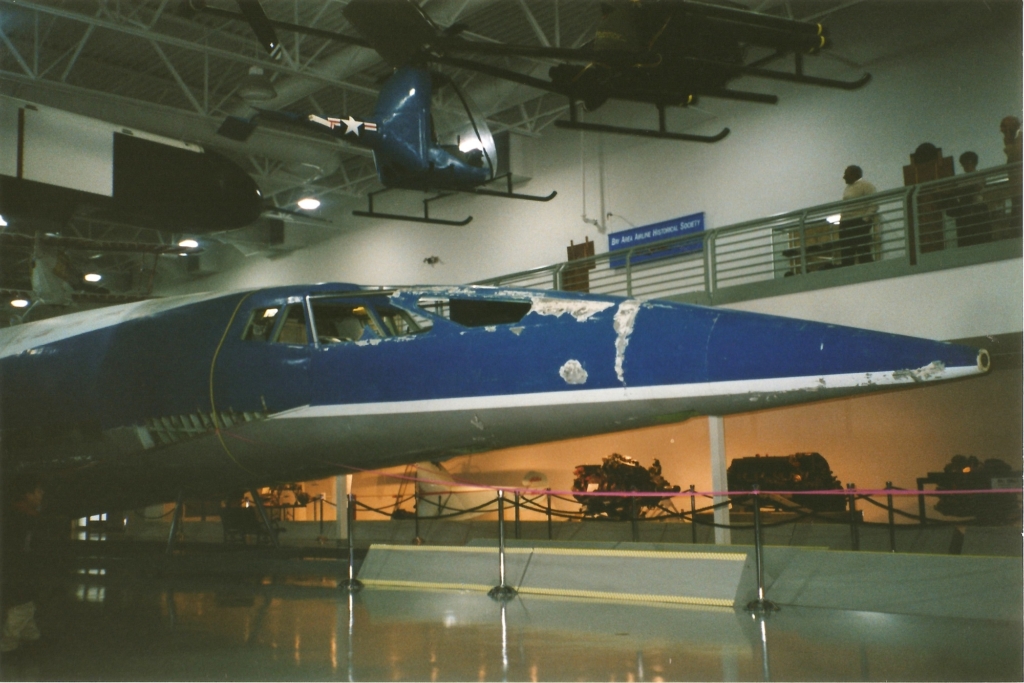
Boeing even went for four digits once. The Boeing 2707 – Supersonic Transport (SST) is perhaps the most famous “lost” Boeing number.
- Designed as a Mach 2.7–3.0 supersonic airliner
- Would have seated up to 300 passengers
- Won the US SST program in the 1960s
- Cancelled in 1971 due to cost, noise, and environmental concerns
Instead of venturing into supersonic flight, Boeing built the Boeing 747 jumbo jet, which reshaped the airline industry.
Boeing will probably never abandon “7”, but it is getting harder to use 7X7
Today, “7-something-7” instantly signals a Boeing jet in a way few industrial naming systems manage. It’s short, global, regulator-friendly, and embedded in aviation culture.
If Boeing launches a new clean-sheet aircraft, odds are overwhelming that it will still be a 7X7.
At this point, the number isn’t just a label—it’s a lineage.
But this three-digit numbering convention also presents a challenge: it is almost used up. All but one of the possible 7X7 variations have already flown—only 797 remains to be applied on the drawing board.
The 797 may be the last Boeing commercial airliner designed with a conventional cylindrical fuselage and powered by fuel engines. The number has long been unofficially associated with Boeing’s new midsize aircraft, though the manufacturer has not used it, industry watchers have. Boeing also hasn’t committed to building an NMA any time soon.
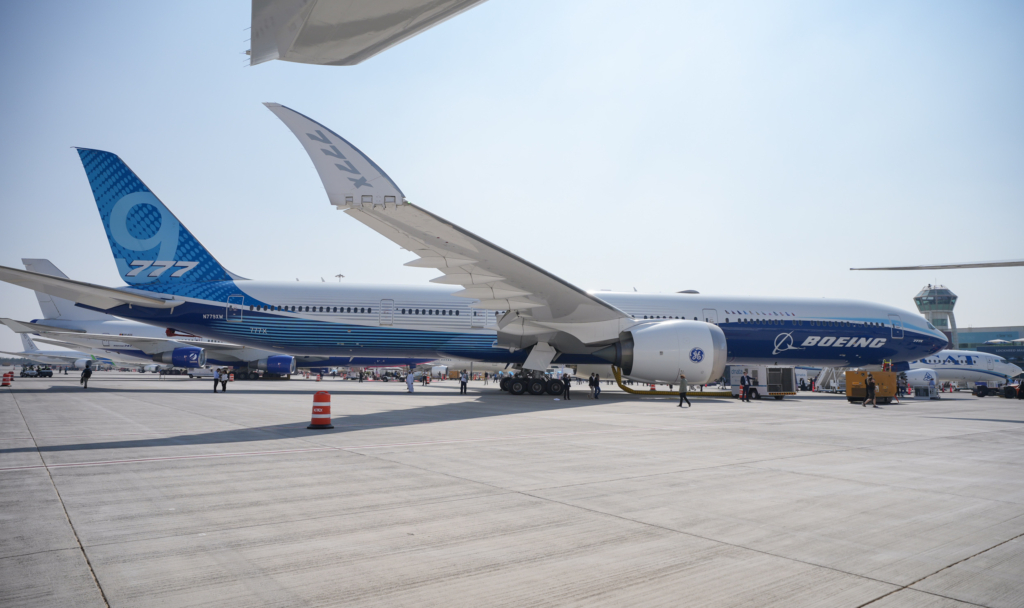
Boeing has managed to stretch the other numbers in the original 7X7 sequence, using letters and dash numbers to identify the variants: 737 MAX 7, 8, 9, 10, or 777-8, 777-9, 777-10 for the new 777X family.
The only issue is that regulators will allow certification of variants under the original model number on aircraft that can be proven to be essentially similar to the previous aircraft. This limits engineering. Boeing already encountered this issue with the 737 MAX, which required some persuasion to show they did not differ significantly enough from the original 737 model to warrant a new product number.
What might Boeing do if it runs out of 7s?
While Boeing may only have one 7X7 variant left to apply, there are still opportunities for the company to retain either a leading or trailing “7” under a three-digit numbering convention. From 700 to 799 or from 007 to 997 (though the aircraft manufacturer would likely avoid the brand conflict with the iconic “Bond, James Bond”).
Doing so would upset the symmetry that is so appealing in Boeing’s aircraft designations, but the manufacturer could maintain it with a letter in the centre: 7A7-7Z7.
Boeing has already used the 7-letter-7 convention internally. The Boeing 7J7 unducted-fan testbed experimental project from the 1980s focused on ultra-high-bypass/propfan engines. It never formally launched, but the technology fed into later efficiency studies. The Boeing 7E7 was an internal program name for what became the Boeing 787 Dreamliner. The “E” stood for efficiency, but the aircraft was renamed 787 before market launch. Boeing had the digit available, and why change something that works so well?

Any of these new numbering conventions would give Boeing enough room to work on new clean-sheet aircraft designs for decades to come. The push for a new three-digit convention is more likely to come up as Boeing explores revolutionary aircraft designs, including hydrogen propulsion and blended-wing fuselages, which would prompt regulators to require a whole new number.
Bottom line, Boeing uses the number 7 because of its early success, turning what was essentially a filing-system category into one of the most recognisable aircraft numbering conventions in aerospace history. And maybe that is lucky.
Featured Image: Dubai Airshow
Sign up for our newsletter and get our latest content in your inbox.


More from


October 17, 20264 min read