


AC-130J Ghostriders and C-17s pour into the UK in rare surge of US special operations aircraft

6 min read
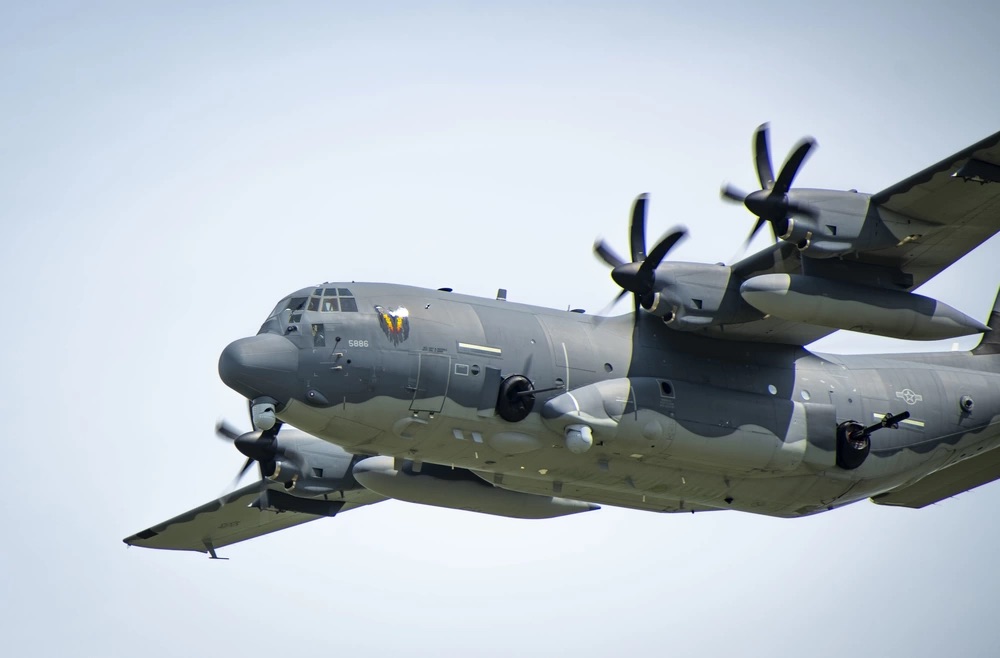
OSINT observers are tracking a renewed surge in US military air activity into the United Kingdom, this time with a clearer special operations aviation signature than previous movements.
Multiple US Air Force C-17 Globemaster III airlifters have arrived at UK bases in recent days, coinciding with sightings of AC-130J Ghostrider gunships and persistent maritime patrol activity linked to the fugitive oil tanker formerly known as Bella 1.
The movements have prompted speculation that the US may be preparing for a contested boarding operation against the tanker, now sailing under the name Marinera, after it evaded the US Coast Guard in the Caribbean in late December.
AC-130J Ghostriders reposition to the UK
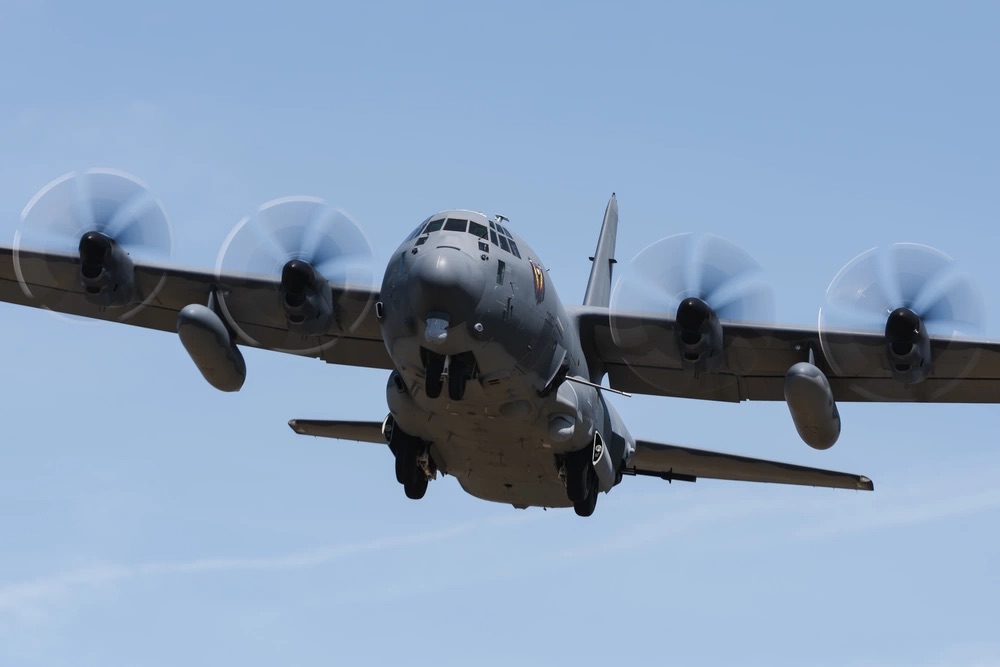
The most concrete aviation development is the presence of AC-130J Ghostrider gunships at RAF Mildenhall, a key hub for US special operations aviation in Europe. Spotters and defence reporters have confirmed at least two AC-130Js arriving in the UK in recent days.
While the Ghostrider is best known for close air support and overwatch, its deployment is often associated with US special operations tasking that requires persistent ISR, communications relay, and command-and-control support, particularly during sensitive maritime or littoral operations.
Their appearance provides a firmer datapoint than some of the more speculative claims circulating on social media.
C-17 movements and special ops aviation hints
Alongside the gunships, OSINT accounts have logged an unusual tempo of C-17 Globemaster III arrivals into the UK, including flights originating from bases associated with the 160th Special Operations Aviation Regiment, better known as the Night Stalkers.
UPDATE: 05JAN26 1700Z – US military air movements to UK that *might* be linked to possible boarding action of M/T BELLA 1 / MARINERA.
— DefenceGeek 🇬🇧 (@DefenceGeek) January 5, 2026
At least 1 MH-47G has done a test flight & C-17 arrivals pace has slowed, but P-8s continue to patrol near the M/T. CV-22Bs still carrying out… pic.twitter.com/DUwLNES91l
Some accounts claim that MH-47G Chinooks or MH-60M Black Hawks may have been delivered to RAF Fairford, but at present, there is no publicly available imagery confirming their presence. Reporting by The War Zone has stressed that these helicopter sightings remain unverified and should be treated cautiously.
The War Zone writes, “There are claims that several of the Night Stalkers’ highly modified MH-47 Chinooks and MH-60M Black Hawks, presumably dropped off by the C-17s, were seen at RAF Fairford; however, no visual evidence has emerged to confirm that.”

What has been observed is continued activity by CV-22B Ospreys, conducting low-altitude hover practice between Mildenhall and Fairford, a profile consistent with maritime insertion training.
In the run-up to the 3rd of January operation to arrest Venezuela’s Nicolas Maduro, and the run-up to Operation Midnight Hammer, OSINT accounts tracked large numbers of US aircraft repositioning. As such, the movements observed over the past couple of days have stirred up plenty of speculation.
Get the latest aerospace defence news here on AGN.
Bella 1: The oil tanker that refused to be boarded
In December 2025, the United States began boarding and seizing oil tankers operating out of Venezuela as part of its sanctions enforcement effort. Around 20–22 December, the oil tanker Bella 1 refused to comply with a US Coast Guard boarding attempt in the Caribbean and departed the area, an unusual outcome that immediately drew attention.
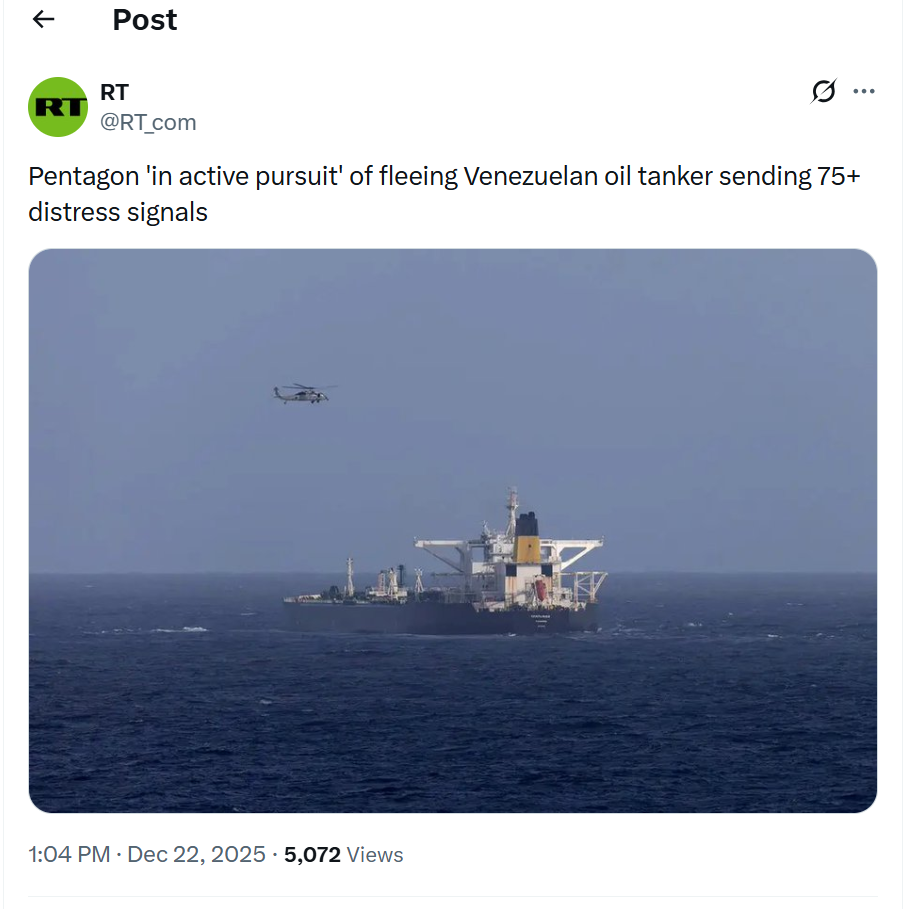
Russian state media outlet RT claimed the vessel issued more than 75 distress calls during the incident, a figure that has not been independently verified. What is clear is that the encounter raised questions about how a large, slow-moving tanker was able to evade a Coast Guard boarding, particularly given the disparity in capability between US enforcement vessels and commercial shipping.
One possible explanation is that the Coast Guard was not prepared for a resisted boarding at the time. Such operations are significantly more complex and carry a higher risk, typically requiring specialist units, aerial overwatch, and detailed planning to execute safely.
Since the incident, the vessel has been renamed Marinera. It was previously flagged in Panama and has been sanctioned by the US Treasury Department since 2024 for transporting Iranian oil. During its flight from the Caribbean, the crew painted a Russian flag on the hull and claimed Russian status, according to open-source reporting.
The oil tanker Bella 1 is fleeing U.S. forces after the U.S. Coast Guard tried to intercept it in the Caribbean.
— Clash Report (@clashreport) December 30, 2025
During the pursuit, the crew painted a Russian flag on the ship and now claim Russian status.
The tanker is under U.S. sanctions for carrying Iranian oil and was… pic.twitter.com/WOAMA35aRp
The tanker is now sailing under a Russian flag and has appeared on the Russian Maritime Register of Shipping with Sochi listed as its port of registry. Moscow has since formally requested that the United States cease its pursuit of the vessel.
Indications point to a possible seizure of the tanker
Reporting by CBS News this week cited two US officials saying American forces are planning to intercept the Marinera as it sails north through the Atlantic, although they cautioned that any boarding operation could still be delayed or cancelled.
The U.S. plans to intercept the tanker Marinera in the Atlantic, carrying Venezuelan oil under a Russian flag, CBS News reports. The vessel, formerly Bella 1, was once Panamanian-flagged and Turkish-owned. A boarding may happen this week, but could still be canceled. https://t.co/uQ0Mv20lzw pic.twitter.com/Ot5H2XGcgH
— Special Kherson Cat 🐈🇺🇦 (@bayraktar_1love) January 5, 2026
OSINT account DefenceGeek posted yesterday, “At least 1 MH-47G has done a test flight & C-17 arrivals pace has slowed, but P-8s continue to patrol near the M/T. CV-22Bs still carrying out low-altitude hover practice between Fairford & Mildenhall.”
The MH-47 Chinooks and MH-60M Black Hawks likely don’t have the range to fly from their airbases in the UK to the ship, but they are also capable of in-flight refuelling.
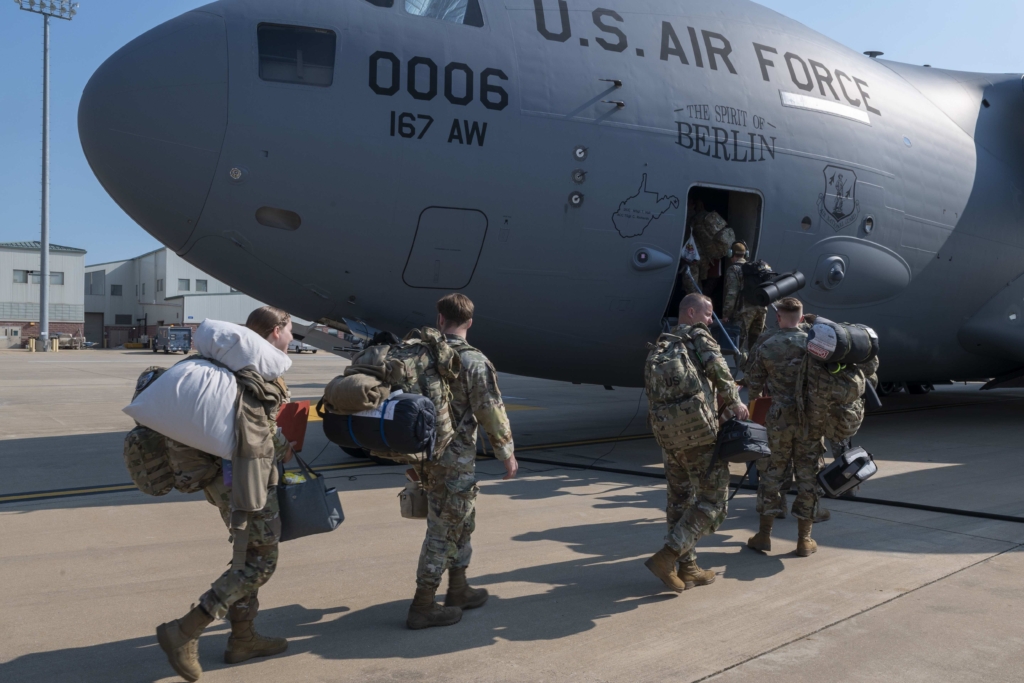
Any boarding operation conducted far from US shores would likely require a carefully coordinated mix of maritime patrol aircraft, special operations helicopters, and airborne command-and-control assets. However, while the Marinera represents one credible explanation for the recent surge in US military air activity into the UK, it is not the only one.
Iran has erupted into protests, and Trump has warned the regime it is “locked n’ loaded” if the state harms the protestors. AP reports that at least 35 people have been killed so far.
Additionally, NATO’s joint training exercise – Steadfast Dart 2026 – kicked off on 2 January and will run through to 18 March. The deployment exercise is focused on Germany and the Baltic Sea, and speculators suggest the aircraft could be arriving for this.
Whatever the underlying driver, the pattern of activity suggests option-building and readiness, not a single, pre-declared mission.
Featured Image: United States Air Force


