From Airbus A340s to a football stadium: how upcycled long-haul jets are providing shade for Strasbourg’s football fans

4 min read
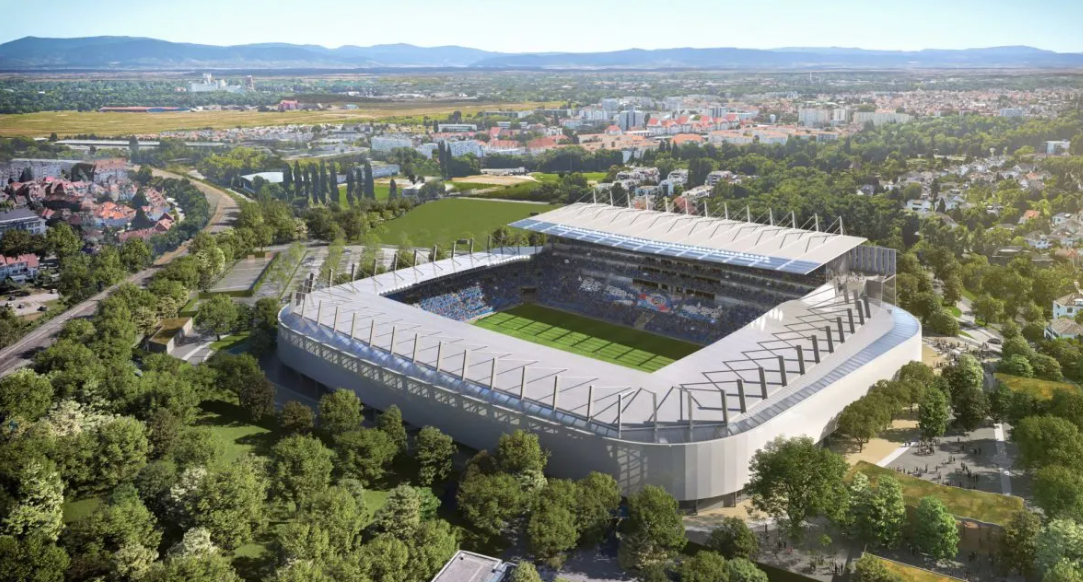
When Racing Club de Strasbourg Alsace returns to its newly transformed Stade de la Meinau, supporters will find something unusual above the terraces – parts of former passenger aircraft forming the stadium’s new southern façade.
Designed by international sports architecture practice Populous in collaboration with Strasbourg-based Rey-de-Crécy, the redevelopment incorporates sections of 30 decommissioned Airbus A340 wide-body airliners into a huge architectural sunshade.
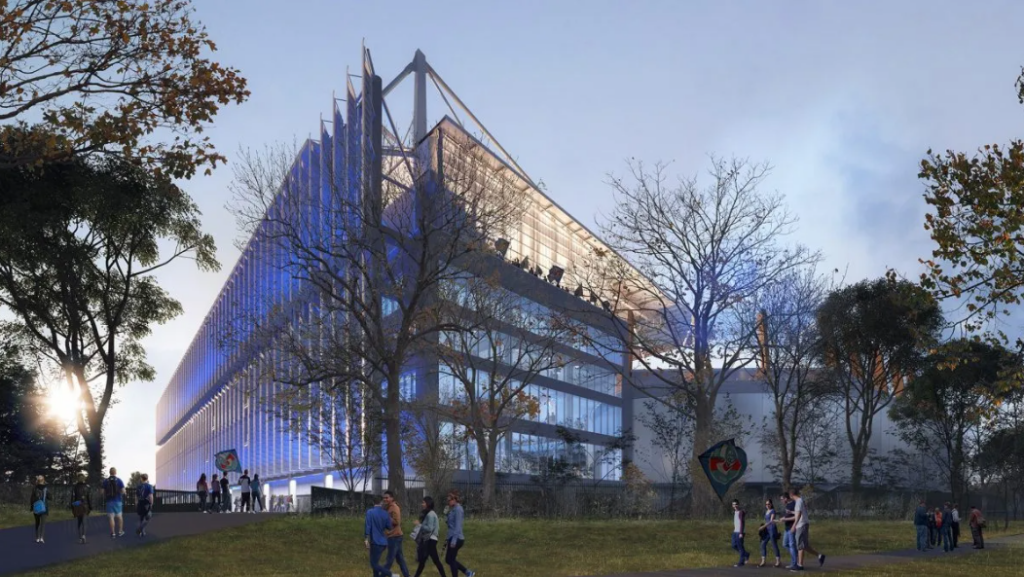
The aircraft aluminium has been cut and re-engineered into 196 individual panels covering approximately 4,050 square metres of the south-facing façade.
The result is an unusual meeting of aviation and football: material that once formed the skin of long-haul aircraft has been given a second life as a “brise-soleil” – a fixed architectural device designed to control solar radiation and reduce heat gain inside the building.
From aircraft graveyard to stadium architecture
As reported by designboom, the idea originated during the COVID-19 pandemic, when much of the world’s commercial aircraft fleet was grounded, and airlines accelerated the retirement of older, less efficient aircraft.
According to François Clément, president of Populous France, the architects saw an opportunity to turn surplus aircraft material into something architecturally useful.
The concept was not simply about producing an eye-catching façade. The curved aluminium sections of the fuselage offered characteristics that made them suitable for solar shading, while their irregularity ensured that the finished façade would retain something of the character of the aircraft from which the material originated.
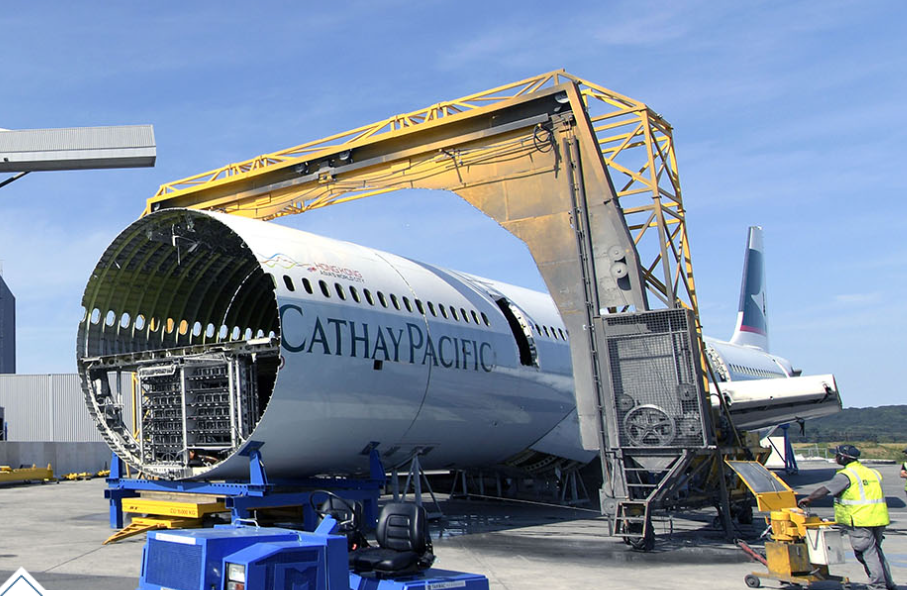
TARMAC Aerosave, the aviation maintenance and recycling company involved in preparing the material, has produced large sections measuring approximately six metres high by 2.5 metres wide. Rather than manufacturing identical architectural panels, the aircraft sections retain differences resulting from their previous lives in aviation.
The individual aircraft identities, however, have not been publicly released. While Populous specifies 30 Airbus A340 aircraft, neither the architectural practice nor TARMAC has published a definitive list of the aircraft registrations or serial numbers used for the stadium.
Which aircraft were used for the football stadium design?
The answer is surprisingly specific at model level. The principal source is the project architect itself. Populous states that the façade incorporates fuselage sections from 30 decommissioned Airbus A340s. The same identification has subsequently been repeated by construction and architectural publications.
Earlier descriptions of the project referred to the equivalent of around 20-25 aircraft, reflecting the amount of material expected to be required. TARMAC Legacy says that nearly 200 large panels would be supplied, equivalent to approximately 20–25 fuselages and explains that production would progress alongside the dismantling of suitable wide-body aircraft.
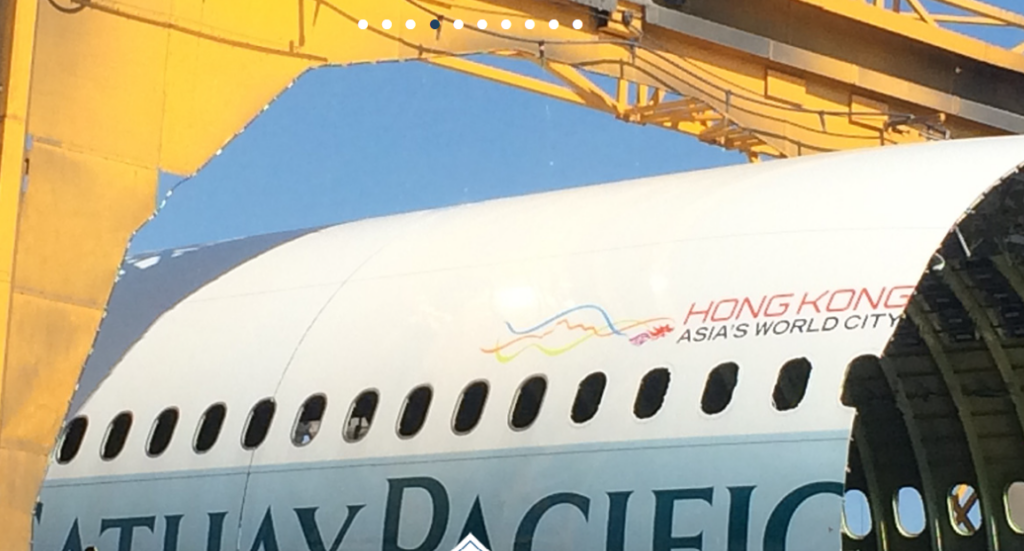
The later figure of 30 aircraft appears to refer to the wider pool of retired A340s from which the 196 finished panels were sourced. There is therefore no reliable public evidence that the façade consists of one particular airline’s fleet, or that the panels can currently be traced to named individual aircraft.
Engineering an aircraft into a building
Turning an aircraft fuselage into a stadium façade presented a very different engineering problem from building a conventional curtain wall.
The aluminium sections were originally designed as components of pressurised aircraft operating at altitude. At Strasbourg, they have been transformed into architectural shading elements mounted up to around 30 metres above ground level.
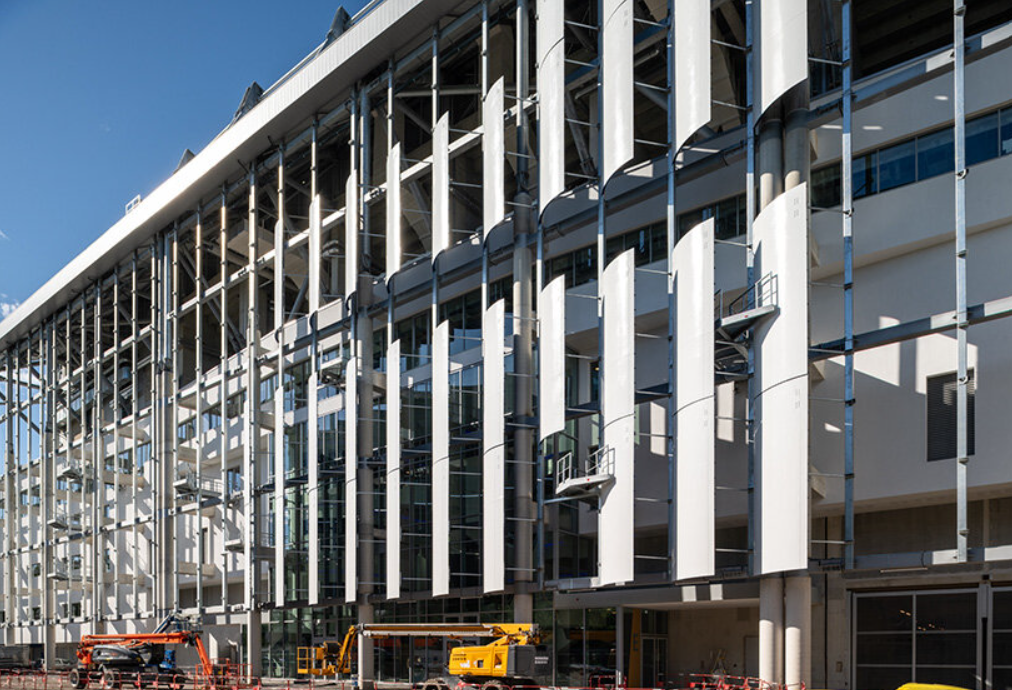
Engineers had to account for wind loading, thermal expansion and the non-standard geometry of the reused material. Building Design reports that an isostatic hanging system was developed to accommodate movement of the aluminium panels and the forces acting on them.
The finished panels form a repeating but subtly varied pattern across the south stand. Their curved surfaces catch the light, creating a shimmering white façade, while their primary practical role is to reduce direct solar exposure and therefore limit heat entering the building.
A new south stand for La Meinau
The aircraft façade is only one element of a much larger transformation. The new South Stand provides approximately 11,712 seats and incorporates a five-storey glass-fronted atrium containing hospitality areas, bars and other supporter facilities, together with two open “party decks” overlooking the pitch.
The wider redevelopment is intended to increase Stade de la Meinau’s capacity from roughly 26,000 to 32,000 spectators. Other environmental measures include photovoltaic panels, rainwater recovery and the reuse of materials from the existing stadium.
The new stand was brought into use during 2025 while work continued elsewhere in the stadium. The complete redevelopment is expected to be finished by the end of 2026.
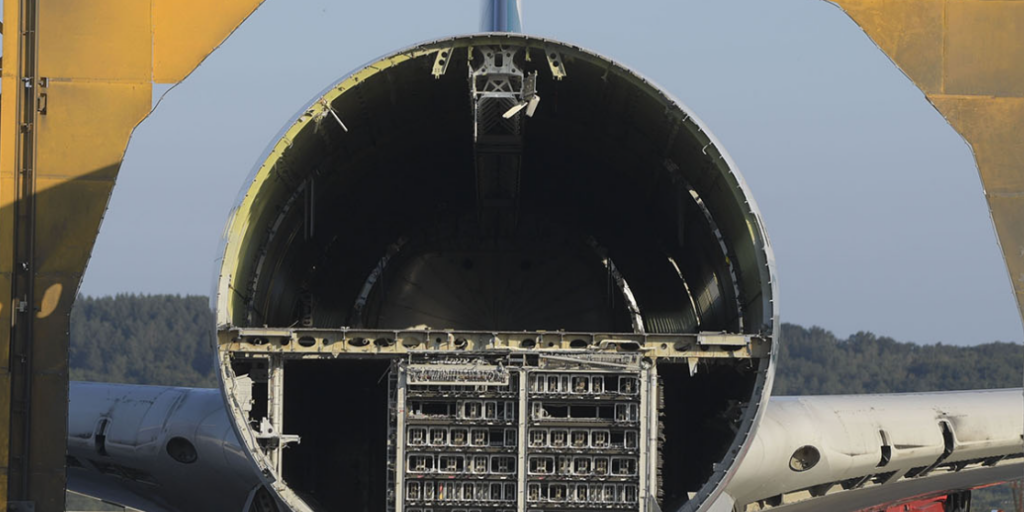
For aviation enthusiasts, however, the most fascinating aspect remains the aluminium skin of the building. The A340 was conceived as a long-range airliner capable of carrying hundreds of passengers across continents.
At La Meinau, sections of those retired aircraft will no longer cross oceans, but they will continue to perform a useful function – filtering sunlight above thousands of football supporters.
It is an unusual form of aircraft upcycling. Rather than an aircraft turned into a museum exhibit or restaurant, in Strasbourg, an entire collection of former airliners has been transformed into part of a working piece of sports architecture.