


Trump signs sweeping space order targeting Moon landing by 2028 and ISS replacement

4 min read
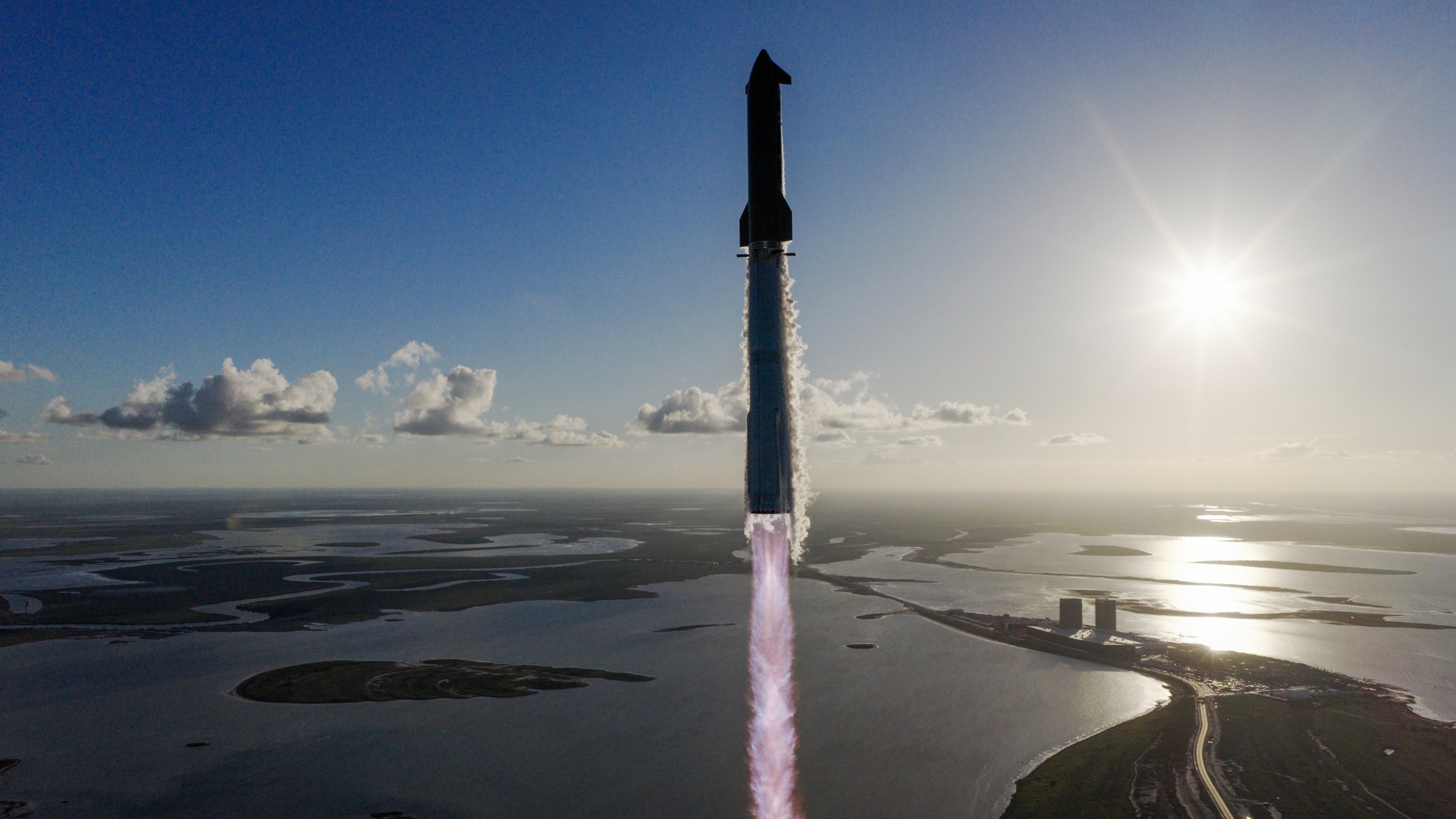
The United States has set out some of the most ambitious civil and military space objectives in its history.
Yesterday, President Donald Trump signed an executive order committing America to return astronauts to the Moon by 2028, deploy nuclear reactors on the lunar surface and in orbit by 2030, and replace the International Space Station (ISS) with commercially operated platforms within the same decade.
Signed at the White House on 18 December, the order represents a sweeping reset of US space policy, blending exploration, national security and commercial competition into a single strategic framework.
It also dismantles the National Space Council structure created under the previous administration, consolidating space policy authority under the White House Office of Science and Technology Policy.
Accelerated Artemis timeline targets US Moon landing by 2028
At the heart of the directive is an accelerated timeline for the Artemis programme. NASA is instructed to land Americans on the Moon by 2028, followed by the establishment of the first elements of a permanent lunar outpost by 2030.
The White House frames this not as a one-off return, but as the foundation for sustained lunar operations and eventual crewed missions to Mars.

The order explicitly links lunar exploration to future economic activity, positioning the Moon as a staging ground for commerce, scientific research and industrial development, rather than symbolic exploration alone.
US plans nuclear reactors in space and on the Moon by 2030
One of the most consequential elements of the order is the directive to deploy nuclear reactors both on the Moon and in orbit, including a lunar surface reactor ready for launch by 2030.
Within 60 days, the White House science adviser must issue guidance establishing a National Initiative for American Space Nuclear Power.
The move reflects growing recognition that long-duration missions, lunar bases and future Mars expeditions will require power sources far beyond the capabilities of solar arrays alone. It also places space nuclear power firmly within national security planning, not just civilian exploration.
Space militarisation, missile defence and orbital nuclear threats
The executive order treats space as a frontline security environment, directing US agencies to ensure the ability to detect, track and counter threats from very low Earth orbit through cislunar space. This includes explicit reference to monitoring and countering attempts to place nuclear weapons in orbit.
By 2028, the administration wants prototype next-generation missile defence technologies demonstrated, linked to its broader “Golden Dome for America” initiative.

The order also calls for a more responsive national security space architecture, accelerating procurement reform and integrating commercial capabilities into military systems.
Allies are drawn into the strategy as well. The State Department is tasked with strengthening partner contributions to space security through deeper operational cooperation, basing agreements and increased allied investment in the US space industrial base.
Commercial space stations to replace the ISS by 2030
Beyond exploration and defence, the order places commercial space at the centre of national strategy.
The administration is targeting at least $50 billion in additional private investment in US space markets by 2028, supported by expanded launch infrastructure and regulatory reform.

Most significantly for industry, the order directs the creation of a commercial pathway to replace the ISS by 2030. This signals a definitive shift away from government-owned orbital laboratories, with NASA repositioned as an anchor customer rather than an owner.
Spectrum management also features prominently, with the Commerce Department instructed to assert US leadership in space spectrum allocation to support global market access for American technologies.
NASA faces procurement reform and strict cost and schedule limits
The order imposes unusually strict accountability measures on federal space programmes.
NASA and the Department of Commerce must review major acquisitions and flag programmes running more than 30 per cent over cost or behind schedule, or failing to meet performance goals.
Within six months, both agencies are required to overhaul acquisition processes, prioritising commercial solutions, fixed-price contracts and alternative mechanisms such as Space Act Agreements. NASA is also directed to better align procurement practices across its centres to reduce duplication and speed decision-making.
Trump revokes National Space Council and reshapes US space governance
The directive formally revokes the National Space Council executive order issued in 2021 and revises existing space traffic management policies to allow services to be used commercially, signalling a shift towards monetisation and market-driven orbital operations.
Taken together, the measures amount to one of the most comprehensive resets of US space policy in decades.
The order blends Cold War-era strategic thinking with modern commercial realities, positioning space not only as a domain of exploration but as a critical arena for economic competition and military power.
Whether the timelines, particularly the 2028 Moon landing and 2030 nuclear deployments, prove achievable will depend on funding stability, industrial capacity and execution.
What is clear is that Washington has placed space firmly back at the centre of American national ambition, with deadlines that leave little room for delay.


