Shield AI targets Poland for autonomous X-BAT production and F-16 sustainment

5 min read

Polish Prime Minister Donald Tusk has outlined ambitious defence-industrial plans involving Shield AI, including potential production of the company’s X-BAT unmanned combat aircraft and the creation of a regional F-16 engine maintenance hub in Poland.
Speaking at a press briefing on 16 June, Tusk confirmed Shield AI is exploring the creation of a Poland-based F-16 engine service centre, as well as a manufacturing presence for its family of X-BAT vertical take-off and landing (VTOL)-configured drones.
A new era of airpower – The greatest transformation in military aviation since the first airplanes launched and landed from ships 115 years ago.#XBAT #Autonomy #Airpower pic.twitter.com/2xjxpsI32o
— Shield AI (@shieldaitech) October 23, 2025
According to a Reuters report published on 16 June, Tusk said Shield AI is exploring the creation of a regional F-16 engine service centre in Poland. “This was also the argument of the Americans from Shield AI, [regarding] a very interesting project, the construction of a regional F-16 engine service centre,” Tusk told reporters.
“Their intention is also to cooperate with Poland and produce in Poland for the X-BAT programme. [It’s] the world’s first autonomous combat aircraft,” he added.
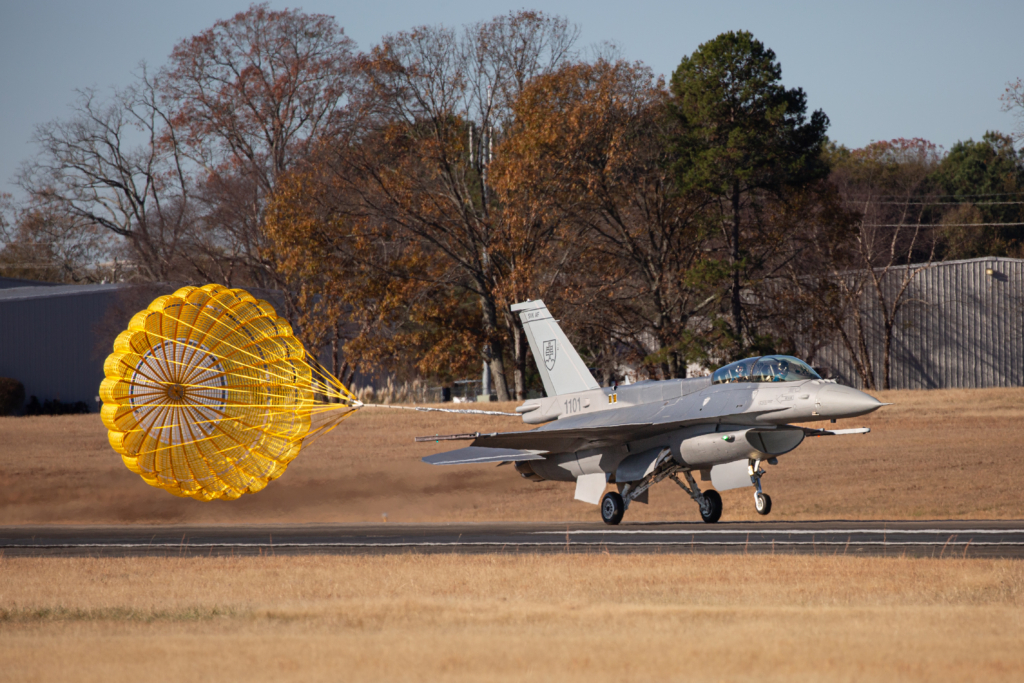
The comments point to a potentially significant expansion of Poland’s role in NATO’s airpower ecosystem, combining aircraft sustainment, unmanned combat aircraft production and the country’s fast-growing position as one of Europe’s most heavily armed frontline allies.
The proposal comes shortly after Poland formally marked the entry into service of its first F-35A Lightning II fighters, known locally as the F-35PL Husarz, at the 32nd Tactical Air Base at Łask.
Poland ordered 32 F-35As from Lockheed Martin in January 2020 under a deal worth around $4.6 billion. The aircraft are intended to replace older Soviet-era combat aircraft and operate alongside Poland’s F-16 fleet.
Poland could become a NATO F-16 engine sustainment hub
A key part of the Shield AI proposal is the creation of a regional F-16 engine service centre in Poland.
Tusk gave few technical details about the proposed facility, but said Shield AI wants it to support F-16 engines operated by NATO members across Europe.
If realised, the project would further strengthen Poland’s position as a maintenance, repair and logistics hub on NATO’s eastern flank, at a time when European allies are rebuilding airpower capacity and sustaining older combat aircraft for longer than previously expected.
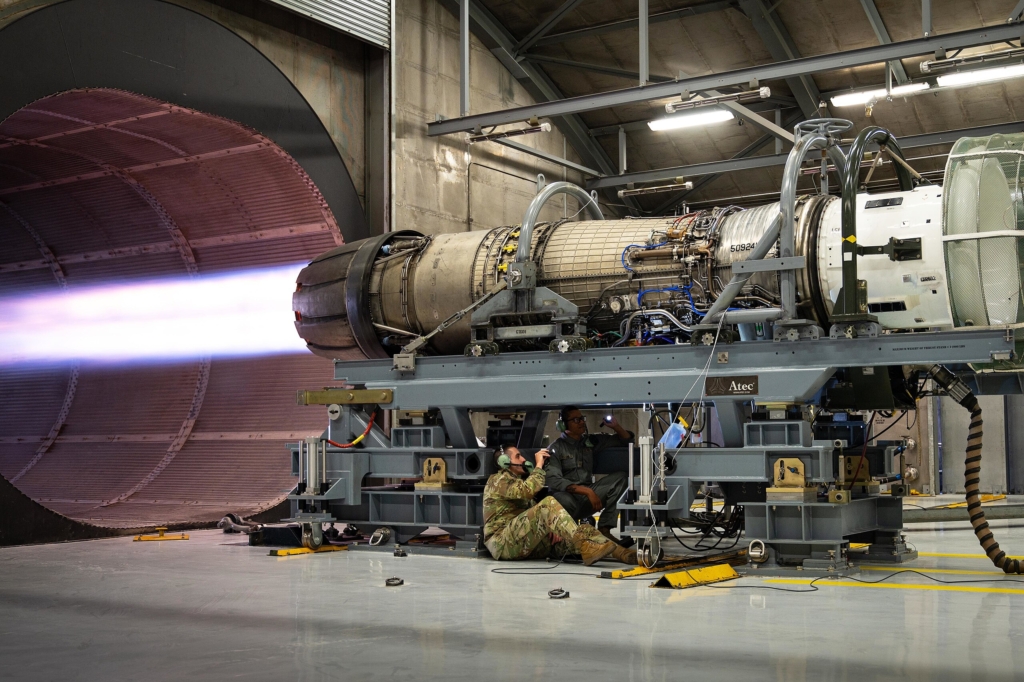
Although several European countries, including the Netherlands, Norway and Denmark, have phased out or transferred their F-16 fleets as they transition to the F-35, the aircraft remains central to the combat air forces of several NATO members.
European F-16 operators include Poland, Greece, Portugal, Romania, Turkey, Belgium, Bulgaria and Slovakia, while Ukraine is also operating donated F-16s as part of its defence against Russia’s full-scale invasion.
That creates a continuing sustainment requirement across Europe, particularly for engine maintenance, spares, overhaul capacity and operational support.
The F-16 connection is also important for Shield AI’s X-BAT ambitions. The company has said the aircraft is being designed around a GE Aerospace F110-class fighter engine, a powerplant family also used on the F-16 and F-15.
X-BAT could bring autonomous combat aircraft production to Poland
The more eye-catching element of Tusk’s announcement is Shield AI’s interest in producing X-BAT in Poland.
X-BAT is Shield AI’s proposed AI-piloted vertical take-off and landing combat aircraft, designed to operate without runways and to support distributed air operations from ships, islands and austere forward locations.
Tusk described the aircraft as an “unmanned equivalent of the F-35” and said the programme could offer Poland access to “cutting-edge technology” capable of supporting air dominance in a future conflict.

Shield AI unveiled X-BAT in October 2025, presenting it as a runway-independent autonomous fighter designed for contested environments. The company says the aircraft will have a maximum range of more than 2,000 nautical miles, a ceiling above 50,000 feet and the ability to carry weapons internally and externally.
The aircraft is intended to operate either as a standalone unmanned combat asset or as a collaborative combat aircraft alongside crewed fighters, including fifth-generation platforms such as the F-35.
Shield AI says X-BAT will use its Hivemind autonomy software, allowing the aircraft to operate in environments where GPS, communications and command links are degraded or denied.
The company has positioned the aircraft as a multi-mission platform for air-to-air, air-to-surface, electronic warfare and intelligence, surveillance and reconnaissance missions.
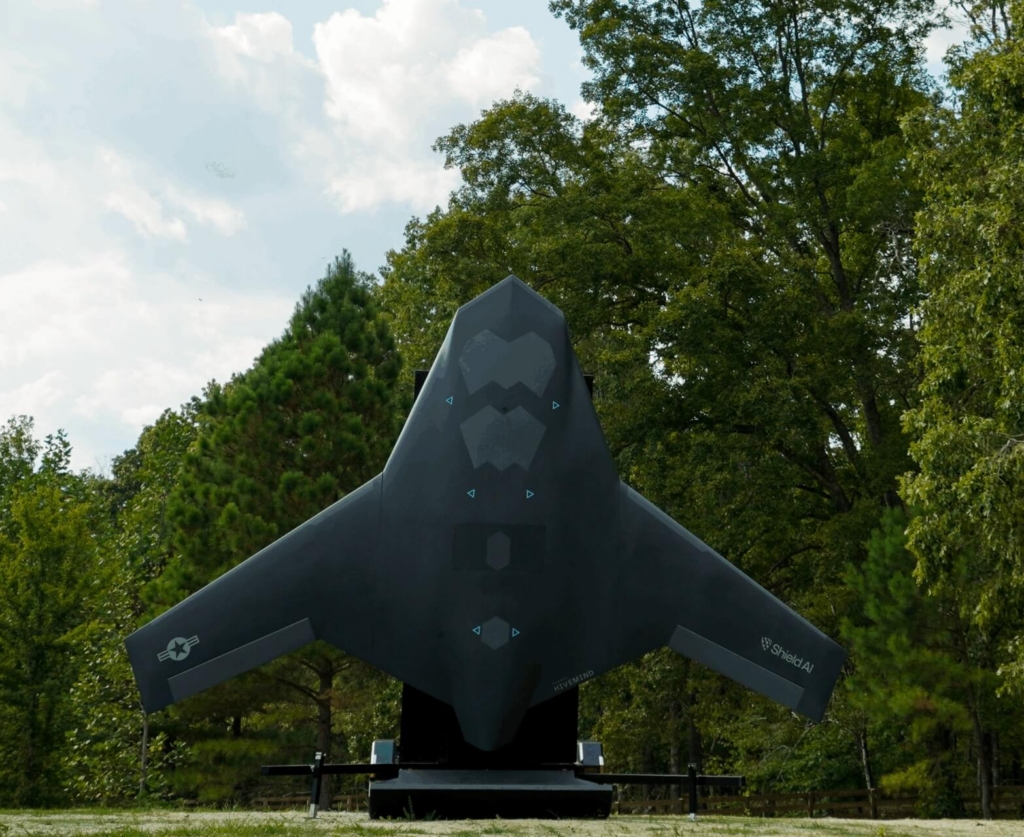
However, X-BAT remains in development. Shield AI has said first VTOL flight testing is planned for 2026, with mission capability targeted for 2028 and production from 2029.
That makes any Polish production role a medium-term industrial opportunity rather than an immediate capability boost.
Shield AI proposal fits Poland’s wider defence build-up
The Shield AI proposal comes as Poland continues one of Europe’s most aggressive military modernisation programmes, driven by Russia’s war in Ukraine and Warsaw’s growing role as a frontline NATO state.
Poland has invested heavily in air defence, armoured vehicles, artillery, missiles and combat aircraft, while also seeking to expand domestic defence production and attract high-technology foreign investment.

A Poland-based X-BAT production line would support that broader strategy by giving Warsaw a role in the emerging collaborative combat aircraft market, rather than limiting the country to procurement of finished systems from overseas suppliers.
It could also give Shield AI a stronger foothold in Europe, where NATO members are increasingly looking at autonomous systems, loyal wingman aircraft and distributed airpower as ways to increase combat mass without relying solely on expensive crewed fighters.
For Poland, the combination of F-16 engine sustainment and potential X-BAT production would deepen defence-industrial links with the US while reinforcing its role in NATO’s eastern defence architecture.
For Shield AI, Poland could offer both a production base and a strategic gateway into the European defence market.
The proposal is still at an early stage, and no binding industrial agreement has yet been announced. But Tusk’s comments suggest Poland is positioning itself not only as a major buyer of advanced combat aircraft but as a country that wants to build, maintain and export the next generation of military airpower.
Featured Image: This digital rendering shows three X-BAT CCAs being launched for a mission. Each is shown equipped with two AGM-88G Advanced Anti-Radiation Guided Missile-Extended Ranges (AARGM-ERs). Image: Shield AI
Sign up for our newsletter and get our latest content in your inbox.


More from


October 17, 20264 min read