Saab GlobalEye surveillance aircraft feared destroyed in Iran drone strike on UAE air base

March 16, 2026
Satellite images circulating online appear to show several damaged aircraft shelters at Al-Dhafra air base in the United Arab Emirates following drone attacks attributed to Iran.
The imagery, which began emerging on social media over the weekend, shows multiple hangars at the large air base with visible structural damage and burn marks. Al-Dhafra hosts aircraft from the UAE Air Force as well as forces from the United States and France, and serves as a key regional hub for surveillance and air operations.
The strike itself is believed to have occurred several days earlier, but the scale of potential damage only began to become visible once new commercial satellite imagery became available.
Speculation grows that UAE GlobalEye aircraft may have been hit
Some open-source analysts have suggested that several of the affected shelters may have housed Saab GlobalEye airborne early warning and control (AEW&C) aircraft operated by the UAE Air Force.
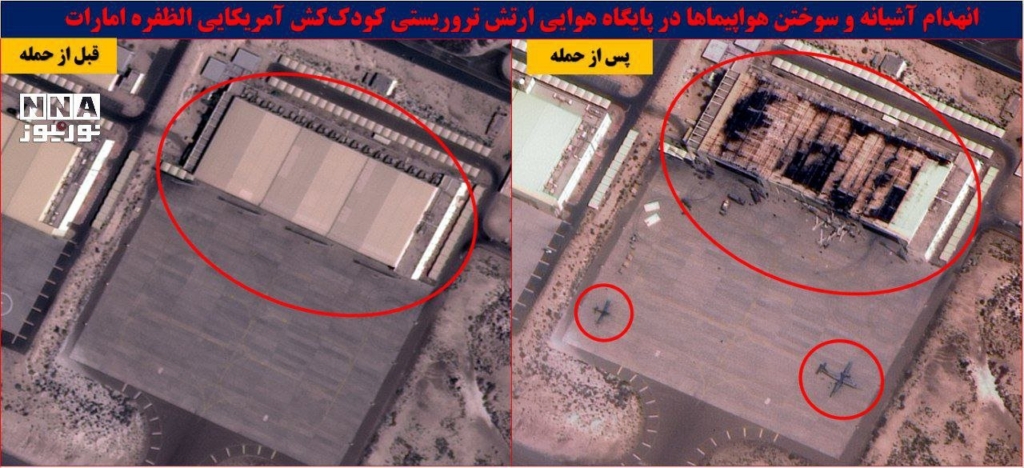
Satellite images appear to show damage to at least three hangars that could potentially accommodate aircraft of that size. However, there has been no official confirmation from the UAE government, Saab, or other military sources that any GlobalEye aircraft were destroyed or damaged.
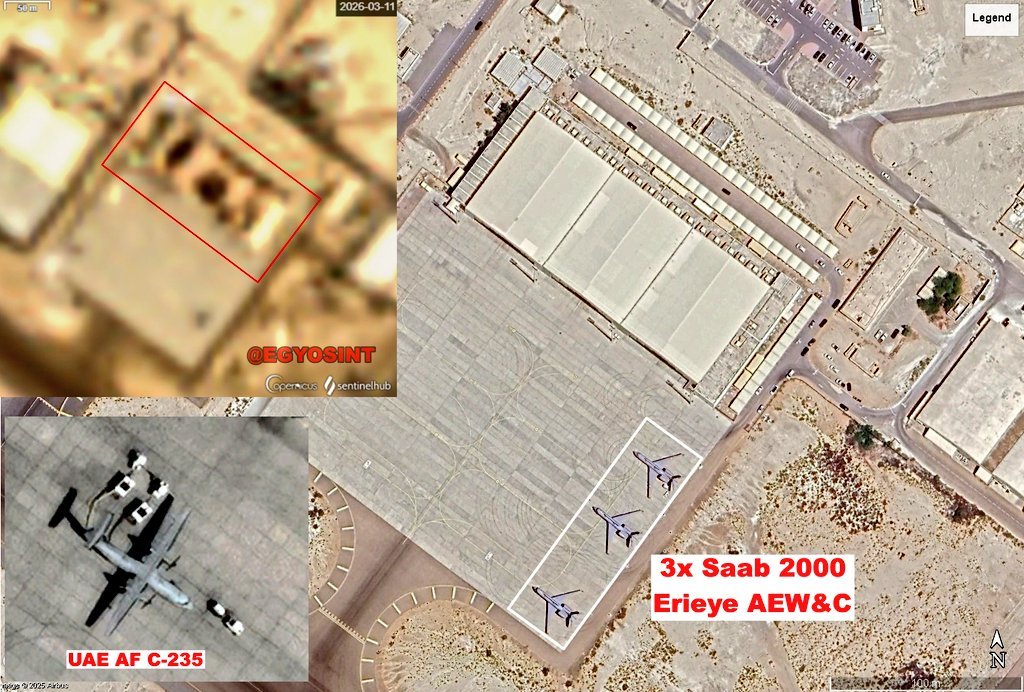
Crucially, satellite imagery alone cannot confirm what equipment, if any, was inside the structures at the time of the strike. Aircraft could have been airborne, relocated to other bases, or the hangars may have been empty.
Separate imagery has also been interpreted by some analysts as showing damage to shelters that could house high-altitude surveillance drones used by US forces.
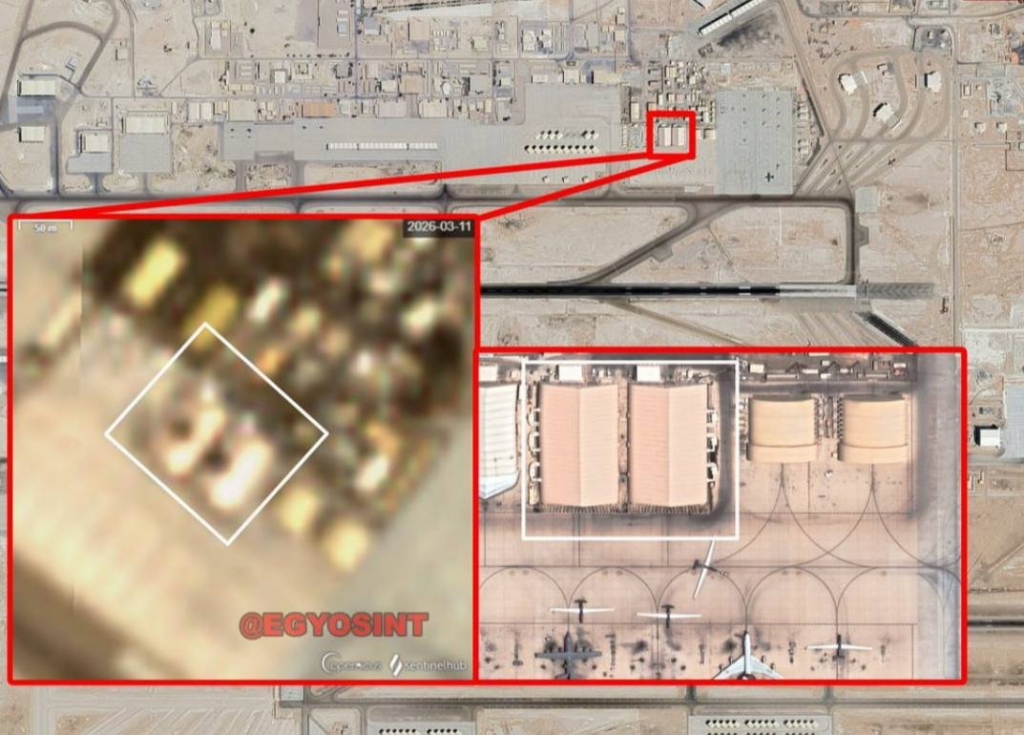
These include hangars potentially used for the MQ-4C Triton maritime surveillance drone and the MQ-9 Reaper remotely piloted aircraft. Both systems are known to operate in the region for intelligence, surveillance and strike missions.
As with the GlobalEye aircraft, however, there is currently no confirmation that any drones were inside the structures when they were hit.
UAE’s five-aircraft GlobalEye fleet makes any loss significant
If confirmed, the loss of even a single GlobalEye would represent a significant blow to the UAE’s airborne surveillance capability.
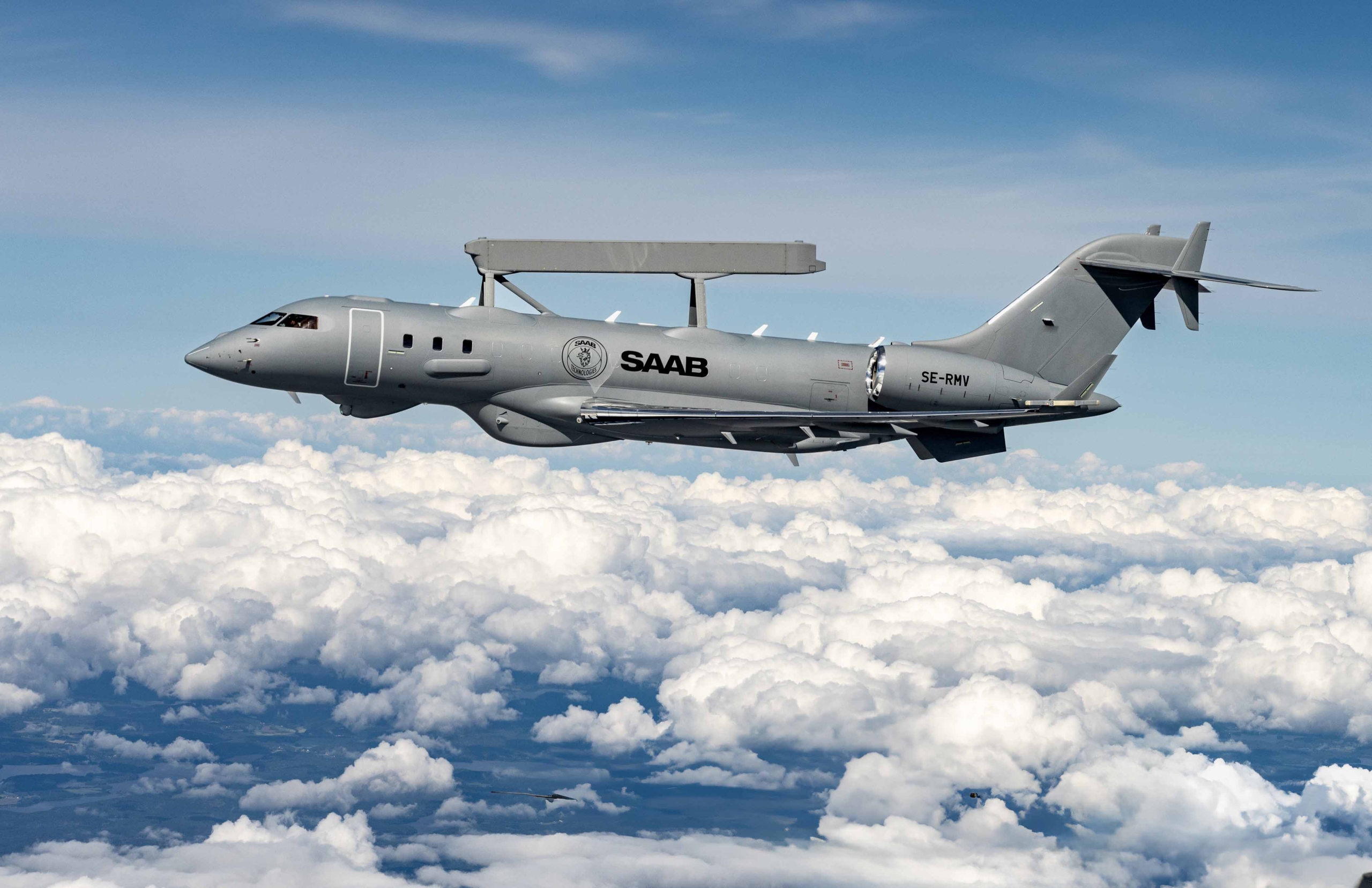
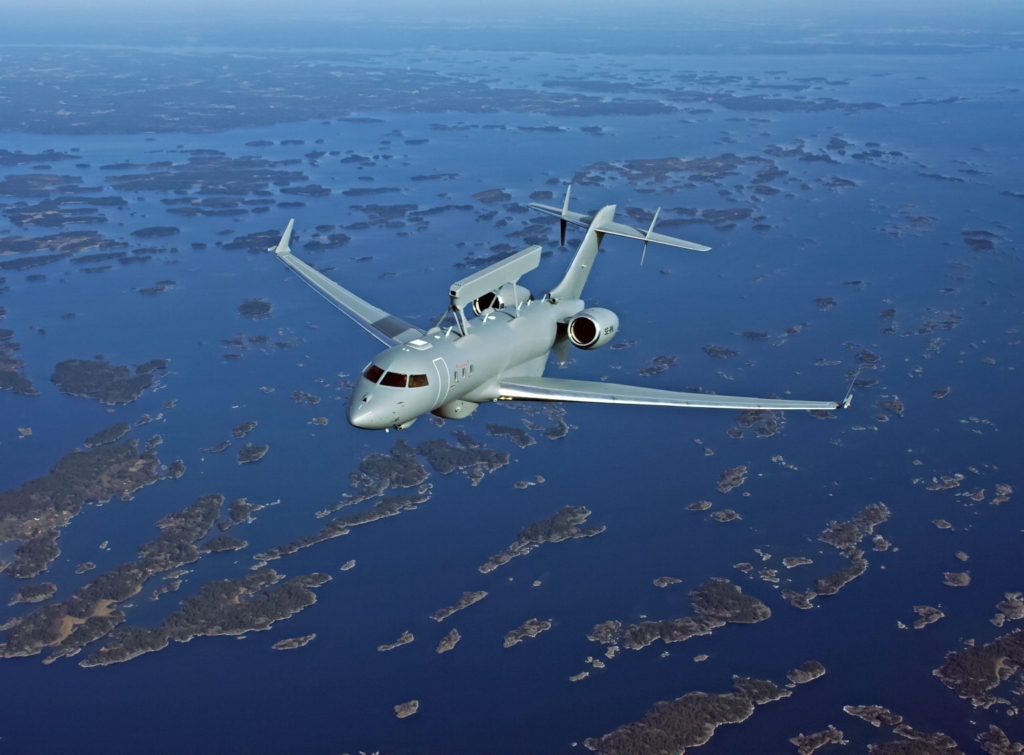
The UAE Air Force operates a fleet of five Saab GlobalEye airborne early warning and control (AEW&C) aircraft. The system is based on the Bombardier Global 6000 long-range business jet, selected for its high-altitude performance and long endurance.
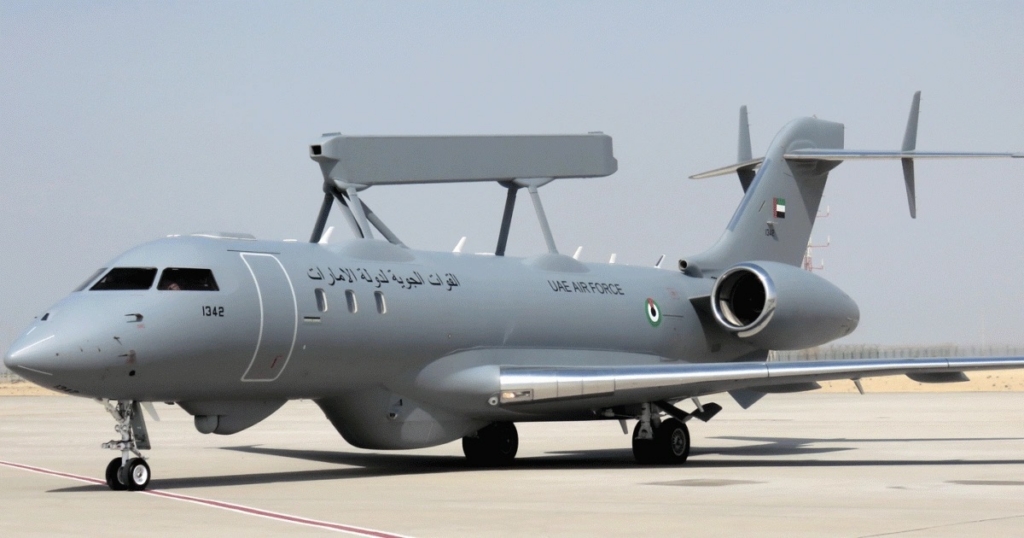
Saab modifies the airframe extensively for its surveillance role. The most visible change is the Erieye ER active electronically scanned array (AESA) radar, mounted in a distinctive dorsal fairing above the fuselage. Unlike traditional rotating radars, the electronically steered system can scan large areas of airspace simultaneously, detecting aircraft, cruise missiles and low-flying targets such as drones at long range.
GlobalEye also carries a maritime surveillance radar beneath the fuselage, allowing it to track ships and surface targets across wide ocean areas, making it particularly useful for monitoring shipping lanes and coastal approaches.
Additional onboard signals and electronic intelligence sensors enable the aircraft to detect and analyse radar emissions and communications signals, providing operators with a detailed picture of the battlespace.
Inside the cabin, the aircraft is fitted with mission consoles where crews monitor sensor data and coordinate operations with fighters, naval forces and ground-based air defence units.
Operating at altitudes above 40,000 feet and able to remain on station for more than 11 hours, GlobalEye effectively functions as a flying command-and-control centre, providing early warning and directing military operations across large areas.
Viral claims of UAE’s $1bn aircraft loss are misleading
Online discussions surrounding the incident have frequently claimed that a destroyed GlobalEye would represent a loss of $1 billion per aircraft.
In reality, the aircraft is significantly less expensive.
The UAE has purchased GlobalEye systems under several contracts with Saab valued at around $2.3 billion for five aircraft, implying a unit cost of roughly $450–500 million per aircraft depending on the configuration and support package.
🚨 BREAKING
— 𝐓𝐌𝐓 (@TMT_arabic) March 15, 2026
Officially, the UAE has lost its advanced early warning and air surveillance aircraft, Saab GlobalEye, the only one in the Middle East. Worth nearly $1 billion, it was destroyed by a drone valued at no more than $20,000. pic.twitter.com/ENJCE7UyJA
While still among the most valuable aircraft operating in the region, the widely circulated $1 billion figure appears to stem from misunderstandings of total contract values rather than the price of a single platform.
The emerging satellite imagery confirms that several aircraft shelters at Al-Dhafra sustained damage during the attack. However, the actual operational impact remains uncertain.
Without confirmation of what equipment was present inside the hangars at the time, it is currently impossible to determine whether any aircraft or drones were destroyed.
Further satellite imagery or official statements from the UAE, the United States or Saab may be required before the full extent of the damage can be assessed.
Featured image: Saab