First airline seatback screens certified to reduce blue light could help passengers on long-haul flights

4 min read
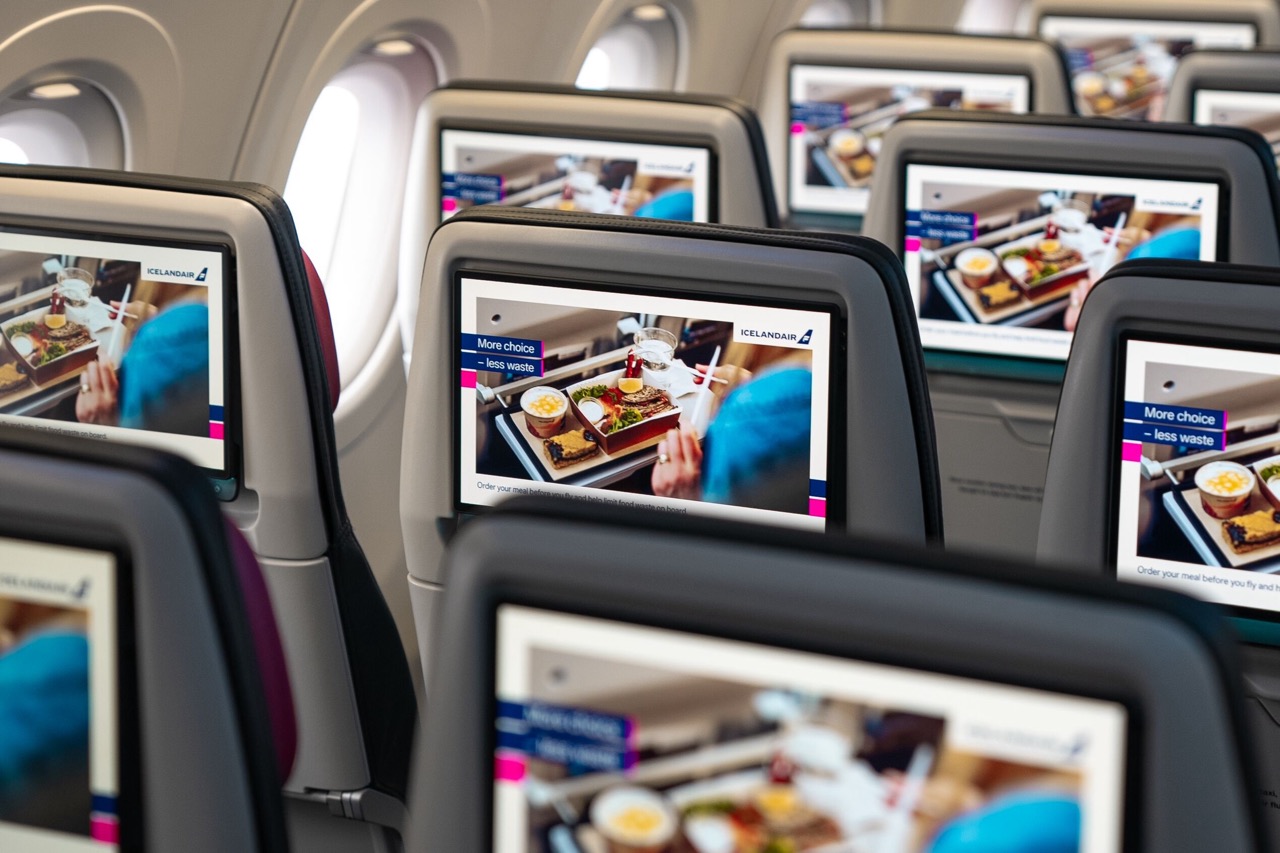
Panasonic Avionics’ Astrova in-flight entertainment system has become the first aircraft IFE platform to achieve Eyesafe Display Requirements 3.0 certification for reduced blue-light emissions.
The certification covers Panasonic’s entire Astrova display range, from 13-inch economy-class screens to 42-inch displays designed for premium cabins.
Panasonic said reducing blue light exposure could be especially beneficial aboard aircraft, where passengers can spend hours sitting close to seatback screens.
What Eyesafe certification means for airline seatback screens
Eyesafe Display Requirements 3.0 establishes criteria covering blue-light emissions and display colour performance.
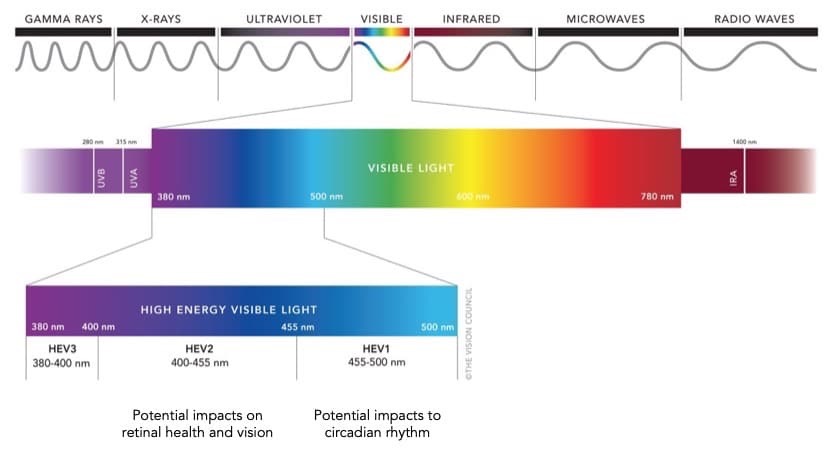
Research indicates that exposure to blue light, also known as high-energy visible (HEV) light, could have detrimental effects.
“Blue light exposure at specific wavelengths may impact eye health and circadian rhythms,” Eyesafe states.
The 435-440 nanometer (nm) range poses a risk to retinal health. The 480-500 nm range can suppress melatonin and disrupt circadian rhythms.
The Eyesafe standards also assess colour performance. Manufacturers cannot reduce blue light emissions simply by degrading the display’s appearance with a filter.
Eyesafe says that photobiological safety standards and research from organisations including the American National Standards Institute, the International Electrotechnical Commission and the International Commission on Illumination inform its Display Requirements 3.0. UL Solutions carries out verification.
Panasonic clarifies that Eyesafe certification is “not a government approval, regulatory authorisation, or safety certification.”
However, it offers a potential benefit for passenger well-being.
How Panasonic Astrova reduces blue light from in-flight screens
The company said Astrova meets the Eyesafe requirements through “precise spectral tuning at the pixel level.”
RPF, or Radiance Protection Factor, measures the reduction of blue light around wavelengths associated with blue-light hazard, particularly the 435–440 nanometre range. The scale runs from zero to 100, with higher numbers indicating greater reduction. Eyesafe requires a score of at least 35 to verify its Display Requirements 3.0 claim. Astrova exceeds that threshold.
The complete Astrova range has achieved an RPF40 rating under the Eyesafe Display Requirements 3.0 standard, according to Eyesafe.
“The Eyesafe certification of Astrova’s OLED screens demonstrates Panasonic Avionics’ commitment to advanced display technology, passenger comfort, and continuous innovation in the in-flight entertainment experience,” said Adri Ruiter, Panasonic Avionics’ senior vice president of In-flight Systems and Global Operations.
Justin Barrett, CEO and Co-Founder of Eyesafe, added: “Long-haul IFE is exactly where better light has to be built in – not layered on.”
How blue light from seatback screens can affect long-haul passengers
As the passenger experience competition intensifies, airlines are installing larger, bright, high-resolution screens aboard long-haul aircraft.
Passengers may watch several films or television programmes during a flight, often sitting much closer to the display than they would to a television at home.
Research continues into the effects of prolonged exposure to blue light from digital displays, including its relationship with visual comfort and circadian rhythms.
Eyesafe’s requirements distinguish between shorter-wavelength blue light, as measured in blue light hazard assessments, and wavelengths associated with the body’s circadian response.
The latter could be especially relevant to aviation because passengers frequently use IFE screens while crossing multiple time zones and at times when the cabin lighting has been adjusted for sleep. Airlines have invested heavily in cabin well-being to help reduce jet lag on longer flights.
Which airlines are installing Panasonic Astrova in-flight entertainment systems?
The Eyesafe certification comes as Astrova gains a growing presence aboard commercial aircraft.
Panasonic said in December 2025 that more than 30 airlines had selected Astrova across 100 individual airline programmes, making it the company’s fastest-adopted IFE product.
Customers announced by Panasonic include Air Canada, Air India, Emirates, Ethiopian Airlines, EVA Air, flydubai, Icelandair, Japan Airlines, Qantas, Qatar Airways, Riyadh Air, Saudia, Turkish Airlines and United Airlines.
Icelandair became the first airline to fly Astrova when its first Airbus A321LR equipped with the system was delivered in December 2024.
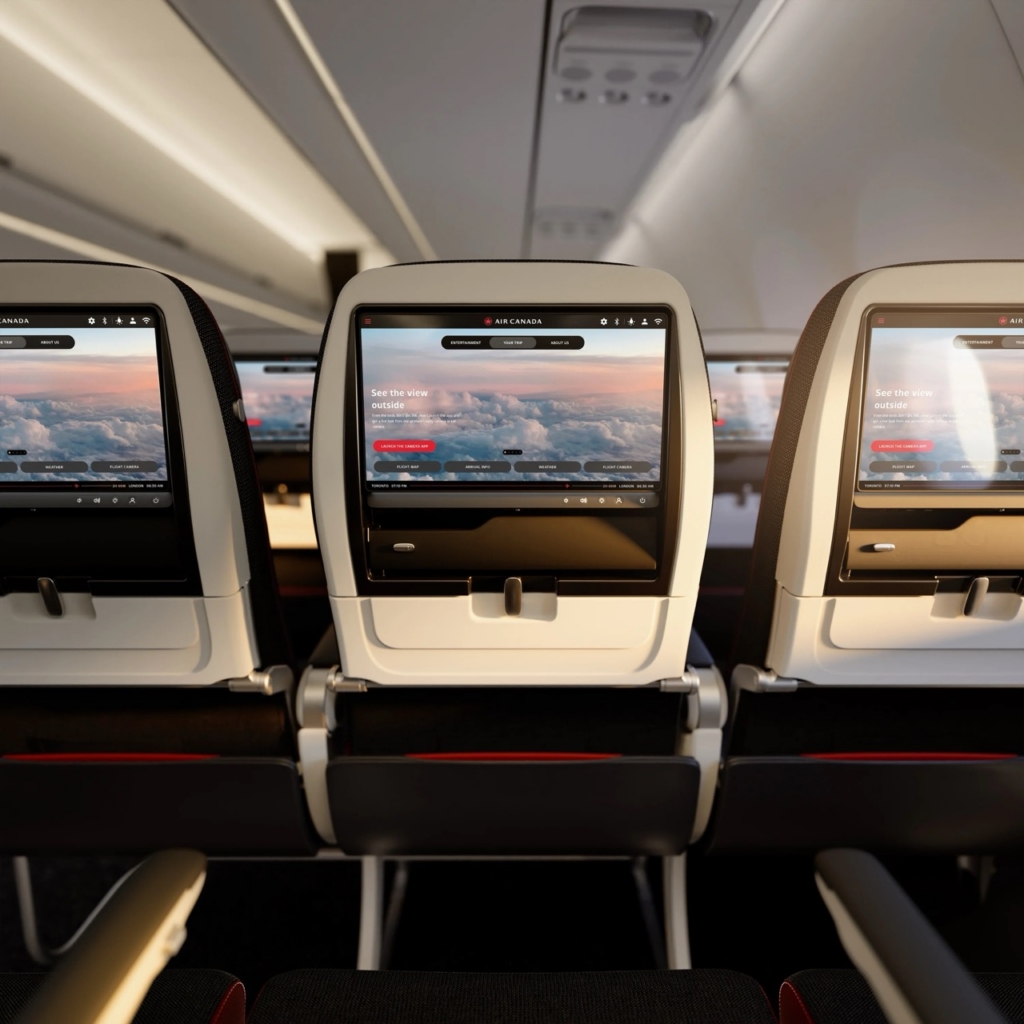
Air Canada introduced Astrova into passenger service in April 2026 and plans to install it across 86 aircraft, including A321s, A220-300s, A321XLRs and Boeing 787-10s.
The system combines 4K OLED HDR10+ screens with Bluetooth connectivity and spatial audio. Depending on the airline configuration, Astrova can also provide high-power USB-C charging.
Its modular architecture allows airlines to upgrade elements of the system without replacing the entire seatback unit. This allows the technology to keep pace with consumer electronics over the life of an aircraft cabin.
The Eyesafe certification is a new benefit the system can offer airlines. It confirms Astrova’s reduced blue light exposure while maintaining the picture quality that prompted them to adopt OLED technology in the first place.
Sign up for our newsletter and get our latest content in your inbox.


More from


October 13, 202612 min read