NATO without the US: What the alliance really loses in military power

7 min read
The United States’ role within NATO is facing renewed uncertainty after President Donald Trump openly questioned the alliance’s value, raising fresh doubts over Washington’s long-term commitment to European security.
In recent days, Trump has gone further than at any point in his presidency, saying he is “absolutely” considering withdrawing the United States from NATO, while also describing the alliance as a “paper tiger”.
He has also repeatedly criticised European allies for refusing to support US military action against Iran, calling their position a “very foolish mistake” and suggesting the US “does not need” NATO support.
The rhetoric has triggered what some analysts describe as the most serious crisis in NATO’s modern history. NATO without the US would still be powerful, but fundamentally different.
What would NATO actually look like, in hard military terms, without the United States?
In raw military terms, NATO without the United States would still be a very large force. A recent CSIS assessment puts the active military personnel of the European NATO countries at 1.86 million, arguing that the issue for Europe is not one of headline scale so much as readiness, coordination and the ability to deploy quickly.
The United States is not just another large ally inside the alliance. It remains the single biggest military contributor by spending and by many of the capabilities that make NATO work at speed.
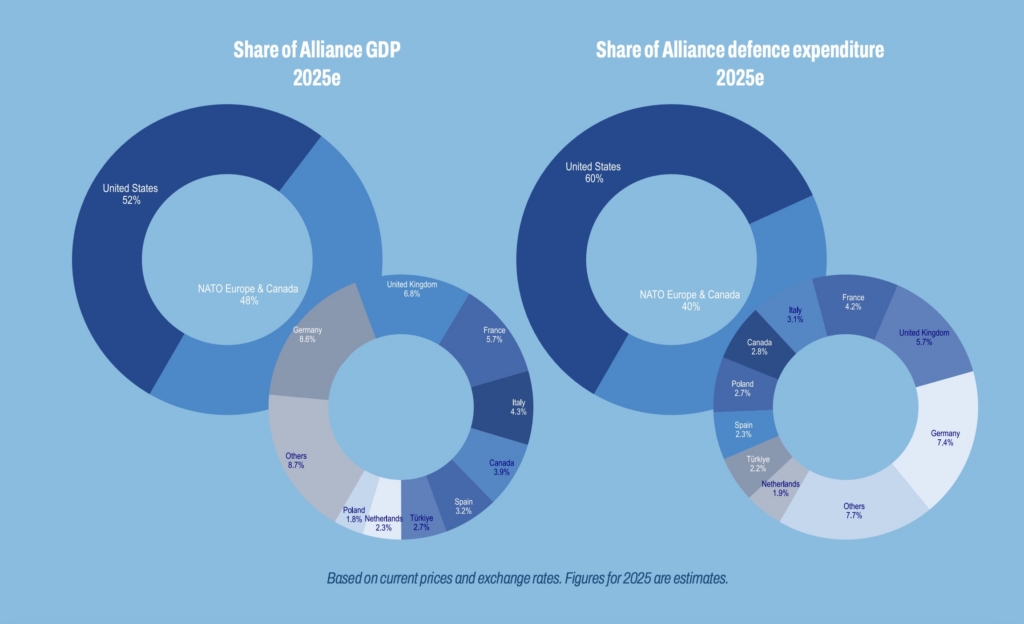
NATO’s own annual report says the US accounted for 60% of combined alliance defence expenditure in 2025, while Europe and Canada together made up the remaining 40%.
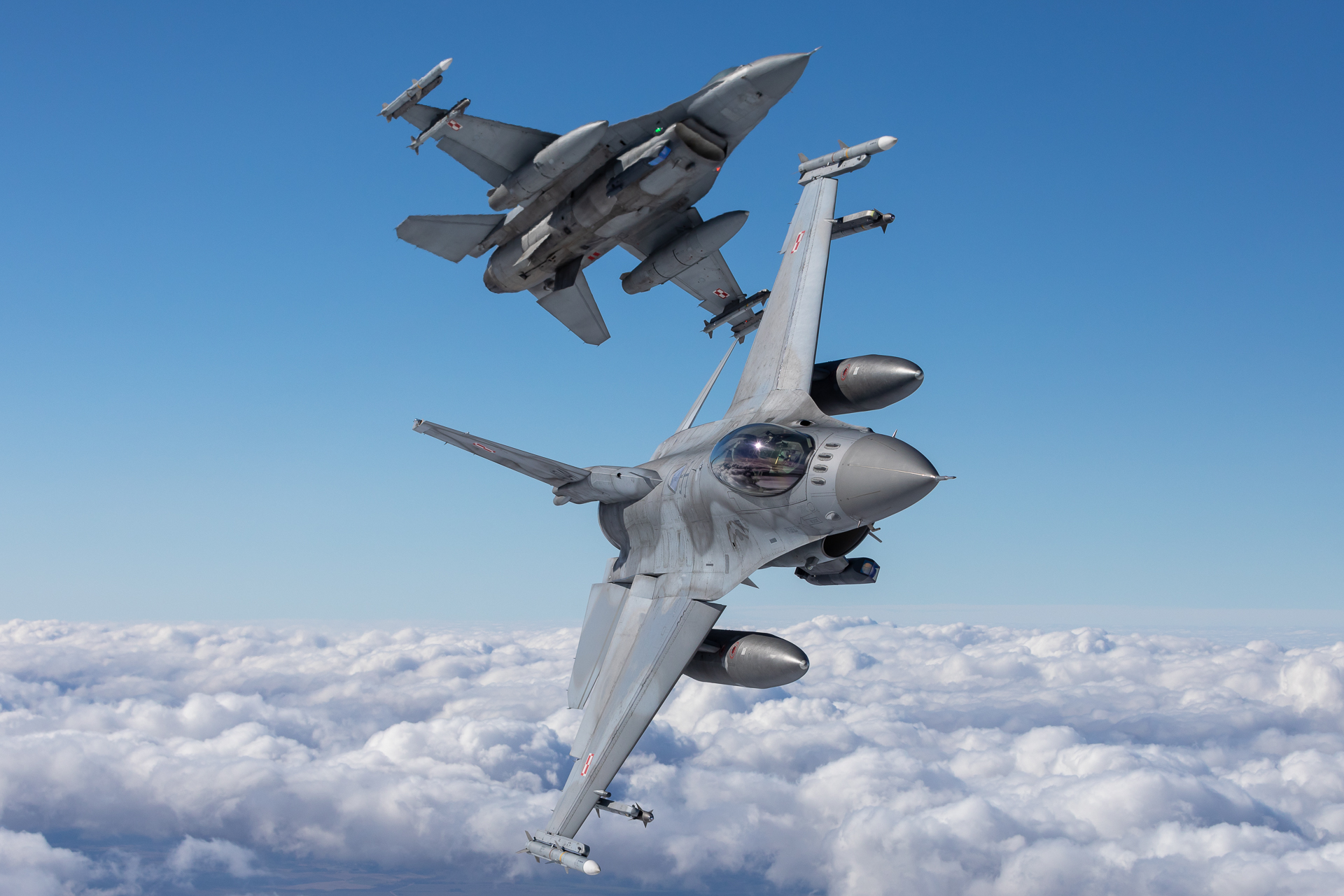
The gap is also visible in high-end air power. CSIS, using The Military Balance 2025, estimates that the United States fields around 3,300 combat-capable aircraft, compared with about 2,100 across the European NATO members in its dataset, which excludes Türkiye.
So NATO without Washington would not be defenceless, or even necessarily small. European allies would still retain substantial land forces, major navies, advanced combat aircraft and two nuclear powers in the UK and France.
But the balance would shift sharply. The alliance would keep a great deal of mass, yet lose a disproportionate share of its most advanced, deployable and integrated military power.
How NATO works and what military equipment it has
To understand the impact of a NATO without America, it’s important to understand how NATO works.
NATO does not have any armed forces of its own in the way a country does. NATO says explicitly that it “does not possess military forces of its own” and instead relies on member states to provide the personnel, equipment and resources required for operations and deterrence tasks.
Under the NATO Force Model, the alliance organises, manages, activates and commands Allied national and multinational forces that are placed at its disposal, either permanently or temporarily. That means the alliance’s strength comes not just from the number of national assets available, but from planning, readiness, command relationships and interoperability.
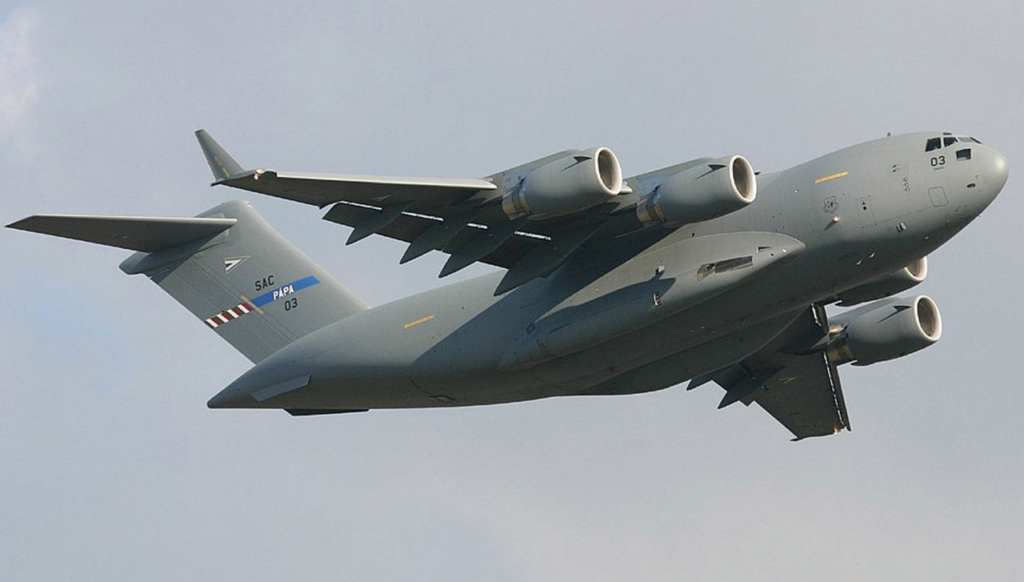
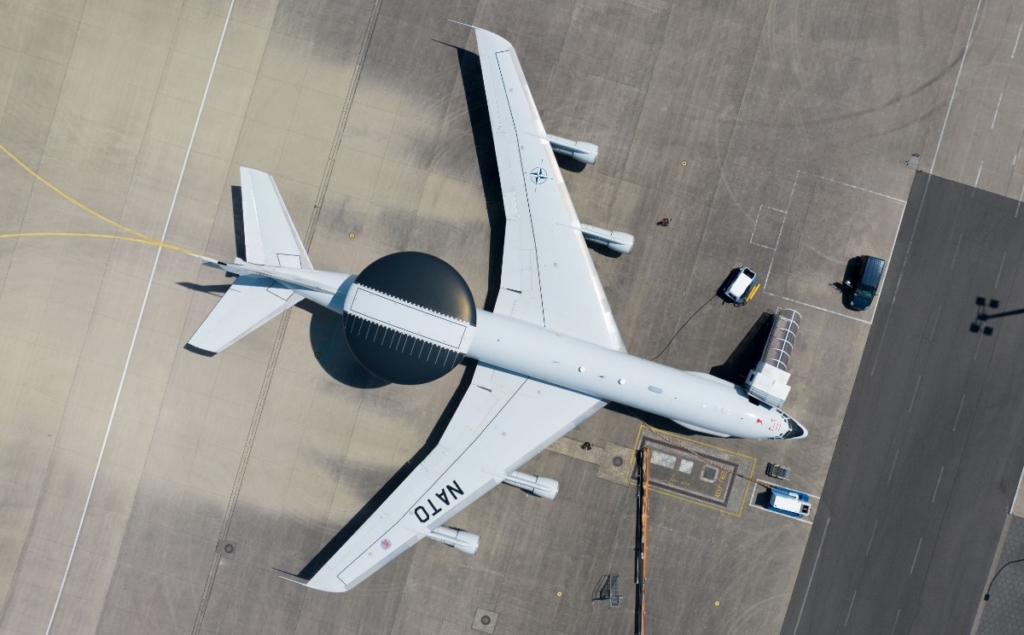
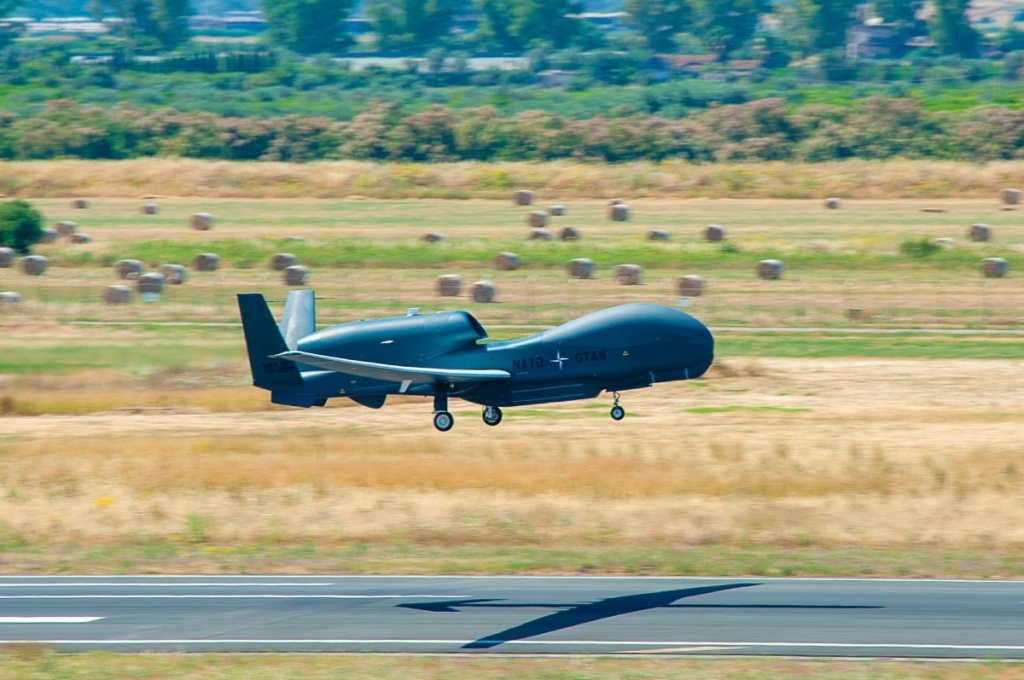
NATO does, however, have a smaller layer of common-funded or jointly operated capabilities. These include NATO’s 14 E-3A AWACS aircraft based at Geilenkirchen, its five RQ-4D Phoenix remotely piloted aircraft in the NATO ISR Force, and the Strategic Airlift Capability’s three C-17s operated from Pápa.
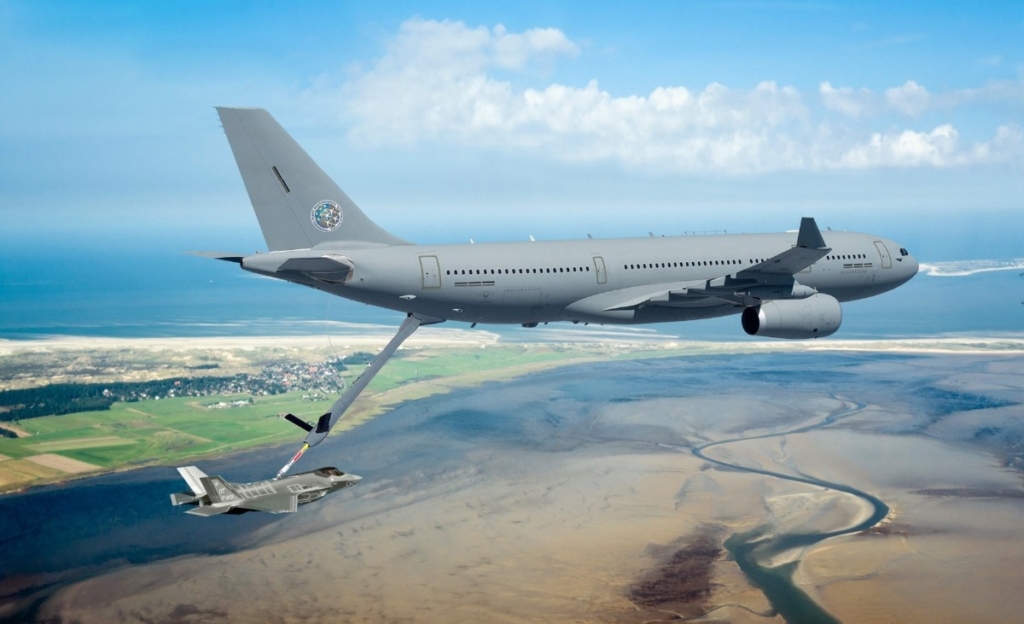
NATO also says the multinational MRTT fleet has seven aircraft in service, with the fleet due to reach 10 aircraft after final deliveries in 2026.
So if the US were to leave NATO, European states would not lose their own tanks, fighters, frigates or brigades overnight. Nor would NATO’s common-funded aircraft simply vanish.
But it would lose the ally that contributes the largest share of spending, a major share of the alliance’s enabling power, and a large part of the command, lift, ISR and deterrence backbone around which the rest of NATO is built.
So what would NATO miss if the USA were to leave?
The biggest loss would not be sheer numbers, but high-end enabling capability.
A recent IISS assessment estimates that, for a major NATO contingency in Europe, the United States could contribute a force package equivalent to around 128,000 troops, including armoured brigades, air defence units, aviation brigades, submarines and carriers.
IISS says replacing the conventional US contribution alone would require between $226bn and $344bn in new systems and platforms, and around $1tn over time once lifecycle and wider replacement costs are considered.
The same study says Europe would need not only to replace US platforms and manpower, but also make up shortfalls in space and all-domain ISR, command-and-control functions, and senior posts inside NATO organisations currently filled by US personnel.
NATO’s vulnerabilities without the USA
- ISR and space-enabled awareness: IISS warns that a US withdrawal would expose Europe’s shortfalls in space and all-domain ISR. High-altitude platforms such as the Northrop Grumman RQ-4 Global Hawk are complemented by US satellite networks and data-sharing systems, which underpin targeting, navigation and battlefield coordination. NATO’s own AWACS fleet operates within this broader architecture, but its effectiveness remains closely tied to integration with US ISR infrastructure.
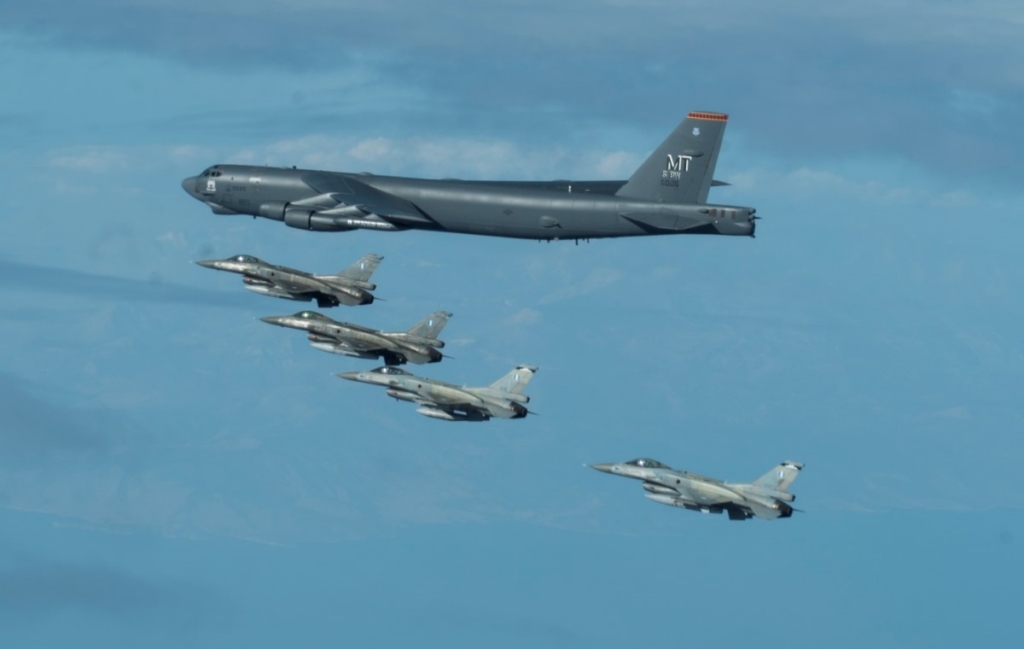
- Top-end airpower: Europe has modern fast jets and growing F-35 fleets, but the US still brings unique mass and depth in stealth, long-range strike and support aircraft. CSIS notes that the US provides more than 100 fighter aircraft in Europe alone, and highlights the role of aircraft such as the F-22, B-52 and B-2 in maintaining air dominance, long-range strike and strategic deterrence.
- Air-to-air refuelling and strategic lift: One of NATO’s most critical dependencies lies in strategic mobility which is the ability to move forces rapidly across theatres. The US provides a significant portion of this capability through platforms such as the C-17 Globemaster III, which enables rapid deployment of troops, heavy equipment and humanitarian aid across intercontinental distances. Strategic sealift and prepositioned equipment in Europe further reinforce this capability, allowing NATO to sustain operations during extended deployments.
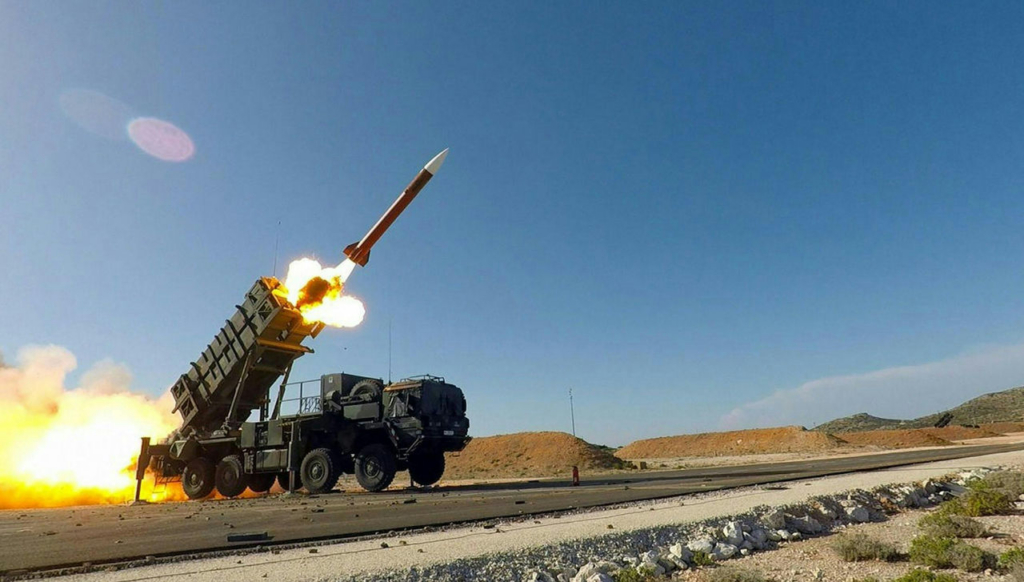
- Missile defence and naval cover: NATO’s integrated air and missile defence capability is similarly reliant on US-developed systems. The MIM-104 Patriot remains one of the primary air defence systems deployed across Europe, capable of intercepting tactical ballistic missiles, cruise missiles and advanced aircraft. In addition, Aegis Ashore missile defence installations in Romania and Poland form part of NATO’s ballistic missile defence shield, providing coverage against emerging missile threats.
- Command, control and integration: This is the least visible dependency, but arguably the most important. NATO can still assemble national forces without the US, but it becomes much harder to fuse intelligence, move forces quickly, coordinate multinational operations and sustain a high-tempo campaign. As CSIS puts it, the problem is not just scale, but coordination, ability and willingness to deploy rapidly.
Without the United States, NATO would still exist, and Europe would still have serious military weight. But the alliance would become less integrated, less responsive and less capable of fighting a modern multi-domain war at scale. It would remain a credible defensive force, but a less cohesive and less technologically advantaged one.
NATO divisions grow as US and Europe clash over Iran response
Recent tensions over the conflict in Iran have exposed growing divergence within the alliance.
Washington has expressed frustration at the reluctance of key European allies to support operations in the Strait of Hormuz, while European governments have remained cautious, citing legal, political and strategic concerns.
NATO’s collective defence clause, Article 5, applies only when a member state is attacked, which is not the case in the current conflict. As a result, participation remains voluntary and shaped by national policy.
That distinction is now being tested in practice. Several allies have already imposed restrictions on US operations linked to the conflict, underlining that NATO cohesion cannot be assumed outside of collective defence scenarios.
Without the US, NATO remains credible but less integrated
Without the United States, NATO would still exist, and Europe would still have significant military weight.
But the alliance would be slower to respond, less integrated in how it fights, and more limited in its ability to project power at scale.
The current crisis has exposed a deeper reality. NATO’s strength is not just in the number of forces it can field, but in how effectively those forces can operate together.
As political alignment becomes less certain, the question is no longer simply whether Europe can replace US capability, but whether the alliance can maintain the cohesion required to use the capability it already has.
Featured image: NATO