NASA discovers a “once-in-a-century” lunar crater during routine Moon scan

6 min read
Robert Wagner, a scientist with NASA’s Lunar Reconnaissance Orbiter (LRO) was not looking for a once-in-a-century event.
On 24 October 2025, the image-processing specialist was carrying out a routine check of data from the LRO Camera. On his computer was an enormous map assembled from hundreds of images of the Moon. Software was comparing it with older observations, turning unchanged terrain grey and highlighting anything that had altered.
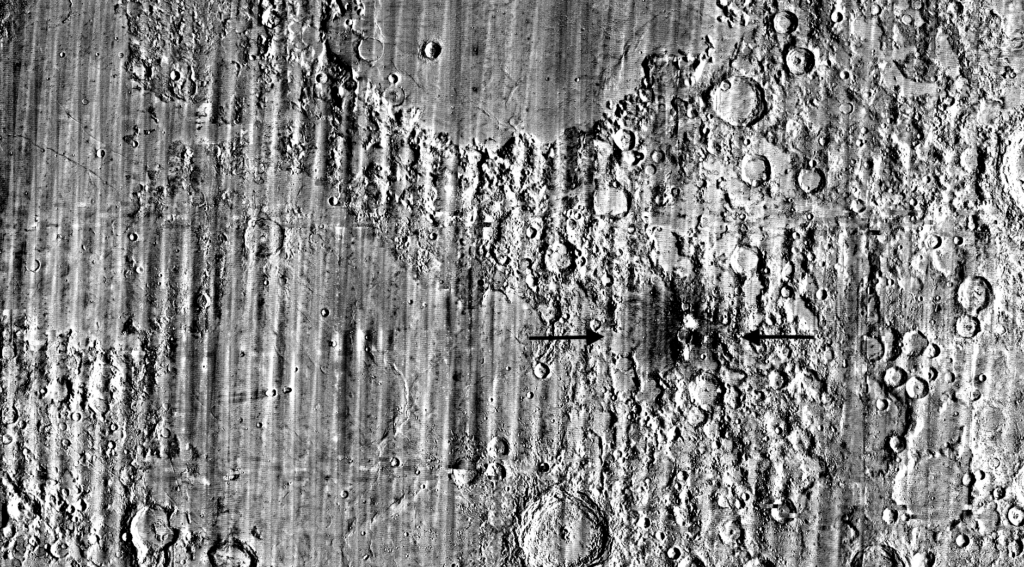
Most of what appeared was noise: slightly different lighting, shadows or other false alarms that had to be checked by eye.
Then Wagner saw a large bright patch surrounded by a dark halo.
“I just stopped, dropped everything, and started looking into what that spot was,” Wagner recalled.
It turned out that something genuinely extraordinary had happened while nobody was watching.
Impact of this scale “once every 132 years”
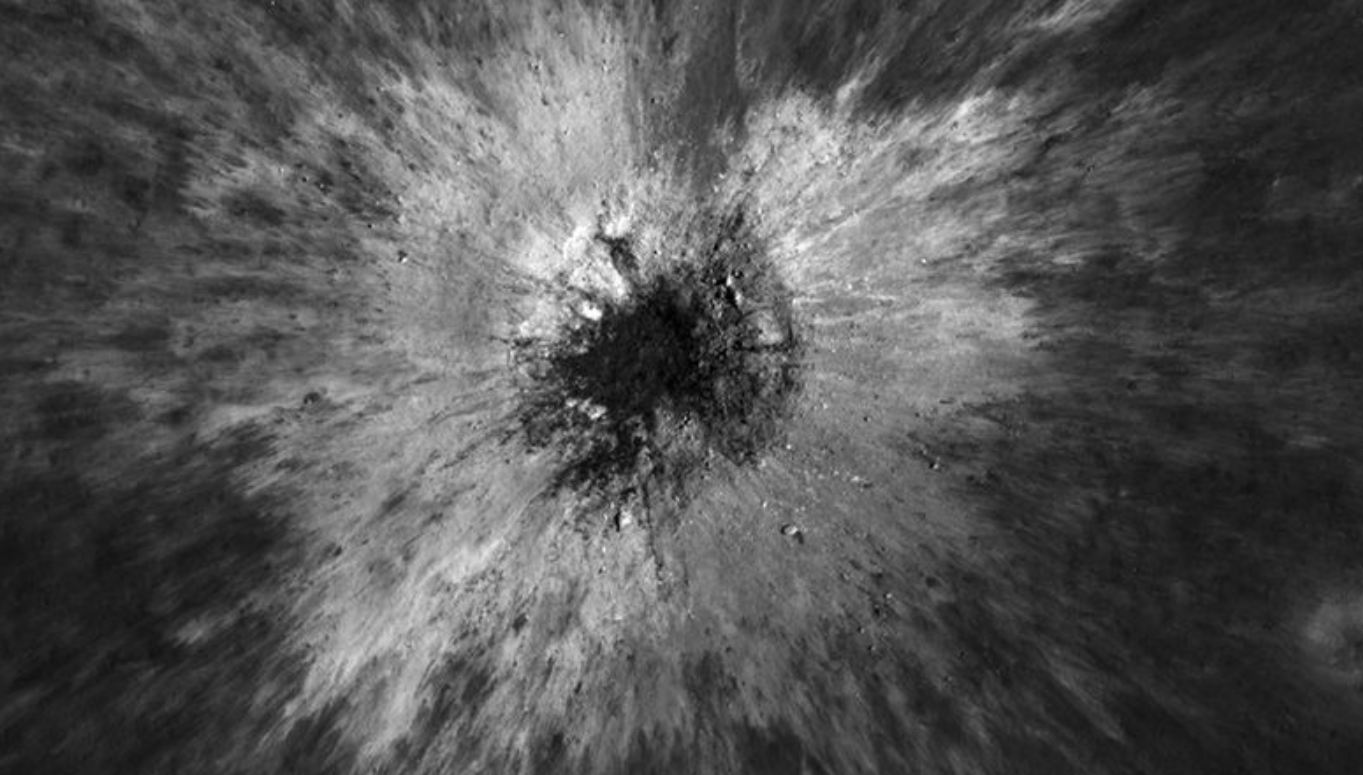
A piece of an asteroid or comet had slammed into the Moon sometime between 11 April and 22 May 2024. The collision excavated a crater 222 metres across and 43 metres deep, the largest newly formed impact crater yet discovered anywhere in the Solar System.
Models suggest an impact of this scale occurs on the Moon roughly once every 132 years. Two studies published in Science Advances on 16 September now show that the hole itself tells only part of the story. The collision disturbed the lunar surface far beyond the crater, leaving traces that can still be detected through changes in brightness and temperature.
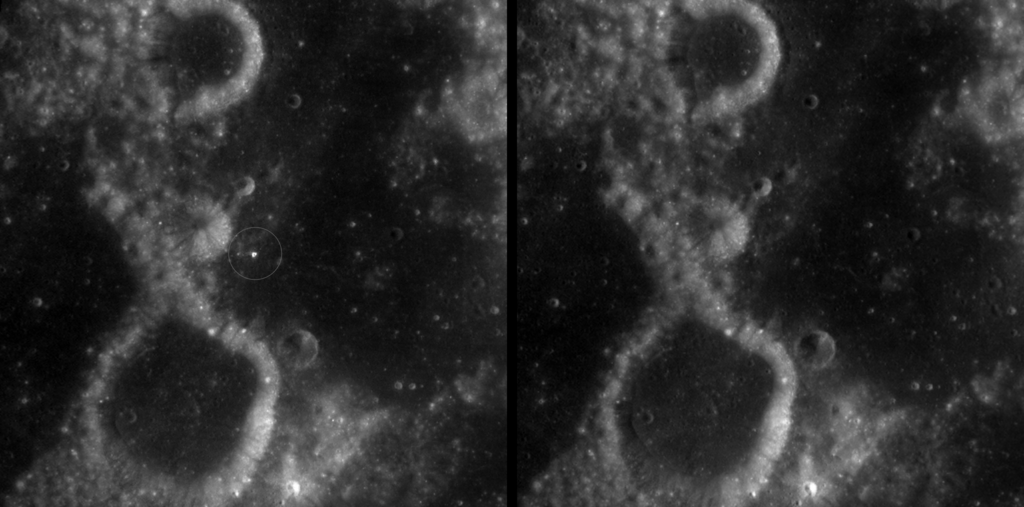
For scientists, the timing was remarkably fortunate. NASA’s Lunar Reconnaissance Orbiter had photographed the area before the impact. It was still operating afterwards.
They effectively had before-and-after pictures of an event nobody had seen happen.
A new scar appears on an old Moon
The crater has been named McGetchin after the late lunar scientist Thomas McGetchin.
It lies near the eastern limb of the Moon, close to a boundary between darker volcanic mare material and the brighter lunar highlands. Its dimensions are substantial: measurements from high-resolution orbital imagery put its average diameter at 222 metres, with a depth of about 43 metres.
The object that made it was much smaller. NASA estimates the asteroid or comet fragment may have been roughly the size of a three- to six-storey building. With no substantial lunar atmosphere to slow or destroy an incoming object, it reached the surface at enormous speed.
Impacts on the Moon are hardly unusual. Lunar Reconnaissance Orbiter has been circling the Moon for more than 17 years, and its team has identified at least 1,000 new impact craters. Scientists estimate impacts capable of making craters around nine metres wide occur about 140 times across the Moon each year. Many more impacts are too small to resolve from orbit.
McGetchin is in a different class
Before its discovery, the largest fresh crater identified during the LRO mission was about 70 metres across. McGetchin is more than three times that diameter. Researchers describe it as the largest contemporary impact crater discovered in the Solar System.
And Wagner knew almost immediately that the image in front of him was unusual.
When searching for large changes, the LROC team compares global maps taken years apart. The software can produce hundreds of false detections that researchers must eliminate manually. A new crater normally appears as a tiny bright point with a fuzzy halo.
McGetchin stretched across hundreds of pixels.
“It was by far the most obvious impact debris pattern I’ve ever seen in one of these images,” Wagner said, according to NASA.
Once the team realised what it had found, attention shifted from the broad-view Wide Angle Camera to LRO’s Narrow Angle Camera. Its much sharper imagery allowed researchers to examine the crater, its rim and the debris scattered around it.
The impact changed far more than the ground it excavated
What followed has made McGetchin particularly valuable. An impact crater is the obvious wound. The more subtle damage around it can be much harder to see.
The first Science Advances study, led by Mark Robinson, examined how material was excavated and redistributed across the lunar surface. Images show changes extending extraordinary distances from the impact site. The paper reports widespread surface modification extending more than 1,000 crater radii.
Some faint reflectance changes were detected roughly 100km from McGetchin. They are not simply great piles of debris thrown that far from the hole. The impact appears to have altered the texture of the lunar surface over a huge area.
Then another instrument aboard LRO found something invisible to an ordinary camera.
At night, the ground surrounding McGetchin is colder.
A seven-kilometre cold patch surrounds a 222-metre crater
NASA’s Diviner Lunar Radiometer began examining the site after the crater was discovered.
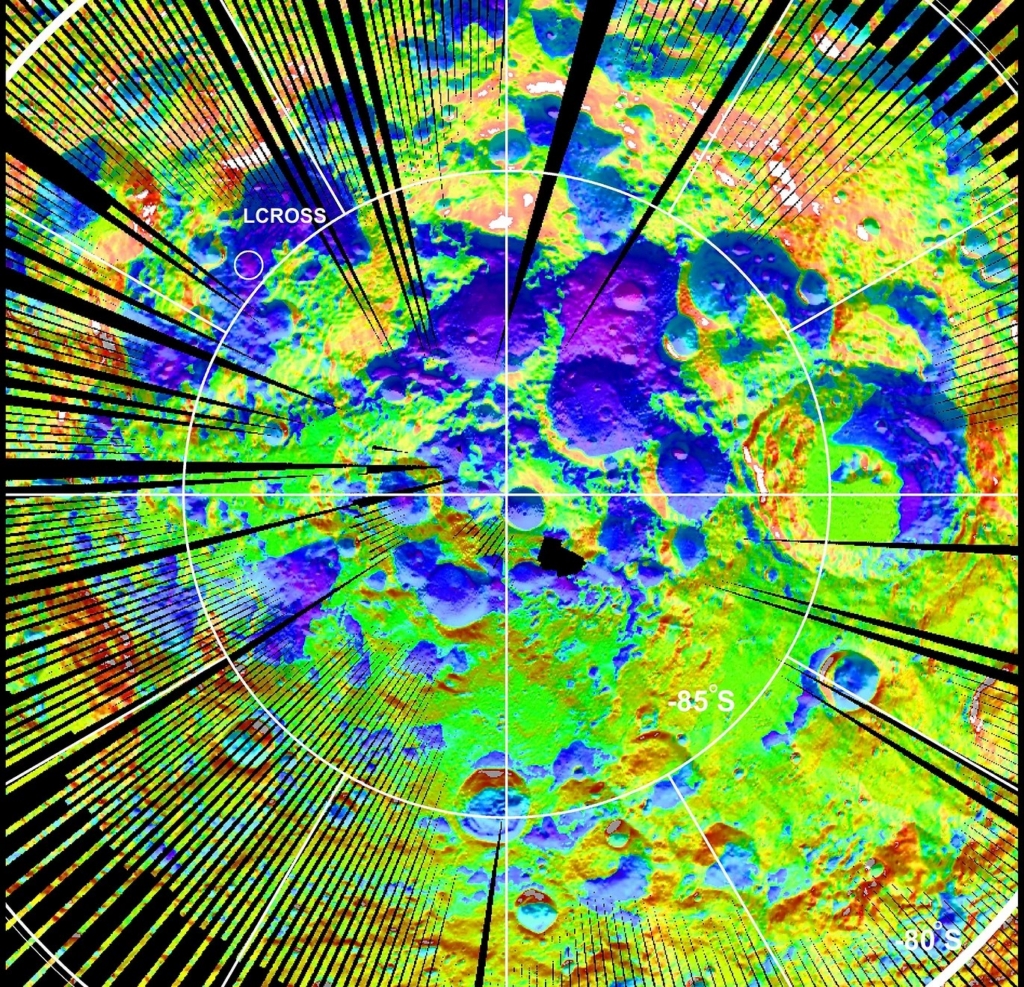
Its measurements revealed a cold spot about seven kilometres across surrounding McGetchin. During the lunar night, parts of it are around 8 to 9 kelvin colder than the surrounding terrain.
The crater at its centre is only 222 metres wide.
Researchers believe the difference comes from what the impact did to the regolith, the loose layer of dust and broken rock covering the Moon. The shock appears to have loosened, or decompacted, its upper layers. Looser material has lower thermal inertia and loses heat differently after sunset.
There is an unexpectedly human piece of evidence supporting that explanation.
Apollo 16 landed within a faint cold spot associated with South Ray crater in 1972. Researchers studying the phenomenon later found that astronaut footprints there were deeper than at other sites, consistent with unusually loose regolith.
More than half a century later, an impact that happened during LRO’s lifetime is allowing scientists to examine the process almost from the beginning.
The Diviner team analysed 21 newly formed craters larger than 20 metres. Every one larger than about 30 metres produced a detectable cold spot. Larger craters also produced stronger temperature anomalies, suggesting they disturb the regolith to greater depths.
That finding changes the importance of the phenomenon. Cold spots are not merely thermal curiosities around a handful of young craters. The researchers argue that repeated impacts may play a substantial role in continually churning and changing the Moon’s shallow surface.
Why a fresh crater matters to people who may one day drive across the Moon
McGetchin also arrives at an interesting point in lunar exploration.
Space agencies and private companies are preparing for more landers, rovers and eventually longer human stays on the Moon. The mechanical properties of the regolith are therefore more than a geological question.
A surface that looks much the same from orbit may behave differently under a wheel or landing footpad if an impact has loosened the material beneath it.
NASA notes that the physical changes identified around McGetchin could affect how rover wheels interact with the surface.
There is another reason researchers would like a closer look. McGetchin formed almost on a boundary between mare and highland terrain, giving scientists an unusually clean experiment in how the same impact affected two different geological settings. The thermal study found that the cold spot stretches across both and is surprisingly symmetrical, suggesting that the upper few centimetres of regolith behave similarly despite the different geology underneath.
A rover sent there could do something LRO cannot: touch the disturbed soil, measure its texture directly and examine how ejecta was deposited centimetre by centimetre.
Tyler Powell, lead author of the Diviner study, told Space.com that observations from the surface would allow researchers to connect what they map from orbit with small-scale changes in surface texture and ejecta distribution.