Mounting Russian aviation losses in Mali amid fresh insurgent offensive

8 min read
Last week, the Islamic insurgent group JNIM and the Tuareg separatist group Azawad Liberation Front (FLA) launched a massive coordinated series of attacks across Mali. The campaign was directed against the Malian government forces and the Russian Africa Corps mercenaries, keeping the military junta in power.
During the attacks, at least one more Russian helicopter was shot down, with another Russian-supplied helicopter captured. These add to the growing tally of Russian aviation losses in the Sahel region. Actual Russian/Mali losses since 2021 are likely higher than reported in this article.
Background to the Mali conflict and Russia’s involvement
The geopolitics of the conflict are far too complicated to even outline in this article. It is also impossible to explain the depth of the Russian propaganda campaign in this region.

However, important details include that the insurgency first kicked into high gear in 2012, with the Mali forces being routed over much of the country. The capital, Bambako, was saved, and much of the territory returned to government control following a French-led military intervention.
While the French were successful in driving back the insurgents, they were unable to solve the insurgency entirely or fix the underlying problems that led to the insurgency in the first place.
By 2021, another military coup resulted in the new military junta ejecting the French from Mali. By late 2021, Russia’s quasi-state-run Wagner military group (later replaced with the Africa Corps) started to arrive.
Broadly speaking, Russian mercenaries had two main jobs. One was to coup-proof the military junta from further internal coups, and the other was to protect Russian mining interests in the region.
They are also tasked with fighting insurgents, sometimes by indiscriminately killing and torturing villagers across the country.
Debris of SU-24 and Russian pilots that fell into a river in Gao, the Tuaregs claim that the aircraft was hit yesterday during the battle north of Kidal and today morning, forcing it down. #Mali pic.twitter.com/5slavY6FPz
— Paweł Wójcik 🦋 (@SaladinAlDronni) June 14, 2025
Russia’s Mali operations and Mali’s Jihadi insurgency are inseparable from those in Burkina Faso and Niger. Both of these countries also rely on Russian mercenaries and have expelled French forces (and American forces from Niger).
Airpower in Mali is mostly supplied by Russia
In order to counter militants in Mali and to provide logistical support, Russia has had to commit aviation assets.
While these losses have not come directly from the Russian Air Force, they are putting further strain on Russia’s deteriorating aviation industry and available inventory of flyable aircraft.
Confirmed by Africa Corps run media networks, helicopter with RU soldiers was lost in Gao yesterday. https://t.co/PgCZndNoc9
— Paweł Wójcik 🦋 (@SaladinAlDronni) April 26, 2026
Since 2021, Russia has lost a small air force to the conflict, which includes aircraft supplied to the fledgling Mali Air Force. Note that some lists claim Mali has MiG-21 jets in service, but they haven’t flown in years.
While Russian aviation is also active in combat/logistical roles in neighbouring Burkina Faso and Niger, all confirmed Russian losses appear to be in Mali for now.
Also important is the massive logistical challenge for Russia in supplying its African adventure. This is a challenge made worse following the fall of Assad and the resulting uncertainty about its Khmeimim Air Base, which functions as a vital refueling base.
Breaking: Corroborating sources confirm that the northern Malian city of Menaka has fallen to the Islamic State Sahel Province yesterday, the militants spent the night in the governor's administrative building and captured his vehicles.
— Brant (@BrantPhilip_) April 28, 2026
The Africa Corps and the Malian army are… https://t.co/UJWbpMplJk
AGN recently reported that the Russian Air Force’s collapsing airlift capacity is now insufficient to meet its domestic and international requirements. This is causing Russia to increasingly rely on civilian commercial aircraft to meet the gap, including for transporting troops within Russia and moving military equipment to Africa.
Get the latest aerospace defence news here on AGN.
Russian-mercenary and Russian-supplied aviation losses in Mali
Since 2021, Russia’s aviation losses in Mali have been gradually mounting. These losses are likely having some effect on the Russian military.
⚡️The moment of the accident on September 23, which led to the destruction of the 🇷🇺Russian Il-76 transport plane in Mali. According to several sources, the plane belonged to the Wagner PMC mercenaries and was transporting the group's fighters. pic.twitter.com/Norvqljq2t
— 🪖MilitaryNewsUA🇺🇦 (@front_ukrainian) September 27, 2023
Perhaps the most important loss was a large Ilyushin Il-76 transport aircraft that crashed on takeoff in September 2023, killing a large number of Wagner mercenaries. Reportedly, around 140 people died.
In 2022, Russia moved to reconstitute the near-non-existent Mali Air Force using aircraft mostly from its own stocks.
In 2026, Ukraine’s Militaryni reported that in 2022, “Russia delivered two Mi-24P helicopters to Bamako, along with P-18 and 59N6-TE Pronet-GE radars. When this equipment was received, the Malian Air Force had a total of eleven Russian-made aircraft in its fleet. The entire fleet was composed solely of Soviet or Russian-designed equipment.”
Mali 🇲🇱: a Malian Army helicopter was also downed over the Niger river, just outside of Gao. pic.twitter.com/DaILe5MALs
— Thomas van Linge (@ThomasVLinge) April 25, 2026
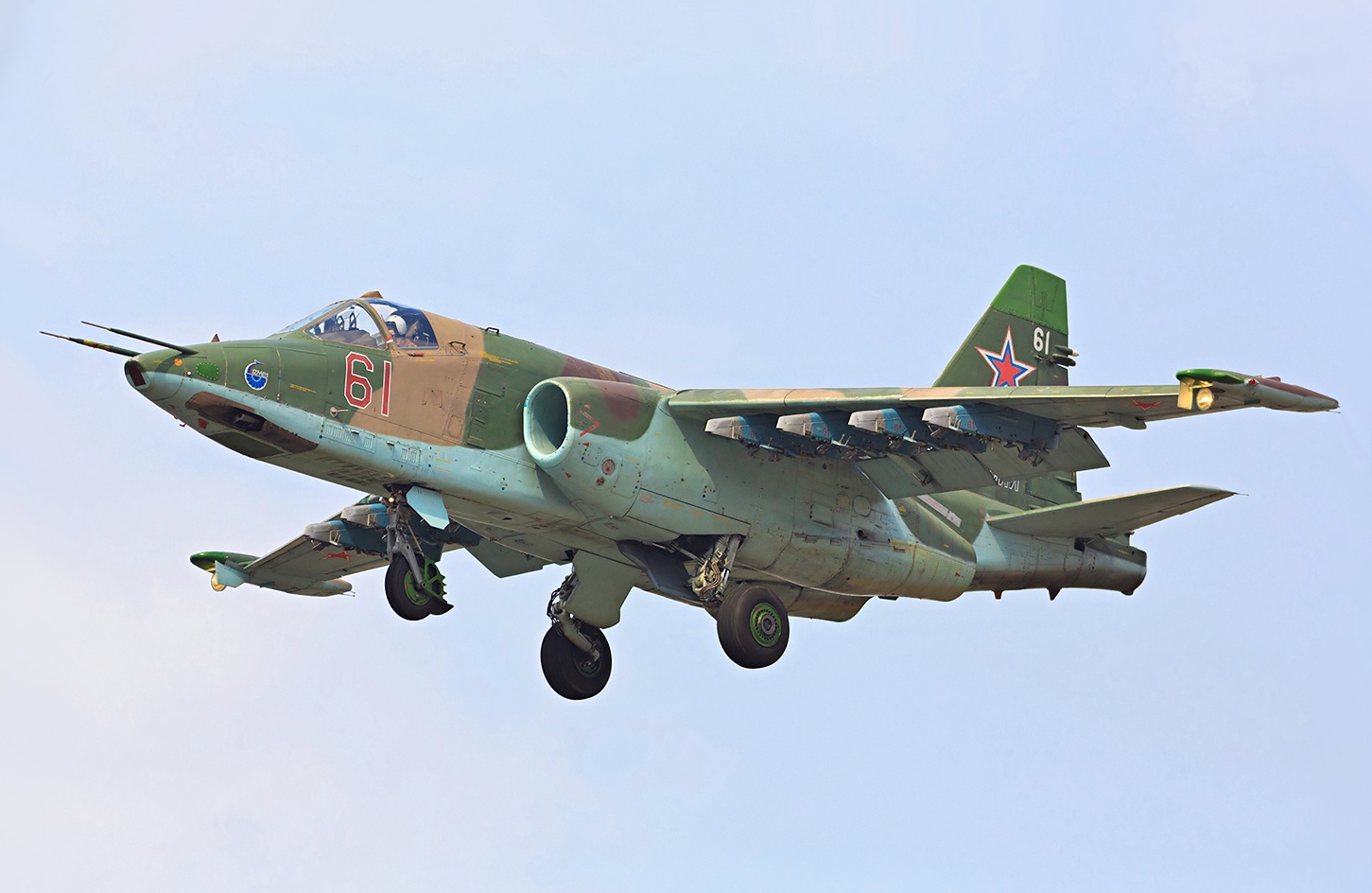
In March 2023, Times Aerospace reported Mali “…has received at least four Aero L-39 jet trainers, which can be used in the ground attack role, as well as a single Mi-8T Hip transport helicopter and two Mi-8MTs, two Mi-24 Hind attack helicopters, two Sukhoi Su-25 Frogfoot ground attack jets, and a single Airbus C-295 tactical transport… Most of the new aircraft appear to have come from Russian stocks…”
| Known aircaft lost in Mali since 2021 (inc. Mali, Wagner, Africa Corps) | Quantity | Notes |
| Sukhoi Su-25 ground attack | 2 (2022 & 2023) | Lost within two months of delivery |
| L-39 Albatros jet trainer | 3+ | Two lost in 2023, one shot down in 2024 |
| Mi-24D ‘Hind’ attack helicopter (possibly Mi-35s) | 3+ | Crashed in 2023, shot down 2024, captured/destroyed April 2026 |
| Mil Mi-8 helicopter | 3+ | Wagner ambush in 2024, shot down August 2025, April 2026 another shot down likely by MANPADS |
| Ilyushin Il-76 | 1 | Crashed on take off killing around 140 mostly Wagner mercenaries in 2023 |
| Sukhoi Su-24M Fencer strike bomber | 1 | Crashed June 2025 near Gao Airport |
| Bayraktar TB2 drone station (from Turkey) | 1 | Captured April 2026 following a defeat of the Africa Corps |
| Unidentified helicopter | 1+ | Reportedly shot down in Feb 2025 near Tessalit |
| Total | 15+ | Baseline airplanes & helicopters lost in Mali since late 2021 |
Both of the Su-25s were soon lost, and it appears the Aero L-39s have also been lost. Many of the helicopters have been lost, although some of those listed above were operated by Wagner/Africa Corps.
🇲🇱🇷🇺🪖 The FLA has captured what remains of a Malian Army Mil Mi-24P helicopter (registration TZ-07H).
— Zaryon OSINT (@zarGEOINT) April 27, 2026
The aircraft was supplied by Russia in 2022. https://t.co/TLC9d3kotu pic.twitter.com/0KkHTzDuBj
It is unclear how willing Russia is to dip into its stocks to continue constituting the Mali Air Force. As of April 2026, Russian forces/Mali continue to carry out airstrikes on militants, slowing their advance.
The larger picture with Niger and Burkina Faso
As stated, the conflict in Mali is a part of a broader conflict engulfing Burkina Faso, Niger, parts of northern Nigeria, and other neighbouring states. The December 2025 US strikes on Nigeria that were loudly tweeted by Trump were related to this.
NEW | Al Qaeda’s Sahelian affiliate JNIM launched its most coordinated and significant attacks across Mali since at least 2012 in coordination with pro-separatist Tuareg rebels and has taken control of several major towns across northern Mali.
— Critical Threats (@criticalthreats) April 28, 2026
The offensive likely aimed to seize… pic.twitter.com/GRC8Q4C3iK
A quick search of “Burkina Faso” on YouTube will return countless fantastic Russian-funded or fueled thumbnails about how Burkina Faso is booming following its military coup, expulsion of the French, and close friendship with Russia.
But reality is the exact opposite. Burkina Faso and its Russian mercenaries have failed to check the relentless march of Jihadi militant groups, and the fragile country has less control of its territory now than before Russian intervention.
It appears the U.S is repositioning it's forces within Niger. Troops and other assets, including MQ-9 Reaper drones are being repositioned from Air Base 101 in the capital Niamey to Air Base 201 in Agadez. pic.twitter.com/MuYod1DqQg
— Defense News Nigeria (@DefenseNigeria) September 9, 2023
This was made much worse by the expulsion of the US from Niger’s Niger Air Base 201. The US operated a drone base there, allowing it to effectively strike Islamist groups across the region using MQ-9 Reapers. Since the US withdrawal in 2024, the ability of the US to strike Islamist groups has diminished.
In January 2026, militants affiliated with the JNIM group in Mali attacked Niger’s main international airport at the capital Niamey.
While the extent of the damage is unclear, the most commonly reported tally of destroyed military aircraft is five. This included only Mi-17 aircraft hit by an RPG, a Diamond DA42 ISR aircraft, a TAI Hürkuş-C light attack/trainer, at least 1-2 Cessna Caravans used for ISR/transport, and perhaps a combat drone.
Wow, ISIS-Sahel has published footage of last week’s attack against Diori Hamani International Airport in Niger, with dozens of terrorists – including several on motorcycles – successfully breaching both the civilian and military sides of airport, as well as several hangers and… pic.twitter.com/rlpLPkRBQH
— OSINTdefender (@sentdefender) February 1, 2026
No Russian-operated aircraft were reported as lost in the attack, with losses coming from the Nigerian Air Force.
However, Russia may need to resupply the Nigerian Air Force from its stocks or pick up more of the tasks from the Nigerian Air Force.
Featured Image: Wikimedia Commons
Sign up for our newsletter and get our latest content in your inbox.


More from


October 17, 20264 min read