Kratos and KAI join forces on low-cost loyal wingman drone integration

3 min read
After announcing a partnership with Sweden’s Saab to produce AI-piloted fighter jets, KAI is now partnering with the US company Kratos to accelerate the development of low-cost autonomous aircraft.
Kratos partners with Korea’s KAI to develop advanced MUM-T aircraft
Kratos Defense & Security Solutions announced on Monday, 27 October, that it was forming a partnership with South Korea’s Korea Aerospace Industries (KAI) to advance the development of Manned-Unmanned Teaming (MUM-T).
Kratos and Korea Aerospace Industries (KAI) are partnering to develop advanced Manned-Unmanned Teaming (MUM-T) solutions, enhancing the operational flexibility and combat readiness for tactical UAS. Together, we will focus on joint research, system integration, and the evolution… pic.twitter.com/mNWCb5jsYi
— Kratos (@KratosDefense) October 27, 2025
The partnership will allow the two organisations to integrate complementary systems and accelerate the “development of interoperable, next-generation MUM-T solutions,” the company says.
Kratos adds that the strategic partnership will focus on joint research, system integration, and evolution of scalable MUM-T applications. This includes autonomous loyal wingmen, collaborative strike missions, and distributed sensing.

Steven Fendley, the President of Kratos’ Unmanned Systems Division, stated, “By combining Kratos’ proven autonomous jet systems with KAI’s advanced technologies, we are expanding the boundaries of affordable mass and collaborative combat capability for US and allied forces.”
No development timeline was given for the partnership, or exactly what each company would be contributing.
Kratos is playing a leading role in developing autonomous aircraft
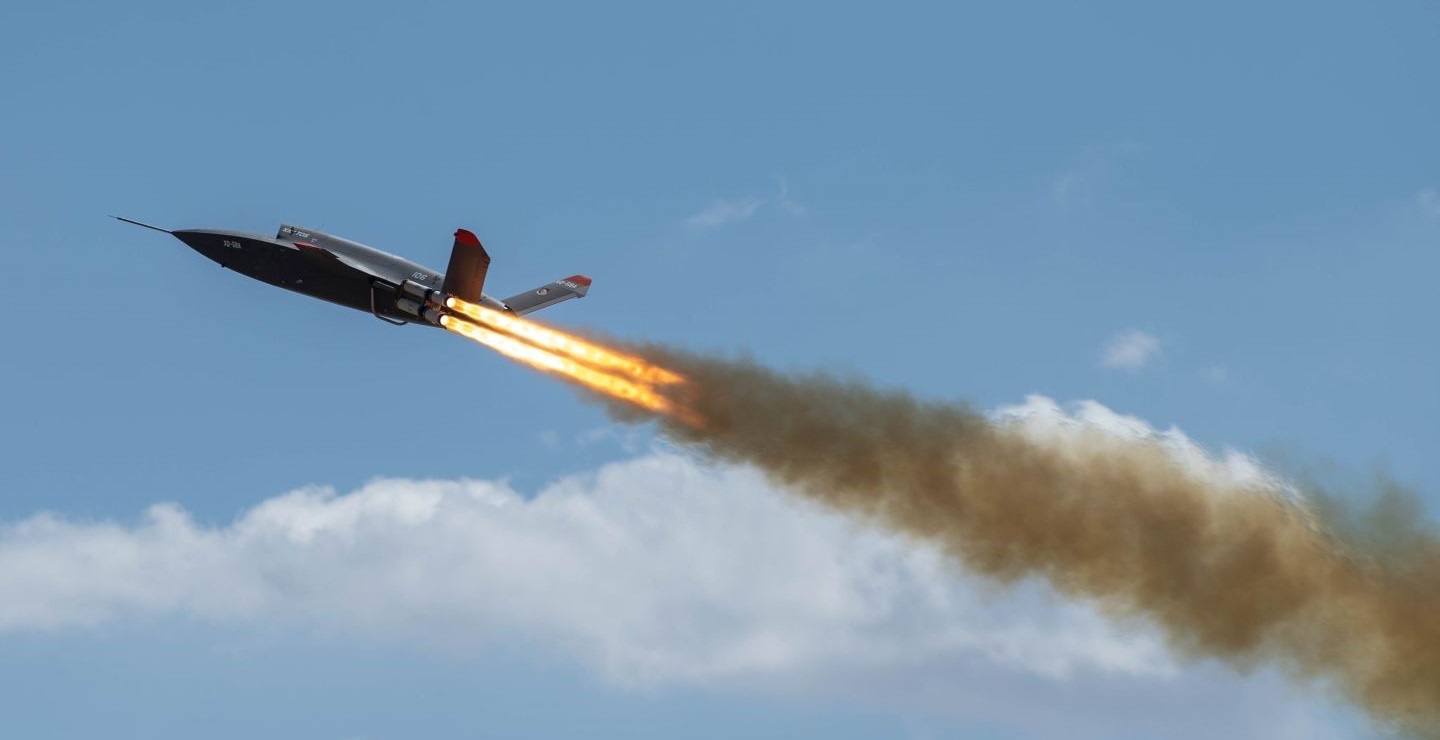
Kratos is one of the leading US Collaborative Combat Aircraft (CCA) or loyal wingman drone defence contractors. Some of its key products include the XQ-58A Valkrie, Mako, and Tactical Firejet.

While the USAF selected General Atomics and Anduril solutions for the CCA Increment 1, Kratos’s role in the CCA programme remains central.
The US Air Force is using Kratos’ Valkyrie loyal wingman drones for testing and evaluation as the CCA programme is developed. The Kratos XQ-58A Valkyrie has been selected to be the first US Marine Corps CCA. Kratos has also signed an agreement with Airbus to produce a variant of the Valkyrie in Germany for the German Air Force.
Separately, Kratos also signed a contract to help Taiwan develop the Chien Feng IV one-way attack drone based on the Kratos Tactical Firejet.
Higher-end quality vs lower-end mass
As loyal wingman drones are rapidly developed, particularly by the US and China, remains an unsolved debate over the balance of making lower-end, cheaper, but mass-produced autonomous aircraft, or higher-end, expensive, but fewer autonomous aircraft.

Kratos’ Valkerie was rejected by the USAF for Increment 1, partly because the service considered the rail-launched aircraft not capable enough. Still, Kratos appears to be sticking with its strategy, saying its partnership with KAI will “focus on affordable mass.”
On the other hand, the USAF rejected Lockheed Martin’s “gold-plated” stealthy CCA demonstrator for being too expensive and infeasible as a massed platform. Even so, Lockheed appears to be sticking to its guns and recently unveiled a higher-end CCA concept called Vectis.
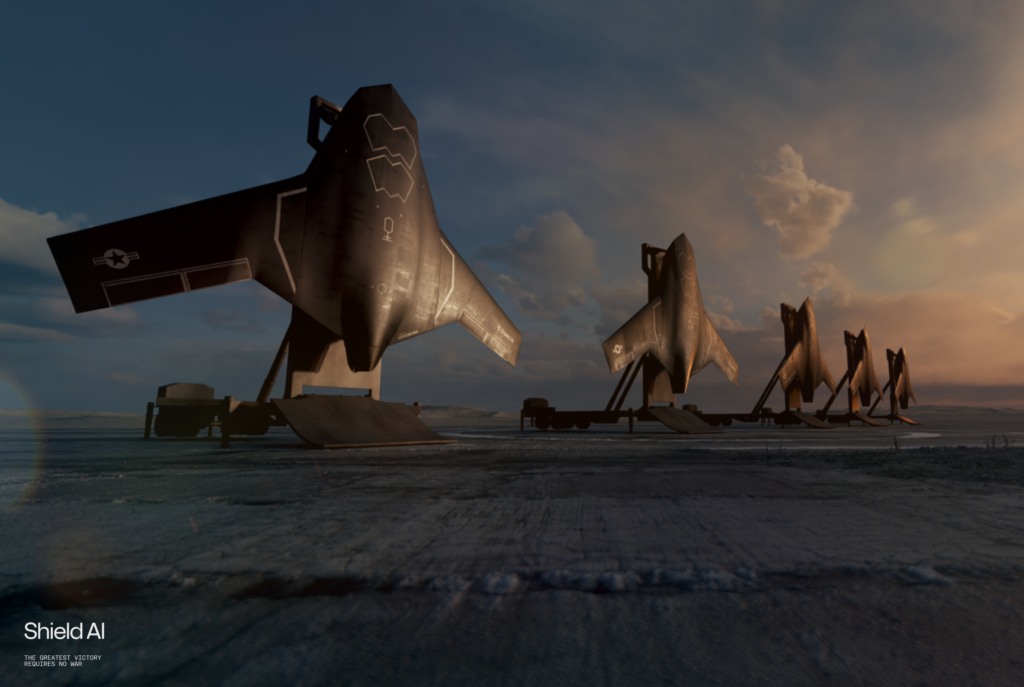
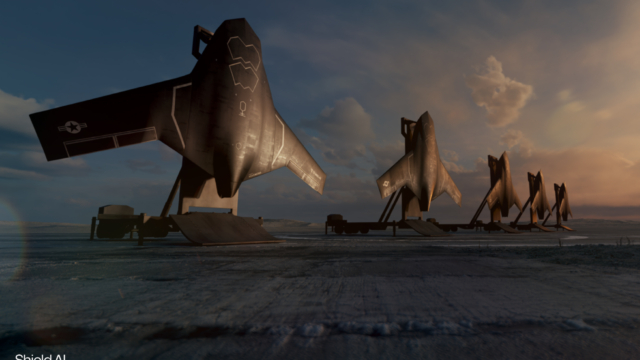
At the extreme quality end, Shield-AI recently unveiled a new concept of a fully autonomous, vertical launch and landing, fighter jet called the X-Bat.
The autonomous General Atomics and Anduril aircraft that the USAF has selected appear to be more middle-of-the-road and not particularly stealthy, although they do incorporate low-observability features. This is in contrast to the loyal wingman drones appearing in China, which appear to be more stealthy. It seems the USAF is putting more emphasis on scalability and mass.
Other US contractors, like Beehive Industries, are developing 3D printed components for critical engine components for CCAs, including engines not expected to have long operational lives.
The US Navy is considering autonomous aircraft at the lower end that would fly a few combat, ISR, or other missions before ending their short lives as a one-way attack munition.
Featured Image: Kratos Defense & Security Solutions