Joby Aviation completes first autonomous transcontinental flight across the US

5 min read
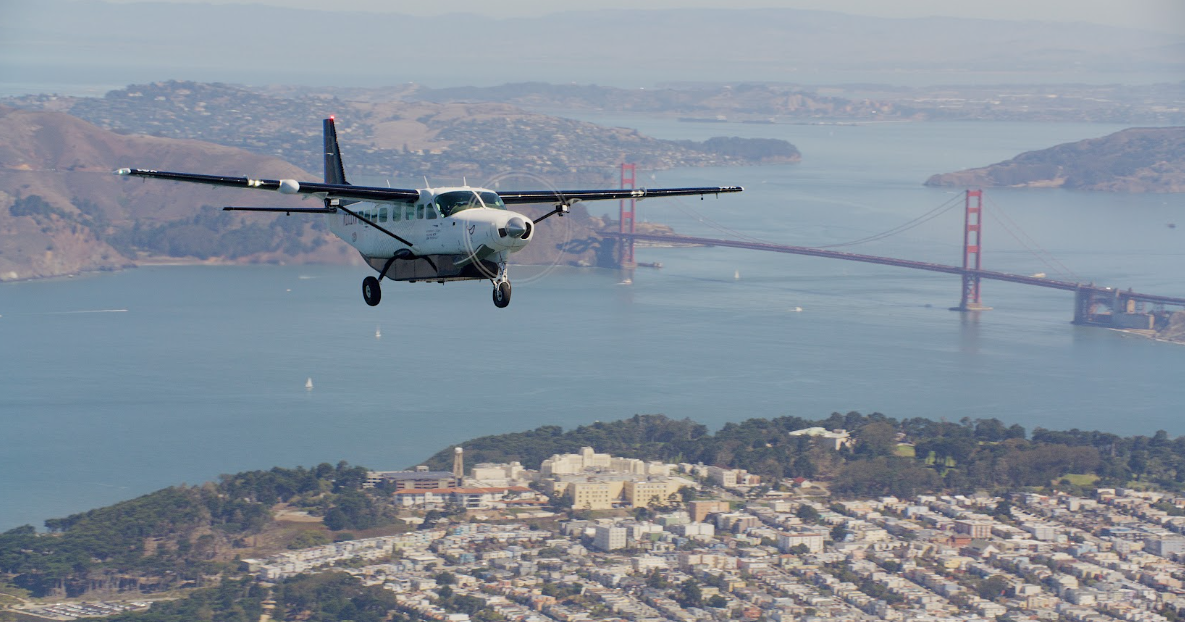
Joby Aviation has completed what it calls the first fully autonomous flight across the United States, marking a major milestone in autonomous air logistics.
The aircraft, a converted Cessna Caravan equipped with Joby’s autonomy technology, travelled 3,199 miles (5,118km) from Concord, California, to North Carolina’s Outer Banks without a single control input from its onboard safety pilot.
The eastbound journey formed part of Joby’s 2026 Electric Skies tour and concluded near Kitty Hawk, the historic site of the Wright brothers’ first powered flight in 1903.
The first transcontinental autonomous flight across 3,199 miles
During the month-long journey, the aircraft autonomously taxied, took off, navigated the route, and landed under remote supervision from Joby’s Autonomy Headquarters in California and Shaw Air Force Base in South Carolina.
At its furthest point, the aircraft was being supervised from as far as 2,323 miles (3,716km) away, demonstrating the potential for autonomous aircraft to be operated remotely across significant distances.

The journey also put Joby’s technology through a range of operational environments. The aircraft navigated complex airspace, operated at Phoenix Deer Valley Airport, one of the busiest general aviation airports in the US, and responded to severe weather and thunderstorms by rerouting in real time.
Importantly, the system was able to operate without prior familiarity with every airport it visited, highlighting its potential to support flexible point-to-point air logistics.
Demonstrating applications beyond commercial aviation
Joby said that the cross-country flight demonstrated how autonomous aviation could support a range of applications, including commercial freight, medical transport, disaster response and defence logistics.
By integrating its autonomous system onto an already-certified aircraft, the company believes it can provide a scalable route towards autonomous air logistics without requiring an entirely new aircraft platform.
“This journey across America offers a glimpse into a new era of aviation,” said JoeBen Bevirt, Founder and CEO of Joby Aviation. “Autonomy has an important role to play in the future of flight, allowing us to connect remote communities, deliver critical supplies, respond faster to disasters, support military operations, and keep pilots out of harm’s way.”
Key milestones along the Electric Skies tour
The eastbound leg of Joby’s 2026 Electric Skies tour included demonstrations and operational showcases at several locations across the country.
The journey began at Buchanan Field Airport (CCR) in Concord, California, where the aircraft departed on its 3,199-mile autonomous transcontinental route.
At Phoenix Deer Valley Airport (DVT) in Arizona, Joby demonstrated dual-use autonomy capabilities aimed at supporting defence, first responders and cargo operations. The visit formed part of Arizona’s uFLY coalition activities.

The aircraft then travelled to Alliance Airport (AFW) in Fort Worth, Texas, a major industrial logistics hub. There, Joby showcased the potential of autonomous freight operations.
The stop also coincided with the company’s first air taxi eIPP flight in Texas, conducted as part of the White House-backed programme.
At Shaw Air Force Base in South Carolina, Joby demonstrated representative military flight operations and tactical defence capabilities before continuing towards North Carolina.
The eastbound journey concluded at Dare County Regional Airport (MEO) in the Outer Banks, where the aircraft completed its autonomous landing.
A journey with a connection to aviation history
The arrival in North Carolina carried particular historical significance. Following its transcontinental flight, the Cessna J208 conducted a low pass near the First Flight Monument at Kitty Hawk, close to where Orville and Wilbur Wright made their pioneering powered flight in 1903.
The aircraft then landed at Dare County Regional Airport, demonstrating a potential use case for autonomous aviation in areas where traditional air logistics can be difficult or costly.

Joby says lower-cost, flexible autonomous flights could eventually help connect remote and underserved communities, including by delivering medical supplies and emergency freight.
In North Carolina, flights supported the North Carolina Department of Transportation’s eLIFT-NC initiative, which is exploring statewide healthcare logistics.
In the western United States, the aircraft also contributed to the UDOT-led uFLY coalition, which is evaluating the integration of high-altitude, extreme-environment operations into the wider US airspace system.
Building on hundreds of autonomous flights
As previously reported by Aerospace Global News, the latest demonstration builds on an existing programme of autonomous flight testing by Joby.
The company says its autonomy technology has completed more than 400 flights and 800 automated flight hours in both controlled and uncontrolled airspace.
Joby acquired its current autonomy technology from Xwing’s autonomy division in 2024. Since then, the system has also been demonstrated during three major US military exercises.

During the Air Force’s Agile Flag exercise, autonomous aircraft were used to deliver critical replacement parts, with Joby reporting that the technology enabled delivery 24 hours faster than conventional logistics.
The technology was also demonstrated during REFORPAC, a major US defence exercise in Hawaii. On that occasion, aircraft operating in Hawaii were remotely controlled from Guam, almost 4,000 miles away.
Together, these demonstrations have allowed Joby to test autonomous operations across civilian, commercial and military environments.
Joby’s autonomous journey now continues west
The completion of the eastbound crossing marks the midpoint of Joby’s wider Electric Skies tour rather than the end of the journey.
The aircraft is now scheduled to begin its return westbound trip, with planned stops including Raleigh (North Carolina), Fredericksburg/Washington, DC, Louisville (Kentucky), Wichita (Kansas), Oklahoma City (Oklahoma), Salt Lake City (Utah), and Portland (Oregon).

The return journey will provide further opportunities to demonstrate Joby’s autonomous technology in different airspace environments and operational settings.
With the aircraft having crossed the US without control inputs from its onboard safety pilot, Joby’s latest demonstration represents another step in its development of remotely supervised autonomous flight and its potential application to future air logistics.
Sign up for our newsletter and get our latest content in your inbox.


More from

October 11, 20263 min read