Istanbul overtakes Heathrow as world’s most connected airport

4 min read
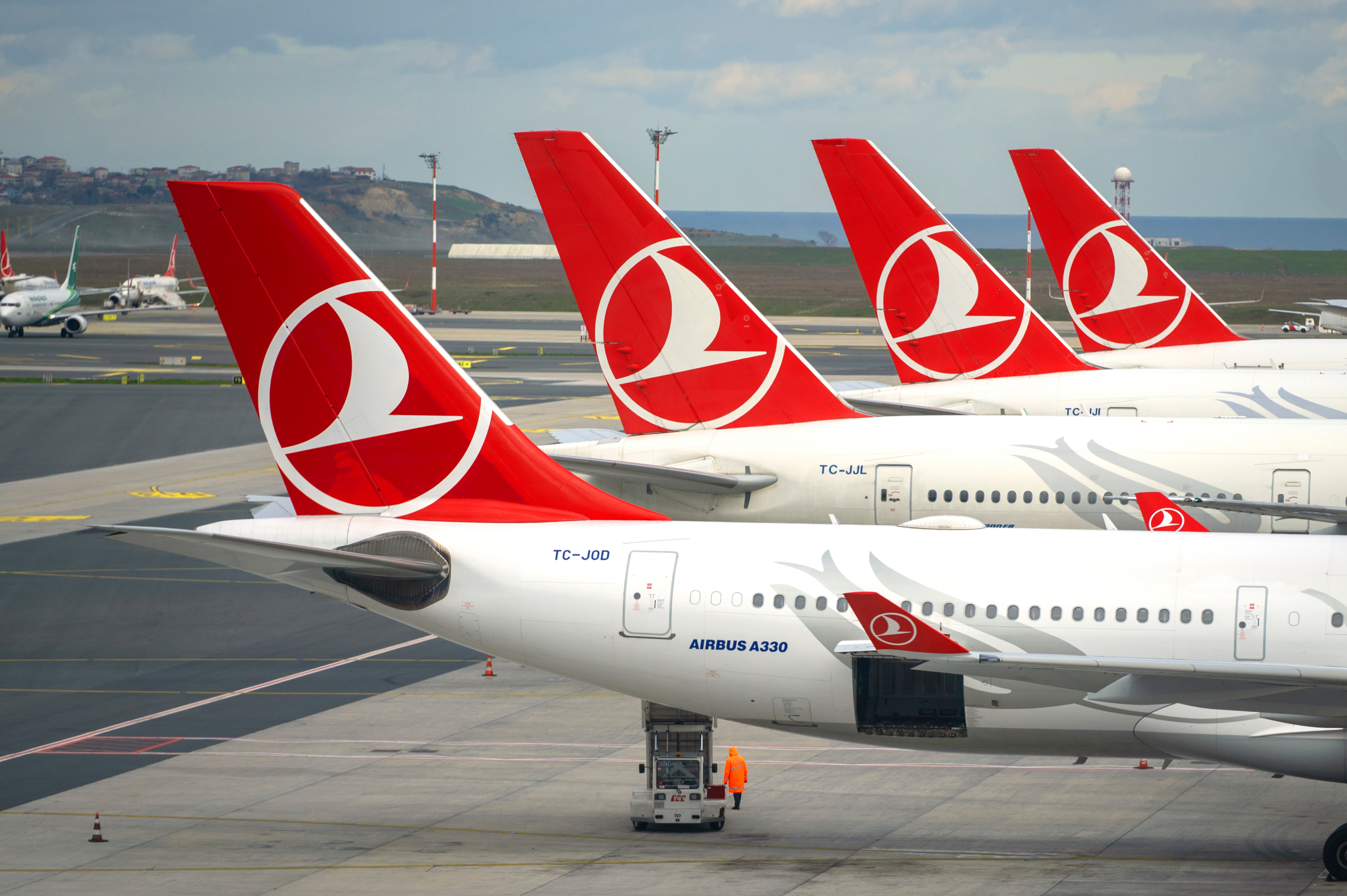
Istanbul Airport has overtaken London Heathrow to become the world’s most internationally connected airport for the first time, according to OAG‘s latest global airport rankings.
The OAG Megahubs 2026 report ranks Istanbul Airport (IST) first, up from second in 2025, while Heathrow (LHR) falls to second. Amsterdam Schiphol remains third.
Istanbul now offers connections to 337 destinations worldwide, helped by Turkish Airlines‘ expansive network, which accounts for around 80% of the airport’s capacity.
OAG Chief Analyst John Grant said Istanbul’s rise reflects both the airline network and the city’s advantageous position between major global markets.
“The 2026 rankings reflect a global aviation landscape that is still recalibrating after significant disruption,” Grant said. “Istanbul’s rise to the top reflects the strength of Turkish Airlines’ network and the airport’s geographic position as a connecting hub between east and west.”
Why Istanbul has overtaken Heathrow
OAG’s ranking does not just consider how many destinations passengers can fly to directly. Its Megahubs index measures the number of possible connections between arriving and departing international flights relative to the destinations served. That means flight frequency, scheduling and how an airline builds connecting banks at its hub can matter as much as the raw number of routes.
- Istanbul had a connectivity index of 265.4 in the 2026 OAG study
- Heathrow had a connectivity index of 246.2
- Istanbul offered 89,456 potential connections across 337 destinations
- Heathrow recorded 55,888 connections across 227 destinations.
| Airport | 2026 rank | Connectivity index | Potential connections | Destinations | International seats | Dominant airline share |
|---|---|---|---|---|---|---|
| Istanbul (IST) | 1 | 265.4 | 89,456 | 337 | 51.2m | Turkish Airlines — 80% |
| London Heathrow (LHR) | 2 | 246.2 | 55,888 | 227 | 51.6m | British Airways — 51% |
Source: OAG Megahubs 2026. International seat capacity covers the September 2025–August 2026 measurement period.
Scheduled international seat capacity is nearly identical at both airports. Istanbul had 51.2 million seats during the September 2025-August 2026 measurement period, while Heathrow had 51.6 million.
Istanbul generates a greater network breadth from comparable international capacity.
Heathrow connections fall 6%
Heathrow’s fall from first to second also reflects disruption to its international network.
OAG said potential connections at Heathrow on the busiest day declined 6% year-on-year, partly because of continuing disruption to Middle East schedules. Capacity between Heathrow and the Middle East was down 25% in August compared with the same month in 2025.
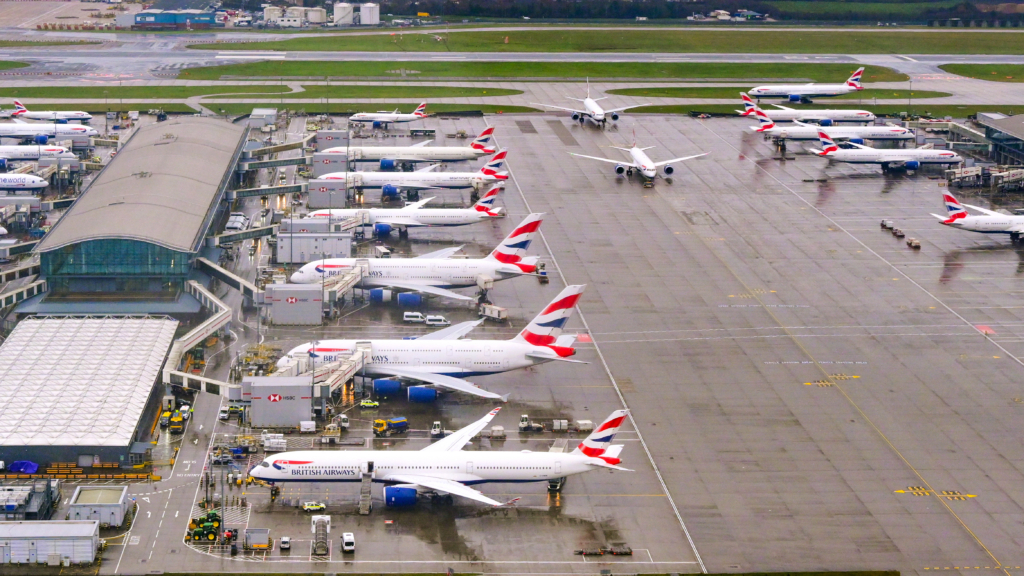
British Airways remains Heathrow’s dominant airline, accounting for around 51% of capacity.
Turkish Airlines has a much larger share of operations at Istanbul, allowing it to coordinate flights around connecting passengers across its network.
Europe’s biggest hubs dominate the top three
Amsterdam Schiphol held third place in OAG’s ranking, with 68,189 potential connections across 281 destinations.
Kuala Lumpur remained fourth and was the highest-ranked Asian airport, while Chicago O’Hare climbed from seventh to fifth and became the most connected airport in the Americas. Chicago also expanded its reach from 297 to 308 destinations and increased potential connections by 9.8%.
The 2026 OAG global top 10 Megahubs
| Rank | Airport | Connectivity index | Potential connections | Destinations | Dominant carrier |
|---|---|---|---|---|---|
| 1 | Istanbul (IST) | 265.4 | 89,456 | 337 | Turkish Airlines — 80% |
| 2 | London Heathrow (LHR) | 246.2 | 55,888 | 227 | British Airways — 51% |
| 3 | Amsterdam Schiphol (AMS) | 242.7 | 68,189 | 281 | KLM — 56% |
| 4 | Kuala Lumpur (KUL) | 232.1 | 35,749 | 154 | AirAsia — 34% |
| 5 | Chicago O’Hare (ORD) | 232.1 | 71,497 | 308 | United Airlines — 49% |
| 6 | Seoul Incheon (ICN) | 221.7 | 43,887 | 198 | Korean Air — 22% |
| 7 | Frankfurt (FRA) | 218.4 | 67,703 | 310 | Lufthansa — 53% |
| 8 | Tokyo Haneda (HND) | 217.4 | 23,040 | 106 | ANA — 36% |
| 9 | Paris Charles de Gaulle (CDG) | 210.1 | 61,980 | 295 | Air France — 57% |
| 10 | Atlanta (ATL) | 190.7 | 49,782 | 261 | Delta Air Lines — 80% |
Source: OAG Megahubs 2026. Connectivity index and potential connections measured on 2 August 2026. OAG ranks airports according to the number of possible international connections relative to the destinations served.
Frankfurt actually serves more destinations than Heathrow, with 310, but ranks seventh because OAG’s measure considers the quality and volume of potential connections, not destination count alone.
Istanbul’s purpose-built hub advantage
Istanbul’s rise also reflects a fundamental infrastructure difference.
Heathrow is a heavily constrained two-runway airport surrounded by development, with plans for further expansion still under debate. Istanbul’s current airport, by contrast, opened in 2018 and was designed from the outset as a very large international connecting hub capable of supporting substantial future growth.
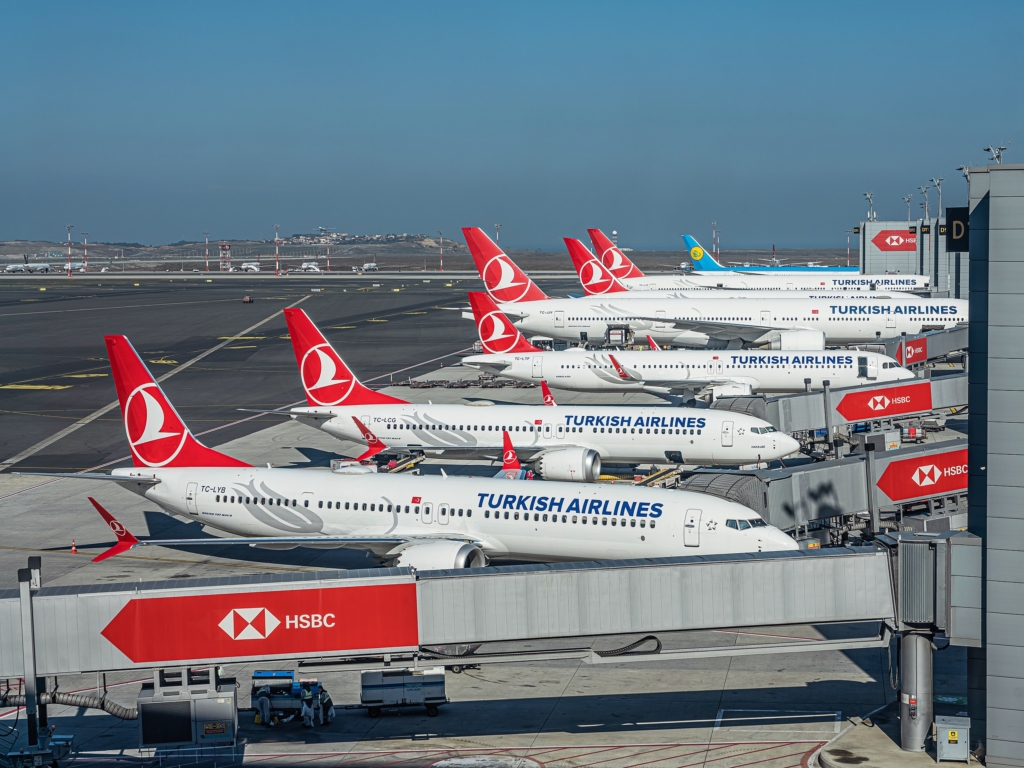
Selahattin Bilgen, CEO of iGA Istanbul Airport, said the result reflected that long-term strategy.
“From the outset, iGA Istanbul Airport was designed to accommodate future expansion, supported by Istanbul’s unique geographical position and our ever-growing airline network,” Bilgen said in OAG’s results announcement.
Turkish Airlines’ network takes full advantage of the airport’s geographical advantage. Istanbul sits between Europe, Asia, Africa and the Middle East, allowing the airline to funnel passengers between many markets through a single hub.
Asian airports make a comeback
Beyond the change at the top, OAG’s 2026 rankings point to a wider shift in global connectivity.
Eight of the world’s 20 leading megahubs are now in Asia Pacific. Chinese airports made some of the biggest gains after a slower post-pandemic recovery in China’s international aviation market.
Shanghai Pudong jumped from 19th to 14th, Guangzhou Baiyun climbed from 36th to 19th, and Hong Kong returned to the top 20 in 20th place.
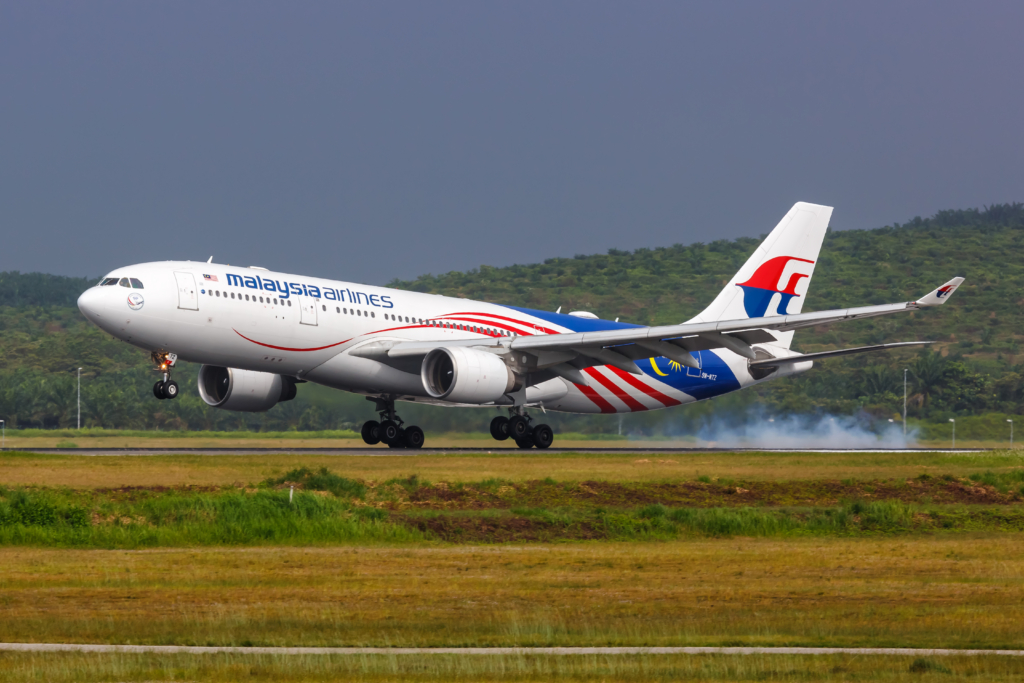
Kuala Lumpur also retained another title as the world’s leading low-cost megahub, offering nearly 15,000 possible connections involving low-cost carriers.
Asia Pacific airports account for 64% of OAG’s top 25 low-cost megahubs.
For Heathrow, losing the top position does not mean it has become a less important global gateway. Its international capacity remains slightly higher than Istanbul’s in OAG’s measurement period.
But the 2026 results show how Istanbul’s combination of infrastructure, geography and Turkish Airlines’ rapidly developed hub network has shifted the centre of global connecting traffic — and given Heathrow a formidable new rival for the title of the world’s leading international hub.